1969: The Year Creedence Clearwater Revival Became One of the Defining American Rock Voices of Its Generation
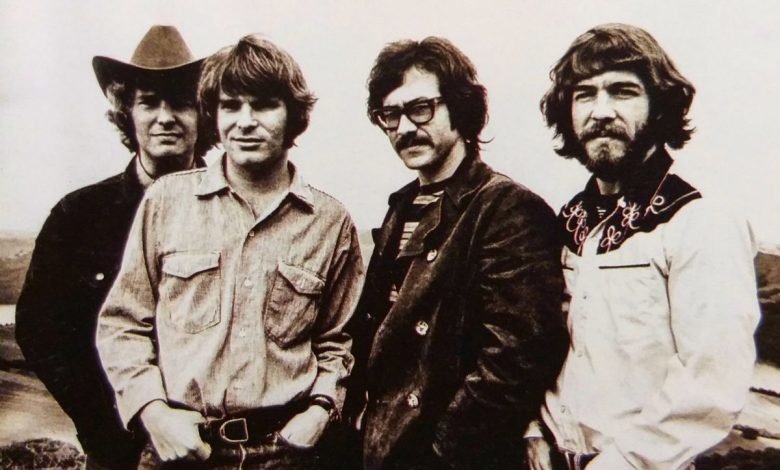
In twelve astonishing months, Creedence Clearwater Revival released three Top 10 albums, sent a rapid succession of singles across American radio, played Woodstock, and turned a California band into the sound of an imagined South. From ‘Proud Mary’ to ‘Fortunate Son,’ CCR made roots music feel urgent enough for 1969.
At the Start of 1969, Creedence Was Still Becoming Creedence
Creedence Clearwater Revival entered 1969 with momentum, but not yet with the stature the name would soon carry.
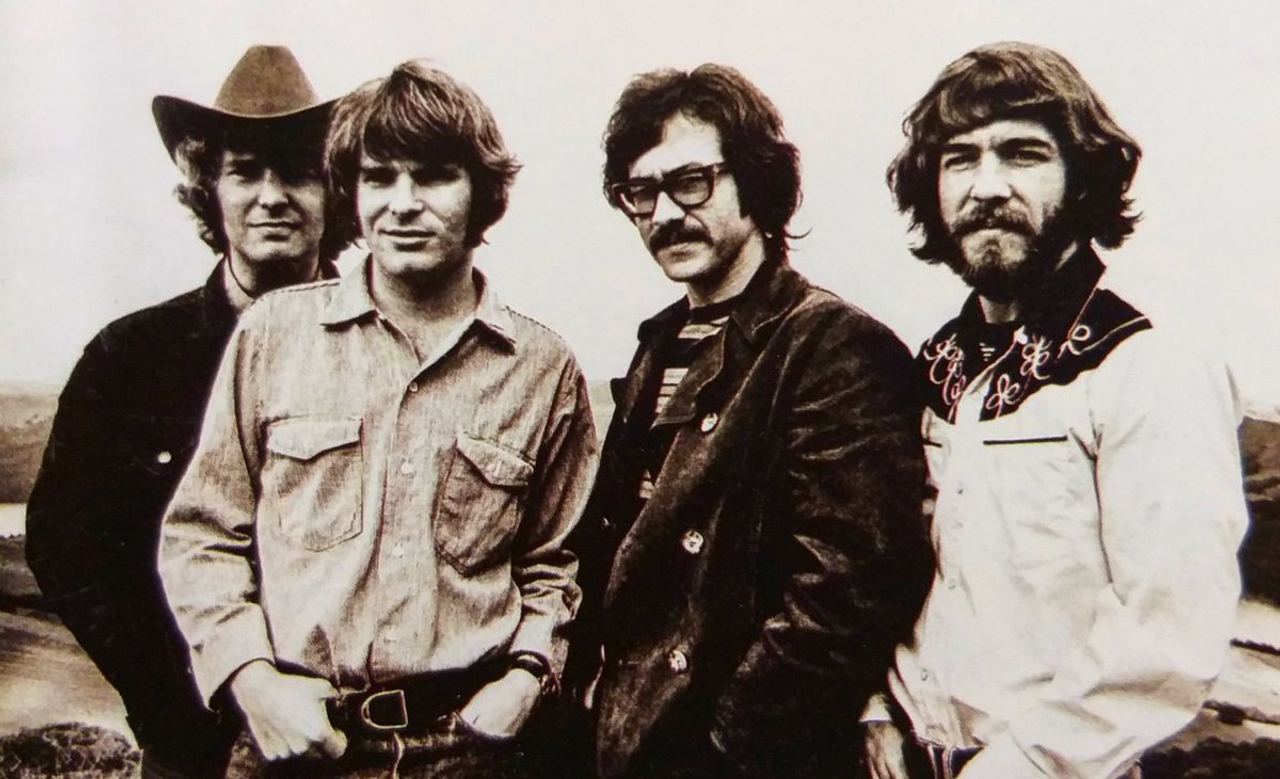
John Fogerty, Tom Fogerty, Stu Cook and Doug Clifford had spent years together under earlier names before becoming CCR in 1968. Their debut album produced a substantial hit with “Suzie Q,” but the band’s identity was still forming.
Then John Fogerty’s songwriting caught fire.
Within months, CCR seemed to possess a style that had always existed: clipped guitar riffs, a hard backbeat, concise arrangements, country and blues roots, and Fogerty’s rough-edged voice singing about rivers, rain, working people, bad omens and an American South the California-born band knew largely through music and imagination.
By December, that sound would be everywhere.
Three Albums in One Year Turned Momentum Into a Flood
Fantasy Records’ own retrospective calls 1969 an epic year in CCR’s short history.
Bayou Country arrived in January.
Green River followed in August.
Willy and the Poor Boys came in November.
All three reached the Billboard Top 10, and Green River became the band’s first No. 1 album.
That pace would have been remarkable even without constant touring, television appearances and major festivals. Yet the records do not sound rushed. They sound focused.
Fogerty wrote and produced with unusual economy. The band learned songs thoroughly and cut them without turning every track into a long studio experiment.
At a time when rock was increasingly associated with psychedelic effects and extended jams, Creedence often moved in the opposite direction.
The song came first.
‘Proud Mary’ Changed the Scale
Bayou Country contained the song that turned Creedence from a promising band into a national force.
“Proud Mary” reached No. 2 on the Billboard Hot 100.
The record has the relaxed roll of something much older than the musicians who made it. The lyric imagines leaving a difficult life behind and finding another rhythm on the river. The guitar figure is simple enough to remember after one hearing.
Nothing about it sounded like a novelty.
That became central to CCR’s appeal. The songs could feel rooted in American musical memory without sounding like museum pieces.
The band was from Northern California, not Louisiana. Yet when Fogerty sang about the river, listeners did not need a geography lesson.
They heard motion, escape and work.
They heard a song that seemed older than the record itself.
A California Band Invented Its Own Bayou
CCR’s relationship to the American South was one of the strangest and most productive parts of its identity.
The group drew deeply from blues, country, rockabilly, gospel, R&B and folk traditions associated with the South.
“Born on the Bayou” is the clearest example.
Fogerty was not documenting a Louisiana childhood. He was building a place through sound: tremolo guitar, a humid groove, regional imagery and a voice that seemed to come from somewhere far from suburban California.
Later critics would call the result swamp rock.
The label worked because Creedence did not imitate one Southern genre. The band compressed several roots traditions into something leaner, louder and more direct.
Its imagined South became a way of talking about America as a whole.
‘Bad Moon Rising’ Put Anxiety Into a Perfect Pop Single
If “Proud Mary” sounded like movement toward freedom, “Bad Moon Rising” sounded like trouble approaching.
The music is bright.
The lyric is full of storms, earthquakes, fear and catastrophe.
The single reached No. 2 on the Billboard Hot 100.
That contrast is part of its brilliance. A listener can sing along before fully noticing how dark the picture is.
In 1969 – a year of war, political division and cultural upheaval – the combination of catchy music and anxious imagery felt unusually well matched to the national mood.
Another band might have turned the subject into a heavy dramatic statement.
CCR finished the job in a little more than two minutes.
They could make apocalypse sound like something coming through the car radio.
Green River Made CCR an Album-Level Power
By the time Green River arrived in August, CCR no longer sounded like a group trying to repeat one lucky hit.
The album became their first No. 1 record in the United States.
Its title song became another major hit, while “Lodi” introduced a different kind of Creedence character: not a hero or rebel, but a working musician stuck somewhere he never intended to stay.
Fogerty’s songs were beginning to populate an entire American landscape.
There were riverboat workers.
Travelers.
Poor boys.
People without connections.
People trying to get out.
Creedence songs often felt less like autobiography than compact American stories.
The arrangements were just as economical. Clifford’s drums, Cook’s bass, Tom Fogerty’s rhythm guitar and John Fogerty’s lead playing rarely fought for attention.
The band made directness sound like depth.
Woodstock Showed How Big They Were – Even If the Film Did Not
Creedence Clearwater Revival played Woodstock after midnight on August 17, 1969.
Craft Recordings describes the band at that moment as being at the peak of an incomparably prolific year and on the verge of becoming one of the biggest groups in the world. “Proud Mary,” “Bad Moon Rising” and “Green River” were already radio staples.
Yet CCR’s Woodstock appearance did not become part of the festival’s original screen mythology. The group declined inclusion in the 1970 film and soundtrack.
As a result, many later viewers barely realized Creedence had been there.
The irony is perfect.
One of America’s hottest bands played the most famous American rock festival of the year, but radio – not the movie – became the medium that fixed CCR in public memory.
They Were Almost the Opposite of the San Francisco Stereotype
Geographically, CCR belonged to the Bay Area.
Aesthetically, they stood apart from much of the psychedelic mythology associated with San Francisco.
The Rock & Roll Hall of Fame later called their roots rock an offbeat standout and noted the extraordinary run of Top 10 singles the band created in only a few years.
CCR records were tight.
The grooves were earthy.
The influences reached backward toward early rock and roll, country and blues.
Even when the band stretched out onstage, the hit singles usually operated with ruthless efficiency.
Listeners who did not want rock to drift away into endless improvisation had Creedence.
The songs had edges.
They had choruses.
They had stories.
And they sounded great on AM radio.
Willy and the Poor Boys Revealed Both Sides of the Band
By late 1969, CCR had another album ready: Willy and the Poor Boys.
“Down on the Corner” showed the joyful side of the group. Its fictional street band and easy groove made music itself feel communal.
Then came “Fortunate Son.”
The Library of Congress later preserved the recording in the National Recording Registry and described its target precisely: the song was not simply against the Vietnam War, but against the unequal system that determined who was most likely to bear its burdens.
Fogerty’s lyric attacks privilege – the sons protected by wealth, status and connections while others are expected to fight.
The argument arrives in roughly two minutes.
There is no long explanation and no soft landing.
That brevity makes the anger sharper.
“Down on the Corner” and “Fortunate Son” could sit on the same album because CCR was never only a protest band, a blues band or a roots revival group.
It could sound celebratory on one track and furious on the next.
Why CCR Became Such a Powerful Vietnam-Era Soundtrack
Creedence did not set out to become the automatic soundtrack to later movies about the Vietnam era.
Yet their music became almost inseparable from that historical memory.
Part of the reason is timing. The hits arrived as the war became harder for Americans to separate from everyday life.
Part of it is sound. CCR records feel immediate and physical, even when the story is invented.
And part of it is Fogerty’s writing.
“Fortunate Son” addresses class and military burden directly.
“Bad Moon Rising” turns anxiety into weather.
Other songs speak through ordinary workers and travelers rather than distant celebrities.
Decades of film and television strengthened the association.
But the connection began because Creedence sounded like a band hearing the same unsettled country as everyone else.
The ‘American’ Sound Was Made From Older American Music
Calling CCR a defining American rock voice does not mean the band invented a pure national style.
Its strength came from mixture.
Blues.
Country.
Rockabilly.
Gospel.
Folk.
R&B.
Early rock and roll.
Many of those traditions were rooted in Black American music and in the South. Creedence compressed them into records that sounded current without cutting themselves off from the past.
That helped the band reach different audiences at once.
Older listeners could hear familiar musical grammar.
Teenagers heard contemporary rock.
Working people recognized the characters.
Guitar players heard riffs simple enough to learn and difficult to improve.
The records sounded basic only if simplicity was mistaken for lack of craft.
By Year’s End, CCR Had Become Too Big to Ignore
Fantasy’s 1969 retrospective summarizes the scale: three Top 10 albums, four hit singles, three charting B-sides, Woodstock, two appearances on The Ed Sullivan Show and heavy touring across North America.
Rock Hall later described Creedence as possibly the most popular band in America at its peak.
Those facts matter because the band’s later reputation can make the success seem inevitable.
It was not.
At the beginning of 1969, Creedence was still proving itself.
By December, “Proud Mary,” “Bad Moon Rising,” “Green River,” “Down on the Corner” and “Fortunate Son” had arrived so quickly that they seemed to contain an entire era.
Few bands have ever compressed that much identity into one year.
1969 Was the Year CCR Found a Voice Big Enough to Sound Like America
Creedence Clearwater Revival entered 1969 as a rising California band.
They left it as one of the defining American rock groups of their generation.
Bayou Country gave them “Proud Mary” and “Born on the Bayou.”
Green River gave them a No. 1 album, “Bad Moon Rising,” “Green River” and “Lodi.”
Willy and the Poor Boys closed the year with “Down on the Corner” and “Fortunate Son.”
They played Woodstock and appeared on national television without sounding as if they were chasing whatever was fashionable.
Instead, Creedence reached backward into blues, country, gospel, folk, R&B and early rock and roll, then used those older languages to describe a country moving through an anxious present.
That is why the music remains so tied to the era.
CCR could celebrate escape and warn of disaster.
It could invent a bayou and confront class privilege.
It could sound old and immediate at the same time.
In 1969, the band did more than produce an extraordinary run of records.
It found a voice rough, direct and broad enough to become part of how America remembers itself.
Listen Again
If this story brought back AM radio, jukeboxes, summer drives or the first time John Fogerty’s voice seemed to cut straight through everything else, revisit two recordings that frame CCR’s extraordinary 1969 – the breakthrough that opened the year and the song that gave its turbulence a lasting voice.
Creedence Clearwater Revival – Proud Mary (Official Audio)
Creedence Clearwater Revival – Fortunate Son (Official Lyric Video)
Continue reading
1985 – Dire Straits Made a Blockbuster for a Format Most Listeners Still Hadn't Adopted. How Did It Help Change the Industry?
Brothers in Arms was already built to sound immaculate. Its extraordinary success then tied one of the world’s biggest rock bands to the moment the compact disc stopped looking like a niche technology.
A Rock Band Met a Format Still Looking for Its Mass Audience
In 1985, the compact disc was no longer science fiction, but it was not yet the default way most people bought an album. Vinyl remained familiar. Cassettes were everywhere – in cars, portable players and bedrooms. CD players were more expensive, and many listeners had little reason to rebuild a music collection around a new format.
Then Dire Straits released Brothers in Arms.
The band’s fifth studio album would become a global blockbuster on any medium. The songs were strong, the production was meticulous and Mark Knopfler had reached a point where his understated guitar style could command the same attention as far more theatrical rock acts. Yet the album’s place in history cannot be separated from the technology through which millions of people chose to hear it.
Brothers in Arms did not invent the compact disc, and Dire Straits did not single-handedly persuade the world to abandon vinyl. What happened was more interesting: an album with enormous musical appeal arrived at exactly the moment a new playback format needed a convincing reason to enter ordinary homes.
Dire Straits was also unusually well positioned for that role. The band had already built an international audience without relying on flamboyant stage identities. Knopfler’s reputation rested on touch, tone and detail – qualities that encouraged close listening. A record associated with that kind of musician could make claims about better sound feel less like electronics advertising and more like a musical argument.
The Production Fit the Promise of the New Medium
Brothers in Arms sounded spacious, controlled and expensive in the best sense of the word. Knopfler and producer-engineer Neil Dorfsman built arrangements that left room around instruments rather than filling every second. The drums could hit with tremendous clarity. Guitars appeared in sharply defined layers. Quiet passages mattered as much as loud ones.
That character made the album unusually compatible with the marketing language surrounding digital audio. Early CD advertising emphasized clarity, low noise, durability and dynamic range. Brothers in Arms gave buyers material that seemed to demonstrate those promises immediately.
The fit was not accidental in a broad creative sense. Dire Straits cared deeply about recording quality, and the album belonged to the new digital studio era. But the larger commercial consequence could not have been fully planned. Nobody could guarantee that a listener who loved the songs would also decide to buy a new machine to hear them.
The music created the desire first. The format benefited from being attached to it.
There was another practical advantage: the album’s wide dynamic range made repeated listening rewarding. The quieter passages were not empty; they created space for the next guitar line, keyboard texture or drum impact. On a good stereo, the record invited listeners to notice separation and depth. That kind of listening experience was exactly what early CD owners wanted to demonstrate when they invited someone over to hear the new machine.
A Blockbuster Does More Than Sell Copies
The album debuted at No. 1 on the UK chart and ultimately spent 14 weeks in the top position there. Official Charts credits it as the first album to sell one million copies on compact disc and notes worldwide sales of roughly 30 million.
Those numbers tell two overlapping stories.
The first is about Dire Straits. Brothers in Arms pushed the group from major rock success into a different level of global visibility. The second is about consumer behavior. A million CD purchases meant a million moments in which buyers had either adopted the new format or decided this album was worth buying again in the most technologically advanced version available.
That is how formats take hold. Hardware specifications matter, but cultural desire matters more. People rarely change habits because an engineer tells them a new medium has better technical performance. They change because something they urgently want is available through that medium and makes the upgrade feel meaningful.
Record retailers and hi-fi stores benefited from the same dynamic. A familiar superstar album gave salespeople something concrete to play when explaining an unfamiliar format. Instead of talking abstractly about sampling rates or digital error correction, they could press a button and let a customer hear a record already dominating popular culture. The technology acquired a soundtrack.
Television and the Compact Disc Reinforced Each Other
The album also belonged perfectly to another technological shift: the MTV era. “Money for Nothing” was inseparable from its computer-animated video and from the new idea that a rock single could circulate as an image as powerfully as it circulated as sound. Dire Straits, a band whose leader hardly fit the stereotype of a flashy video-age frontman, ended up with one of the defining videos of the period.
That contrast helped. The group did not look manufactured for technology. It looked like an established rock band whose music was suddenly traveling through the newest channels available.
In one direction, television put Dire Straits in living rooms. In another, CD players changed what those living rooms could sound like. The same album thrived inside both transformations.
The Recording Academy later honored “Money for Nothing” with the Grammy for Best Rock Performance by a Duo or Group with Vocal, while Brothers in Arms received an Album of the Year nomination. The accolades confirmed the musical scale of the project, but they do not fully explain its technological importance.
The CD Became a Status Object – Then an Ordinary Object
For listeners who remember the mid-1980s, an early CD player could feel almost futuristic. The drawer slid out. The small silver disc seemed strangely delicate and indestructible at once. There was no needle to lower, no cassette to rewind, and track access felt immediate.
Brothers in Arms became one of the albums people used to show that future to each other.
A friend might point out the silence before an instrument entered. A stereo shop could use the album to demonstrate clarity. A new owner could compare the compact disc with a familiar LP or cassette and feel that the technology itself was part of the musical event.
This is the memory bridge that sales statistics miss. Format transitions happen in homes, cars and record stores, one purchase at a time. They involve curiosity, status, skepticism and the small thrill of believing you are hearing tomorrow before everyone else has arrived.
Dire Straits happened to make an album that rewarded that feeling.
Success Turned a Technology Story Into a Music Story
It would be easy to tell the history backward and claim Brothers in Arms succeeded because it was on CD. That reverses the cause. The album succeeded because millions of listeners wanted the music. Its extraordinary popularity then gave the CD a cultural showcase that technical demonstrations could never provide on their own.
The relationship was reciprocal. Digital playback emphasized the record’s clean production and dynamic detail. The record’s popularity, in turn, made the new format seem less like an expensive experiment and more like the direction the industry was heading.
Official Charts still lists Brothers in Arms among the biggest albums in UK history. Dire Straits’ official history describes it as one of the world’s best-selling albums. Decades later, those achievements stand on their own.
But 1985 remains special because the success was attached to a larger change in how music was bought, stored and heard.
The compact disc did not need a lecture. It needed an album people could not stop playing.
Dire Straits gave it one.
Listen Again
Hear the album through two official videos that capture both sides of its 1985 identity: the MTV-era spectacle and the spacious, reflective title track.
Dire Straits – Money For Nothing (Official Music Video)
Dire Straits – Brothers In Arms (Official Music Video)
Share
X
Telegram
Other posts
Jul 21, 2026
1967 – Jefferson Airplane Changed One Voice Just Before San Francisco Exploded. Why Did th…
Aug 11, 2026
1978 – Eddie Van Halen Thought It Was Just a Warm-Up. Why Did the Producer Insist on Keepi…
Jul 22, 2026
1980 – AC/DC Lost the Voice That Defined Them. Why Did the Decision to Continue Produce On…
Jul 14, 2026
1975 – Earth, Wind & Fire Did Not Trust the Movie They Were Scoring. Why Did the Soundtrac…
Jun 23, 2026
1972 – Isaac Hayes Walked Into an Oscar Category No Black Composer Had Ever Won. How Did a…
May 23, 2026
1972 — Curtis Mayfield Was Asked to Score a Film He Didn't Trust. He Turned the Soundtrack…
May 27, 2026
1983 — New Order Tried to Build a Song That Could Play Without Them. The Mistakes Became P…
Jul 28, 2026
1983 — R.E.M. Refused to Chase the Radio. How Did a Murky Debut Become the Blueprint for A…
↑
Read more stories
- My Ex-Husband Kicked Me Out Without Letting Me Take My Clothes – Weeks Later, His New Woman Wore My Late Mom’s Dress to a Party, but When I Told Her, ‘Check the Pocket,’ She Went Pale
- A Moment of Transformation on Stage: A Song That Was Always About Them, The Heartfelt Legacy of Alan Jackson’s
- 4-Ingredient Beef Tater Tot Bites
- Hayden Panettiere, 36, Found Unresponsive Before Her Passing — New Details Emerge from Official Investigation