1969: The Year The Who Helped Turn the Rock Opera Into a Major Cultural and Musical Statement
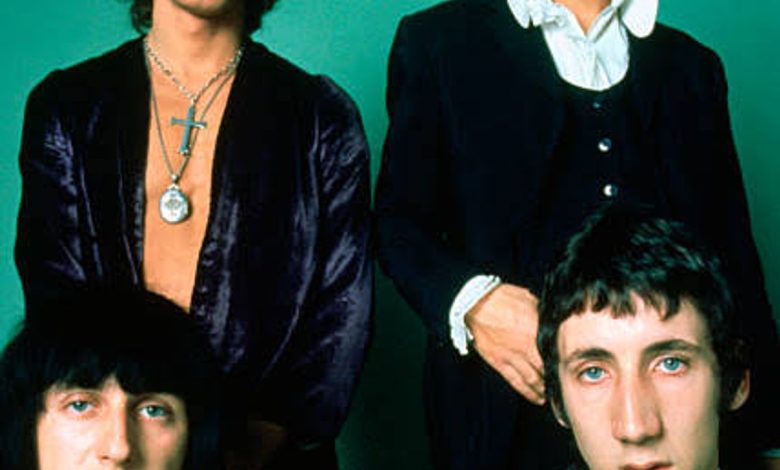
The Who had already built a reputation for explosive singles, smashed guitars and chaotic live shows. Then Pete Townshend imagined a story too large for one song. In 1969, Tommy turned that ambition into a double album and helped show that rock music could carry narrative, character and theatrical scale without losing its power.
Before Tommy, The Who Were Known for Impact
By 1969, The Who were hardly unknown.
They had already produced some of the most memorable British rock singles of the decade: “My Generation,” “I Can See for Miles,” “Substitute” and “Pictures of Lily.” Onstage, Pete Townshend’s windmill guitar, Roger Daltrey’s commanding presence, John Entwistle’s bass and Keith Moon’s near-chaotic drumming gave the band a physical force that made them one of the most exciting live acts in Britain.
But there was a problem.
The Who were famous for moments.
A great single.
A destroyed guitar.
A wild performance.
Pete Townshend wanted something larger.
He had already experimented with connected song ideas on earlier records, especially the mini-opera “A Quick One, While He’s Away.” By the end of the 1960s, he was thinking on a scale that could no longer fit inside three minutes.
The result was Tommy.
It did not ask listeners to hear one song.
It asked them to enter a story.
A Rock Album With Characters and a Plot
Tommy told the story of Tommy Walker, a boy traumatized into apparent deafness, blindness and muteness who later becomes a pinball champion and the center of a spiritual movement.
The narrative could be strange, disturbing and deliberately symbolic.
But the important idea was simple: the album was designed as one continuous dramatic work.
Songs introduced characters.
Themes returned.
Short musical passages connected larger scenes.
The listener was expected to follow an emotional journey across four sides of vinyl.
Rock music had used concept albums and connected narratives before. Townshend was not inventing the idea of ambitious storytelling from nothing.
What Tommy did was make the phrase “rock opera” impossible to ignore.
The Who’s own history later described it as the first album overtly billed as a rock opera.
That label changed expectations.
An opera suggested scale.
Drama.
Recurring ideas.
Something meant to be experienced as a whole.
And here it was being played by four men whose reputation had been built on volume, aggression and teenage frustration.
“Pinball Wizard” Gave the Story a Doorway
A project this ambitious still needed a song that could live outside the larger narrative.
“Pinball Wizard” became that song.
Released on March 7, 1969, it reached No. 4 in Britain and No. 5 in the United States.
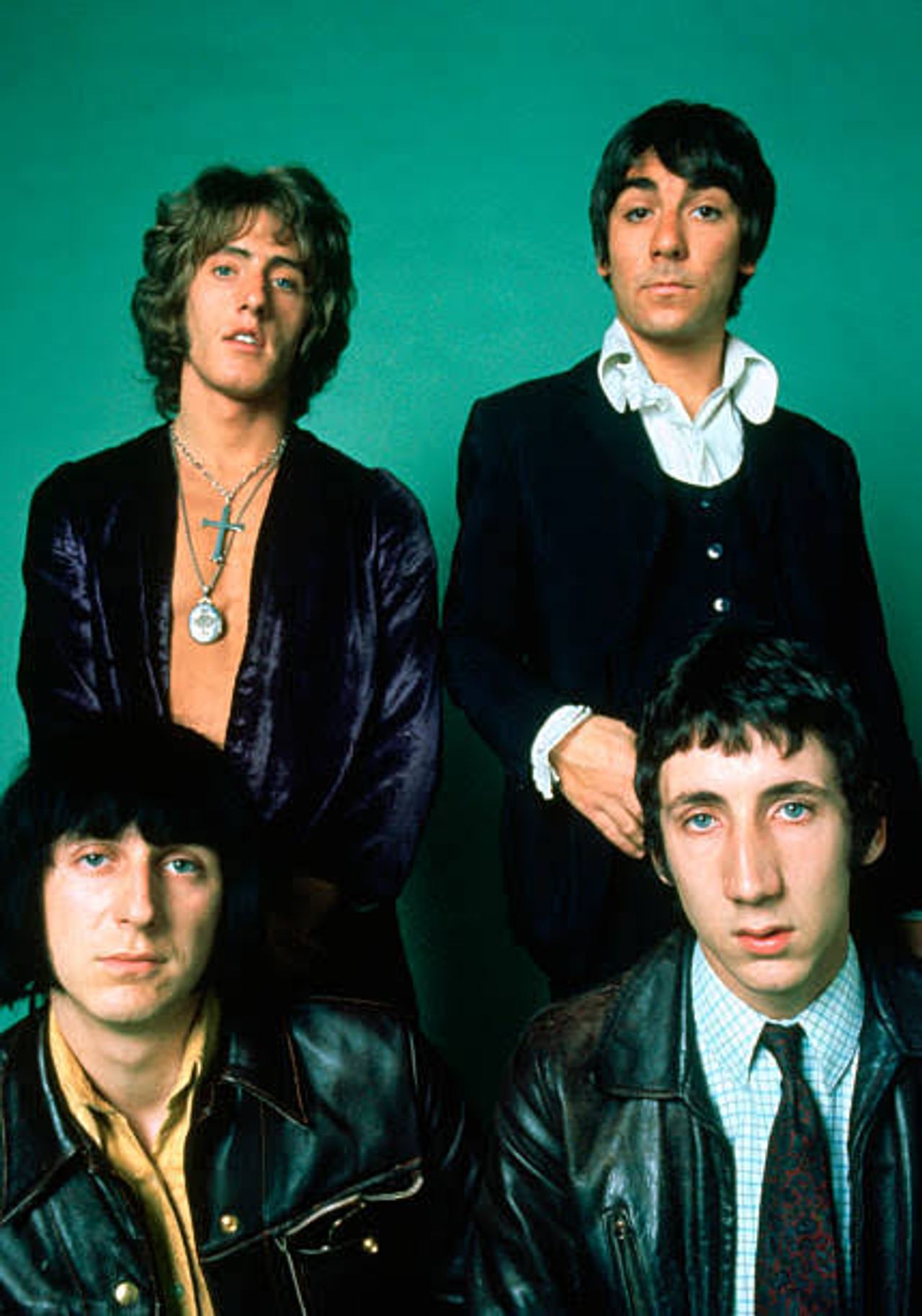
The track begins with Townshend’s rapidly strummed acoustic guitar before the full band crashes in. The contrast between acoustic rhythm and hard electric rock gave the song an unusual sense of motion.
Inside Tommy, the song is part of the plot.
Outside Tommy, it worked perfectly well as a rock single.
That was crucial.
A listener did not need to understand every symbolic layer of Tommy Walker’s story to feel the excitement of “Pinball Wizard.”
The single created a bridge between familiar radio rock and the larger work Townshend was building.
It told fans that The Who had not abandoned immediacy just because they had become ambitious.
The music could still hit hard.
May 1969: Tommy Arrived as a Whole
Before the album reached stores, The Who previewed Tommy for the British press at Ronnie Scott’s club in London on May 1.
The response was enthusiastic.
Later that month, the double album was released.
Tommy reached No. 2 in the United Kingdom and No. 4 in the United States. The Who’s official history notes that it remained on the American chart for 47 weeks.
For a band that had often been viewed mainly as a singles act, this was a major shift.
People were buying four sides of connected music.
They were listening to “Overture,” “Amazing Journey,” “The Acid Queen,” “Pinball Wizard,” “I’m Free,” “We’re Not Gonna Take It” and the recurring “See Me, Feel Me” theme as parts of one larger experience.
The album demanded time.
That mattered in 1969.
Rock audiences were increasingly willing to sit with albums as complete works rather than treating LPs as containers for a few singles.
Tommy arrived at exactly the right moment.
The Record Player Became a Theater
For someone encountering Tommy in 1969, the experience was different from hearing a single on the radio.
You brought the record home.
You opened the gatefold.
You looked at the artwork.
You placed the first disc on the turntable.
Then you followed.
There was no screen showing Tommy Walker.
No actor explaining the story.
The theater existed in the listener’s imagination.
That is one reason Tommy became such an important example of what albums could do.
The record player became the stage.
Townshend provided characters, recurring themes and narrative direction. Daltrey had to give a human voice to the central figure. Entwistle and Moon supplied musical personalities strong enough to keep the story from becoming stiff.
The Who were still a rock band.
But the album asked them to think like an ensemble inside a larger dramatic structure.
For listeners who had grown up buying 45s, that could feel like a different relationship with rock music.
You did not simply wait for the chorus.
You waited to find out what happened next.
Roger Daltrey Found a New Kind of Voice
Tommy also changed Roger Daltrey.
The Who’s official history credits the album with helping establish him as one of rock’s major frontmen, and the reason can be heard in the performance.
Daltrey had always possessed a powerful voice, but Tommy required more than force.
He had to inhabit a character.
The songs move through vulnerability, confusion, triumph and near-messianic confidence. The role gave Daltrey room to develop the dramatic style that would become central to the band’s live identity.
By the Tommy era, his stage presence was changing too.
The fringed clothes, bare chest, long curls and microphone swinging created an image very different from the sharper Mod-era Who of only a few years earlier.
The band had grown with the work.
Tommy was not merely a Pete Townshend writing exercise.
It reshaped the people performing it.
Then The Who Took the Opera on the Road
The greatest test was whether Tommy could survive outside the studio.
The Who answered by playing much of the work live.
Across May and June, they performed Tommy for American audiences. The band’s official timeline describes the response as ecstatic and credits the album’s success with transforming their finances and making them one of Britain’s hottest live attractions.
This was where the idea of rock opera became physical.
The audience was no longer alone with headphones or a turntable.
They stood in front of one of the loudest and most volatile bands in rock while the group attempted to maintain a long narrative arc night after night.
The concept did not make The Who calmer.
If anything, the contrast made the performances more powerful.
Townshend could move from delicate acoustic passages to enormous electric chords.
Moon could make the music feel as though it might fall apart at any moment.
Entwistle gave the chaos a deep structural center.
Daltrey turned the character into theater.
Tommy worked because the story did not replace The Who’s energy.
It organized it.
Woodstock Made the Statement Even Bigger
On August 17, 1969, The Who performed at Woodstock.
Pete Townshend later spoke harshly about the experience itself, but the festival helped seal the band’s reputation as one of the world’s most exciting live rock acts.
The setting gave Tommy another kind of visibility.
Hundreds of thousands of young people had gathered in New York for what would become the defining festival image of the counterculture era. The Who arrived with a work involving spiritual searching, trauma, celebrity, mass devotion and disillusionment.
Those themes did not fit Woodstock perfectly.
They did not need to.
What mattered was scale.
A rock opera that had begun as an ambitious double album was now being performed inside one of the largest cultural events of the decade.
“See Me, Feel Me” would later become one of the performance moments most closely associated with The Who at Woodstock.
Tommy had escaped the record sleeve.
From Rock Clubs to Opera Houses
By the end of 1969, the transformation was almost surreal.
The same band once famous for smashing instruments was taking its music into venues associated with high culture.
In December, The Who began a run of European opera-house performances, opening at the London Coliseum.
The symbolism was obvious.
Rock music was entering rooms that had historically belonged to opera, ballet and classical traditions.
The Who did not need to become classical musicians to get there.
They brought amplifiers.
Drums.
Electric guitar.
And Tommy.
That crossover said something important about the changing cultural status of rock.
Only a few years earlier, rock and roll had often been dismissed as disposable teenage entertainment.
By the end of the 1960s, artists and audiences were treating the album as a serious creative form.
Tommy became one of the clearest statements of that ambition.
Why Tommy Mattered Beyond The Who
Tommy was not the first concept album, and rock storytelling did not begin with Pete Townshend.
But it demonstrated how far the form could be pushed.
A band could create characters.
Build recurring musical themes.
Tell a long story.
Tour the story.
Turn it into theater.
And still make rock music.
The possibilities expanded quickly.
Progressive rock would explore albums built around long narratives and unified concepts. Other artists would use recurring characters and theatrical personas. The relationship between rock and stage musicals would deepen.
The Who themselves would return to large-scale narrative with Quadrophenia in 1973.
Tommy kept changing shape long after 1969.
A symphonic version followed.
Ken Russell directed a feature film in 1975.
In the 1990s, Tommy became a major Broadway musical and won Tony Awards.
A work that began on four sides of vinyl proved capable of living in entirely different forms.
That is one of the strongest measures of its cultural reach.
For Listeners in 1969, It Was Still Just a New Record
The later history can make Tommy feel inevitable.
It was not.
For the people buying it in 1969, nobody knew there would be a movie, Broadway show or decades of anniversary editions.
It was simply a strange new double album by The Who.
Perhaps someone first heard “Pinball Wizard” on AM radio.
Perhaps they bought Tommy because of that single and discovered something much larger when they got home.
Perhaps the gatefold sat open on the carpet while the records played.
Perhaps friends argued about whether the story made sense.
Perhaps parents heard the volume from another room and wondered why a rock band suddenly thought it was writing opera.
That uncertainty is part of the charm of looking back.
Before an ambitious album becomes a classic, it is a risk.
Tommy was a risk that worked.
The Year Rock Opera Became Too Big to Dismiss
By the end of 1969, The Who were a different band in the public imagination.
They still had all the force that had made them famous.
Keith Moon was still Keith Moon.
Townshend could still attack a guitar.
Daltrey could still dominate a stage.
Entwistle still played with that extraordinary calm at the center of the storm.
But Tommy gave the band another dimension.
It established Pete Townshend as a composer capable of sustaining a large work. It gave Roger Daltrey a dramatic role that helped transform his presence. It turned The Who from a group associated mainly with explosive singles into a band whose albums could carry major artistic expectations.
And it gave rock audiences permission to expect more from the form.
A rock record could be a story.
A live show could become theater.
A teenage music could enter an opera house without apologizing for being loud.
That was the real achievement of 1969.
The Who did not prove that rock needed to become opera in order to matter.
They proved that rock could borrow the scale and ambition of opera while remaining unmistakably rock.
Tommy made that possibility visible.
Afterward, the boundaries seemed much harder to put back in place.
Listen Again
If this story brought back the feeling of opening a double LP, studying the artwork, and letting an entire album side play without interruption, take a moment to revisit two songs that carried Tommy from an ambitious idea into rock history.