1976 – The Ramones Made a 29-Minute Debut That Barely Sold. Why Did Its Failure Become Punk's Blueprint?
A Record That Sounded Too Small to Matter
In April 1976, rock music was not short of scale. Albums stretched outward. Guitar solos could become events. Stadiums rewarded bands that sounded large enough to fill them, and the recording studio had become a place where polish, layering and technical ambition were often treated as signs of progress.
Then the Ramones released an album that seemed to move in the opposite direction.
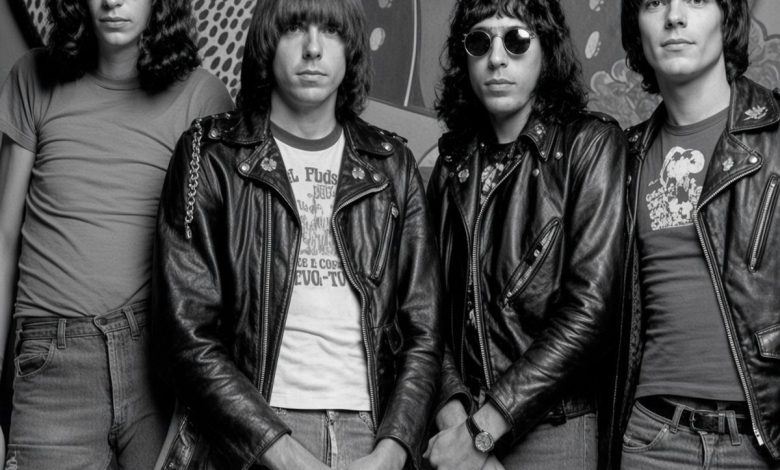
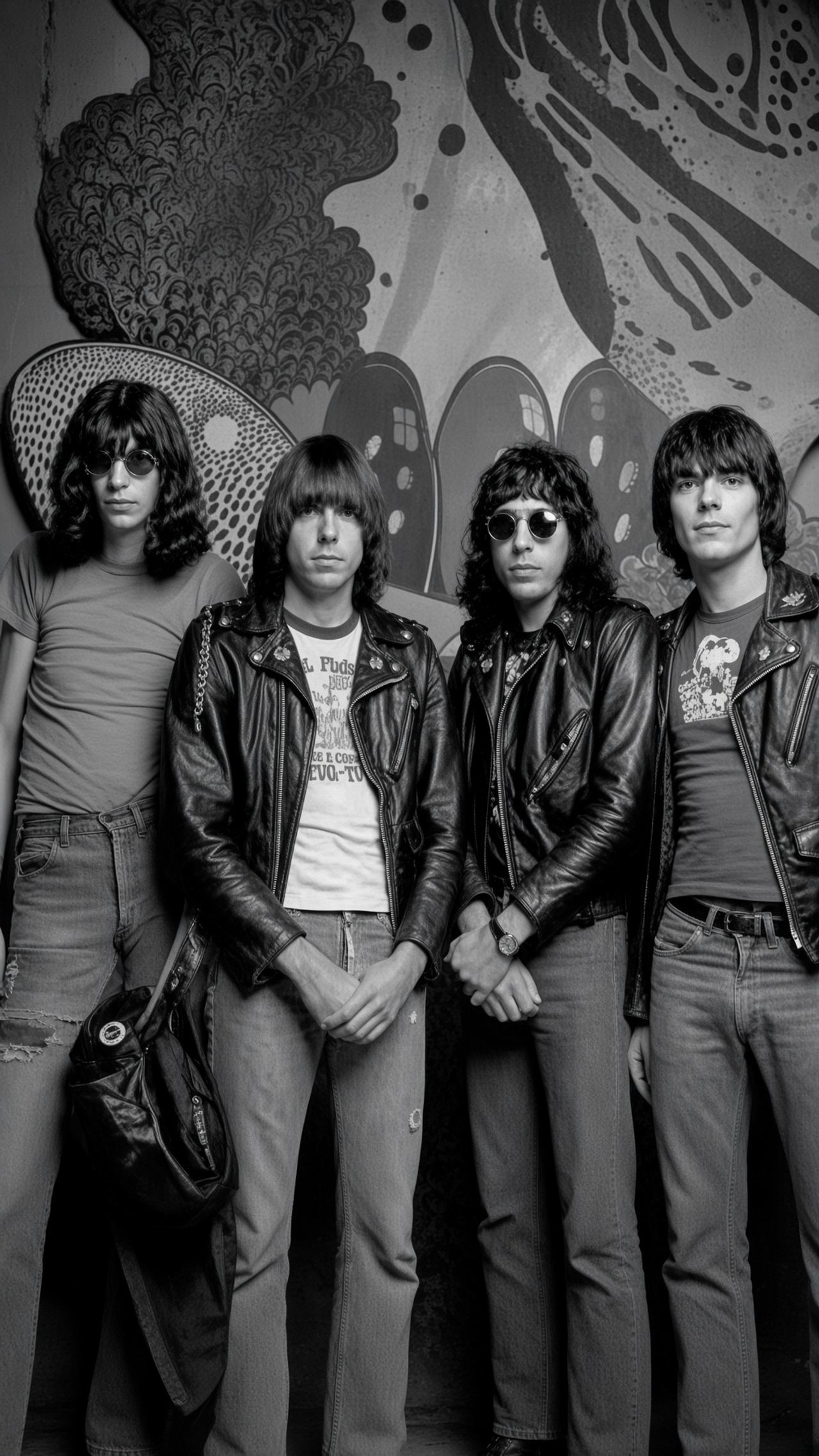
Four men from Queens stood against a brick wall on the cover in leather jackets and worn jeans. Inside were 14 tracks packed into roughly 29 minutes. The songs arrived quickly, hit their point, and got out. Johnny Ramone’s guitar reduced rock rhythm to hard, repetitive downstrokes. Dee Dee’s bass locked into the same forward drive. Tommy Ramone’s drumming kept the songs tight and fast. Joey Ramone sang with a voice that was both deadpan and oddly melodic.
The record did not sound unfinished. It sounded as though the band had decided that much of what rock considered necessary was unnecessary.
That decision would eventually become a blueprint.
At first, it looked more like a commercial setback.
Before the Album, CBGB Was the Laboratory
The Ramones had already spent two years refining this compressed language in New York. They formed in 1974 and became part of the loose downtown scene centered on CBGB, where bands such as Television, Patti Smith Group, Blondie and Talking Heads were developing identities that did not fit comfortably inside mainstream rock.
The Ramones were different even within that difference.
Their early performances were startlingly short. Songs could blur into one another with little stage conversation and almost no pause. The group’s humor was dry, cartoonish and deliberately primitive on the surface, but the underlying discipline was real. Playing that simply required the four members to agree on tempo, attack and structure with almost mechanical precision.
The goal was not to display limited ability as a virtue. It was to remove anything that slowed the songs down.
That distinction matters because the Ramones’ influence is often summarized with the word "simple." Simple can imply accidental or easy. The debut album shows something more intentional: a band reducing rock to a chosen set of essentials – beat, chord, hook, attitude, repetition – and then making those essentials feel complete.
By the time Sire Records put them in the studio, they were not searching for a sound. They were documenting one they had already tested in small rooms.
Fourteen Songs, Almost No Waste
The self-titled debut was released on April 23, 1976. Producer Craig Leon and drummer Tommy Ramone helped translate the band’s live economy into a studio record without sanding away its strangeness.
The opening track, "Blitzkrieg Bop," contains the basic proposition in miniature. A shouted count-in, a blunt guitar pattern, a hook that feels instantly communal, and a structure that wastes almost no time explaining itself. The record does not ask the listener to admire virtuosity. It asks the listener to move before there is time to overthink the invitation.
Across the album, that compression becomes a worldview. Many tracks stay close to two minutes. Themes bounce between boredom, juvenile fantasy, pop romance, menace and black humor. The band’s leather-jacket image could look tough, but the music also carried bubblegum-pop instincts. Joey’s melodies often softened the violence of Johnny’s guitar attack.
That mixture is one reason the album proved so reusable. Future punk bands could emphasize aggression, humor, melody, speed or minimalism and still hear part of themselves in the Ramones.
The record was narrow by design, but the possibilities inside that narrowness were unexpectedly wide.
Then the Numbers Refused to Cooperate
If influence had been obvious in real time, the debut would have looked like a major commercial arrival. It did not.
The album peaked at No. 111 on the Billboard album chart. Contemporary reports and later histories put first-year U.S. sales at only about 6,000 copies. The singles did not become mainstream chart hits.
For a label trying to create a breakout act, those numbers were disappointing. For a band whose sound would later be treated as foundational, they are almost comically modest.

But low sales can mean two very different things. Sometimes a record disappears because few people care. Sometimes a record reaches a small audience containing exactly the people who will do something with what they hear.
The Ramones’ debut belonged to the second category.
Musicians, critics, fanzine writers and young fans did not need the album to be a mass-market success before they recognized a permission structure inside it. The record suggested that rock did not have to become more elaborate to move forward. A new band could become more direct. Faster. Shorter. Cheaper. More immediate.
That idea traveled faster than the sales figures.
London Heard a Possibility, Not a Failure
The album’s most important early consequence may have been what happened across the Atlantic.
British punk was already forming in 1976. The Sex Pistols existed before the Ramones arrived. The Clash played their first show in July. The Damned and other young bands were developing their own responses to glam, pub rock, economic frustration and the spectacle of mainstream British rock. It would be wrong to pretend four Americans arrived and invented the movement for them.
What the Ramones provided was acceleration and validation.
The album circulated among British musicians and writers, and in early July the band traveled to London for two shows: the Roundhouse on July 4 and Dingwalls the following night. The details have accumulated mythology over the years, so the safest point is also the strongest one. Members of the emerging London punk community saw the Ramones at close range during that visit and heard how fully their stripped-down concept worked as a live system.
This was no longer a strange imported record. It was four people proving that the speed, economy and lack of ornament could command a room.
Rhino, the band’s label archive, later described the debut as helping launch punk scenes in both America and Britain. That is a more accurate legacy than saying the Ramones created British punk. They helped make its next step feel possible.
The Blueprint Was a Method, Not a Uniform

The bands influenced by the Ramones did not all sound like the Ramones for long. That is precisely why "blueprint" is a useful word.
A blueprint is not a finished building. It is a set of structural ideas.
The debut offered several. Songs could be brutally short and still feel complete. Guitar could be powerful without solos. A rhythm section could create intensity through repetition rather than complexity. Pop hooks did not have to disappear when the volume rose. A band could turn a limited visual vocabulary – jackets, jeans, identical surnames, minimal movement – into a complete identity.
Just as important, the record lowered the psychological barrier to participation. Young listeners did not have to imagine years of conservatory training before starting a band. The Ramones made commitment seem more important than polish.
That message could be misread as "anyone can do it." The deeper lesson was "decide what matters, then do it completely."
Johnny’s relentless guitar attack, Joey’s melodic instincts, Dee Dee’s propulsion and Tommy’s conceptual discipline made the music feel inevitable. Copying the surface was easy. Reproducing that balance was not.
A Small Album With a Long Shadow
The chart peak remained No. 111. The first-year sales remained small. Those facts never changed.
What changed was the context around them.
As punk expanded in Britain and the United States, the Ramones’ debut became easier to recognize as an origin point. Later hardcore bands heard the speed and economy. Pop-punk heard the hooks. Alternative and indie musicians heard proof that a record could build a world without expensive excess. Even artists who sounded nothing like the Ramones could borrow the principle of reduction.
The album’s institutional legacy eventually caught up with its musical one. In 2012, the Library of Congress selected Ramones for the National Recording Registry, identifying it as part of the nation’s culturally, historically and aesthetically significant recorded heritage. By then the contrast between its original commercial performance and its influence had become the story.
For listeners who first encountered the album on vinyl or cassette, the impact could feel almost physical. Side one did not gently introduce itself. The songs piled forward, and before a listener had time to settle into conventional album pacing, the record was already teaching a different sense of time.
Twenty-nine minutes could be enough.
The Setback Was the Proof
The Ramones’ 1976 debut is often described as a failure that became a classic. That is true, but incomplete.
Its initial commercial weakness is not merely an ironic footnote. It explains the kind of influence the album had.
The record did not reshape rock because the industry immediately crowned it. It reshaped rock because musicians and listeners kept extracting ideas from it even while the marketplace offered little evidence that those ideas would be profitable. The gap between No. 111 and the album’s later reputation is where the real story lives.
The Ramones showed that rock could move forward by subtracting. They removed extended solos, decorative arrangements and much of the distance between one song and the next. What remained was pulse, melody, repetition, humor and attack.
Then other people heard the formula and pushed it into places the original band could not have predicted.
That is why the debut’s modest sales no longer look like a contradiction. They are part of the point. The record did not need millions of buyers in 1976 to start a movement. It needed the right few thousand people to hear that rock could be rebuilt from almost nothing.
The charts measured how many people bought it.
History measured how many people started something because of it.
Listen Again
To hear the compact design at the heart of the debut, begin with the track that became the band’s most recognizable opening statement, then follow it with another 1976 cut whose two-chord force shows how little the Ramones needed to make a complete record.
Ramones – Blitzkrieg Bop (Official Music Video)
Read more stories
- My Husband Returned from a ‘Work Retreat’ with Glitter All over His Suit – I Said Nothing and Wore the Same Glitter to His Office Party
- Italian Drunken Noodles
- Hayden Panettiere’s Boyfriend Allegedly Contacted Her Despite Court Order — Newly Revealed Messages Show What He Said
- My Daughter Gave Me a ‘Divorce Cake’ Before I Knew My Husband Was Filing – What I Found Inside Made Me Gasp