1977 — The Bee Gees Wrote a Song About Surviving the Streets. How Did Its Relentless Groove Become the Sound of Disco’s Biggest Moment?
The walk came first for millions of viewers.
John Travolta’s Tony Manero moves down a Brooklyn street carrying paint, eating pizza and stepping with enough confidence to turn an ordinary sidewalk into a runway.
Underneath him, the Bee Gees pulse.
“Stayin’ Alive.”
The title sounded perfect for a disco phenomenon, but the song was never meant to be a shallow celebration of nightlife.
Robin Gibb later emphasized that its subject was serious: survival in the streets of New York.
The groove made the struggle danceable.
That contradiction became one of the secrets of the record.
Written during the Bee Gees’ work connected with Saturday Night Fever, “Stayin’ Alive” entered the U.S. chart in December 1977 and reached No. 1 in early 1978, holding the top for four weeks. The soundtrack became a global cultural event, spent 24 weeks at No. 1 on the Billboard album chart and won Album of the Year at the Grammys.
Disco had existed long before the film.
After Saturday Night Fever, it belonged to mass culture.
And the song that announced the movie did not say life was easy.
It said keep walking.
The Bee Gees Had Already Survived One Career Collapse
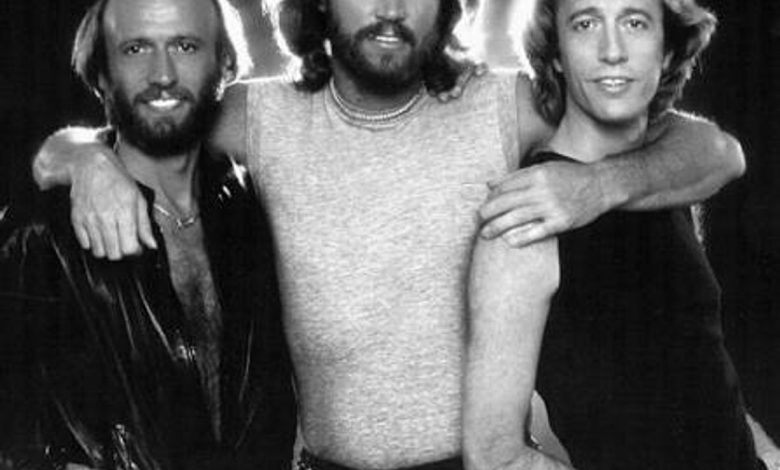
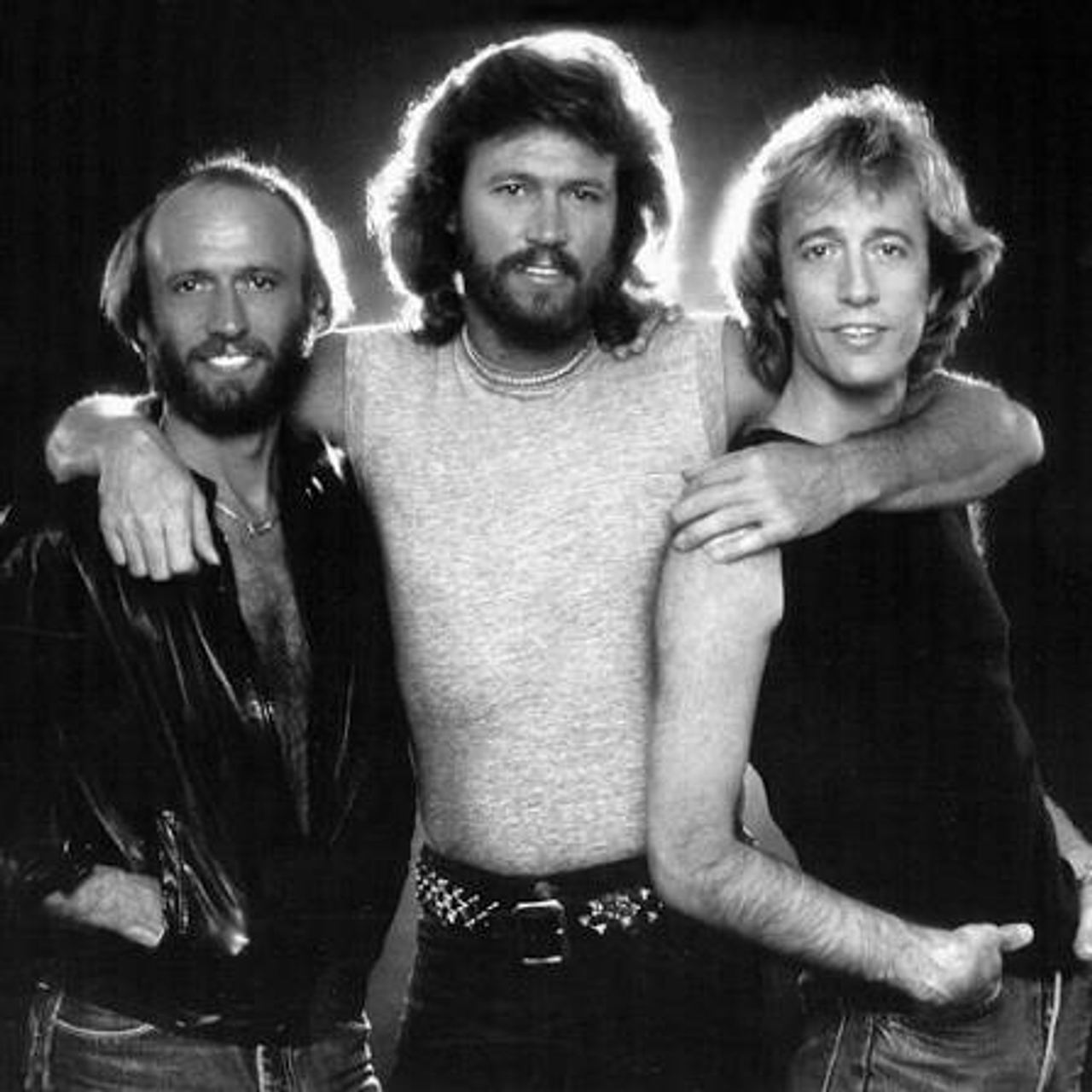
Barry, Robin and Maurice Gibb were not newcomers to pop in 1977.
They had been famous since the 1960s, with orchestral ballads and harmony-rich songs that belonged to a very different era.
Then tastes changed.
Their commercial power faded.
By the middle of the 1970s, the Bee Gees needed reinvention.
The transformation came partly through rhythm.
Working with producer Arif Mardin on Main Course, they leaned into R&B and funk. “Jive Talkin’” returned them to No. 1 in 1975. Barry Gibb’s falsetto became a central instrument rather than an occasional effect.
The group discovered that the voices people associated with melancholy could ride a dance groove.
They had already survived one version of irrelevance before writing a song called “Stayin’ Alive.”
Saturday Night Fever Needed Songs Before the Bee Gees Knew What the Film Would Become
Producer Robert Stigwood asked the brothers for material for a movie based around New York dance culture.
The Bee Gees did not compose by carefully scoring finished scenes.
Barry Gibb later recalled that they had little sense of what the final film would become. They were in France and began producing songs from the basic concept.
The burst of writing was extraordinary.
“How Deep Is Your Love.”
“Night Fever.”
“More Than a Woman.”
“If I Can’t Have You.”
“Stayin’ Alive.”
The songs were not afterthoughts attached to a finished phenomenon.
They helped create the phenomenon.
The Groove Was Built From a Loss
One of the most remarkable technical stories behind “Stayin’ Alive” came from an interruption.
Drummer Dennis Bryon had to leave the sessions after his mother died.
Producer Albhy Galuten and engineer Karl Richardson needed a way to maintain the rhythmic feel.
They took a section of drums from another recording, “Night Fever,” and created a physical tape loop, running magnetic tape around stands and through the studio so the same beat repeated steadily.
The Library of Congress essay on the Saturday Night Fever soundtrack describes it as an early landmark in the use of a drum loop on a pop recording.
The solution created something machines later made ordinary: perfect repetition with human texture inside it.
That relentless pulse became the road Tony Manero walked on.
The Rhythm Says Confidence; the Lyric Says Pressure
Listen beyond the falsetto and famous beat.
The narrator has been kicked around.
The world is difficult.
He is trying to understand how to remain standing.
The chorus does not promise luxury.
It announces endurance.
That is why the song works so well with the film’s opening. Tony’s walk looks confident, but the movie around him is full of class frustration, family pressure, racism, sexual violence and young people searching for somewhere to feel powerful.
The disco floor becomes temporary escape.
“Stayin’ Alive” contains the same tension.
The beat is freedom for four minutes.
The title reminds you why freedom is needed.
Falsetto Turned Vulnerability Into a Weapon
Barry Gibb’s high register became one of the defining sounds of the disco era.
Falsetto could have made the song feel light.
Instead, the compressed intensity of the voice cuts through the rhythm.
The Bee Gees stack harmonies around it, turning the chorus into something both human and almost mechanical in its precision.
The vocal sound became so strongly associated with disco that parody later followed it.
But in 1977, the approach felt new enough to be startling.
A group once known for soft harmonies had found a voice sharp enough to ride over the hardest dance-floor pulse of its career.
The Movie Turned a Song Into a Walk Everyone Recognized
The opening of Saturday Night Fever did something music videos would later do routinely: fuse a song with a permanent visual identity.
Travolta’s walk became inseparable from the beat.
The city around him was not glamorous in a conventional sense. It was storefronts, traffic, sidewalks and neighborhood life.
The music transformed it.
That fusion helped sell both the character and the soundtrack before the main disco scenes had even begun.
“Stayin’ Alive” was not merely played in the movie.
It taught the audience how to see Tony Manero.
The Soundtrack Turned Disco Into a Pop-Culture Supernova
Disco had deep roots in Black, Latino and gay club culture before Hollywood arrived.
That history matters because Saturday Night Fever did not invent the genre.
What the film and soundtrack did was push disco into an unprecedented mainstream position.
The album dominated Billboard for 24 weeks and produced multiple No. 1 singles. The Recording Academy later awarded it Album of the Year.
The Bee Gees became the public faces of a movement larger and more diverse than any one group.
That visibility brought enormous success — and later enormous backlash.
Success Became So Large It Nearly Turned Against Them
By the end of the 1970s, disco saturation had produced cultural exhaustion and open hostility.
The Bee Gees became easy targets precisely because they had become so visible.
Their success was treated by some critics as evidence of artificiality.
Yet the backlash sometimes obscured the craft in the records.
“Stayin’ Alive” is not durable because people remain nostalgic for polyester.
It is durable because the rhythm, bass, guitar, vocal arrangement and lyric reinforce one another with extraordinary economy.
Remove the fashion and the record still moves.
The Beat Found an Unexpected Second Life in Medicine
Decades later, the title acquired another layer of literal meaning.
The song’s tempo is close to the rate recommended for chest compressions during CPR, and medical training campaigns have used it as a memory aid.
Barry Gibb has spoken about meeting people who connected the groove with lives saved through resuscitation.
It is almost absurdly fitting.
A song metaphorically about surviving became a tool people use while trying to keep someone alive.
Pop history rarely produces a more literal afterlife.
The Song Survived Disco Because Survival Was Always the Subject
That is the key to its endurance.
The genre changed.
The backlash came.
The Bee Gees’ commercial position shifted.
The film aged into a period piece.
The beat kept going.
The words were never really about a fashionable nightclub.
They were about staying upright when life keeps hitting.
That idea does not expire with a dance trend.
Walk the Brooklyn Beat Again
Before it became shorthand for disco, “Stayin’ Alive” was a tense little survival song riding one of the most relentless grooves in pop history.
Put the beat back under your feet — then follow it deeper into the soundtrack that turned the Bee Gees’ reinvention into a global fever.
▶ Bee Gees — “Stayin’ Alive” — Official Video
May you like
The Playful Song That Captured a Changing Generation
In 1974, The Hollies were entering a new chapter. Allan Clarke had returned to the group after a brief solo career, and the band w…
The Love Song That Became a Cry of Frustration
In 1964, songwriter Horace Ott was going through a difficult moment after an argument with his girlfriend, Gloria Caldwell. Out of…
The Failed Rock Opera That Created a Rock Classic
In 1971, Pete Townshend was working on Lifehouse, an ambitious rock opera intended to follow Tommy. But the project became too com…
▶ Bee Gees — “Night Fever” — Official Video
Music Nostalgia Article
Read more stories
- My Neighbor Demanded I Cut Down My Apple Tree – One Morning, I Woke up to Find My Entire Yard Covered in Apples
- They Judged Me for My Weight at Work, but I Turned the Tables and Proved My True Worth — Story of the Day
- My Husband Spent 13 Years Calling It Our Forever Home – Then I Walked In and He Handed a Stranger the Keys
- The Song That Reminded Millions That Time Never Stops