1970 — A Broken Guitar String Produced a Riff Onstage. The Guess Who Followed It Until an Improvised Jam Became Their Only U.S. No. 1
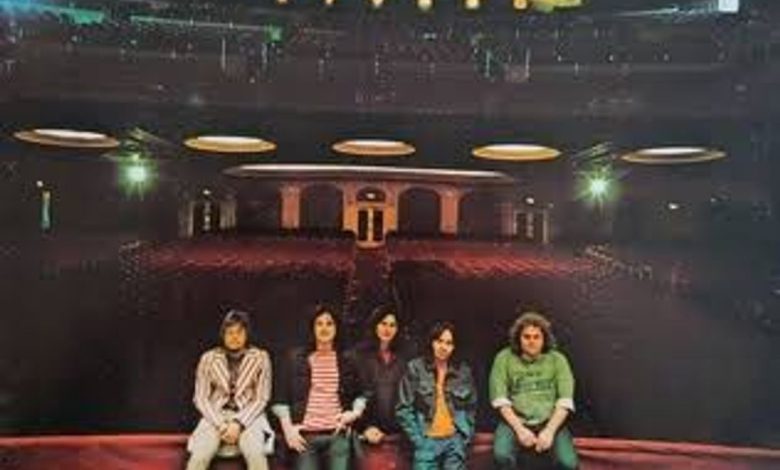
THE GUESS WHO — 1970
The riff arrived before the song existed
“American Woman” did not begin with a notebook, a scheduled writing session or a producer asking for a single. It began onstage when Randy Bachman was dealing with a broken guitar string and tuning back up.
As he played, a new riff appeared under his fingers.
Bachman recognized that something was happening and kept repeating it. The other members of the Guess Who joined in, and Burton Cummings began improvising words over the groove.
According to the band’s later recollections, a young audience member happened to be recording the performance on cassette. The tape helped them recover the improvised material afterward.
The song that became the group’s only U.S. No. 1 began as a moment everyone could easily have lost.
Accident became structure
The story is attractive because it sounds like pure luck, but luck alone does not create a hit.
What matters is that the band recognized the riff.
Bachman’s figure is blunt, repetitive and instantly physical. It does not require explanation. The guitar announces the song’s attitude before Cummings begins singing.
The band then turns the improvised energy into structure without sanding away its roughness. That is why the finished record still feels like a jam that might break loose again at any moment.
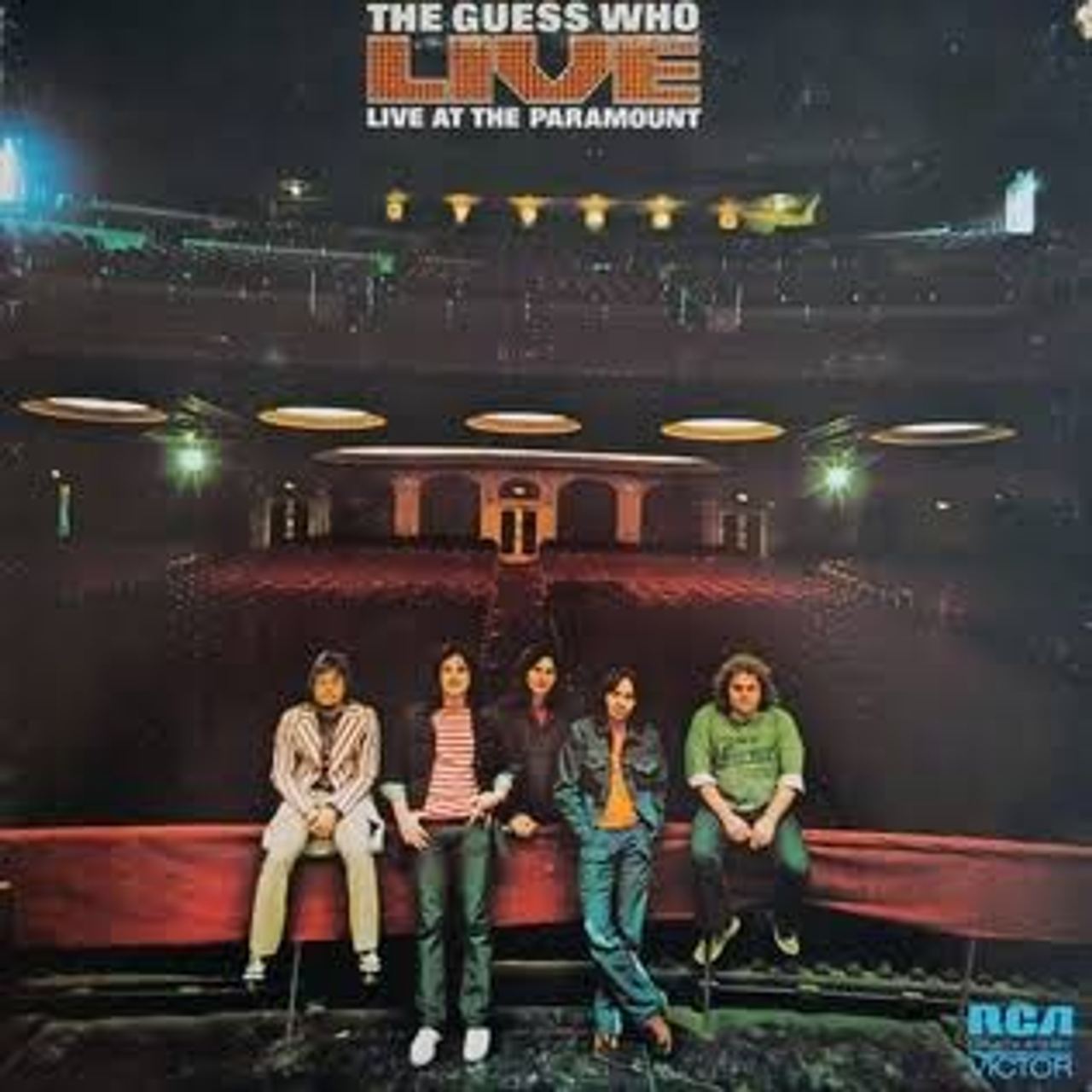
Burton Cummings turns improvisation into confrontation
The lyric that emerged around the riff has been debated for decades. Some listeners heard a direct attack on the United States, especially against the background of Vietnam, the draft and political tension. Band members later resisted the idea that the song was a simple anti-American manifesto.
That ambiguity helps the record.
Cummings sings “American woman” less like a political essay than a force he needs distance from. The repeated command to stay away creates tension without explaining every reason.
The song’s power comes from refusal. The singer is not persuading. He is pushing something back.
The groove carries more meaning than the argument
Because the lyrics are open to interpretation, the riff becomes the stable center of the record.
That is why “American Woman” survives political readings that shift from decade to decade. The guitar does not require historical context to work.
It is heavy, simple and slightly menacing. The band leaves enough space around it for the riff to feel enormous.
This is a perfect example of how rock meaning can live in sound before it lives in explanation. The record communicates confrontation through tone, repetition and attack.
A Canadian band reached the top of the American chart
The irony was difficult to miss: a Canadian band singing a song called “American Woman” reached No. 1 in the United States.

The single became the Guess Who’s biggest American success and helped make them one of the most prominent Canadian rock acts of the era.
But the hit was not calculated for the market it conquered. Its origin was the opposite of calculation.
The song had begun because a guitar string broke and a musician heard a riff worth saving.
Why the accidental origin still matters
Rock history loves accidents because they appear to prove that great songs are discovered rather than manufactured.
The truth is more interesting. Accidents create opportunities; musicians decide whether those opportunities matter.
Bachman could have tuned his guitar and moved on. Cummings could have filled the time with meaningless stage chatter. The band could have forgotten the jam before the next show.
Instead, they listened.
That act of recognition is the real creative event.
The record kept the live electricity
The finished “American Woman” does not sound overly polished. The guitar remains abrasive, Cummings’s vocal retains a raw edge and the band treats repetition as strength.
That roughness connects the studio record to the improvisational moment that created it.

Many hits are refined until their origins disappear. This one still sounds like musicians grabbing an idea before it escapes.
The song is the moment luck becomes identity
The broken string is the hook to the story, but the song is the destination.
Listen to the riff and it becomes obvious why Bachman refused to let it vanish. Listen to Cummings push against the groove and the song’s confrontational character forms in real time.
“American Woman” is not great because it was accidental.
It is great because the Guess Who heard an accident becoming music—and had the instinct to follow it all the way to No. 1.
The single sits between blues, hard rock and improvisation
The Guess Who were a pop-successful band, but “American Woman” feels heavier than the polished label might suggest. The riff draws on blues repetition while the vocal aggression points toward the hard-rock language becoming dominant in the new decade.
Because the song was born from improvisation, those stylistic categories feel secondary. The musicians are following energy first.
That instinct gives the record a looseness that later arena rock would often try to recreate deliberately.
The disputed meaning protects the song from becoming a pamphlet
If every line had been tied to one political event, the record might now feel fixed in 1970. Instead, the ambiguity allows the title figure to operate as woman, nation, culture or simply a symbolic force the narrator rejects.
The band members themselves offered different explanations over time.
Rather than weaken the song, that uncertainty keeps listeners arguing—and listening.
The riff makes spontaneity sound permanent
What began as a live accident survives because the riff feels inevitable once it exists. Its repeated figure is simple enough to be remembered after one hearing, yet heavy enough to support Burton Cummings’s increasingly forceful vocal.
That contrast is part of the recording’s magic. The origin was unstable—a broken string, a tuning moment, a jam that might have vanished—but the finished single sounds carved in stone. Studio discipline preserved the looseness of discovery without sanding away the danger. The song therefore carries two sensations at once: the thrill of musicians finding something in real time and the authority of a riff that seems as though it had always been waiting for them.
A bootleg tape saved what improvisation might have erased
The story of the song’s birth is remarkable because an improvised live moment normally disappears as soon as the room goes quiet. In this case, someone in the audience had recorded the jam, giving the band a way to reconstruct what they had created spontaneously.
That detail is more than trivia. It explains why the finished record still feels unusually physical. The musicians were not inventing a riff at a desk and then learning how to energize it. They were trying to preserve energy that had already happened in front of people. The studio version succeeds because it does not over-civilize the idea. Repetition remains central, and the riff keeps the blunt force of something discovered by accident rather than designed for polish.
Burton Cummings turns ambiguity into confrontation
Burton Cummings’s vocal gives the title its most provocative quality. He does not sing as though he is calmly explaining what “American woman” represents. He sounds as though he needs distance immediately.
That urgency allows several meanings to coexist. The figure can be heard as a literal woman, a symbol of the United States, a rejection of cultural pressure or some combination of them. The band members later offered varying explanations, and the record itself never settles the argument. Cummings’s performance makes uncertainty useful: listeners may disagree about the target, but they understand the desire to get away. The emotional command is clearer than the political footnote.
The No. 1 preserved a Canadian band’s outsider stance
Reaching the top of the U.S. chart with a song titled “American Woman” created an irony too perfect to ignore. A Canadian band crossed the border commercially with a record that sounded suspicious of the very figure named in its chorus.
The achievement mattered because the Guess Who did not soften the track to make the breakthrough. The guitar remained abrasive, the vocal remained confrontational and the arrangement retained the repetitive weight of the original jam. Their only U.S. No. 1 did not arrive by becoming more generic. It arrived when an accidental riff gave them a sound distinctive enough that American radio could not ignore it.
Let the recording tell the rest
Read more stories
- Loaded Air Fryer Nachos
- I Thought a Young Man Was Helping My 83-Year-Old Neighbor – Until I Opened Her Bedroom Door
- The Night Susan Boyle Silenced the Room
- My MIL Canceled My Wedding Venue, Saying She Was Saving Her Son from Me – The Next Morning, She Called and Demanded, ‘Tell Me You Didn’t Do This!’