When David Bowie Turned a Rolling Stones Anthem Into Glam-Rock Theater
A cover version that felt like a provocation
By 1973, rock music was no longer moving in a single line. The late-1960s counterculture had splintered into harder, stranger forms, and audiences were learning to recognize that image, pose, and performance could matter as much as a guitar riff. Few artists understood that better than David Bowie, who treated pop not as a fixed identity but as a stage on which identities could be built, discarded, and rebuilt again.
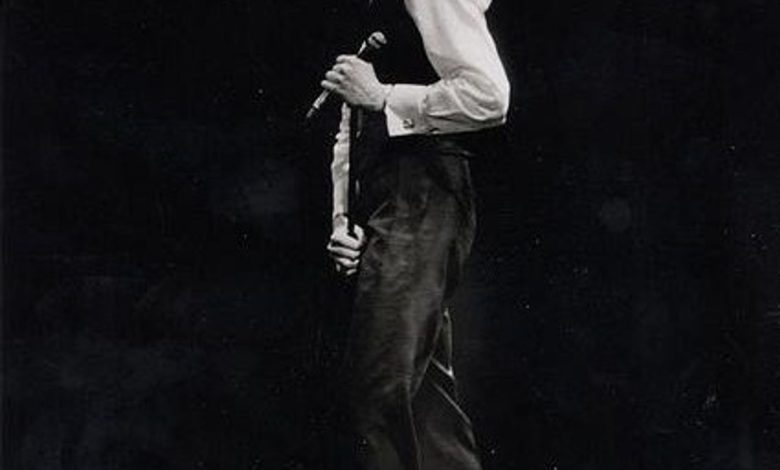
So when Bowie took on the Rolling Stones’ “Let’s Spend the Night Together,” many listeners heard more than a cover. They heard a challenge. The Stones’ version, first made famous through its insistent beat and slyly provocative hook, belonged to a world of masculine rock confidence. Bowie’s take pulled it into glam rock’s illuminated mirror maze, where sexuality was more fluid, gesture more theatrical, and nothing was left in its original shape.
What the Rolling Stones represented
The Rolling Stones had come to embody a particular kind of rock authenticity: dangerous, blues-rooted, insolent, and defiantly physical. Their music carried the residue of American rhythm and blues, reworked through British attitude and stadium-sized charisma. Even when they flirted with pop polish, the band’s public image remained grounded in grit, appetite, and rebellion.
That made “Let’s Spend the Night Together” more than just another song in their catalog. It was a statement of nerve, a wink delivered with a hard edge. By the time Bowie approached it, the tune was already linked to the Stones’ cultural authority. To tamper with it was to touch a monument—something glam rock, with its love of exaggeration and reinvention, was almost designed to do.
Bowie’s method: transformation, not tribute
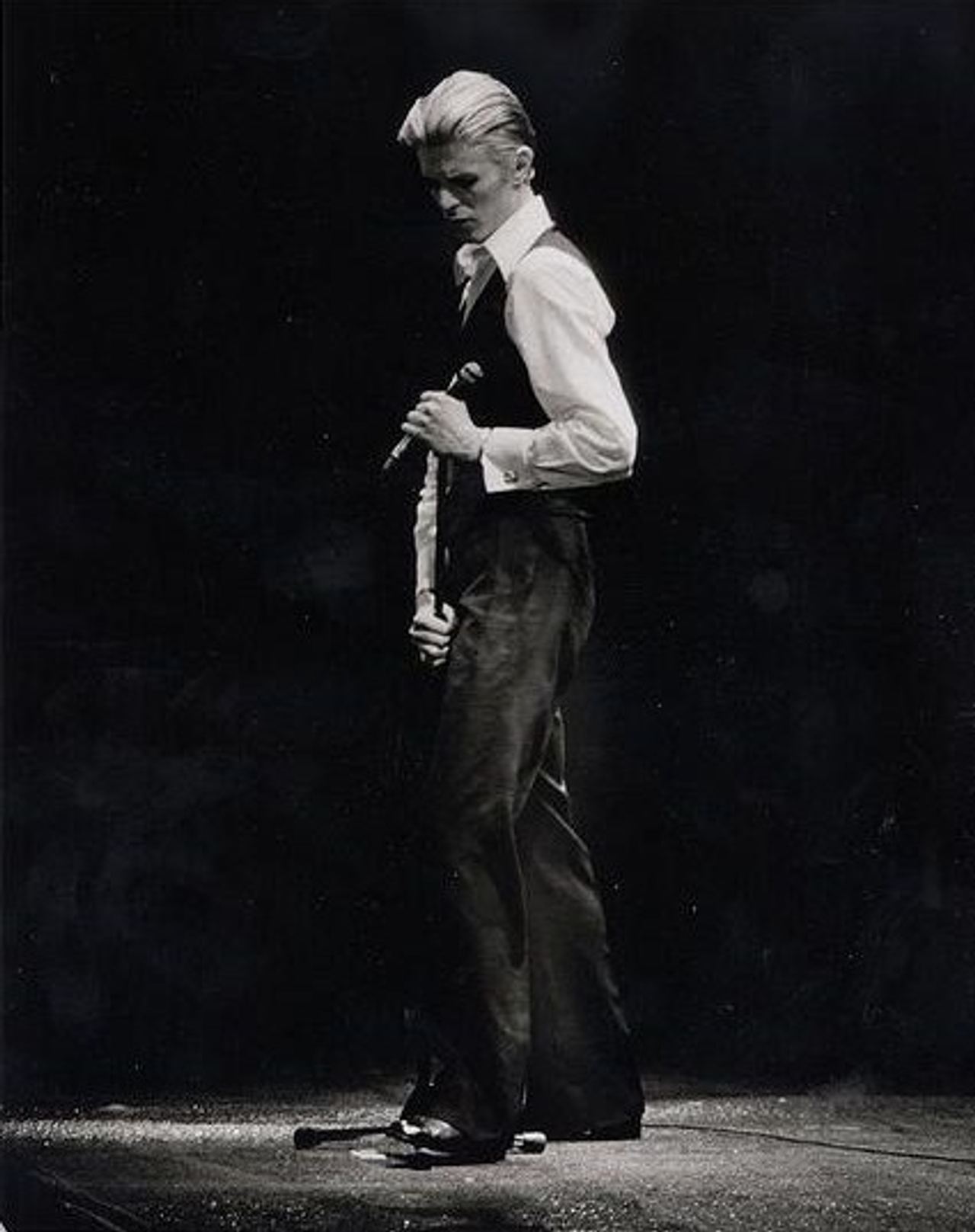
Bowie rarely approached songs as sacred texts. He approached them as material. His 1973 version of “Let’s Spend the Night Together,” released on Aladdin Sane, did not preserve the original’s rough-forward momentum so much as refract it. The arrangement is brighter, more stylized, less about blunt seduction than about performance itself. It swings with a different kind of confidence—cooler, stranger, and more knowingly artificial.
That difference was the point. Bowie was not trying to out-Stones the Stones. He was recasting their song within his own expanding universe, one filled with cabaret touches, futuristic glamour, and a sense that rock could be both decadent and intelligent. In his hands, the song became less a come-on barked from the barroom floor than a piece of stylized nightlife, all angles, makeup, and unstable desire.
Bowie’s genius was to understand that a cover could be an argument: not just “here is a great song,” but “here is what this song means in a new age.”
Why purists bristled
For rock traditionalists, this kind of reinvention could feel like vandalism. In the early 1970s, authenticity was still treated by many critics and fans as rock’s highest virtue. Glam, with its costumes, camp sensibility, and flirtation with ambiguity, was often dismissed as surface without substance. Bowie’s decision to seize a Stones staple and drape it in glittering artifice therefore seemed, to some, like an insult to the old order.
But that reaction revealed the deeper cultural shift already underway. Bowie’s version did not weaken the song; it exposed how much meaning in rock had always depended on who was singing, how they were dressed, and what fantasies they invited the audience to enter. If the Stones sold transgression as swagger, Bowie sold it as transformation. That was precisely what made his interpretation so unsettling—and so potent.
The so-called scandal, then, was not simply musical. It was symbolic. Bowie had taken a song associated with one model of rock masculinity and rerouted it through glam’s theatrical, shape-shifting lens. For listeners invested in rigid boundaries, that gesture could feel almost confrontational.
The larger battle inside 1973 rock
Bowie’s recording arrived in a year when glam rock was rewriting the visual and emotional rules of pop. Sequins, platform boots, painted faces, and invented personas were not side effects of the music; they were part of its language. Bowie stood at the center of that shift, proving that the rock star could be actor, alien, cabaret host, and cultural critic all at once.
Seen in that context, “Let’s Spend the Night Together” becomes a small but vivid case study in a larger struggle over what rock would become. Would it remain tethered to blues authenticity and hard-bitten realism, or would it open itself to style, ambiguity, and theatrical play? The answer, of course, was both. But Bowie’s version made that tension impossible to ignore.
His cover also reflected a broader truth about the era: rock’s canon was already becoming available for reinterpretation almost as soon as it was established. Songs were not museum pieces. They were live wires. Bowie understood that better than most, and he used the tune to show how quickly cultural meaning could shift under new lighting.
The legacy of the reinvention
Today, Bowie’s “Let’s Spend the Night Together” is less shocking than revealing. Heard now, it sounds like a perfect expression of his talent for turning familiar material into something unmistakably his own. What once scandalized some listeners now reads as one more example of his confidence as an interpreter and world-builder.
It also says something enduring about Bowie’s relationship to rock history. He did not merely inherit it; he edited it in public. He sampled its myths, exaggerated its poses, and returned its sacred objects in altered form. That was why he could unsettle audiences so deeply. He understood that pop culture is not preserved by reverence alone. Sometimes it is renewed by audacity.
The real story of this 1973 collision is not that Bowie shattered the Rolling Stones. The Stones remained the Stones, monumental and indelible. What Bowie shattered was the assumption that their kind of rock authority could not be recoded. In three glam-charged minutes, he proved that even a classic anthem could be made to wear a different face.
Quick Facts
- Song: “Let’s Spend the Night Together”
- Original artist: The Rolling Stones
- Reinterpreted by: David Bowie
- Bowie album: Aladdin Sane
- Era: 1973 glam rock
- Core theme: A clash between rock traditionalism and theatrical reinvention
Image credits: Jean-Luc Ourlin / Wikimedia Commons / CC BY-SA 2.0; John Tenniel / Wikimedia Commons / Public domain; Adam Bielawski / Wikimedia Commons / CC BY-SA 3.0.