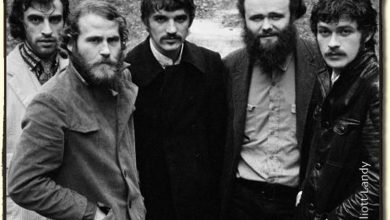
He Spent Years Creating Hits for Other Voices—Then the Deepest Voice in Soul Finally Stepped Out Front

The voice sounds inevitable now: deep, patient and so immediately recognizable that a few spoken words can identify the singer before the melody begins. For years, however, Barry White built records from the other side of the microphone.
White was born Barry Carter on September 12, 1944, in Galveston, Texas, and grew up in South Central Los Angeles. His path toward music was not a smooth ascent. As a teenager, he was jailed for stealing tires, an experience that helped convince him he needed a different future.
That future began behind the scenes.
During the 1960s, White learned the record business as a songwriter, arranger, session musician and producer. He worked with West Coast vocal acts and developed the skills that would later define his own sound: disciplined rhythm, dramatic strings and arrangements that treated romance as something almost orchestral.
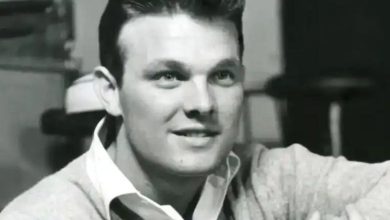
Barry White performing onstage during the height of his success. Image source: Last.fm community archive.
This period is easy to skip because the public story seems to begin with the beard, the velvet suits and the bass-baritone. But White’s years outside the spotlight explain why his later records feel so completely designed.
He did not merely arrive and sing over someone else’s track. He understood how the bass should move, when the strings should rise, how long a groove could breathe and how a spoken introduction could create anticipation before the first chorus.
White’s major breakthrough came through Love Unlimited, the female vocal trio he guided as writer, arranger and producer. Their 1972 hit “Walkin’ in the Rain with the One I Love” carried his low spoken voice in a supporting role, like a preview of the star still waiting offstage.

He then expanded the idea into the Love Unlimited Orchestra, a large ensemble whose sweeping strings and steady rhythm section made soul feel cinematic. The instrumental “Love’s Theme” reached number one on the American pop chart in early 1974.
By then, White had also stepped forward as a solo artist. His 1973 album I’ve Got So Much to Give attached that carefully constructed musical world to the voice audiences would never forget.
The surprise was not simply that the producer could sing. It was that his voice completed the architecture he had been building for others.
White’s delivery was intimate without being small. He could murmur a promise, then open into a chorus large enough to fill an arena. Around him, the arrangements combined soul, funk and the emerging pulse of disco without surrendering their warmth.
“Can’t Get Enough of Your Love, Babe” captured that formula at full strength in 1974. The record begins with conversational confidence, then keeps enlarging: bass, rhythm, strings, backing vocals and finally a chorus that feels less like a private thought than a public celebration.
The single reached number one on the Billboard Hot 100. It confirmed that the man once shaping sessions for other singers could command the center of popular music on his own terms.
Barry White in a 1970s-era portrait. Image source: Barry White Official Site.
Listeners sometimes reduce White’s catalog to seduction, but that misses the craft. His records are studies in pacing. He knew that anticipation could be musical, that a groove becomes more powerful when it is allowed to settle, and that sincerity matters even when the production is luxurious.

He was also a multi-instrumentalist and arranger, not merely a famous voice placed on top of an orchestra. The Barry White sound was the result of many roles converging in one person.
His official site credits him with more than 100 million records sold worldwide and describes him as a producer, singer-songwriter, arranger and cultural icon. Those achievements began with years when most listeners did not know his name.
September 12 marks the birthday of the man who became known as soul music’s great voice of romance. The more interesting story is that the voice arrived only after he had learned how every other part of a record should feel.
Return to “Can’t Get Enough of Your Love, Babe” and listen beyond the famous baritone. Hear the arrangement tightening around it, the strings answering it and the rhythm carrying it forward. Barry White did not simply step into the spotlight. He built the room, arranged the light and then finally walked into it.
Listen to the recording
[EMBED:
Continue reading
He Wrote the Saddest Number-One Hit of the 1970s閳ユ摮hen Insisted It Wasn't His Life

Back in 1972, radio listeners heard a young man abandoned at the altar, mourning his parents and wondering whether life was worth continuing. The voice sounded so personal that many assumed the singer was revealing his own history.
He later insisted that it was not autobiographical. The narrator was a character, imagined carefully enough to feel real but not copied from the songwriter閳ユ獨 life.
That distinction is the first surprise. The second is that the song became a number-one hit despite having no conventional chorus and a subject far darker than most pop radio would normally allow.
The piano moves with a gentle, almost cheerful pattern while the lyric grows heavier. That contrast creates the song閳ユ獨 strange emotional atmosphere: the melody keeps walking even when the narrator is close to giving up.
Gilbert O閳ユ┎ullivan performing at the piano during his 1970s breakthrough.
The repeated title phrase works like a shrug. It does not solve the loneliness; it simply names the condition and continues. Each return sounds a little more resigned, a little more familiar.
The writer閳ユ獨 unusual stage image made the darkness even more unexpected. The schoolboy-inspired clothes and tidy performance style suggested light entertainment, but the song underneath was studying abandonment, grief and the fear of being forgotten.
Listeners recognized themselves in the fiction because the details are specific without being exclusive. A wedding gone wrong, a parent閳ユ獨 death or a night spent alone can all lead to the same emotional room.

The recording never turns the narrator into a hero or a villain. He is confused, self-pitying and painfully honest, which is exactly why the song can feel uncomfortable as well as beautiful.
Its success proved that audiences would stay with a complicated story if the melody gave them somewhere to breathe. The piano softens the subject without pretending the pain is small.
Gilbert O閳ユ┎ullivan onstage in 1974, connecting directly with the audience.
The song閳ユ獨 long afterlife also comes from its refusal to explain everything. The listener is not told how the character recovers, only that he keeps observing the world and trying to make sense of it.
That is the craft behind the apparent confession. The songwriter did not need to live every event; he needed to understand how loneliness sounds when someone is trying to disguise it as ordinary conversation.
Play it again and notice how the bright piano keeps moving beneath the darkest lines. The sadness is real, even when the life behind it was invented.
Listen to the recording
[EMBED:

She Slowed an Old Folk Song Into a Five-Minute Spell閳ユ摮hen a Film Made It Number One
In 1972, a song that had waited quietly for years suddenly became impossible to escape. It was not new, not loud and not built for quick radio impact. Its power came from how slowly it allowed a single moment to unfold.
The song had begun as a folk composition in the late 1950s, but the performance that reached millions treated it like a private confession. Piano, strings and space surrounded the voice instead of competing with it.
The singer had already known the song before recording it. Her experience teaching music helped her hear possibilities inside the simple melody, and she reshaped it from a brief folk number into an extended meditation on first love.
The result lasted several minutes longer than the earlier versions. That extra time was not empty. Each pause lets the listener notice a different shade of awe, from nervous discovery to the feeling that the entire world has changed.
Roberta Flack performing at the piano in 1972.
For a while, the recording seemed destined to remain a critic閳ユ獨 favorite rather than a mass hit. Then a filmmaker heard it and placed it inside a romantic scene in a 1971 movie.
The film gave the song a visual context, but the voice did the lasting work. Listeners who encountered it in theaters returned to the record and discovered that its intimacy did not depend on the screen.

When the single finally climbed to number one in 1972, it rewrote the usual rules for a pop hit. There was no rushing chorus, no dance beat and no dramatic production trick閳ユ攼nly patience and emotional precision.
The piano performance is central to that effect. The singer does not treat the instrument as background decoration; every chord feels like part of the conversation, answering the vocal and then stepping aside again.
The song閳ユ獨 success also established the singer as a rare interpreter. She could take a composition written for another voice and reveal a new emotional architecture without making the original disappear.
Roberta Flack singing with a live ensemble during her early-1970s breakthrough.
That is why the recording still feels almost cinematic even without the film. The arrangement creates close-ups, pauses and slow changes in light, while the vocal keeps the listener inside the room.
More than fifty years later, its famous slowness feels like a kind of courage. The performance trusts the audience to stay still long enough for wonder to become believable.
Listen from the opening piano notes and let the silence work. The spell begins before the first lyric arrives.
Listen to the recording
[EMBED: