The Beat That Kept Everyone Moving Began With a Problem in the Studio
The rhythm sounds so certain that it is difficult to imagine anyone struggling to find it. It moves forward without hesitation, inviting a walk, a dance, or simply a change in posture. Yet one of popular music’s most familiar pulses was assembled through a practical studio workaround. Behind the effortless confidence was a team listening closely to a few bars of drums, trying to solve a problem before a promising song slipped away.
The Bee Gees released “Stayin’ Alive” in 1977 as part of the musical world of Saturday Night Fever. Written by Barry, Robin, and Maurice Gibb, it became inseparable from the film’s image of John Travolta moving through Brooklyn. But the recording deserves to be heard without reducing it to a costume or a remembered scene. Its precision came from real musicians, inventive production, and an understanding that an apparently simple beat could carry an enormous amount of feeling.
Engineer and co-producer Karl Richardson later described the sessions in a detailed Sound on Sound interview. An early version did not have the steadiness the team wanted. With drummer Dennis Bryon temporarily away, Richardson and fellow producer Albhy Galuten worked with a short section of his playing from “Night Fever.” They made a repeating tape loop, creating the dependable foundation around which the new recording could be built.
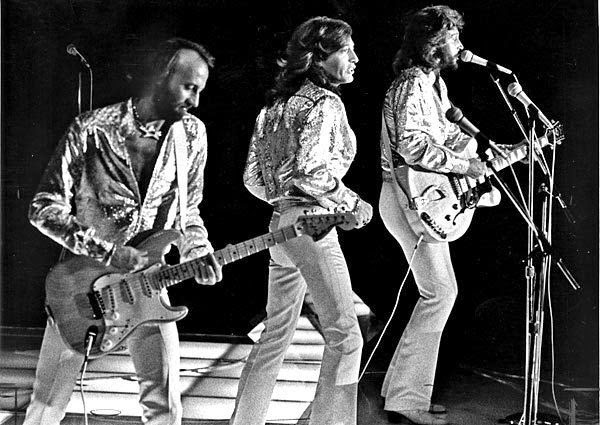
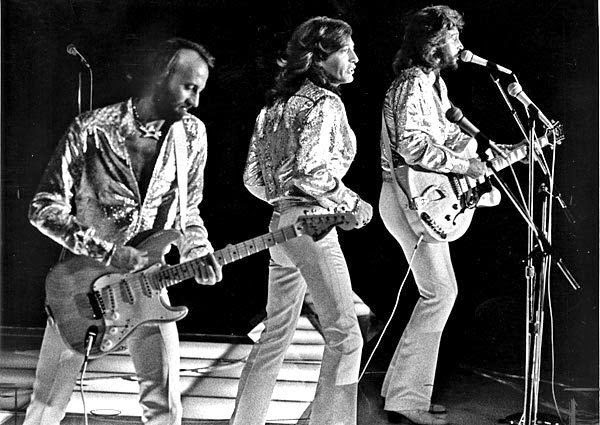
Maurice, Robin, and Barry Gibb performing together during the Bee Gees’ late-1970s era. Archive image reproduced by The Roxborogh Report.
This was a physical operation, not a quick command on a computer screen. Richardson recalled running a long loop around studio supports and adjusting its speed to suit the track. The crucial choice was musical before it was mechanical: the selected bars needed to feel right. Repetition could preserve that feeling, but it could not create it from nothing. The human performance was still inside the apparent regularity.
The distinction is easy to miss when the record is treated as merely a product of disco fashion. The loop was not a substitute for musicianship. It was a way of organizing a musician’s contribution so the other parts could settle around it. The result lets the rhythm feel reliable without making everything above it sound static. Voices and instruments can push, answer, and open up because the ground beneath them remains secure.
The connection to Saturday Night Fever sharpened that contrast. The film follows a young man whose command of the dance floor exists alongside limitations in the rest of his life. The music helps convey aspiration, escape, and the desire to occupy space with assurance. It would be misleading to turn the song into a literal summary of every scene. What matters is how its determined movement complements the character’s effort to seem larger than his circumstances.
The single reached number one in the United States, and the soundtrack became a defining commercial event. Those achievements can make the record’s success look inevitable in hindsight. The studio account suggests something less predetermined: people tested an approach, found it unsatisfying, and built another one. The familiar sound depended on decisions that could have gone differently. A hit can feel immediately recognizable to later listeners while remaining a practical puzzle to the people making it.
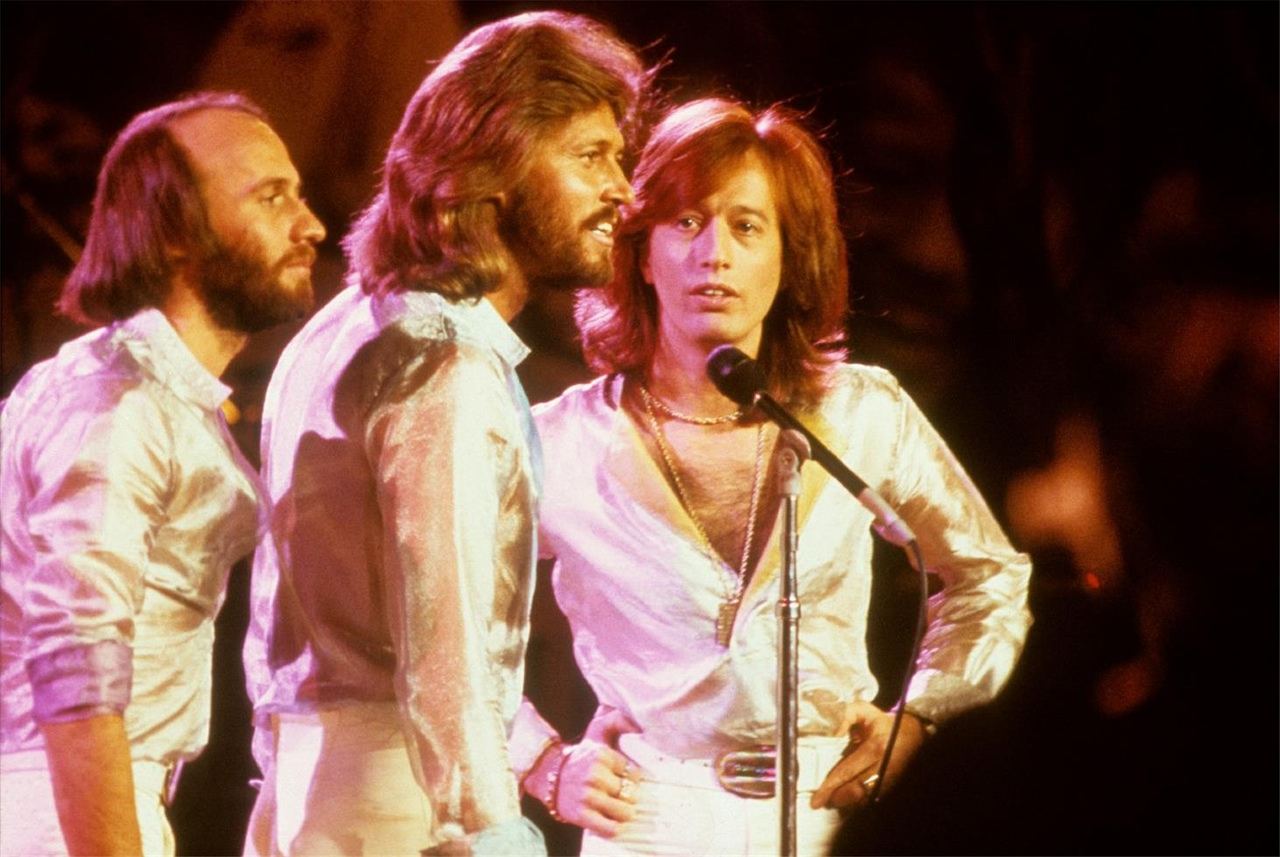
The Bee Gees performing together in 1979. Photo: Richard E. Aaron / Morrison Hotel Gallery. Illustrative concert photograph, not the recording session.
That is also why the famous falsetto should not become the whole explanation. The voices matter, but so does the space around them. The track gives melodic phrases room to land without constantly interrupting the forward motion. Its detail does not always announce itself as complexity. Instead, the parts support a feeling of continuous movement, letting listeners experience the complete performance before they begin separating it into individual contributions.
Play “Stayin’ Alive” again with that small studio solution in mind. The beat is no longer just something that happens beneath the singing. It is the product of human judgment, preserved and repeated until other musicians could build around it. The Bee Gees and their collaborators made a technical workaround feel like conviction. What sounds effortless is not the absence of work; it is the moment when the work disappears and the listener starts moving.
Listen to the Song
Watch the official music video for Stayin Alive.
Continue reading
He Kept an Old Song Almost Bare – and Found a New Beginning Inside It
The recording leaves enough space for the listener to notice what is missing. There is no need for a large dramatic entrance or a wall of sound telling everyone how much the memory hurts. A voice, a guitar, and a restrained setting allow an old story of separation to arrive with unusual closeness.
Willie Nelson recorded “Blue Eyes Crying in the Rain” for Red Headed Stranger, released in 1975. Fred Rose wrote the song decades earlier. Nelson’s version became a number-one country single, as his official album page records. The breakthrough therefore came through interpretation: a familiar composition found another emotional life inside a singer’s increasingly distinctive approach.
The song’s place within Red Headed Stranger matters. The album uses spare performances and recurring ideas to create a larger narrative atmosphere. An older composition can become part of that world without having been written for it originally. The effect depends on selection and delivery, on understanding how a song’s existing feeling can connect with the material around it.
Willie Nelson performing in Atlanta in 1975. Tom Hill / WireImage, reproduced by Parade.
Nelson’s phrasing provides much of the intimacy. The lines do not feel mechanically placed over the accompaniment. A phrase can arrive with the slight freedom of a remembered thought, giving the listener a sense that the singer is considering the words as he goes. That impression is an artistic effect, not proof that the lyric describes a specific event from his private life.

The restraint keeps the memory from becoming overexplained. The song gives the listener separation, sadness, and a hope that reaches beyond the immediate scene, but it does not supply a full biography of the people involved. The absence of extra detail is part of its reach. A listener can recognize the feeling without needing every circumstance to match.
The instrumental setting serves that openness. Small gestures have room to register because they are not buried beneath constant activity. The guitar’s character matters as much as the notes themselves, and the space between phrases becomes part of the emotional pacing. Sparse does not mean unfinished. It can mean that the arrangement has identified what the song actually needs.
The commercial success is an important part of the story, but it should not become the only explanation for the approach. The recording would still demonstrate a particular kind of musical confidence without its chart position. Nelson trusted that a quiet, carefully inhabited performance could hold an audience. The result showed how an older song could become central to a new phase of a career.
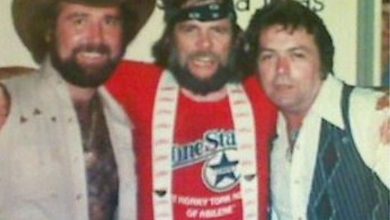
Willie Nelson and Doug Sahm at the 1976 Fourth of July Picnic. Archive photograph reproduced by The Atlanta Journal-Constitution.
More than fifty years later, the record remains a useful counterpoint to the assumption that bigger emotion always requires bigger production. Its sadness is not diminished by the small frame. The frame brings it closer. A listener has less distance from the voice and fewer distractions from the memory the song is asking them to follow.
Return to “Blue Eyes Crying in the Rain” with attention to that space. Hear how Nelson lets the composition move without trying to prove ownership through excessive change. Rose’s song remains recognizable, while the interpretation becomes unmistakably Nelson’s. That is the quiet transformation at the center of the recording: an old piece of music becomes a new beginning because someone understands how much it can say when it is allowed to remain almost bare.
The quiet approach also makes room for a listener’s own memory. A separation need not match the narrator’s circumstances exactly to feel recognizable. The performance offers a place for that recognition without insisting on what the listener must remember.

Listen to the Song
Listen to the featured recording. Any later performance is identified by its video title.
A Guitar Band Found Its Breakthrough in the Sound of a Harpsichord
The sound that introduces the record is not the obvious calling card of a blues-based guitar band. It is bright, percussive, and immediately different. Before the voice has told its story, the arrangement announces a possibility: this group is willing to step outside the sound listeners might expect from it.
The Yardbirds released “For Your Love” in 1965. Graham Gouldman wrote the song, and session musician Brian Auger supplied its distinctive harpsichord part. The recording became a major breakthrough for the group, while its pop direction formed part of the tension surrounding Eric Clapton’s departure. Success and artistic agreement were not necessarily arriving together.
Participant interviews are useful here because the recording’s fame can make its unusual instrumentation seem like a fully inevitable plan. Auger has recalled his own uncertainty about a pop single featuring the harpsichord. Jim McCarty has discussed the group’s search for a hit and the difference between that ambition and Clapton’s commitment to blues. These are perspectives from the people involved, not a reason to reduce the split to one melodramatic argument.
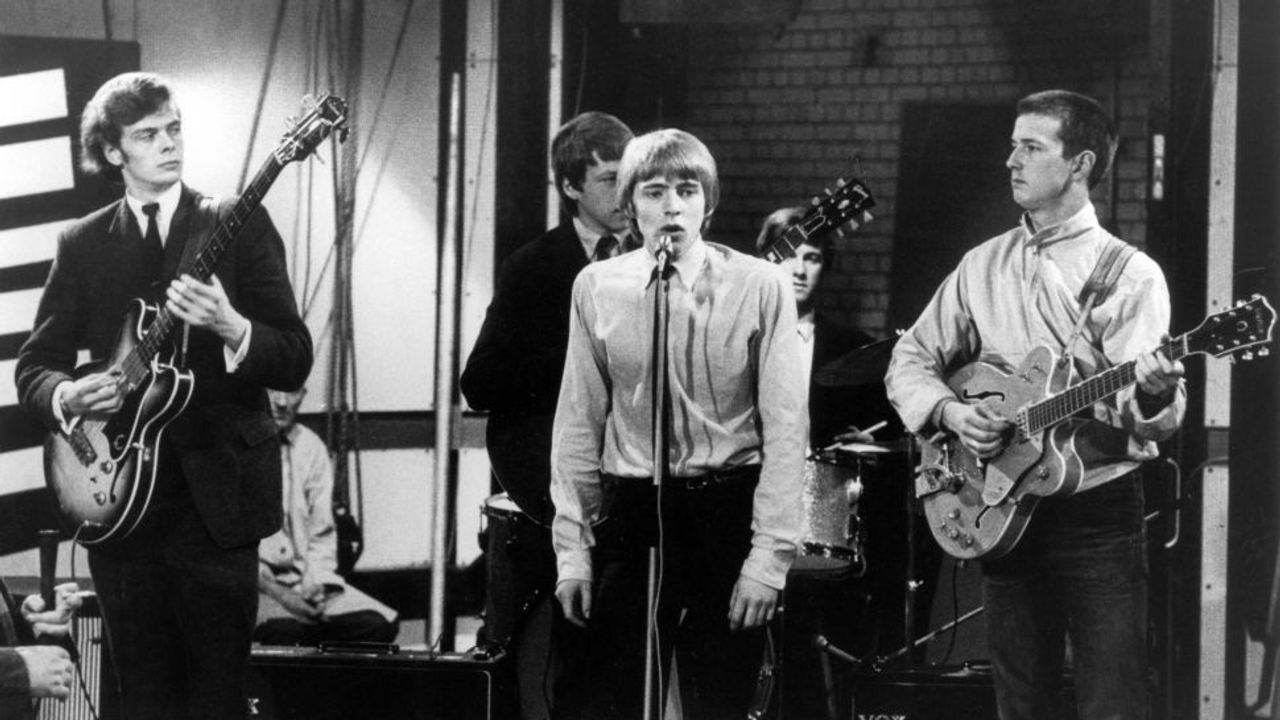
The Yardbirds performing in their early blues-era lineup. Val Wilmer / Redferns archive image reproduced by MusicRadar.
The song’s arrangement gives those differences a musical shape. It moves between contrasting textures rather than remaining in one familiar groove throughout. The opening establishes a sound the listener can identify quickly; the contrasting middle passage changes the energy. That movement helps the recording feel adventurous within the compact space of a single.
The point is not that a harpsichord was automatically more imaginative than a guitar. The choice matters because of its relationship to the group, the song, and the expectations around both. An unusual instrument can be a novelty, but here its attack and repeated figure are central to the record’s identity. It gives the vocal something distinct to enter.
The performance also demonstrates that a band’s sound is not a fixed object. Different members may disagree about how far it can change before it becomes something else. A commercial breakthrough can intensify that question rather than settle it. The record’s success proved that an audience existed for the direction, but it could not require every musician to want the same future.
That makes the story more useful than a simple contrast between authenticity and selling out. Musicians can value different traditions and ambitions without one side becoming a cartoon villain. The finished single shows what this particular combination achieved. The subsequent personnel change belongs to the band’s history, but does not remove the recording’s musical interest.
The Yardbirds performing in a garden in 1964. Archive photograph reproduced by GuitarPlayer; not the For Your Love recording session.
More than sixty years later, the first notes still reveal the creative risk more clearly than a label can. The record sounds like a group testing how much a concise pop song can hold: a striking texture, a direct declaration, and a shift of momentum. Its experimentation is immediate enough to register before the listener begins analyzing it.

Listen to “For Your Love” for the relationship between its sections, not only the unusual opening instrument. The harpsichord provides recognition, but the movement around it gives the single life. Gouldman’s song, Auger’s playing, and the Yardbirds’ performance created a record that expanded their audience while exposing different ideas about their direction. A breakthrough can open a door for a band and, at the same time, reveal that not everyone intends to walk through it.
The contrast is still audible without knowing the personnel history. The song moves between musical spaces with a clarity that gives each return its purpose. Its novelty works because it is organized into a performance, not simply added as an unusual sound.
Listen to the Song
Listen to the featured recording. Any later performance is identified by its video title.
The Song Meant for Someone Else Became Their Breakthrough
The path to a defining record is not always a direct route from writer to performer. A song can be intended for one group and find its lasting identity with another. The important change is not simply the name on the label. It is the way a different set of voices makes the material speak.
The Supremes released “Where Did Our Love Go” in 1964. Written and produced by Holland-Dozier-Holland, it became the breakthrough that opened their extraordinary run of hits. The Motown Museum notes that the song was originally intended for the Marvelettes. Its eventual association with Diana Ross, Mary Wilson, and Florence Ballard can make that earlier possibility easy to forget.
The finished record makes a difficult feeling approachable. The central question is about affection disappearing, but the rhythm does not collapse under the sadness. It keeps moving, allowing the listener to feel the emotional tension inside a song that is immediately accessible. Heartbreak and a compelling beat do not cancel each other; their contrast gives the performance its pull.
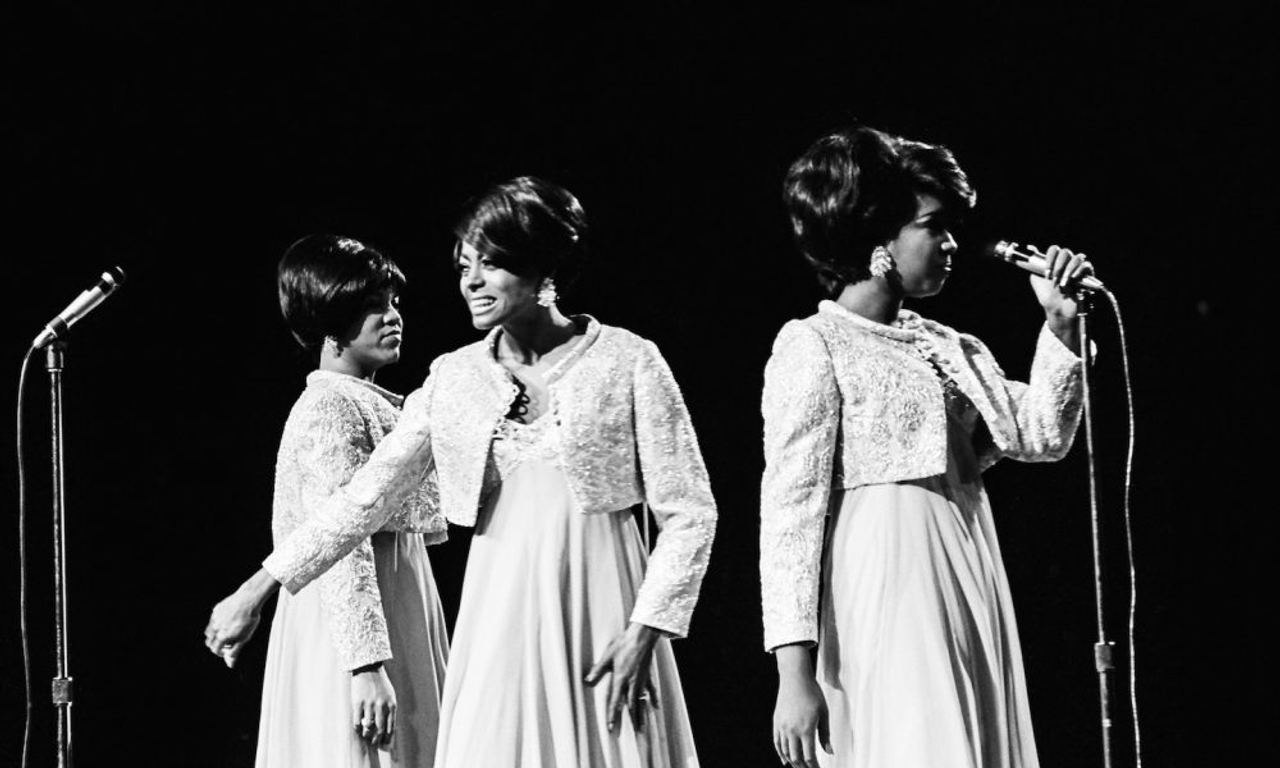
The Supremes in a television performance. Archive still reproduced by The Ed Sullivan Show; not the original studio recording.
Ross’ lead stays controlled enough for the vulnerability to register through phrasing rather than spectacle. The supporting voices and repeated patterns create a shared frame around the individual question. The effect is not of one singer alone in an empty space. The music gives the uncertainty a social setting, even when the character at its center seems unable to understand what has changed.
That is one reason the recording rewards attention beyond its familiarity. A listener can remember the melody and rhythm without noticing how exposed the central question remains. The song does not offer a detailed explanation for the relationship’s change. It lets the absence of an answer become part of the feeling.
The production also shows how economy can create a strong identity. The record does not need a long introduction, a complicated plot, or a succession of dramatic shifts. Its repeated elements become recognizable quickly, and the performance finds expression inside them. A small musical vocabulary can carry a complicated experience when the choices are clear.
The breakthrough belonged to a collaborative environment. The writers and producers supplied material and a recording approach, while the singers made the arrangement sound like the Supremes. Treating the record as the achievement of only one person would miss that relationship. So would assuming that a song intended for another act could not become personal through interpretation.
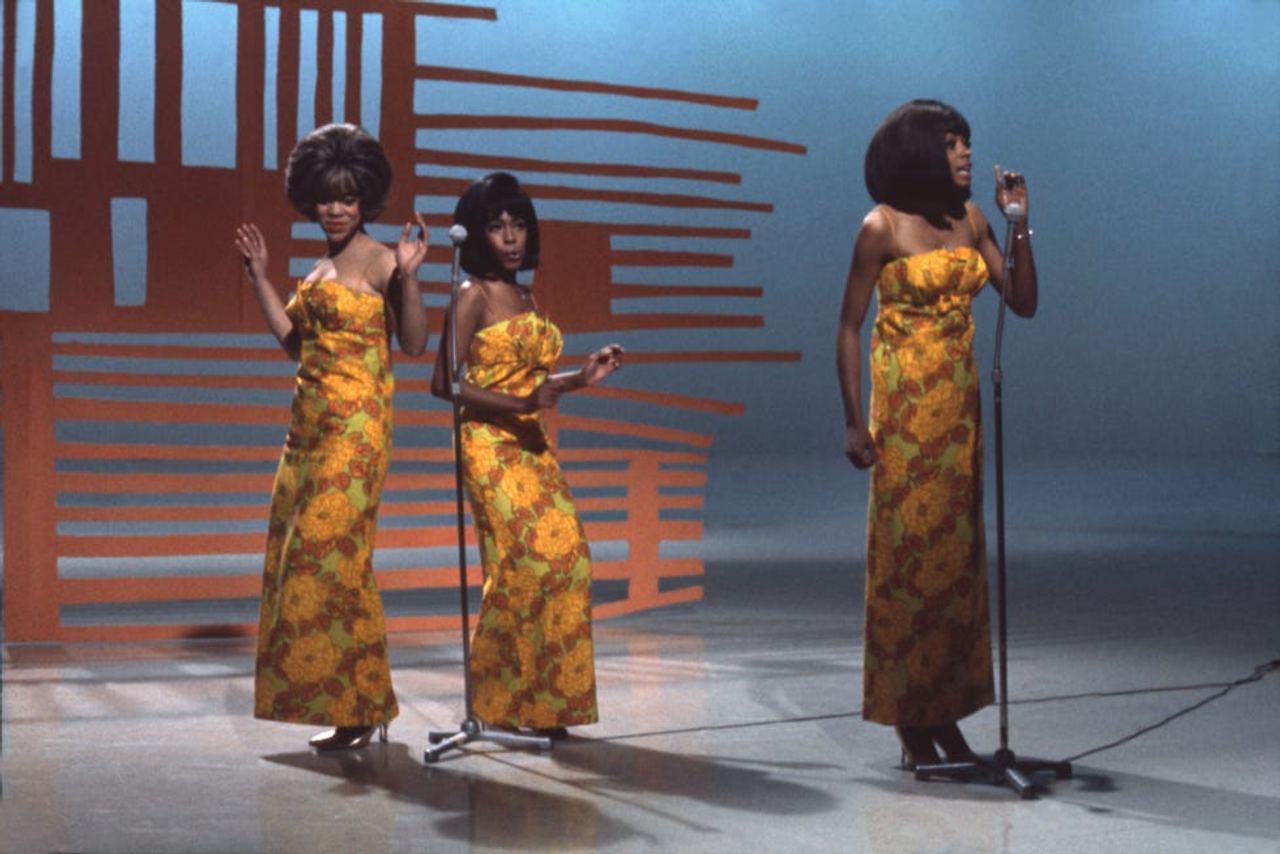
Mary Wilson, Florence Ballard, and Diana Ross performing on television in the 1960s. Archive photograph reproduced by ELLE.
More than six decades later, the group’s later success can make this beginning seem inevitable. It was not. The recording emerged from a particular set of choices about repertoire, voices, and production. Its history is more interesting when those possibilities remain visible: another route existed, and the song that now sounds inseparable from one group might have reached listeners differently.
Return to “Where Did Our Love Go” as a performance rather than only a milestone. Hear the uncertainty inside the steady movement and the way the voices make a simple question feel worth repeating. The song did not need to explain every detail of a lost relationship to become emotionally clear. It needed the right balance of presence and unanswered longing. The Supremes found that balance in material first imagined for someone else, and made the result a beginning of their own.
The record also leaves room for the listener to participate. Its repetitions do not remove the uncertainty; they make that uncertainty something a group of voices can share. A private question becomes public without requiring a complete explanation.
Listen to the Song
Listen to the featured recording. Any later performance is identified by its video title.