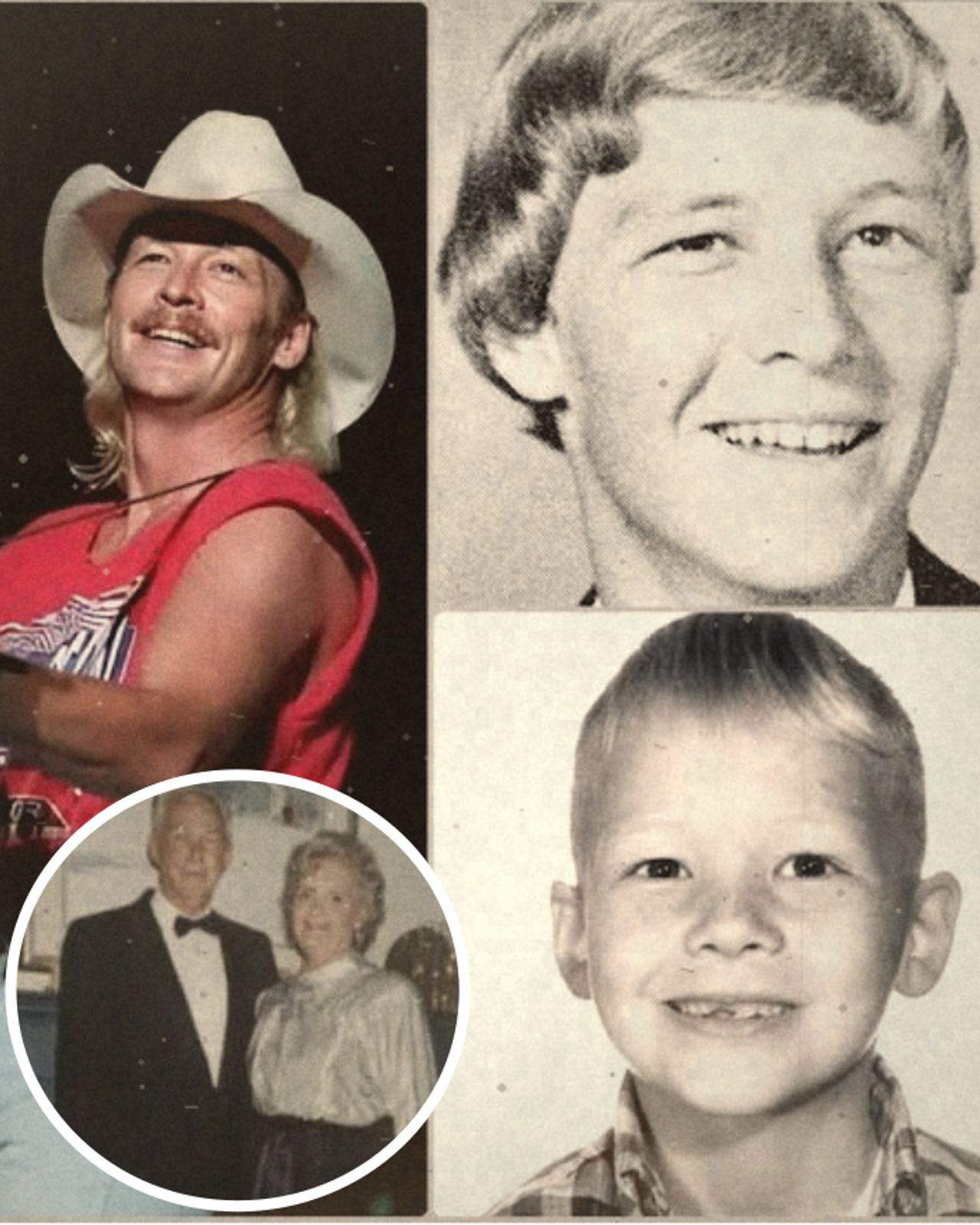
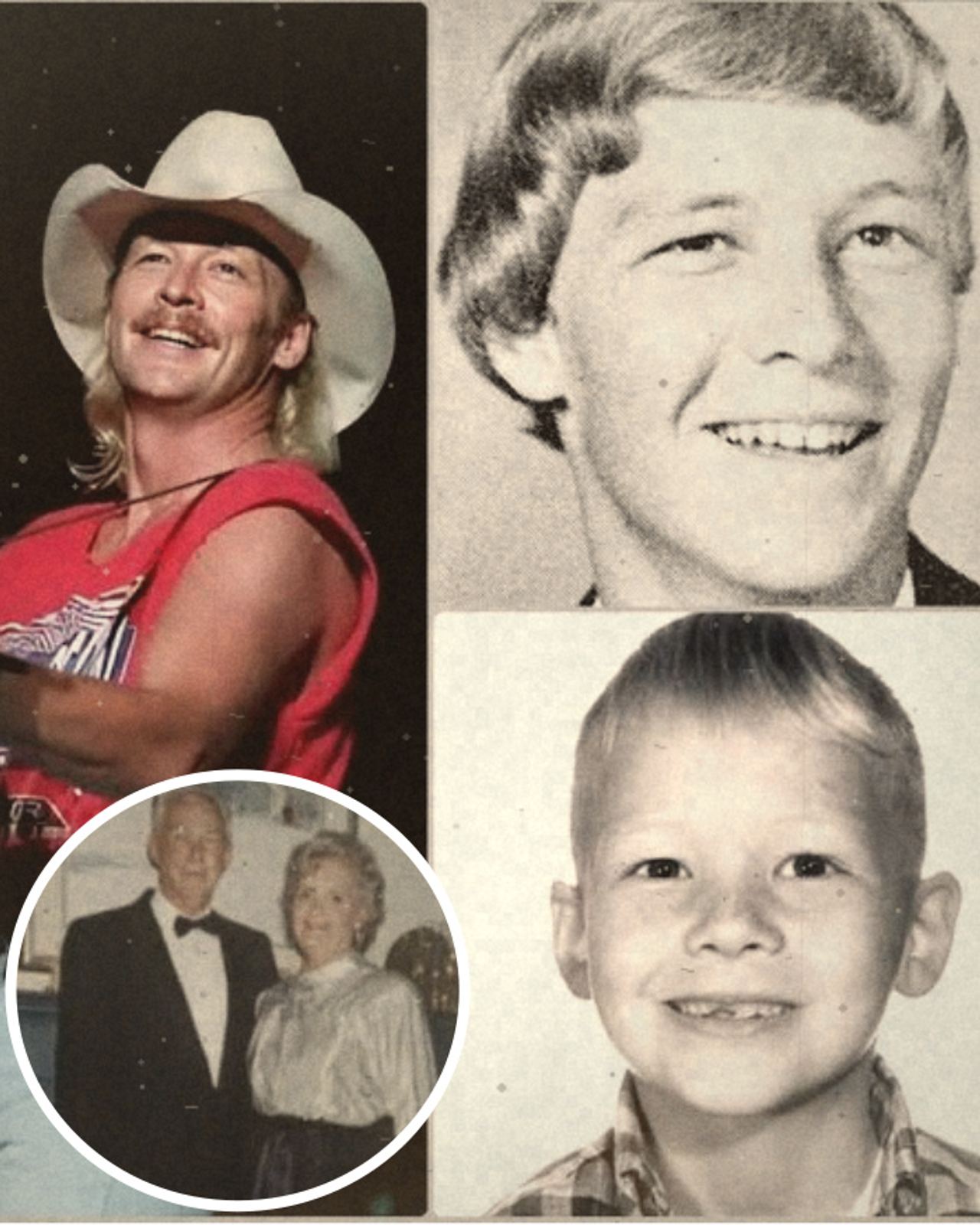
Before he sold millions of records, Alan Jackson shared a space converted from a tool shed with his parents and four sisters in Newnan, Georgia.

Alan Jackson recorded a collection of old hymns in 2006 solely as a private family gift, having no intention of ever releasing the songs to the public.
At the time, he was one of the biggest superstars in the world, sitting at the center of the Nashville hit-making machine. But his voice and his creative anchor were shaped long before the stadium tours, back in a converted tool shed in Newnan, Georgia.
Growing up, Jackson shared that modest home with his parents, Gene and Ruth, and his four sisters. There were no expensive radios or sprawling record collections in the house. His earliest musical education came directly from the pews of Central Baptist Church and the quiet sound of his mother humming hymns while she worked.
The boy did not originally dream of the Grand Ole Opry or global fame. He simply wanted to be a mechanic with grease on his hands, exactly like his father.
That path shifted in his late teens when a friend played him cassette tapes of Gene Watson, John Anderson, and Hank Williams Jr. Hearing those rustic country melodies, Jackson realized there was a music outside the church walls that spoke directly to his working-class reality.
Because his voice was shaped by Sunday mornings rather than commercial ambition, it remained remarkably pure. Even as he rose to country music royalty, earning dozens of number-one hits, he never lost the unadorned storytelling warmth of a boy singing in a Georgia congregation.
In 2006, Jackson decided to honor that foundation. He walked into a studio to record a deeply personal project, entirely disconnected from his career trajectory. He wanted to capture the traditional hymns that his mother, Mama Ruth, and his mother-in-law, Nell, had always loved.
The project was never designed to be a blockbuster production. In the mid-2000s, mainstream country music was shifting toward loud, rock-influenced anthems with heavy instrumentation. Jackson rejected that approach entirely. He kept the arrangements stark and simple, relying primarily on a piano, an acoustic guitar, and his own unedited vocal delivery.
He recorded the tracks quickly, treating them as an audio home movie rather than a commercial product. To keep the project anchored in family, his wife, Denise, and their daughters provided background vocals on the hymn “’Tis So Sweet to Trust in Jesus”. The finished fifteen-track collection, titled Precious Memories, was meant to be pressed onto a few private discs and handed out as Mother’s Day gifts.
But executives at his record label, Arista Nashville, eventually heard the recordings. Recognizing the rare authenticity in the stripped-down sessions, they urged him to release the music to the public.
Jackson was heavily hesitant. He felt the recordings were too intimate, too acoustic, and perhaps too unpolished for a mainstream audience expecting radio-ready hits. The label persisted, and the album was quietly released in late February 2006.
There were no radio singles pushed to broadcasters and no massive promotional tours. Yet, the public reaction was immediate and overwhelming. Without relying on the usual marketing playbook, Precious Memories debuted at No. 1 on the Top Country Albums chart, becoming the first gospel record to ever achieve that milestone.
It functioned as a sonic palate cleanser for an audience hungry for honesty over production. Listeners connected with the sound of a man singing from memory rather than a script. The album eventually sold nearly two million copies, earning Platinum certification. To celebrate the unprecedented success, Arista Nashville later presented both Mama Ruth and Nell with $100,000 checks to donate to their favorite charities.
A project born out of quiet gratitude ended up becoming one of the most defining moments of his career. It proved that the music industry’s polished perfection could not compete with a son simply bringing the songs of a converted tool shed back home.
Read more stories
- Another Pregnant Woman Showed up at My Gender Reveal Party and Said My Husband Was Her Baby’s Father – I Ordered a Separate Box Just for Them, and What Was Inside Made Them Turn Pale
- I Got My Granddaughter’s Drawing Tattooed on My Arm – Then My Husband Stopped Talking to Me
- Baked Garlic Parmesan Chicken
- My Parents Adopted a Girl I Refused to Accept as My Sister for 2 Years – Then I Found a Black Box Under Her Bed With My Name on It, and What Was Inside Made Me Go Pale