A Mother Was Called To School Until Her Daughter Refused To Stand Up!!!
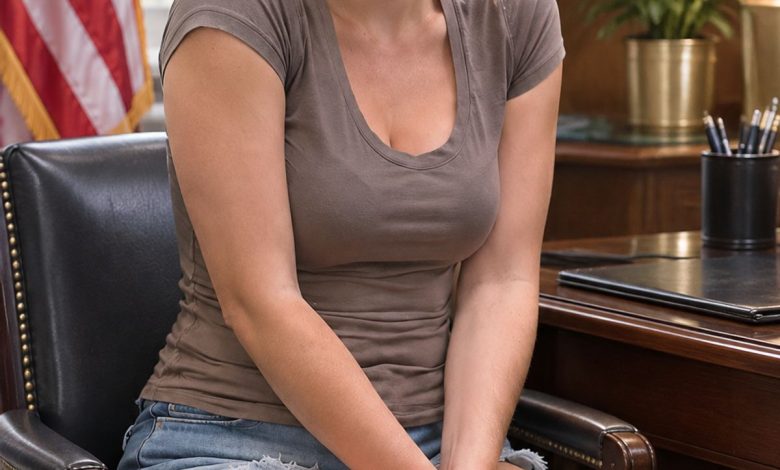
“Mom, I’m not leaving. I can’t get up from this chair.”
My fourteen-year-old daughter, Emily, looked up at me with tears running down her face.
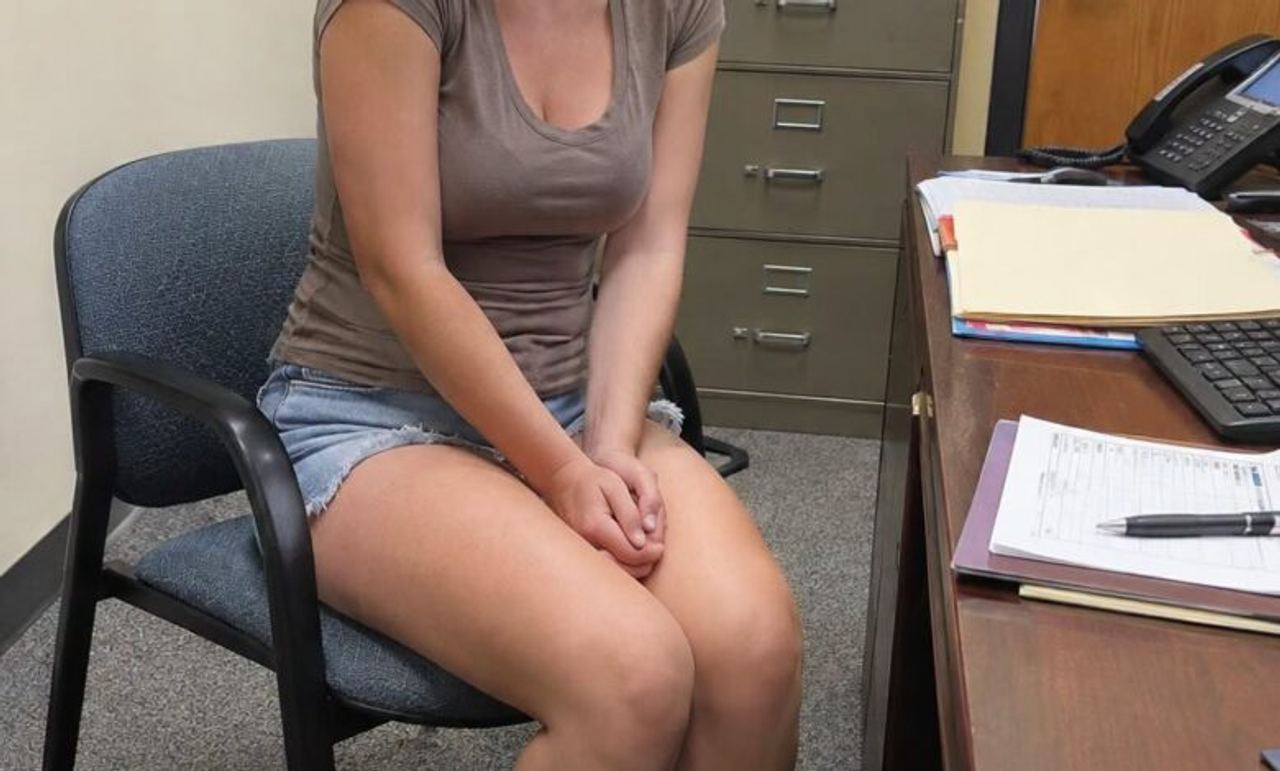
She was sitting in a hard plastic chair in the corner of the principal’s office. Her backpack was at her feet. She had both hands pressed flat against her knees, gripping the fabric of a long, pale blue skirt I had never seen before. Her face was blotchy and red, the way it gets when she’s been crying for a long time.
I’d been in that office for exactly thirty seconds, and I already knew something was very wrong.
Twenty-five minutes earlier, I’d barely sat down at my desk.
I work as a bookkeeper at a dental practice across town. I’d just hung up my coat, poured my first cup of coffee, and opened the spreadsheet for last month’s insurance claims when my phone rang.
It was the school.
My stomach dropped the way every parent’s stomach drops when the school’s number shows up on their phone at nine-fifteen in the morning.
“Mrs. Wilson? This is Principal Harris at Lincoln Middle School.”
“Is Emily okay?”
“She’s not hurt,” he said quickly. “But something happened during her history class. She’s here in my office, crying. She’s refusing to go to her next class. She keeps asking us to call you so you can take her home.”
“What happened?”
“She won’t tell us much.” He paused. “I think it’s best if you come in.”
I left immediately. I didn’t even turn off my computer. I told the office manager I had a family emergency and grabbed my coat and was out the door before she finished saying “Of course, go.”
I spent the whole twenty-minute drive running through every terrible possibility in my head. Bullying. A fight. A boy. Something on her phone. Something worse that I didn’t even want to name.
I didn’t come close to guessing what it really was.
Now I was standing in Principal Harris’s office, looking at my daughter. I couldn’t understand why she wouldn’t move.
Principal Harris was standing behind his desk. He’s a tall, thin man in his fifties with gray hair and a tie with little pencils printed on it. He looked uncomfortable.
There was another man in the office too, standing near the window. He was younger, maybe forty, with a neatly trimmed beard and a sweater vest. I recognized him from parent-teacher night. Mr. Bennett. Emily’s history teacher.
I knelt down beside Emily’s chair.
“Why, honey? What’s stopping you?”
She glanced at Mr. Bennett. Then she lifted one hand off her knee and pointed straight at him.
“I’m not saying anything while he’s here,” she said. Her voice was shaking but loud. “Tell him to leave.”
I’d never heard my daughter speak to an adult like that. Not once in fourteen years.
Mr. Bennett took a step toward me.
“Mrs. Wilson,” he said, “I think you and I should speak privately first. You might misunderstand the situation. I need you to stay calm and hear me out.”
Every instinct I had told me to stand up and demand answers right there. In front of everyone.
Stay calm. Nothing makes a mother less calm than a man telling her to stay calm while her child is crying.
Instead, I looked at Emily.
“I’ll be right outside, sweetheart,” I said. “Right on the other side of that door. Okay?”
She nodded. She didn’t let go of her knees.
I stood up.
“Fine,” I told Mr. Bennett. “Let’s talk.”
We stepped out into the hallway. Mr. Bennett closed the office door behind us.
The hallway was empty. Classes were in session. I could hear a teacher’s voice through a nearby door, something about fractions. The floor smelled like that orange cleaner every school in America uses.
Mr. Bennett took a breath.
“First,” he said, “I want you to know Emily wasn’t injured.”
“Then why can’t she stand up?”
He hesitated.
“Her clothing was damaged during class.”
“What does that mean?”
“She was wearing an old skirt. It caught on a chair and tore.”
I stared at him.
“How badly?”
“Badly enough that she got embarrassed.”
“Then why is she still sitting there? Couldn’t somebody find her something else to wear?”
“We offered her a sweatshirt to tie around her waist,” he said. “She refused.”
“Why?”
“She wouldn’t explain.”
I folded my arms across my chest.
“Start from the beginning,” I said.
That morning, Mr. Bennett had asked his students to bring in an object connected to their family history. Something they could hold up and talk about for three to five minutes. A medal, a photograph, a recipe card, anything. The assignment had been on the board for two weeks.
I hadn’t known about it. Emily never mentioned it.
Emily had brought a long pale blue skirt with tiny white flowers embroidered near the hem. She’d worn it to school.
During her presentation, a boy named Tyler Grant made a comment from the back of the room. Something about how it looked like she’d raided a nursing home. Several kids laughed.
Emily tried to keep going. She got through another minute. Then she sat down on the edge of a desk chair at the front of the room to fix her note cards, which had gotten out of order.
When she stood back up, the fabric caught on a broken piece of wood under the chair. There was a splintered edge on the bottom of the seat, where the plastic had cracked off years ago and nobody had replaced it.
She pulled away.
The skirt tore.
“She started crying,” Mr. Bennett said. “Right there in front of the class. I thought it was the laughing that upset her. So I told everybody to settle down.”
“And?”
“Emily wouldn’t continue. She just stood there holding the back of her skirt, saying it was ruined. Over and over. ‘It’s ruined, it’s ruined.’”
“What did you say to her?”
He looked uncomfortable. He looked down at his shoes.
“I told her that accidents happen,” he said. “And that she needed to stop making a scene.”
I stared at him.
“You said that in front of the class?”
“Yes.”
“While she was crying?”
“I didn’t realize how serious it was.”
“Serious enough,” I said slowly, “that she couldn’t stand up without exposing herself?”
He lowered his eyes.
“Yes,” he said quietly.
I waited. I didn’t say anything. I’ve learned over the years that if you stay quiet long enough, people usually tell you the rest.
“I also told her she could finish the assignment another day,” he added. “That made her more upset. She asked to leave. So I walked her down here.”
“Why didn’t you call me right away?”
“I brought her to Principal Harris. We thought she might calm down.”
I looked at the closed office door. Through the little window, I could see the back of Emily’s head. She hadn’t moved.
“Mr. Bennett,” I said. “My daughter doesn’t cry easily. She broke her arm in fourth grade and didn’t cry until we got to the hospital. If she’s this upset, something more happened. Something more than a skirt.”
“I understand that now.”
“Then you need to give her some space.”
He nodded.
“I’ll wait in the staff room,” he said.
He walked away down the hallway. I watched him go. His shoulders were slumped.
When I went back into the office, Emily was sitting exactly where I’d left her.
Principal Harris was standing near his desk.
“Mrs. Wilson,” he said. “We found some spare clothes in the lost and found. And the nurse has some extras. She can change whenever she’s ready.”
“Thank you,” I said. “Could you give us a few minutes alone?”
He agreed. He stepped out and closed the door.
As soon as the door clicked shut, I knelt down beside Emily’s chair again.
“Sweetheart,” I said, “Mr. Bennett told me about your skirt.”
Her face crumpled.
“It’s ruined, Mom.”
“We’ll look at it together. Okay? Whatever it is, we’ll figure it out.”
“No,” she said. “You don’t understand.”
She gripped the fabric across her knees even tighter. Her knuckles were white.
“It’s Grandma’s,” she said.
My breath caught in my throat.
My mother, Evelyn, died two years ago. She had a stroke in her kitchen on a Tuesday afternoon in October, standing at the stove making applesauce. The neighbor found her. She was seventy-three.
Emily adored her. Absolutely adored her. The two of them were inseparable from the time Emily could walk.
They baked together every Sunday. Snickerdoodles, banana bread, a lopsided apple pie every Thanksgiving. They planted flowers in Mom’s backyard every spring. Zinnias and marigolds and a whole row of sunflowers taller than Emily.
On rainy afternoons, they sat at Mom’s kitchen table making little things out of leftover fabric. Pot holders. Doll clothes. Fabric flowers. A lumpy little stuffed whale Emily still keeps on her bookshelf.
After Mom died, Emily stopped talking about her as often.
I’d thought she was adjusting. Slowly. The way kids do. The way the grief books I read said they would.
I was wrong about a lot of things that day.
“Where did you get Grandma’s skirt?” I asked.
“From the cedar chest,” Emily said. “In the attic.”
I remembered that chest. It was Mom’s old cedar hope chest from when she got married in 1971. After her funeral, I’d packed all her clothes into it. Her cardigans. Her church dresses. Her sewing aprons. Her reading glasses. Her good wool coat that still smelled like her perfume.
I’d folded everything as fast as I could, without looking too closely at any of it. I’d closed the lid and dragged the chest up into our attic and pushed it into the corner behind the Christmas decorations.
I hadn’t opened it since. I couldn’t make myself.
“Did you take it?” I asked.
Emily nodded. She looked down.
“I was going to tell you,” she said.
“You’re not in trouble, honey.”
She wiped her cheeks with the back of her hand.
“I wanted to wear it for my presentation,” she said. “Grandma always said clothes could tell stories.”
I remembered those words.
Clothes tell stories, Emmy. Every stitch is a choice somebody made. Every patch is something that happened.
My mother had worked as a seamstress when she was young, before she married my father. She worked at a little tailor shop on Main Street called Halvorsen’s, hemming pants and fixing zippers and sewing wedding dresses for half the brides in town. Later, she taught home economics at the high school for thirty years.
She could tell how old a piece of fabric was just by rubbing it between her fingers. She could look at a seam and tell you whether it had been sewn by a machine or by hand, and sometimes by whom.
“How long have you had the skirt?” I asked Emily.
“Since last month.”
“Why didn’t I see it?”
“I kept it in my closet. Under my winter coat.”
She looked down at her knees.
“It had some holes,” she said. “Moth holes, I think. And the hem was coming down. I fixed them.”
I blinked.
“You repaired it? Yourself?”
“Grandma taught me little stitches when I was younger,” she said. “Running stitch and backstitch and blind stitch. I watched some sewing videos online to remember how.”
She carefully lifted the hem of the skirt off her ankle and turned it so I could see.
I leaned in.
There were tiny repairs along the bottom seam. Little careful stitches in pale blue thread, almost the same color as the fabric. There was a small patch near one side where a moth hole had been, sewn on from the inside so you could barely see it.
They weren’t perfect. A couple of the stitches were uneven. One spot was a little puckered.
But they were neat. They were careful. Somebody had spent a long time on them.
My daughter had spent weeks restoring something that reminded her of the grandmother she missed.
And I hadn’t noticed. Not once.
Then I did remember something.
For the past month, I’d seen a light under Emily’s bedroom door late at night. Eleven o’clock. Eleven-thirty. Once almost midnight. I’d knocked once and told her to go to sleep, it was a school night. She’d said she was reading. I’d believed her.
She hadn’t been reading.
She’d been sitting on her bed with a needle and thread and her grandmother’s skirt in her lap, watching sewing videos on her phone with the sound turned down so I wouldn’t hear.
“Why didn’t you ask me for help?” I said.
Emily hesitated for a long moment.
“Because you get sad when we talk about Grandma,” she said.
The words hit harder than I expected. I actually rocked back on my heels.
“Emily…”
“You always say we should remember the happy things,” she said. She was looking at the floor. “But then you change the subject. Every time. Like when I said I wanted to make Grandma’s snickerdoodles for my birthday. You said, ‘Let’s just get a cake from the store this year, honey.’ And then you started talking about something else.”
She was right.
I remembered that exact conversation. Her thirteenth birthday. I’d been standing at the sink, and she’d come up behind me and asked about the snickerdoodles. And I’d felt my throat close up and my eyes burn, and I’d said the first thing that came into my head to make it stop.
Let’s just get a cake from the store this year.
She’d said okay. She hadn’t asked again.
After Mom died, I couldn’t walk past her photograph in our hallway without crying. So I moved it. I put it in my bedroom, on my dresser, facing the wall. I told myself I’d turn it back around when I was ready.
I never turned it back around.
Whenever Emily mentioned her grandmother, I tried to smile. I said something like “She was a wonderful woman, wasn’t she?” Then I moved the conversation along. To homework. To dinner. To anything else.
I’d believed I was protecting my daughter from my grief. I didn’t want her to see me fall apart. I didn’t want her to have to take care of me.
Instead, I’d made her feel like she had to remember her grandmother alone. In secret. At midnight. Under her winter coat.
“I’m sorry,” I whispered.
Emily shook her head.
“It’s okay.”
“No,” I said. “It’s not okay. I should have listened more. A lot more.”
She stared down at the torn skirt.
“I thought if I fixed it and wore it,” she said quietly, “you’d be happy. I thought you’d see it and remember Grandma and smile. Like a real smile. Not the fake one.”
“I would have been,” I said. My voice cracked. “I would have been so happy, baby.”
“But now look.”
She shifted slightly in the chair, leaning forward just enough to show me the back of the skirt.
There was a long tear running down the back seam, maybe ten inches. Part of the surrounding fabric had ripped too. A piece had pulled loose completely and was hanging, leaving a wide opening.
The damage was worse than I’d imagined.
I understood now why she wouldn’t stand up. Why she wouldn’t tie a sweatshirt around her waist. A sweatshirt wouldn’t have covered it, not completely. And she would have had to walk down the hallway past every classroom with her grandmother’s skirt hanging open behind her, while kids looked.
And maybe, I thought, she just didn’t want to get up because getting up meant moving the skirt. Moving it meant maybe tearing it worse.
“Okay,” I said gently. “First, we’re going to get you something else to wear. Then we’ll figure out the skirt. One thing at a time.”
“I don’t want everyone seeing me.”
“They won’t,” I said. “I promise.”
I asked Principal Harris to bring the spare clothes into the office.
He came back with a pair of loose gray athletic pants and a navy sweatshirt that said LINCOLN LIONS across the front. They were way too big. He apologized for that.
There was a small staff restroom right next to his office. I helped Emily stand up very slowly, keeping the torn skirt wrapped tightly around her with my arm behind her back. We walked the six steps into the restroom together, like we were doing a three-legged race.
She changed by herself. I stood outside the door with my back against it.
When she came out, the athletic pants were rolled up three times at the ankles, and the sweatshirt hung down to her knees. She was holding the skirt folded against her chest with both arms, the way you’d hold a baby.
“I don’t want to leave it here,” she said.
“You don’t have to,” I said.
Back in the office, Principal Harris apologized to her directly.
“I should have made sure you felt comfortable sooner, Emily,” he said. “We should have had you changed and calling your mom the minute you walked in here. I’m sorry it took this long.”
She nodded without looking at him.
“What’s going to happen with the boy?” I asked. “Tyler. The one who made the comment.”
“We’ll speak to him,” Principal Harris said. “And to the students who laughed. Mocking someone’s clothing isn’t acceptable at this school. Not ever.”
Emily looked up suddenly. Her eyes were wide.
“Please don’t make everyone talk about me,” she said. “Please. Don’t make it a big thing in front of the class.”
“We won’t announce anything,” Principal Harris said gently. “I promise. Nobody’s going to stand up and say your name.”
She let out a breath.
I turned to her.
“Do you want to go home now?”
She nodded.
“Yes, please.”
We were gathering up her backpack when Mr. Bennett appeared in the office doorway.
“Emily,” he said. “May I say something?”
She went stiff all over.
I looked at her.
“You can say no,” I told her. “You don’t have to talk to anybody you don’t want to.”
She was quiet for a long moment. Then she nodded.
Mr. Bennett stayed near the door. He didn’t come any closer.
“I’m sorry I told you to stop making a scene,” he said. “That was wrong of me. I should have asked you what was wrong instead of assuming you were overreacting.”
Emily stared at the floor.
“I wasn’t trying to make a scene,” she said.
“I know that now.”
She looked up at him then. Right in the eye.
“And Tyler laughed before the skirt ripped,” she said. “Not after. Before. When I was just standing there talking about my grandma. You didn’t say anything then.”
Mr. Bennett looked like she’d slapped him.
“You’re right,” he said. “I should have said something right away. I heard it, and I let it go. That’s on me.”
He paused.
“You don’t have to finish your presentation,” he said. “Not today. Not ever, if you don’t want to. When you’re ready, we can talk about another way for you to share it.”
Emily didn’t answer.
I thanked him for apologizing. I meant it, but only a little.
Then we left.
On the drive home, Emily held the folded skirt in her lap the whole way.
She ran her fingers over the little white embroidered flowers near the hem. Over and over. The same three flowers.
I wanted to tell her everything would be fine. That we’d fix it. That it would be good as new.
But I couldn’t promise that. I didn’t know anything about sewing. I couldn’t even sew a button back on without stabbing myself. I’d always just taken things to Mom.
So instead, I asked about her presentation.
“What were you going to tell the class?” I said. “About the skirt?”
She looked out the window at the houses going by.
“That Grandma made it when she was young,” she said. “When she worked at the tailor shop.”
“She did. She was nineteen.”
“And that she wore it the day she met Grandpa.”
I smiled.
“I remember that story.”
“At the county fair,” Emily said. “By the lemonade stand. And Grandpa was so nervous talking to her that he spilled a whole cup of lemonade down the front of his shirt.”
I laughed. It surprised me.
“He absolutely did,” I said. “She told that story at every single Thanksgiving. And every single time, Grandpa would say, ‘It was a very hot day, Evelyn. My hands were sweaty.’”
Emily smiled faintly. It was the first smile I’d seen on her all day.
My father died when Emily was four. She barely remembers him. But she knows all his stories, because Mom told them over and over. The lemonade. The time he drove the tractor into the pond. The way he used to whistle “Moon River” while he shaved.
Mom kept him alive for Emily by talking about him.
I hadn’t done the same for her.
Then Emily turned to look at me.
“There’s something else,” she said.
“What?”
She unfolded the skirt in her lap. She turned it inside out and showed me the inside of the waistband.
There was a small embroidered patch sewn there. A little square of white cotton, about the size of a playing card, stitched into the lining with tiny blue thread. The stitches were faded, but I could still read the words.
For Emily, who makes every ordinary day beautiful.
I pulled the car over.
I didn’t decide to. My hands just did it. I pulled onto the shoulder of Maple Avenue, right in front of the dry cleaner’s, and put the car in park, and covered my mouth with my hand.
“Mom?” Emily said.
I couldn’t speak. I just nodded.
“Grandma made this?” she said. “For me?”
“Yes,” I managed.
Emily traced the letters with one finger. Slowly. E-m-i-l-y.
“She never showed me,” she said.
I remembered the day Mom sewed that message.
Emily was eight. It was a rainy Saturday in April, and Mom had been teaching her to make fabric flowers out of old scraps at the kitchen table. Little yellow roses made from a strip of an old bedsheet, rolled up and stitched at the bottom.
I’d come over to pick Emily up. Mom was standing in her bedroom closet, cleaning it out, and she’d pulled the blue skirt down off a high shelf.
She held it up to the light from the window.
“Look at this,” she said. “I can’t believe it’s still in one piece. I made this at Halvorsen’s in 1969. Wore it the day I met your father.”
“It’s beautiful, Mom.”
“I’m saving it for Emmy,” she said. “For when she’s older. Fourteen, fifteen maybe. When she’ll appreciate it.”
That night, she called me and said she’d sewn a little message into the waistband. A surprise. “Don’t tell her,” she said. “Let her find it herself someday.”
I’d forgotten.
I’d completely forgotten, until right that moment on the side of Maple Avenue.
“She told me she was saving it for you,” I said to Emily.
Emily looked stunned.
“Really?”
“She wanted to give it to you when you were older. When you were around your age now.” I swallowed. “She said you’d appreciate it more.”
“Why didn’t you tell me?”
I didn’t say anything for a long moment. The windshield wipers were off. A light rain had started, little drops sliding down the glass.
“After she died,” I said finally, “I packed everything away. Everything. Into that chest. As fast as I could. And I couldn’t bring myself to open it again. I couldn’t even go up in the attic. I’ve been sending your dad up for the Christmas decorations for two years.”
Emily stared down at the message in her lap.
“I thought I found it by accident,” she said.
“Maybe you did,” I said. “But she always meant for it to be yours.”
Her eyes filled up again.
“I ripped something she saved for me,” she said. Her voice broke. “She saved it for me for, like, six years. And I wore it one time. And I ripped it.”
“You didn’t mean to.”
“But it’s broken.”
I reached over and touched the little embroidered patch. For Emily, who makes every ordinary day beautiful.
“The message isn’t,” I said.
She looked at me.
“The skirt’s torn, baby,” I said. “But that part’s fine. That part’s not going anywhere. Look.” I ran my thumb over the faded blue letters. “Not a single stitch out of place.”
Emily leaned her head against the car window and cried quietly. I held her hand across the center console.
We sat there on the side of Maple Avenue in the rain for a long time.
When my husband, Paul, got home from work that evening, I met him at the front door.
“Is Em okay?” he said. He’d gotten my text at lunch. Something happened at school. She’s okay. Tell you tonight.
“She’s okay,” I said. “Mostly.”
I told him everything. The skirt. The cedar chest. The embroidery. You get sad when we talk about Grandma.
Paul listened. He’s a quiet man. He works for the city water department. He doesn’t say much, but when he does, it usually matters.
When I was done, he put his arms around me.
“She’s not wrong, Annie,” he said gently. “You know that, right?”
“I know.”
“Every time I bring up your mom, you change the subject too.”
I pulled back and looked at him.
“I do?”
“Last Christmas, I asked if you wanted to put her ornament on the tree. The little glass bird. You said, ‘Maybe next year.’”
I didn’t remember that. I believed him anyway.
“I didn’t want to push,” Paul said. “I figured you’d get there. In your own time.” He sighed. “I think Em figured the same thing. She was just a lot more patient than I was.”
That night, after dinner, I spread the skirt out across our dining room table.
I put down a clean white tablecloth first. Then I laid the skirt on top of it, flat, smoothing it out with both hands.
Under the bright light of the chandelier, I could see everything.
The tear ran right down the back seam and into part of the fabric beside it. Some of Mom’s original stitches had pulled loose. There were little ragged threads sticking out everywhere. A piece of the pale blue fabric, about the size of my palm, was hanging by a corner.
But the embroidered flowers near the hem were almost untouched. All of them. Tiny white daisies with yellow centers, each one no bigger than a dime. Hund…
Read more stories
- NYC Marathon Runner Collapsed Near Mile 24 — The Stranger Who Held Her Hand Later Revealed What She Noticed
- My Neighbor Made My Kids Hand Over Every Single Apple That Fell Into Our Yard, and When My Husband Saw the Photos I Took, He Smiled Quietly and Said, “Let Me Handle This,” and What He Did Next Left the Whole Street Speechless
- The Voice is giving Dolly Parton a special night all her own.
NBC announced Dolly Parton
- My Mother B@nned My Children From Our Family Reunion, Forgetting I Had Paid $17,000 for the Country Club. So I Quietly Canceled Everything—and Three Weeks Later, 123 Relatives Arrived to Discover a Surprise Nobody Had Expected…