In early 2026, after months of pancreatic cancer treatment kept him away from the road, Ri
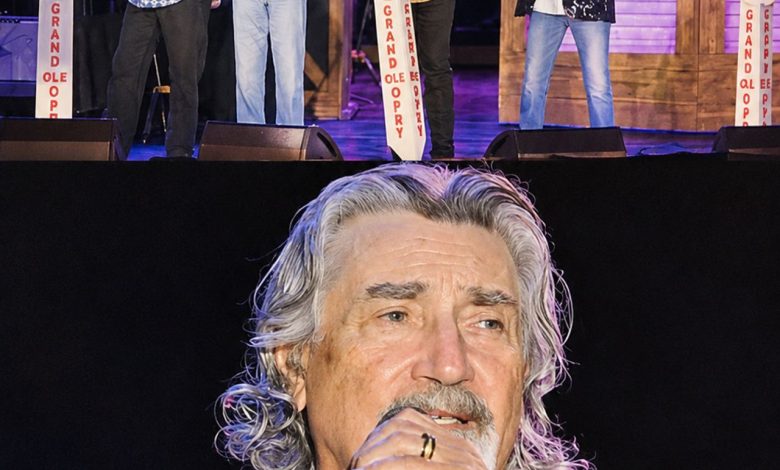
There are some nights in country music that feel bigger than a performance. They become a moment of gratitude, resilience, and shared feeling between an artist and the people who have followed that artist for years. That was the mood in early 2026, when Richard Sterban returned to the Grand Ole Opry stage at age eighty two after months away from the road during pancreatic cancer treatment.
For fans of The Oak Ridge Boys, Sterban’s return carried a special emotional weight. He had stepped back from touring after his 2025 diagnosis so he could focus on chemotherapy, and his absence was deeply felt. His voice has long been one of the most recognizable parts of the group’s sound, and his stage presence has been part of the quartet’s identity for decades. So when he felt ready to sing in public again around late January and early February 2026, the place he chose said a great deal on its own: the Grand Ole Opry in Nashville, where The Oak Ridge Boys had been inducted as official Opry members in 2011.
A return to a meaningful stage
The Grand Ole Opry has always stood for tradition, continuity, and the passing of songs and stories from one generation to the next. For Sterban, returning there after months of treatment gave the moment a deeper layer of meaning. This was not simply a stop on a schedule or a casual public appearance. It was a return to a place tied to the group’s history, a place that already held important memories for the quartet.
That connection could be felt before he even sang. As he walked out from the wings, the physical effects of the past months were visible. The tailored suit he wore hung a little looser after treatment. Yet what stood out just as much was the way he carried himself. He kept his back straight and smiled warmly toward the front rows, sending a clear signal that he was glad to be there and ready to meet the moment.
The response from the crowd came instantly. As soon as his name was announced, the entire auditorium rose for a standing ovation that lasted several minutes before he sang a single note. It was the kind of welcome that says more than applause normally can. It was not only appreciation for an artist’s talent, but recognition of what he had been through and the strength it took to stand there again.
The bond inside the harmony
When Sterban stepped onto the wooden circle beside Duane Allen, William Lee Golden, and Ben James, he resumed his familiar place in the group’s four-part harmony. For longtime listeners, that image alone was powerful. After months away, the picture felt complete again. The Oak Ridge Boys have always been known for the way their voices lock together, but this performance also highlighted something else: the visible care between the men onstage.
Throughout the set, Allen and Golden stood closer to Sterban than usual, resting a hand on his shoulder between songs and keeping watch over their bandmate of more than fifty years. It was a small detail, but one audiences notice immediately. On a stage where performers often rely on polish and routine, gestures like that reveal something real and human. They showed support without turning the evening into spectacle. They let the music remain central while quietly honoring the journey that brought Sterban back.
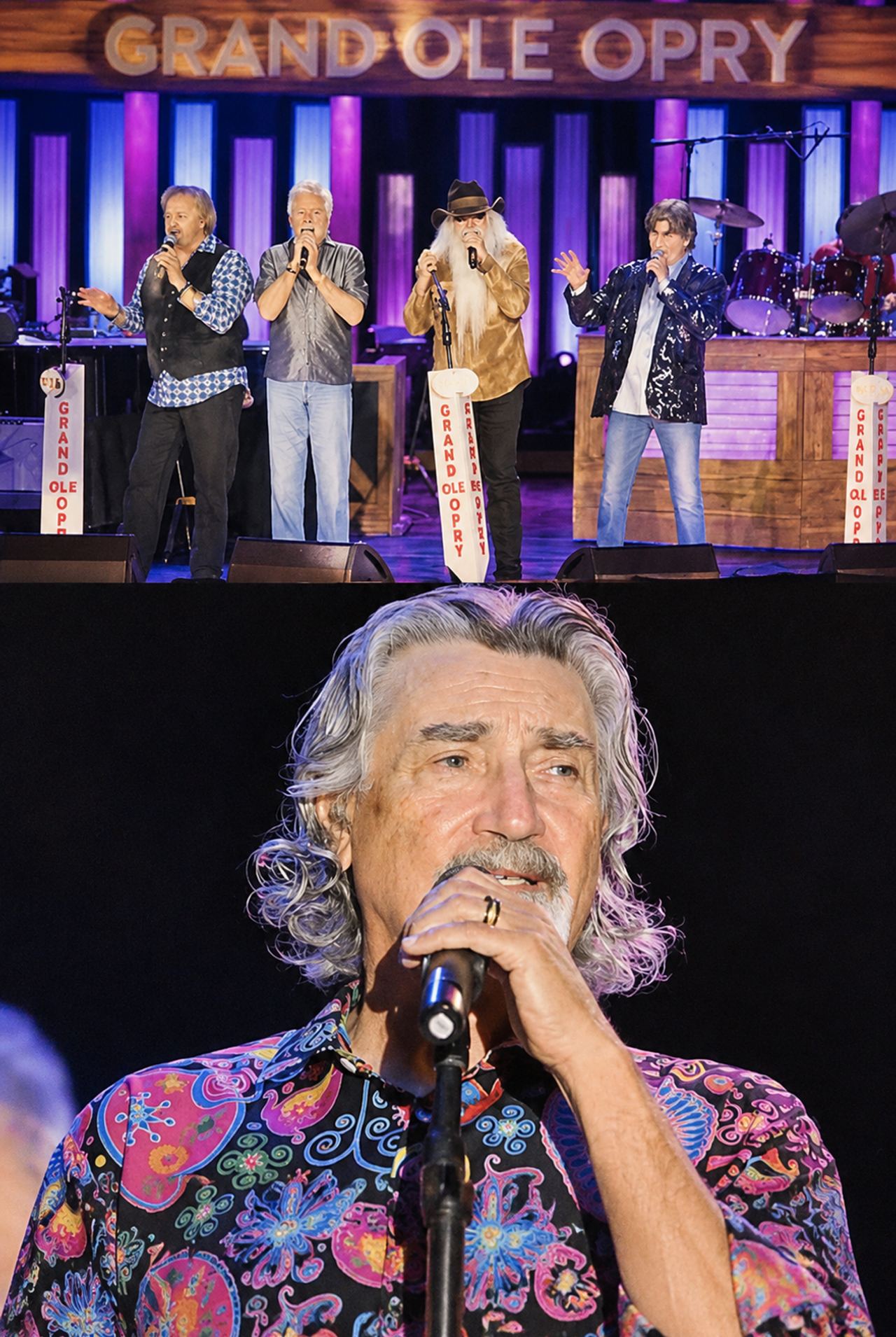
That kind of companionship is part of what gives groups like The Oak Ridge Boys their lasting appeal. Fans come for the songs, but they stay connected because they feel they are witnessing a true bond. In moments like this, the years shared between performers become visible in a glance, a step closer, a steadying hand. It reminds an audience that harmony is not only musical. Sometimes it is personal too.
The moment everyone was waiting for
Every singer has something audiences especially associate with them, and for Richard Sterban, one of those defining elements is his signature bass solo. On this night, that part of the performance carried extra anticipation. Months had passed since fans had heard those deep notes in person. There was excitement, but also a quiet uncertainty that often comes with a comeback after serious treatment. People hope, they believe, and they wait to hear how the moment will unfold.
When the time came, the hall fell quiet. Sterban leaned into the microphone and delivered the deep, resonant low notes that fans had waited months to hear. The reaction was immediate, with cheers moving through the room. It was a release of feeling as much as a response to the sound itself. In that instant, the audience heard not just a familiar voice, but a piece of normalcy restored. They heard proof that he was back in the place where he belonged.
That is often what makes return performances so moving. The artist is not trying to erase what happened or pretend the difficult months never existed. Instead, the performance holds both realities at once. It carries the memory of the struggle and the joy of overcoming enough to step back into the light. Sterban’s bass solo seems to have done exactly that, giving the audience a moment they could feel in the room and remember long afterward.
A night of gratitude and emotion
As the applause continued at the end of the performance, Sterban removed his glasses and wiped the corner of his eye. Then, with one hand over his heart, he bowed deeply from the center of the wooden circle that had waited all those months for his return. It was a simple image, but a lasting one. It captured the emotion of the night without needing any elaborate speech.
Moments like that resonate because they speak to something universal. Even people who have never stood on the Opry stage understand what it means to return to something you love after being forced away from it. They understand the uncertainty of waiting, the courage of trying again, and the gratitude that comes with being welcomed back. That is why this performance reached beyond the usual boundaries of a concert recap. It became a story about endurance, friendship, and the healing power of familiar places.
For The Oak Ridge Boys, for Opry audiences, and for those who have followed Sterban through the years, the night offered a memory that was both celebratory and tender. It showed an artist stepping back into his role, supported by his bandmates and embraced by an audience that understood the significance of every note. The details of the evening, from the standing ovation to the bass solo to the final bow, all came together to create a scene that will stay with many who witnessed it.
If this moment moved you too, share your thoughts and memories of Richard Sterban and what his return to the Grand Ole Opry meant to you.
Read more stories
- There are so many beautiful things in life, but nothing compares to the joy of holding you
- My Pregnant Daughter Was Battling Cancer When She Asked for Just One Joyful Day: a Gender Reveal Party. But Hours Before the Celebration, a Phone Call Brought Her and Her Husband to Tears—and I Worried the Box in Our Backyard Might Never Be Opened.
- A Charity Gives a Woman’s 12-Year-Old Son with Cancer One Wish – He Uses It to Feed 300 Homeless People, but Then a Stranger Asks Her, ‘He Hasn’t Told You the Truth, Has He?’
- In his latest memoir, The Last Leaf, Willie Nelson says his wife Annie saved his life.
In