Loretta Lynn Sang Her Real Childhood Story on TV — and Coal Miner’s Daughter Became a Country Classic
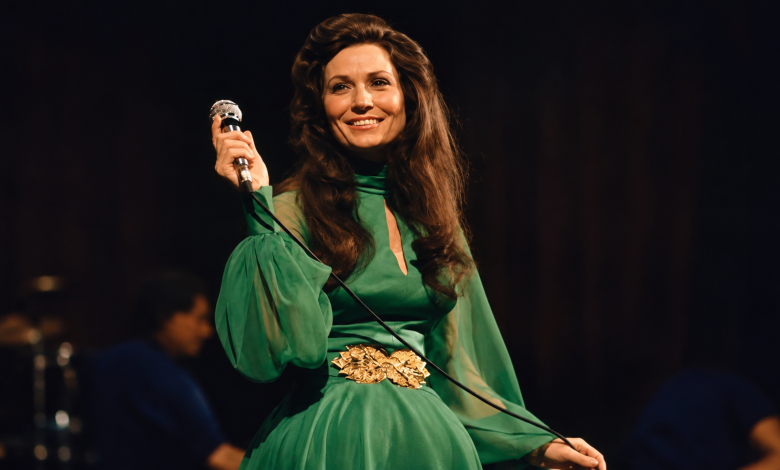
On October 11, 1970, Loretta Lynn stepped onto the stage of The Ed Sullivan Show with a song unlike the bold, confrontational hits that had made her famous. Instead of warning a romantic rival or challenging an unfaithful husband, she told the story of her own childhood in the hills of Kentucky. The song was Coal Miner’s Daughter, and its simple details carried a lifetime of memories.
The performance came just days after Decca released the single. Viewers heard a country star speak openly about poverty, family, and the pride she felt in the place she once called home. By December, the song would reach No. 1 on the country chart. More than fifty years later, the surviving television footage still shows why that personal story mattered.
The Kentucky Home Behind the Song
Loretta Webb grew up in Butcher Hollow, near Van Lear, Kentucky, as one of eight children. Her father, Melvin Webb, worked in the coal mines, while her mother, Clara, kept the family together through long days of household work. Their home offered little luxury, and money often ran short. Yet the children also grew up with music, close family ties, and memories that never left Loretta.
In Coal Miner’s Daughter, she looks back on ordinary moments that wealthy families might never have noticed: washing clothes by hand, carrying water, reading by lamplight, and getting through another demanding day. She never asks listeners to pity her. Instead, she honors the parents who worked hard to care for their children and finds dignity in a modest beginning.
The wooden house in Butcher Hollow remains a meaningful landmark for fans. A photograph from 2014 shows the home long after Loretta left Kentucky. It does not show the house as it looked in 1970, but it helps connect the song to the real landscape and family story behind it.

She Wrote More Verses Than the Record Could Hold
Loretta began writing Coal Miner’s Daughter in 1969. According to an account preserved by the Library of Congress, she created the melody and words together and originally wrote nine verses. She remembered her childhood in such vivid detail that she could have kept going. The finished recording, however, needed a shorter running time, so she removed three verses and kept six.
That decision gave the song a shape listeners could follow without losing its personal heart. Loretta moved from the hard work of her parents to the changing seasons and the passage of time. By the end, the little girl from Kentucky had grown into a woman who understood how much her upbringing had shaped her.
Loretta later acknowledged that she had doubts about releasing a song so closely tied to her own life. She wondered whether anyone would want to hear a country star talk about a poor childhood. Her audience answered that question in a way no one could ignore.
A Historic Night on The Ed Sullivan Show
When Loretta sang Coal Miner’s Daughter on October 11, 1970, she brought those memories to a national television audience. The appearance happened during the same week that her record reached stores. The Ed Sullivan Show introduced performers to families who gathered around the television each Sunday, so the moment gave her autobiographical song an important stage.
The original footage reveals the qualities that made Loretta so compelling. She needed no elaborate introduction to her story. Her direct delivery and unmistakable Kentucky voice carried the meaning. The broadcast came before the single reached No. 1, making it a special glimpse of a classic at the start of its public life.
The official Ed Sullivan archive later shared this October 1970 performance online. It is the television performance featured at the end of this article, not a modern recreation or a scene from the movie.
One Song, a Bestseller, and a Hollywood Movie
Coal Miner’s Daughter rose to the top of Billboard’s country chart in December 1970. The success showed another side of an artist whose earlier songs often tackled marriage, jealousy, and the frustrations women faced. Loretta could deliver a sharp warning, but she could also move listeners with gratitude and memory.
The title soon reached beyond radio. In 1976, Loretta published her autobiography, Coal Miner’s Daughter, with George Vecsey. Then, in 1980, Universal Pictures released a biographical film with the same name. Sissy Spacek played Loretta and won the Academy Award for Best Actress for her portrayal. The song had become the name of an entire life story.
The Library of Congress added Loretta’s recording to the National Recording Registry in 2009, recognizing its cultural and historical significance. A personal memory from rural Kentucky had earned a lasting place in American music history.
Why Fans Still Treasure This Performance
For longtime country fans, Coal Miner’s Daughter can bring back an era when a singer could make a whole family story feel close and familiar. For younger listeners, it offers a window into a working-class life that rarely appeared in glamorous entertainment. The details are specific to Loretta, but the feelings are universal: love for family, respect for hard work, and longing for a place that time has changed.
The October 1970 performance captures those feelings before the autobiography, the Oscar-winning film, and decades of tributes. Loretta stands onstage and tells her story in her own words. That simplicity is what makes the footage worth revisiting today.