Merle Haggard Sang Okie from Muskogee on TV in 1970 — The Country Hit That Divided and United America
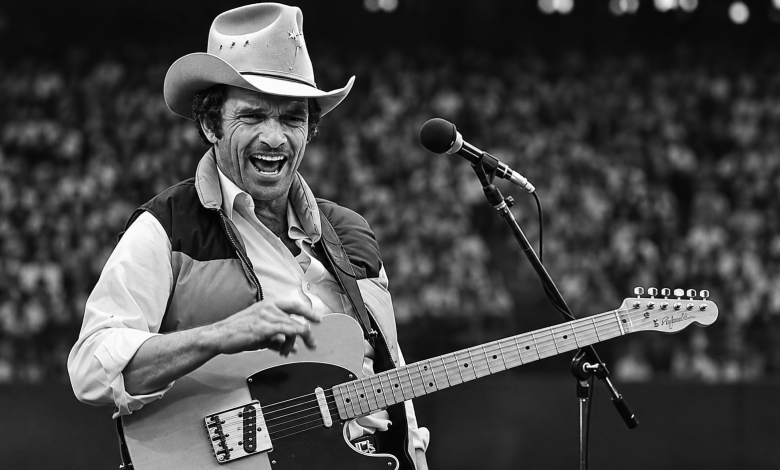
In 1970, Merle Haggard appeared on The Porter Wagoner Show and performed one of the most discussed songs in country music. Okie from Muskogee had already reached No. 1, and its familiar opening drew a strong response from audiences who recognized its message about small-town life. Yet the song carried a complicated history. Some listeners heard pride in traditional values, while others heard a sharp response to the counterculture of the late 1960s. The surviving television appearance captures Haggard at the height of that national conversation.
The Life That Shaped Merle Haggard
Haggard grew up in the Bakersfield area of California after his family moved west from Oklahoma during the Depression. His early years included serious trouble with the law, and he spent time in San Quentin State Prison before rebuilding his life through music. That experience later influenced his songs about regret, responsibility, and second chances.
In the 1960s, Haggard helped define the Bakersfield sound, a tougher, guitar-driven alternative to some of Nashville’s smoother productions. With his band, the Strangers, he recorded songs about working people, personal failures, and ordinary Americans. The Bottle Let Me Down, Sing Me Back Home, and Mama Tried established his reputation as a songwriter who could tell difficult stories without pretending that life was easy.
A Song Written During a Divided Decade
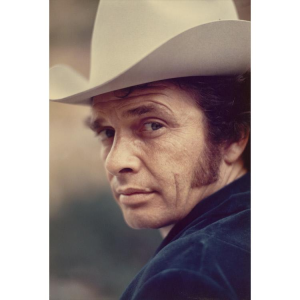
Haggard wrote Okie from Muskogee with Roy Edward Burris in 1969. The United States was debating the Vietnam War, generational change, and new social attitudes. The song portrayed a community that took pride in familiar customs and rejected behaviors associated with the youth counterculture. Its direct language made it instantly memorable, but listeners disagreed about its meaning almost from the beginning.
Some fans embraced the recording as a straightforward statement of patriotism and small-town identity. Others heard satire or felt that it unfairly dismissed younger Americans. Haggard himself discussed the song in different ways over the years, sometimes emphasizing its humor and sometimes explaining the frustration that inspired it. Those changing reflections are a reminder not to squeeze a complex artist into one simple political label.
An Immediate Country Music Success
The single reached No. 1 on Billboard’s country chart in 1969 and held that position for four weeks. Its success showed how strongly the song connected with part of the country music audience. In 1970, the Country Music Association honored Okie from Muskogee as Single of the Year. The accompanying live album from Muskogee also earned major recognition.
The song became bigger than one recording. People quoted its title, argued over its message, and sang it at concerts. For Haggard, the attention brought fame but also created expectations that he would always represent a single cultural viewpoint. His wider catalog tells a richer story, with tenderness, self-criticism, humor, and sympathy for people facing hard circumstances.
The 1970 Porter Wagoner Television Performance
In a surviving episode of The Porter Wagoner Show from 1970, Haggard and the Strangers performed Okie from Muskogee before the television cameras. The video below comes from that vintage appearance, not from the 1969 live album recorded in Muskogee, Oklahoma. That distinction matters because fans often encounter different live versions under similar titles online.
The television clip shows how naturally the song worked onstage. Haggard’s direct singing and the band’s steady accompaniment leave plenty of room for the words. He does not need a large production to hold the audience’s attention. The performance also offers a rare glimpse of the country television environment that helped bring regional stars into American living rooms.
Beyond One Controversial Song
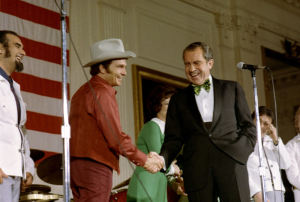
Haggard’s public recognition continued to grow. In March 1973, he performed at the White House with the Strangers and other country musicians, a moment that reflected his place in mainstream American culture. Yet his enduring influence reaches far beyond famous appearances. Country artists have spent decades studying his expressive voice, economical writing, and fearless willingness to sing about complicated subjects.
Okie from Muskogee remains an important record partly because people still debate it. Hearing the song in its original era makes it easier to understand how it captured a moment when Americans struggled to agree about who they were. It also reminds us that music can preserve an atmosphere, not just a melody.