At 13 We Shaved Our Heads for a Friend Fighting Cancer, but 17 Years Later He Asked Us to a Dinner We Would Never Forget
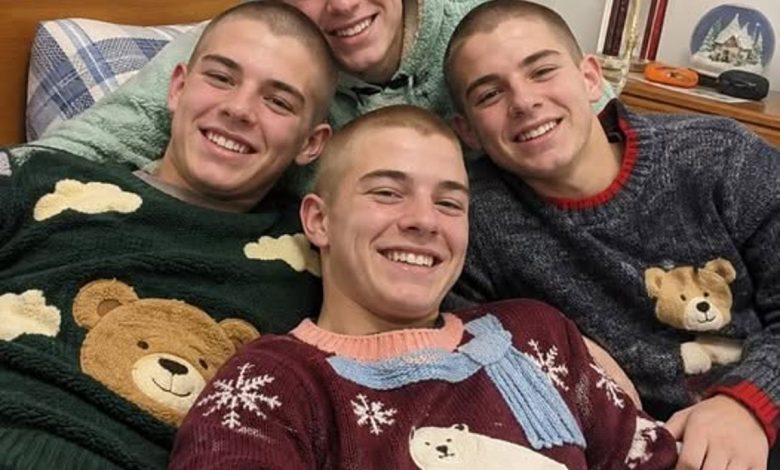
Four Chairs
Part One: The Clippers
We were thirteen that fall when our friend Daniel was diagnosed with cancer.
It was acute lymphoblastic leukemia. Back then, I couldn’t even spell it, and I didn’t really understand what it was, except that it meant Daniel Kowal stopped showing up at school in October of eighth grade, and when I biked past his house on Montague Street after soccer practice, his mother’s car was never in the driveway, because she was always at the hospital in Chicago, ninety miles away.
He was gone for six weeks. When he finally came home, he wasn’t the same. He was thinner. His skin looked gray. He was exhausted all the time. And the chemotherapy had stripped every bit of hair from his head.
His mother, Maureen, called my house on a Sunday evening in November. My mom picked up. I heard the tone of her voice shift in the kitchen, the way mothers’ voices change when they’re speaking to another mother about something painful. Then she called me to the phone.
“Will,” Mrs. Kowal said. Her voice sounded careful and worn out. “Daniel is going back to school next Monday. Just half-days. The doctors say he’s strong enough.” She stopped for a second. “He’s scared, sweetheart. He thinks everyone is going to stare at him. He thinks they’re going to laugh. He’s been crying in his room every night.”
She paused once more.
“I just thought you should know,” she said. “You and Jake and Ryan. You’re his best friends.”
I hung up. Then I called Jake and Ryan and told them to get over to my house. Immediately.
They rode over on their bikes in the dark, bundled in winter coats. The three of us sat on my bedroom floor in our house on Rural Street in Rockford, Illinois, thirteen years old, with the Bulls game playing on my little TV and the sound turned down.
I told them what Mrs. Kowal had said.
Jake Moreno was the biggest one of us, already five-ten in eighth grade, with a thick black head of hair practically made for a buzz cut and a temper he was still figuring out how to control. He punched my pillow.
“We can’t just sit here while he’s going through this,” Jake said.
Ryan Kelleher was the quiet one. Thin, red-haired, covered in freckles, the kind of kid who read the entire encyclopedia for fun. He sat cross-legged on my floor, staring at the carpet for a long time. Then he lifted a hand and ran his fingers through his own hair. Bright red, curly, so thick his mother had to thin it with special shears.
“What if,” Ryan said slowly, “Daniel wasn’t the only kid at school with no hair?”
Jake and I looked at each other.
We knew exactly what he meant.
Part Two: Three Potatoes
My dad kept a pair of Wahl electric clippers in the bathroom cabinet. Every Saturday morning he used them on his own head in front of the mirror, because he’d been going bald since he was twenty-eight and figured he might as well lean into it.
I took them out. I plugged them in. They buzzed in my hand like an angry bee.
Jake went first, either because he was the bravest or because he wanted to show that he was. He sat on the edge of my bathtub with a towel around his shoulders. I ran the clippers straight down the center of his head, from front to back. A thick strip of black hair dropped into the towel.
All three of us just stared at it.
Then Jake started laughing. Then Ryan did. Then I was laughing so hard I had to set the clippers down on the sink.
It took us close to an hour. We traded off. Jake shaved me. I shaved Ryan. Ryan’s red curls came off in big soft clumps all over my bathroom floor, and he kept picking them up, studying them, and saying, “Huh.”
When we were finished, we stood side by side in front of my bathroom mirror.
We looked awful. Our heads were pale and bumpy and uneven, with little cuts and spots where the clippers had missed. Ryan’s ears stuck out like handles on a sugar bowl. Jake had a scar on the back of his head none of us had ever noticed before, from falling off a swing when he was four.
We looked like three small potatoes.
We laughed and laughed. And not one of us was sorry.
My mother found us that night at ten o’clock, three bald thirteen-year-olds standing in a bathroom covered in hair, laughing like idiots. She stood in the doorway in her bathrobe for a long moment without saying a word.
Then she asked, “Is this for Daniel?”
“Yeah,” I said.
She put a hand over her mouth. Then she went downstairs and called Jake’s mom and Ryan’s mom, and both of them said the boys could spend the night, and in the morning she made us pancakes and drove us to Daniel’s house before school.
Part Three: Montague Street
Mrs. Kowal answered the door.
She was a small woman, around forty-seven then, with dark hair turning gray and the permanently exhausted eyes of a single mother whose only child had cancer. Daniel’s father had left when Daniel was five. It had always just been the two of them.
She looked at us standing on her front porch in our winter coats. Three bald heads, pink from the cold, in the November morning.
For a long second she didn’t say anything. Then her eyes filled with tears.
“Oh, boys,” she whispered. “Oh, boys.”
She pulled all three of us into a hug right there on the porch. She held us so long that Jake started shifting around. Then she let go, wiped her eyes, and took us upstairs.
Daniel was sitting on the edge of his bed in his pajamas, staring down at the floor. He had a gray knit beanie pulled low over his ears, even though the house was warm. His backpack sat by the door. He’d been trying to gather the courage to go to school.
“Mom,” he muttered without looking up. “I told you I don’t feel like seeing anyone.”
Then he looked up.
His mouth dropped open.
He stared at the three of us in his bedroom doorway, completely confused. Three bald heads. Three grinning faces.
“What happened to your hair?” he said.
Ryan shrugged.
“We heard bald was in,” he said. “Didn’t want to miss the trend.”
Daniel let out a small, uncertain laugh. “You actually shaved your heads?”
“Obviously,” Jake said. “You didn’t think we were going to let you be the only handsome bald guy in eighth grade, did you?”
Daniel tried to smile. But his eyes were already filling with tears.
“You guys didn’t have to do that,” he said softly.
I stepped into his room.
“Yeah,” I said. “We did. We’re in this together.”
That was all it took.
Daniel started crying. Really crying, the kind you do when you’ve been holding everything in for weeks. He got up from the bed and threw his arms around the three of us, and he yanked off his gray beanie and tossed it across the room, and for several minutes the four of us just stood there in his little bedroom on Montague Street, holding on to one another, four bald heads together.
Mrs. Kowal stood in the doorway and cried too.
That one simple act, three boys and a pair of electric clippers, became the foundation of a friendship that shaped the rest of our lives.
Part Four: Eighth Grade
That Monday morning, the four of us walked into Lincoln Middle School side by side. Four bald heads in a line.
The whole hallway stopped and stared.
Then somebody started clapping. I never learned who it was. Some kid near the trophy case. Then a few others joined in. And by the time we got to homeroom, half of eighth grade was applauding and the other half was asking where they could get clippers.
By Friday, eleven more boys in our grade had shaved their heads. And two girls. And Mr. Pellegrino, the science teacher, who had already been bald for years anyway, wrote TEAM DANIEL across his scalp in washable marker.
In the months that followed, we went to school with Daniel whenever he was strong enough. We carried his books when he was too tired. We sat with him at lunch when the chemo made him so sick he couldn’t eat. We told off the eighth-grader from Guilford who asked whether Daniel was dying.
We spent hundreds of afternoons at his house on Montague Street, playing Xbox in his bedroom, watching The Office on DVD, doing homework at the kitchen table while Mrs. Kowal made grilled cheese sandwiches.
We rode with his mom to Chicago for treatments at Lurie Children’s Hospital, all four of us squeezed into the backseat of her old Honda Accord, singing along with the radio. We sat for hours in the waiting room. When he was hooked up to chemo, we sat by his bed and played cards.
We kept our heads shaved the entire time. Every Saturday, at my house, using my dad’s clippers. Until Daniel’s hair finally grew back.
Two and a half years later, when we were sophomores at Auburn High School, the doctors at Lurie gave us the news we had been praying for.
Daniel was in remission.
We celebrated like we had won the lottery. We drove to the Culver’s on North Alpine Road in Jake’s mom’s minivan and ordered four of the biggest sundaes they had and ate them in the parking lot, sitting on the hood, laughing until we felt sick.
Part Five: Brothers Forever
All through high school, the four of us were inseparable.
We shared birthday parties and first girlfriends and first heartbreaks. We shared terrible ideas, like the time Jake tried to jump his bike over the creek in Sinnissippi Park and broke his wrist, and the time Ryan and I got caught sneaking into the drive-in theater in Belvidere. We shared dreams about the future too, lying on our backs on the roof of my garage at two in the morning, staring up at the stars.
Daniel was going to be a doctor. He wanted to work with kids who had cancer. He said it at least a hundred times.
At our high school graduation, in the gym at Auburn, the four of us stood in our caps and gowns in a little circle beside the bleachers while everyone’s parents took pictures.
Jake stuck out his hand. Palm down.
“No matter where life takes us,” he said, “we’re brothers. Forever.”
Ryan put his hand on top. Then I did. Then Daniel.
“Forever,” we all said.
We meant every word.
Part Six: Drifting
But growing older changes things. It always does.
College took us to different states. Ryan went to Iowa City to study nursing at the University of Iowa. Jake went to Northern Illinois in DeKalb for construction management. I went to Indiana University in Bloomington to study education. And Daniel went to the University of Wisconsin in Madison, premed, exactly like he had always said he would.
After that came careers. Ryan became an ER nurse in Des Moines. Jake started his own contracting business back in Rockford. I became a high school history teacher in Indianapolis. Daniel finished medical school at the University of Wisconsin and stayed in Madison for his pediatrics residency.
Then came marriages and families. Jake married his high school girlfriend, Gabriela, and they had twin boys. I married another teacher named Laura, and we had a daughter, Grace. Ryan mostly stayed single and worked nights. Daniel married a woman named Sasha in medical school, and they had a daughter named Ivy, and then, when Ivy was eighteen months old, Sasha accepted a research position in Seattle and decided she didn’t want to be married anymore.
Daniel got full custody. He became a single father and a pediatric resident at the same time. I still don’t know how he managed it.
The daily phone calls became weekly ones. Then monthly. Then the occasional group text on somebody’s birthday, or after a Bulls game, or a meme of a potato that Ryan sent every November like clockwork.
But whenever we did talk, it felt like no time had passed at all.
Part Seven: The Message
Then, seventeen years after that morning on Montague Street, in late October, I got a text from Daniel.
I was in my classroom at North Central High School in Indianapolis, grading Civil War essays during my planning period. My phone buzzed on the desk.
Hey, brother. I’m turning 30 next Saturday. I want to have dinner with you and Jake and Ryan. Just the four of us. At Lino’s, in Rockford. It would mean the world to me if you could make it.
A minute later, another text appeared underneath it.
Please come. I really need all three of you there.
I read those words twice.
Something about the second message bothered me.
Daniel had never been the kind of person who insisted on anything. Even when he was thirteen and sick, he told his mother he didn’t want to bother anyone. When his marriage fell apart, he didn’t tell us for six months. When he graduated from medical school, he didn’t even send invitations because he didn’t want us to feel obligated to drive to Madison.
Please come. I really need all three of you there.
I texted Jake and Ryan in a separate group chat.
Did you get Daniel’s message?
Jake replied within a minute. Yeah. Weird, right? The please.
Ryan answered ten minutes later. He had just gotten off a night shift. Something’s wrong. He doesn’t say please like that.
I cleared my schedule. Laura took Grace to her soccer game by herself. I made the four-hour drive from Indianapolis to Rockford on Saturday afternoon, up I-65 and across I-90, through the flat brown November fields of northern Indiana and Illinois.
I had a bad feeling the entire way.
Part Eight: Lino’s
Lino’s is an Italian restaurant on East State Street in Rockford that has been there since 1958. Red-checkered tablecloths, candles in old Chianti bottles, a mural of the Bay of Naples on the back wall. Our families used to go there for every birthday when we were kids. Daniel’s mom took the four of us there to celebrate the day he went into remission, before Culver’s, and the owner, old Mr. Gallo, sent out free tiramisu for everyone.
The hostess led me past the main dining room, which was crowded and noisy on a Saturday night, into a small private room in the back. A wooden door with frosted glass.
Jake and Ryan were already there.
We hugged the way you hug people who’ve known you almost your whole life. Long hugs, with back slaps. Jake had gotten broader since the last time I saw him, and there was gray in his beard now. Ryan had somehow gotten even thinner, if that was possible. His red hair was cut short and starting to recede at the temples.
“Will,” Ryan said. “You look old.”
“You look older,” I said.
“I’m a night-shift ER nurse,” Ryan said. “I’m eighty-four.”
Then I noticed the table.
A small round table in the center of the private room. A red-checked tablecloth. A candle in a Chianti bottle.
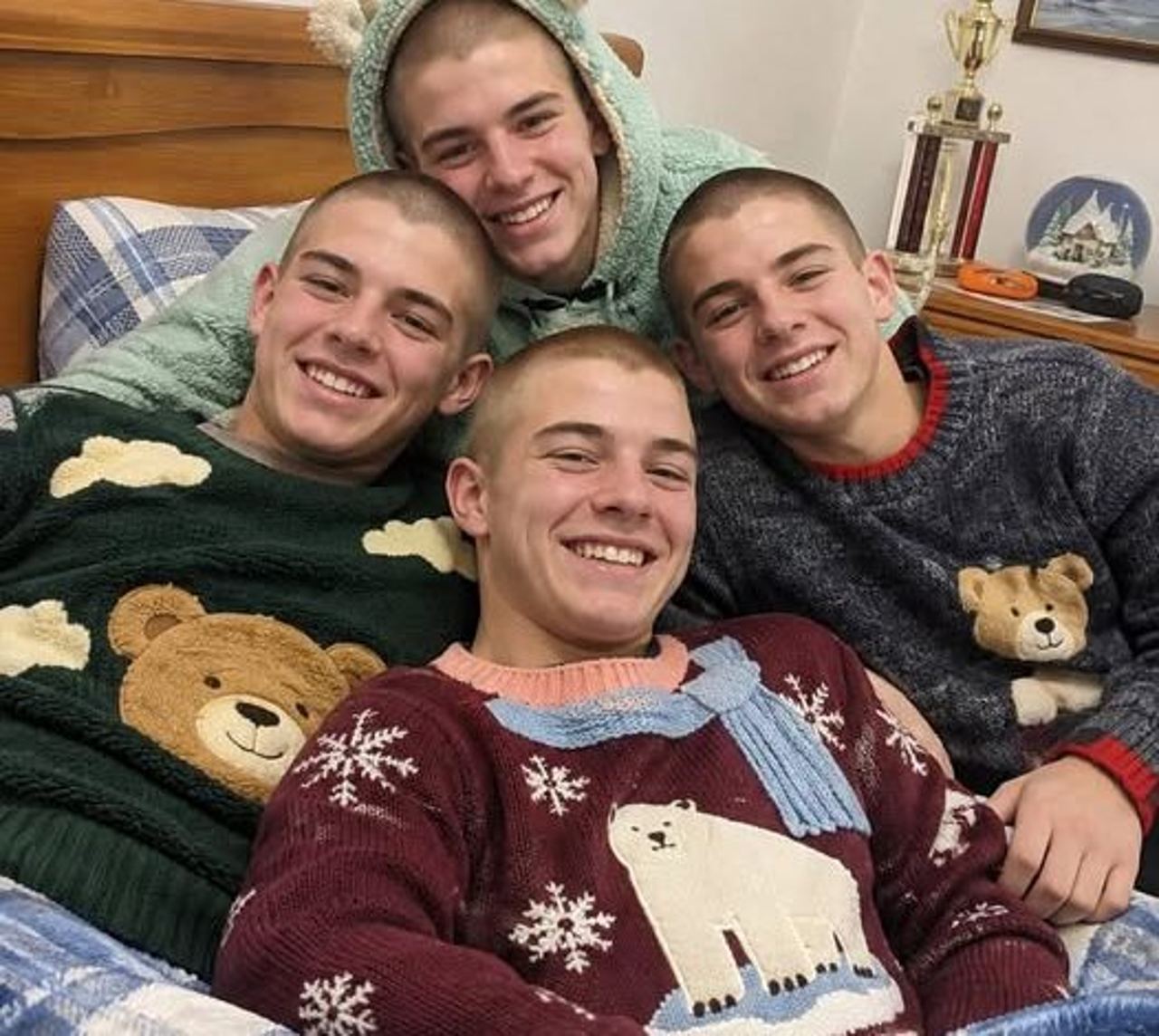
Four chairs. Four place settings. Four wine glasses.
No one else.
“Are we the whole party?” I asked.
Ryan glanced around the small room. “Apparently.”
“Where’s his mom?” Jake asked. “Where’s Ivy?”
Before we could say anything else about it, the door opened behind us.
Part Nine: Daniel
Daniel walked in.
For a second, I barely recognized him.
He had always been slim. But now he was thin. His face had become gaunt, with hollows beneath his cheekbones. His skin had a grayish cast I recognized from somewhere deep in my memory, from eighth grade. There were dark circles under his eyes, deep ones.
And he was wearing a hat. A gray knit beanie. Pulled low over his ears. Indoors, in a warm restaurant.
But when he saw us, his old smile came back. The same smile from Montague Street.
“My brothers,” he said quietly.
We all stood.
He hugged Jake first, and held on for a long time. Then Ryan. Then me.
Each hug lasted longer than the one before. When he hugged me, I could feel his shoulder blades through his sweater. I could feel how little he weighed.
He held on to me for a long moment. Then he pulled back. He looked at my face.
“You came,” he said.
“Of course I came,” I said.
When he finally sat down, he looked around the table at the three of us for several seconds without speaking.
Ryan was watching him with a nurse’s eyes. I could tell he was taking everything in: the weight loss, the color of his skin, the beanie. I saw his jaw tighten.
“Daniel,” I said. “Is everything okay?”
He nodded. But his face said something else.
Part Ten: “It’s Not About My Birthday”
The waiter came in. A young guy in a white apron. Daniel ordered a bottle of Chianti and four plates of Lino’s famous chicken parmigiana, the same thing we always used to get. Then the waiter left and shut the door behind him.
“First,” Daniel said, “I want to thank you for coming. I know everyone’s busy. I know it’s a long drive.”
“Come on,” Ryan said. “You only turn thirty once.”
Daniel gave a faint smile.
“That’s true,” he said.
Then he looked down at his hands on the red-checkered tablecloth.
“But this dinner isn’t really about my birthday,” he said.
The whole room changed. I felt it. The air went still.
Daniel laced his hands together on the table. I noticed they were trembling.
“Do you remember,” he said, “what you did for me when we were thirteen?”
Jake laughed. “You mean when we all decided to look like potatoes?”
Daniel laughed too.
“Exactly that,” he said.
He paused.
“I don’t think any of you ever really understood,” he said quietly, “how much that meant to me.”
Part Eleven: What It Meant
He looked around the table at each of us.
“When I lost my hair in eighth grade,” he said, “I thought everyone would see me as the sick kid. Forever. I was afraid they’d laugh at me. I was afraid they’d pity me. I had stopped eating. I had stopped sleeping. Every morning I’d sit on the edge of my bed trying to work up the courage to go to school, and I couldn’t do it. I felt completely alone.”
His voice wavered.
“And then three boys walked into my bedroom with shaved heads,” he said, “and reminded me I still belonged somewhere.”
None of us said anything. Jake was staring at the candle. Ryan was looking down at his hands.
“That day gave me the courage to face everything that came after,” Daniel said. “Every chemo treatment at Lurie. Every spinal tap. Every night I threw up until I couldn’t breathe.” He looked at us. “I would close my eyes and think about the three of you standing in my bedroom doorway, bald, grinning like idiots. And I’d think, I’m not alone. They’re in this with me.”
He swallowed.
“I’ve carried that memory with me for seventeen years,” he said. “Through college. Through medical school. Through every child I’ve ever treated.”
Ryan wiped at his eyes with the back of his hand.
“Man,” he said. “You’re going to make us cry before the chicken parm even gets here.”
Daniel smiled. A small, tired smile.
Then he reached into the inside pocket of his jacket.
Part Twelve: The Envelopes
He took out three envelopes. Plain white, letter-sized, a little thick. He set them side by side on the red-checkered tablecloth.
Each one had a name written on the front in his handwriting. The neat, slanted doctor’s handwriting he had developed somewhere between eighth grade and medical school.
Jake.
Ryan.
Will.
We looked at one another.
“What is all this?” Jake asked.
Daniel rested his hands gently on top of the envelopes, like he was holding them down so they wouldn’t blow away.
“There’s something I haven’t told you,” he said.
His eyes filled with tears.
“Something happened six months ago,” he said. “And ever since then I’ve been trying to figure out how to tell the three people who helped me survive the hardest thing in my life.”
My stomach turned cold.
Daniel took a shaky breath.
“I wanted us all together tonight,” he said, “because I need you to know. And I couldn’t make myself say it over the phone.”
He looked at each of us one by one. Jake. Ryan. Me.
“Before you open those letters,” he said, “I need you to promise me one thing.”
No one moved.
“Promise me,” Daniel said, “that after tonight, you won’t look at me like I’m the sick kid. Not ever. No matter what happens.”
His voice cracked.
“I spent two and a half years being the sick kid,” he said. “I don’t want to spend whatever time I have left being it again.”
Then he lifted a hand and took off the gray knit beanie.
His head was bald. Completely smooth. Pale in the candlelight.
Part Thirteen: Six Months
“It’s leukemia,” Daniel said. “Again.”
No one said anything. I couldn’t breathe.
“Acute myeloid leukemia,” he said. “AML. Not the same kind I had as a kid. It’s called therapy-related AML.” He gave something like a humorless laugh. “Some of the chemotherapy drugs that saved my life when I was thirteen can cause a different kind of leukemia twenty years later. It’s rare. Less than one percent.” He shook his head. “I’ve read every paper on it. I’m a pediatrician. I know the statistics.”
He looked at the reflection of his bald head in the dark window.
“I just never thought I’d be one of them,” he said.
“Six months ago,” he said, “I was examining a four-year-old at the clinic in Madison, and I got dizzy and had to sit down on the exam table. A nurse checked my blood pressure and made me get a blood count. My white count was fourteen times normal.”
He looked at Ryan. Ryan’s face had gone completely white. He knew exactly what that meant.
“I started induction chemotherapy at the University of Wisconsin hospital in May,” Daniel said. “Seven days of continuous infusion. Then another round in July. Then another in September.” He touched his bald head. “My hair started coming out in the second week. In the shower. Just like in eighth grade.”
“Why didn’t you tell us?” Jake said. His voice was shaking. “Six months, Daniel. Why didn’t you call?”
Daniel looked at him for a long time.
“Because you would have come,” he said quietly. “All three of you. You would have dropped everything. Jake, you’ve got twins and a business. Ryan, you work nights. Will, you’ve got Grace and a classroom full of kids.” He shook his head. “You would have shaved your heads and driven to Madison every weekend and slept in the hospital waiting room. I know you would. You did it when we were thirteen.”
He looked down at the envelopes.
“I didn’t want to be the sick kid again,” he said. “I didn’t want you to have to carry me again.”
Part Fourteen: The Transplant
“The chemo worked,” Daniel said. “Partly. I’m in remission. For now.”
All of us let out a breath.
“But with this kind of AML,” Daniel said carefully, “remission doesn’t last. Not without a bone marrow transplant. A stem cell transplant.” He looked at Ryan. “You know.”
Ryan nodded slowly. He was crying now, silently, tears sliding down his freckled face.
“I’m an only child,” Daniel said. “No siblings to test as a match. They ran me through the national registry in July. There are around forty million people in it worldwide.” He shook his head. “No perfect match. Not one.”
“So the doctors are doing what’s called a haploidentical transplant,” Daniel said. “A half-match. From my mom.”
“Mrs. Kowal?” Jake said.
“She’s sixty-four,” Daniel said. “She’s healthy. She matches half my genes, like every parent does. It’s harder than a full match. More risk. More complications. But it works more often than people think.” He took a breath. “They’re harvesting her stem cells on November 17th. Then they’ll completely wipe out my bone marrow with high-dose chemo and radiation. Then they’ll put her cells in.” He looked at the candle. “It’s like starting over. Like being born again, with somebody else’s blood.”
He looked up at us.
“The transplant is a week from Monday,” he said. “November 18th. At UW Hospital in Madison. I’ll be in isolation for five or six weeks.”
“What are the odds?” Ryan asked. His voice was very quiet. Professional. The ER nurse asking the question no one else at the table wanted to ask.
Daniel looked at him for a long time.
“For my situation,” he said, “with a haploidentical donor, about fifty percent,” he said. “At two years.”
The room went completely silent.
“Fifty-fifty,” Daniel said. “That’s why I needed you here tonight. Before it happens.”
Part Fifteen: The Letters
Jake picked up the envelope with his name on it. His big hands were trembling.
“Can we open them?” he asked.
“Yes,” Daniel said. “But I want you to know what’s in them first. So you don’t think it’s a goodbye letter.” He almost smiled. “It’s not a goodbye letter. I’m not that dramatic.”
He reached across the table and placed his hand on top of Jake’s.
“Ivy is four,” he said. “She’s the most important thing in the world to me. Her mother is in Seattle. She calls on Sundays. She sends gifts on birthdays. But she’s not going to raise her.” He swallowed. “My mom is sixty-four. She’ll do everything she can. But she’s getting older, and she’s giving me her bone marrow, and if something happens to me…”
He stopped. He took a breath.
“If something happens to me,” he said, “Ivy is going to need somebody. Not just one person. She’s going to need people who show up. Every birthday. Every soccer game. Every time she’s scared and thinks she’s alone.”
He looked at each of us.
“She’s going to need three guys who would shave their heads for her,” he said.
“The letters,” Daniel said, “are legal documents. My lawyer drew them up in Madison. If you sign them, and if something happens to me, you’ll be Ivy’s co-guardians. The three of you together. With my mom.” He looked at us. “Not instead of my mom. With her. A team.”
He wiped his eyes.
“I know what I’m asking,” he said. “I know you have your own families. Your own kids. I know it’s not fair. If you don’t want to sign, I understand. I’ll u…
Read more stories
- ‘I Might Not Have Known It Was Her’: Faith Hill, 59, Appears Remarkably Different Next to Tim McGraw in New Photos — Take a Look at Her Transformation
- How One Song Turned Luckenbach Into a Symbol of Simpler Living
- How One Song Made Luckenbach a Symbol of Country Simplicity
- My Sister Billed Our 79-Year-Old Mom For Everything Until My Son’s Birthday Toast Revealed Her