The Crossroads of Destiny: Neil Diamond’s Leap from Medicine to Music
In the vibrant tapestry of Brooklyn in the 1960s, a young Neil Diamond found himself at a daunting crossroads. With just ten credits standing between him and a coveted medical degree from NYU, the weight of his family’s sacrifices pressed heavily upon him. His grandparents had journeyed from distant lands, carrying dreams of a better life in a foreign country. His parents, too, had toiled tirelessly to carve out a future for their son—their hopes intertwined with the title of doctor, a symbol of stability and respect. Yet, despite the clear path laid before him, Neil’s heart sang a different tune.
As he sat in the lecture hall, the lectures faded into a dull hum, his mind wandering to vibrant, uncharted realms. In secret, he would slip away from the confines of academia, hopping onto the subway, each stop pulling him further from the life that was expected of him. His destination? The bustling streets of Tin Pan Alley, where dreams fluttered like the pages of unrecorded songs. He would pitch his creations to publishers, but the doors remained firmly closed, the silence echoing his solitude. Yet, like a moth drawn to light, Neil returned time and again, caught in the allure of a world that promised no guarantees, only the faint whisper of a dream.
A breakthrough came during his senior year when Sunbeam Music offered him a lifeline—a modest deal that paid fifty dollars a week for sixteen weeks, allowing him to write songs for others. In that moment, Neil stood at the precipice of a decision that would alter the course of his life. With a heart heavy with uncertainty, he chose to step away from the security his family had fought for, abandoning the white coat for a world where he was just one of many hopefuls. His parents’ disappointment weighed heavily on him, and friends questioned his sanity, but Neil felt an unquenchable fire inside, a passion he could no longer ignore.
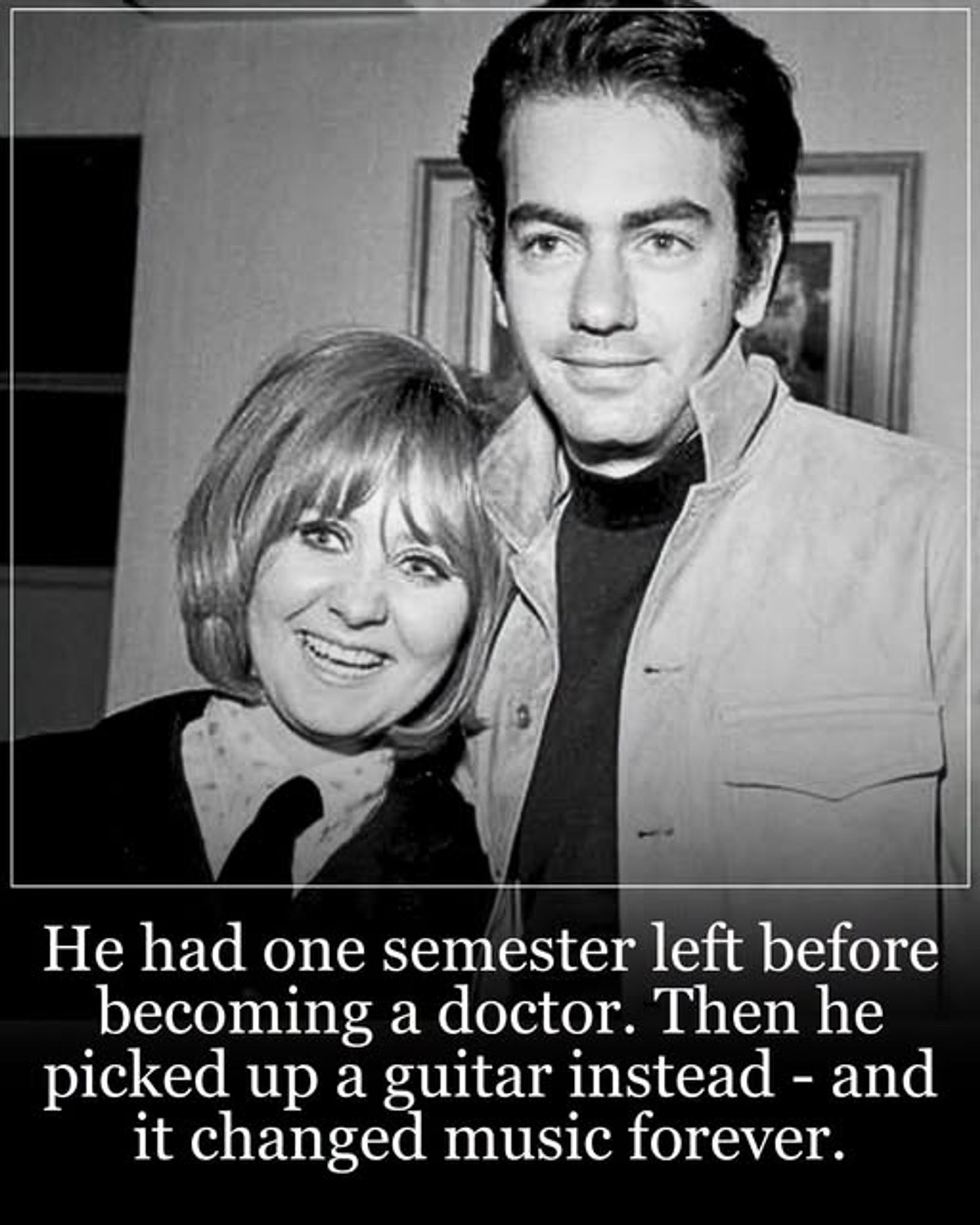
The initial years were nothing short of grueling. He poured his soul into his music, performing to empty rooms and feeling the sting of rejection as he watched others succeed. A small victory arrived in 1965 when the song “Sunday and Me” found a home with another artist, a flicker of hope amid the darkness. Yet, it was in 1966 that everything shifted spectacularly. The Monkees, a rising band, breathed life into his song “I’m a Believer,” catapulting it to the top of the charts and placing Neil’s name in the spotlight. Suddenly, he was no longer just a struggling songwriter; he was a part of something larger, his melodies reverberating across America.
But the rush of success only fueled his desire for more. Neil craved to express himself, not merely as a writer hidden behind the curtain. He stepped boldly into the role of an artist, delivering hits like “Solitary Man” and “Cherry, Cherry,” songs that resonated deeply with the human experience. Each note paved a path away from the ghost of the medical career he abandoned, and as the years flowed, he forged his unique identity.
In the sweltering heat of a Memphis motel room, amidst the noise and chaos of life on the road, Neil found inspiration for yet another melody. This humble setting stood in stark contrast to the bright lights and fame that would follow but served as a reminder of his journey. It was here, in a moment of quiet reflection, that he realized the true essence of his path—embracing the uncertainty, choosing passion over predictability, and ultimately, crafting a legacy that would resonate for generations. Neil Diamond’s story is a testament to following one’s heart, the beauty of dreams deferred, and the magic that unfolds when we dare to stray from the expected.
Read more stories
- Released in 1971, this cheerful pop hit sounded bright and carefree on the surface… But hidden inside the lyrics was a surprisingly sad story most listeners never noticed.
- Shelley Winters: A Voice That Refused to Be Silenced
- Ed Harris’s Journey from Frustration to Acceptance in Dutton Ranch
- The Last Ride: John Wayne’s Moving Farewell in The Shootist