The Villain Who Haunts: Unpacking Anton Chigurh’s Chilling Realism

When Javier Bardem stepped onto the set of the Coen Brothers’ haunting film, “No Country for Old Men,” he was unaware that he was about to create a character that would leave an indelible mark on both cinema and the field of psychology. Bardem’s portrayal of Anton Chigurh became iconic, not for theatrical outbursts or elaborate monologues, but for his chilling, almost robotic demeanor. With hollow eyes and a cattle gun in hand, Chigurh enters scenes with a calm that belies the chaos he brings in his wake, leaving audiences trembling in their seats, grappling to understand the essence of his malevolence.
Chigurh’s unsettling nature caught the attention of two Belgian researchers, Dr. Samuel Leistedt and Dr. Paul Linkowski. Both trained in forensic psychiatry, they embarked on an ambitious three-year project to analyze the portrayal of psychopaths in film. Their objective was to measure how Hollywood’s notorious villains aligned with clinical standards for psychopathy, and they approached this task with the meticulousness of scientists, examining 400 films that spanned the history of cinema.
As they dissected the behavior of various screen villains, the researchers employed the same diagnostic markers used in clinical evaluations, such as a complete absence of empathy and an inability to feel remorse. This laborious effort revealed a startling truth: out of hundreds of filmic villains they observed, only 126 depicted traits that could be accurately classified as psychopathic. The majority, it turned out, fell short of the mark, often laughing too freely, seeking attention, or explaining their motives in ways that real-life psychopaths do not.
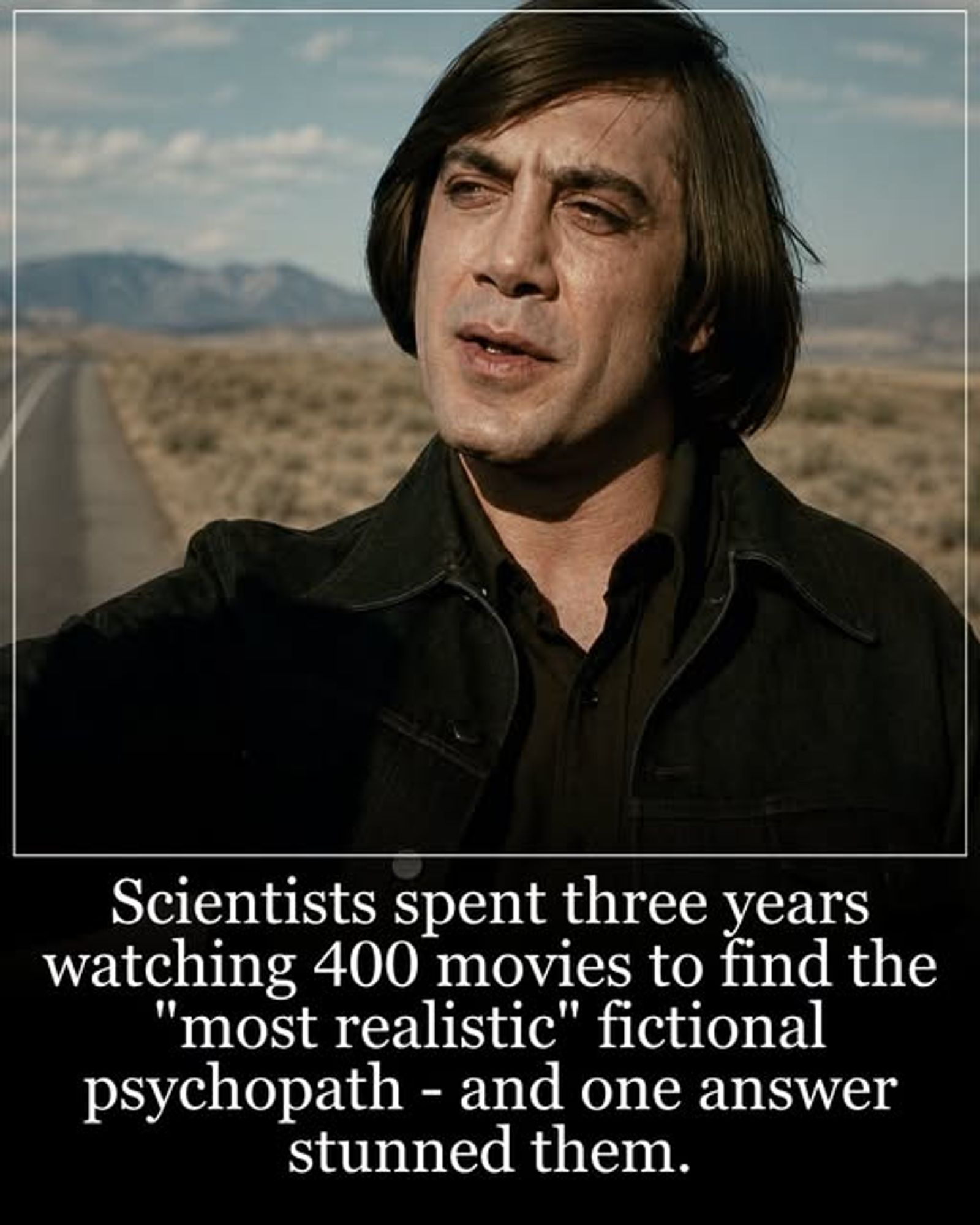
The stark contrast becomes particularly evident when analyzing Chigurh. Unlike many cinematic foes who, for all their cruelty, reveal a desire to connect—however twistedly—with their victims, Chigurh operates without emotion. He does not plead for attention or understanding. He simply executes his tasks with a chilling detachment, akin to someone completing mundane paperwork, devoid of the human experiences of guilt or sorrow. This stark portrayal resonates with what Dr. Leistedt describes as the “primary, idiopathic psychopath,” a type of individual whose moral vacancy is not rooted in past trauma but is simply a part of their existence.
As the researchers concluded their analysis, they highlighted the rarity of characters like Chigurh, who embody such authentic depictions of psychopathy. This character stands as a reminder that the most terrifying evils in our narratives often dwell in simplicity, woven into a fabric that lacks emotion. The chilling efficiency of Chigurh’s actions, devoid of any dramatics, strikes a nerve far deeper than any monologue or maniacal laughter could.
Reflecting on this chilling character, one can’t help but feel a mixture of dread and fascination. Chigurh transcends the realm of mere fiction; he serves as a stark reflection of humanity’s darker corners, a reminder that the scariest monsters are often those who walk among us, silent and unassuming, leaving behind the devastation of their indifference. In the end, Bardem didn’t just play a villain; he gave life to a profound exploration of what it means to be devoid of humanity, capturing an unsettling truth that continues to haunt audiences long after the credits roll.
Read more stories
- Released in 1971, this cheerful pop hit sounded bright and carefree on the surface… But hidden inside the lyrics was a surprisingly sad story most listeners never noticed.
- Shelley Winters: A Voice That Refused to Be Silenced
- Ed Harris’s Journey from Frustration to Acceptance in Dutton Ranch
- The Last Ride: John Wayne’s Moving Farewell in The Shootist