The hidden mathematician behind the map in your pocket
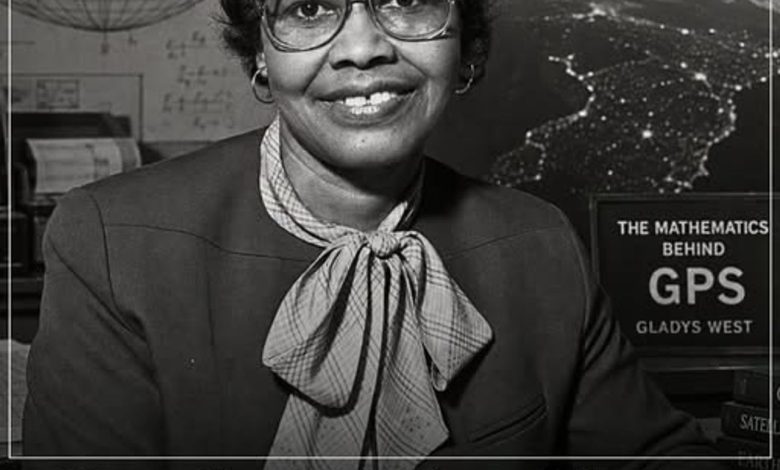
Somewhere right now, a plane is landing. A delivery driver is turning onto a street they have never seen before. A parent is watching a tiny dot drift across a map toward a school. Those moments feel ordinary, almost effortless. Yet all of them depend on a chain of calculations that reaches back to a woman who once sat at a government desk in rural Virginia, doing math no one was watching.
Her name was Gladys West. She grew up in Sutherland, Virginia, in a community where most futures were already sketched out before childhood could finish: fields, labor, repetition. But Gladys saw another path early on. She had a gift for math that could not be overlooked, earned a scholarship, and went to Virginia State College to study it seriously. For her, numbers were not just schoolwork. They were a way out, and a way forward.
In 1956, she entered the Navy research facility in Dahlgren, Virginia, becoming one of only a handful of Black employees on the base. Her assignment was not glamorous. It was not the kind of work that makes a room fall silent with admiration. She was asked to model the Earth itself, not as the smooth ball of a classroom globe, but as the real planet: slightly flattened, subtly bulging, full of irregularities that matter in ways most people never see.
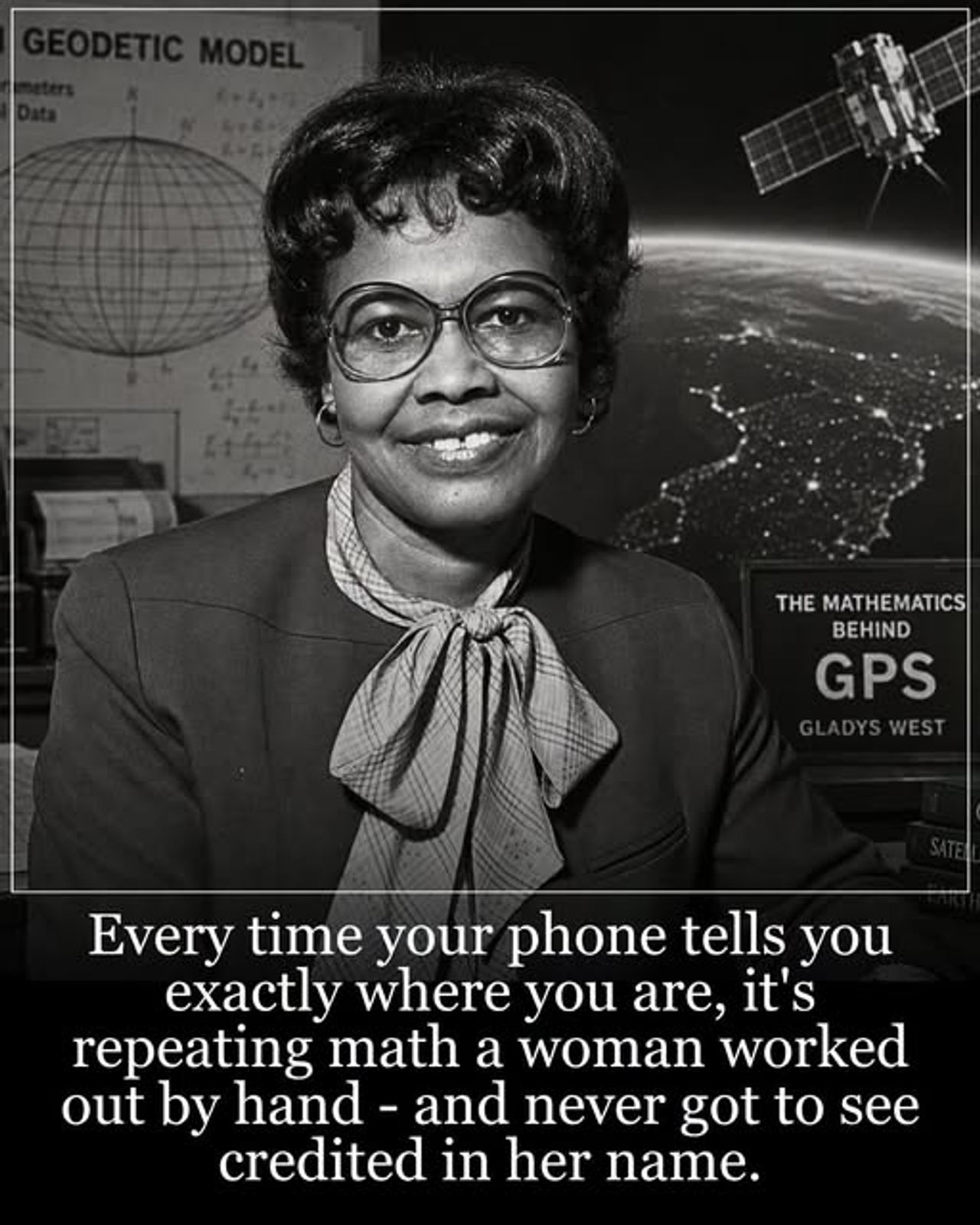
That field was geodesy, and it was painstaking work. For years, West fed numbers into room-sized computers, refining models and adjusting for tides, gravity, and all the small distortions that shape our planet from orbit’s point of view. The labor was patient and exacting. She was helping prove, inch by inch, what the Earth actually looked like to a satellite trying to find us.
That quiet work became part of the foundation of GPS, the invisible system that now lives inside phones, cars, planes, and delivery apps around the world. And yet for decades, her name stayed largely out of the public story. She never held a patent for it. She was not the person at the microphone when the achievement was announced. In the system she worked inside, credit rose upward, but rarely settled where the actual calculation had been made.
Still, she kept going. She kept showing up. After retiring, West faced a stroke that took away much of her mobility and balance. Even then, she did not let that become the last word. In her seventies, she set herself one more ambitious goal: to finish the doctorate she had always intended to earn. She rebuilt her body and her ambitions at the same time, refusing to let time decide the shape of her story.
For much of her life, nearly no one beyond her own circle knew what she had done. Then, years later, the recognition finally began to catch up. By then, the world she had helped build was already everywhere, quietly guiding people home. It is a humbling kind of legacy: not loud, not flashy, but present in the everyday miracles we barely notice. Gladys West’s life is a reminder that some of the most important work in history is done in silence, and that the people who move the world forward are not always the ones who are first to be seen.