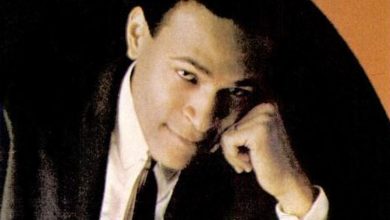
Before ‘Walkin’ After Midnight,’ Patsy Cline Was Finding Her Voice on Jimmy Dean’s Washington TV Stage
A future star in a regional spotlight
Before Patsy Cline became one of country music’s defining voices, she was a young singer working steadily in the Washington, D.C., area, building a reputation the hard way. In the fall of 1954, she became a featured performer on Connie B. Gay’s Town and Country television broadcasts, a regional platform that put emerging country talent in front of local viewers at a crucial stage in their careers.
paras
The setting now feels almost mythic in hindsight. Here was Cline, still years away from signature recordings like “Crazy” and “I Fall to Pieces,” already carrying the vocal force that would later make her a legend. But at that point, national stardom had not yet arrived. She was one of several ambitious young artists trying to break through, learning how to command a camera, a bandstand and an audience before the rest of the country knew her name.
Jimmy Dean at center stage
Jimmy Dean, who hosted the program, was also still on the ascent. Before he became a household name in entertainment and business, Dean was a charismatic regional star with a strong on-camera presence and a natural ease as an emcee. On Town and Country, he helped shape the show’s tone while serving as a visible focal point for the circle of talent orbiting Connie B. Gay’s influential country operation.
That shared environment mattered. Regional television in the 1950s was not just filler between radio appearances and live gigs; it was a proving ground. Artists learned timing, image and audience connection in real time. For Dean, hosting reinforced his showmanship. For Cline, appearing regularly meant another chance to demonstrate that her voice was bigger than the market she was currently working in.
Before either of them became part of country music canon, they were simply two determined performers trying to own the same small piece of television time.
A scene crowded with future names
What makes those broadcasts especially fascinating now is the company they kept. Roy Clark, George Hamilton IV and Billy Grammer were all part of the same broad Washington-centered country circle. Seen from a distance, the cast looks less like a local roster and more like an early snapshot of postwar country music talent before the industry fully sorted out who would become national stars.
That context gives the surviving memories and footage extra weight. These were formative years for multiple performers who would go on to leave distinct marks on country music. The regional ecosystem around Washington, D.C., helped incubate artists who were learning how to navigate the business while still rooted in live performance, radio and early television. Cline was one of the most striking voices in that mix, even before her definitive hits arrived.
Patsy Cline and Jimmy Dean: not exactly easy chemistry
For all the value of that shared stage, Patsy Cline and Jimmy Dean were not known for personal warmth. Years later, Bill Anderson described their relationship as “not quite oil-and-water,” a memorable phrase that suggests friction without outright feud. It is an image that fits two strong-willed performers, each with a distinct sense of self, trying to occupy the same professional space.
That tension is part of what makes the story compelling. Country music history often gets polished into a smooth narrative of inevitable greatness, but careers rarely unfold that neatly. Cline was not a passive ingénue waiting to be discovered, and Dean was not merely a friendly host ushering talent into view. Both were ambitious, both were building something, and that kind of proximity can create as much strain as solidarity.
Why the old footage still resonates
The surviving film and television material from this period matters because it captures Cline before the mythology fully formed. Audiences who know her through her classic Decca recordings can look back at these appearances and see the work in progress: the poise being developed, the authority already present and the sense that she was pushing against the limits of where she had been placed.
There is also something moving about seeing Jimmy Dean introduce a young Patsy Cline before history fixed their places in American culture. In those moments, neither is yet the fully established figure posterity remembers. The footage preserves the uncertainty of becoming. It reminds viewers that legends do not begin as legends; they begin as working performers, showing up, singing hard and trying to be impossible to ignore.
The road from Washington to immortality
Cline’s later rise would make these regional years look like a prelude, but they were more than that. They were foundational. By the time national success came, she had already spent years in front of crowds and cameras, developing the toughness and interpretive confidence that would define her recordings. The emotional clarity heard in her mature work did not emerge from nowhere; it was forged in exactly these kinds of working environments.
That is why the Jimmy Dean connection remains more than a footnote. Their uneasy coexistence on Town and Country captures an important truth about country music’s golden era: major careers were often shaped in local scenes, among peers and rivals, before the broader industry caught up. In Patsy Cline’s case, the old Washington broadcasts show a star before the breakthrough — and perhaps more importantly, an artist already insisting on being heard.
Quick Facts
- Program: Connie B. Gay’s Town and Country television broadcasts
- Location: Washington, D.C. region
- Patsy Cline’s role: Featured singer beginning in the fall of 1954
- Host: Jimmy Dean
- Other artists in the circle: Roy Clark, George Hamilton IV, Billy Grammer
- Later Patsy Cline classics: “Walkin’ After Midnight,” “Crazy,” “I Fall to Pieces”
Image credits: Appalachian State University / Wikimedia Commons / Public domain.