Before He Was Johnny Paycheck, George Jones Already Knew What Donny Young Could Do
The years before the name meant anything
Before country audiences knew Johnny Paycheck as the singer of defiant working-man anthems, he was still Donny Young, a talented musician trying to break through in a Nashville system that did not immediately reward raw ability. He had already recorded solo sides for Decca and Mercury, but the records failed to connect in a meaningful way. For a young artist with a distinctive voice and no hit to prove it, the next step was practical rather than glamorous: find work with stars who were already drawing crowds.
That path was common in country music. The road bands behind major singers were full of players and vocalists who could easily have been leading acts themselves. For Donny Young, those years were not a detour from stardom so much as an education in how country music worked night after night, town after town, in front of audiences who could tell instantly whether a performer meant it.
Learning the job from the road
Before settling into his longest high-profile sideman role, Young worked with established names including Porter Wagoner, Faron Young and Ray Price. Each stop put him inside a different corner of country music’s touring machine, where discipline mattered as much as talent. A band member had to play tightly, support the headliner, read a crowd and deliver the same level of intensity whether the room was electric or indifferent.
Those jobs also placed him among some of the strongest stylists in the genre. In that company, he was absorbing tempo, phrasing, timing and stagecraft from artists who had already mastered them. The experience would matter later, when he stepped back into solo recording with a more fully formed identity and a better feel for how to command an audience.
Four years with George Jones
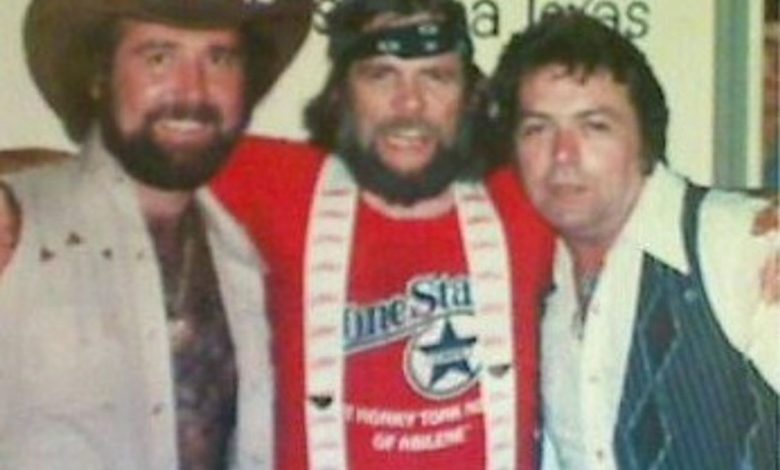
The defining sideman chapter began when George Jones hired him. From 1962 to 1966, Donny Young played bass and served as a frontman in Jones’s band, the Jones Boys. It was not a minor assignment. Jones was already one of country music’s towering vocal talents, and anyone standing beside him had to be musically sharp, dependable and strong enough to help hold together a demanding live show.
Young did more than stand at the back of the stage. He played bass, opened shows and sang harmony, becoming part of the sound surrounding Jones at the height of his early-1960s powers. His voice can be heard behind Jones on recordings including “The Race Is On” and “Love Bug,” a reminder that some future stars first entered the public ear as anonymous parts of somebody else’s records.
The audience discovered Johnny Paycheck later. George Jones had already heard him.
Still in the background, but not for long
Even while working behind George Jones, Young was edging toward a new version of himself. The shift was more than cosmetic. By 1965, Donny Young had become Johnny Paycheck, a name with more bite, more memorability and more of the edge that would define his later career. It suggested a singer built for hard country songs about frustration, pride and survival.
The change quickly coincided with movement on the charts. His recording of “A-11” reached No. 26 on the country chart, giving him a real foothold after years of stalled attempts. It was not yet superstardom, but it was proof that the man who had spent years helping carry other performers’ shows could now begin carrying his own.
The breakthrough that ended the apprenticeship
A year later, the progress became impossible to miss. In 1966, “The Lovin’ Machine” gave Johnny Paycheck his first Top 10 country hit. After years of being the skilled musician in the shadows, he had finally crossed into the category that Nashville recognizes instantly: artist with a hit.
That success did not erase the importance of the Jones years; it explained them. The apprenticeship behind George Jones had given Paycheck a daily test in professionalism and performance. He had lived inside the engine room of country music, where songs were tightened onstage, voices learned to cut through noise and a singer’s identity was refined by repetition, pressure and proximity to greatness.
Why the George Jones connection still matters
It would be easy to tell Johnny Paycheck’s story only from the moment he became famous, especially because his later image was so vivid and his signature hit so indelible. But the more revealing chapter is the one before mass recognition, when he was still earning trust from musicians who knew exactly what they were hearing. George Jones did not make Paycheck famous, but he gave him something nearly as valuable: a prominent place in a first-rate band and four years of close musical work at the highest level.
That is why this period remains important in country history. It shows how often major careers are built in plain sight before the public notices. Long before many fans knew the name Johnny Paycheck, George Jones had already put Donny Young onstage night after night, trusting him to sing, play and help deliver the music. Fame came later. The evidence came first.

Quick Facts
- Birth name: Donny Young
- Stage name adopted by: 1965
- Worked with George Jones: 1962 to 1966
- Role in Jones Boys: Bass player, frontman and harmony singer
- Notable George Jones recordings with his backing vocals: “The Race Is On” and “Love Bug”
- Early breakthrough singles: “A-11” and “The Lovin’ Machine”
Image credits: Cris57helpme / Wikimedia Commons / CC0; Bill / Wikimedia Commons / CC BY 2.0; Epic Records / Wikimedia Commons / Public domain.