The Old Ballad That Missed the Top 40—Then Became Her Forever Song
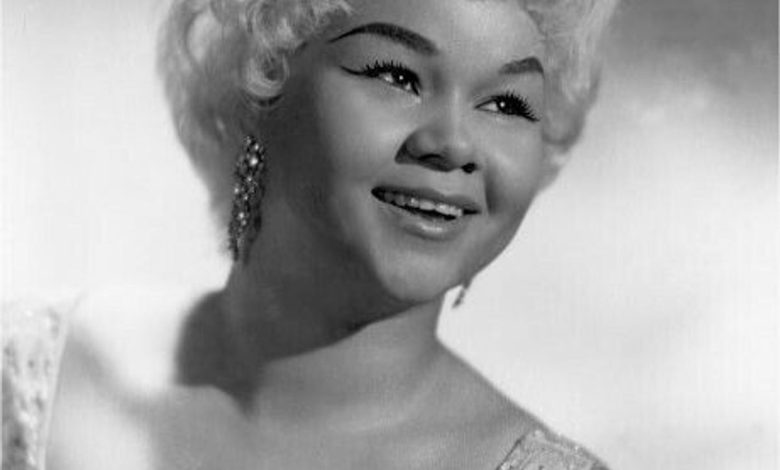
In 1960, Etta James was twenty-two and beginning a new chapter.
After several years recording for Modern Records, she had signed with Chess Records and was placed on its Argo subsidiary. The move gave her room to stretch beyond the hard-edged rhythm and blues that had first made her known.
For her debut album, producers Leonard and Phil Chess paired James with arranger Riley Hampton. Hampton surrounded her powerful voice with strings and orchestral textures, creating a polished setting that could reach beyond the traditional R&B audience.
Among the songs chosen was a ballad already nearly twenty years old.
It had been written by Harry Warren and Mack Gordon and had been successful for Glenn Miller’s orchestra in the early 1940s.
Etta James was about to make it sound as though it had been waiting for her.
YOUTUBE 1 — ORIGINAL 1960 RECORDING
Hampton’s arrangement begins with sweeping strings, but James never lets the performance become too delicate. Her voice carries grit beneath the romance. She stretches phrases, bends notes and turns At Last from an elegant old pop standard into something that sounds intensely personal.
The recording appeared on her debut album At Last! in November 1960 and was later released as a single.
Yet the response was not the massive pop breakthrough its modern reputation might suggest.
YOUTUBE 2 — OFFICIAL ETTA JAMES AUDIO
In 1961, At Last reached No. 2 on Billboard’s R&B chart but only No. 47 on the Hot 100.
It missed the pop Top 40 entirely.
At the time, there was little reason to predict that this modest crossover hit would eventually eclipse many records that had charted far higher.
But the song refused to disappear.
As the decades passed, James’ recording became increasingly inseparable from moments of romance and commitment. It appeared at weddings, in movies and television, and in the repertoires of generations of singers. Other artists recorded the composition, but James’ combination of vulnerability, relief and raw power became the version against which the others were measured.
YOUTUBE 3 — LIVE ROCK & ROLL HALL OF FAME PERFORMANCE
The recognition eventually caught up with the recording.
It entered the Grammy Hall of Fame in 1999, and the Library of Congress selected it for the National Recording Registry in 2008.
The irony is beautiful.
In 1960, Etta James took a song that was already old and recorded a version that did not even crack America’s pop Top 40.
Yet time made a different decision.
The record became her signature, a wedding standard and one of the most instantly recognizable love songs of the twentieth century.
Some hits explode immediately and then fade.
This one took the longer road.
And decades later, when the strings begin and Etta James enters, it still sounds like love has finally arrived.
Continue reading
The Former Drummer Whose Voice Became Bigger Than the Name on the Record
Philadelphia, 1972. Kenny Gamble and Leon Huff were sitting in Gamble’s office, working beside an old upright piano and doing what they often did when inspiration was slow: looking through possible song titles.
Their method was simple. They kept lists of phrases that might contain a story.
One phrase suddenly opened an entire relationship.
What happens when two people have been together for years, argued, forgiven each other and shared a home—yet one still doubts the other?
Gamble heard the emotional answer immediately.
That idea became If You Don’t Know Me by Now.
But the words were only waiting for the right voice.
YOUTUBE 1 — OFFICIAL AUDIO
That voice belonged to Teddy Pendergrass.
Pendergrass had entered Harold Melvin’s group as a drummer before his extraordinary baritone pushed him from behind the kit to the front of the stage.
By 1972, Gamble and Huff understood that his rough, gospel-charged delivery could turn a relationship argument into something far more dramatic.
At Sigma Sound Studios, they surrounded him with the musicians and arrangers who were defining the emerging Philadelphia soul sound.
YOUTUBE 2 — ORIGINAL 1972 EPIC/LEGACY RECORDING
The performance begins with restraint.
Pendergrass sounds like a man trying to explain himself rather than win an argument.
But as the recording develops, patience gives way to frustration. His voice rises, cracks and eventually roars against the elegant strings and rhythm section.
The contrast became the record’s secret weapon.
Released in September 1972, If You Don’t Know Me by Now became the breakthrough Harold Melvin & the Blue Notes had been waiting for. It reached No. 1 on Billboard’s R&B chart and No. 3 on the Hot 100.
But success created an unusual side effect.
YOUTUBE 3 — OFFICIAL SOUL TRAIN PERFORMANCE
Teddy Pendergrass’ voice became so dominant that audiences sometimes assumed the powerful man singing lead was Harold Melvin himself.
Gamble later recalled Melvin complaining that people were confusing the two men.
It was an extraordinary problem to have.
The record had introduced the group to a national audience—but it had also revealed that the former drummer standing at the microphone possessed a presence too powerful to remain anonymous.
More than fifty years later, the recording still works because the emotion underneath it is so familiar.
It is not simply about love.
It is about reaching the moment when love should have produced understanding.
In 1972, Gamble and Huff found that frustration in an ordinary phrase.
Teddy Pendergrass made it sound like a breaking point.
Read more stories
- The Woman Who Sold Us Our House Scratched a Warning Into a Closet: ‘Don’t Ever Give the Harrises a Key’ – Six Months Later, I Found Out Why
- My Ex-MIL Used My Outdoor Faucet Without My Permission to Fill Her Pool and Refused to Pay My Huge Water Bill – So I Put Her in Her Place
- Jelly Roll Turned the Story That Was Supposed to Keep Him Off Country Radio Into a No. 1 Hit
- Erik Menendez Diagnosed With ‘Serious’ Medical Condition – Report