Bob Seger Wrote “Night Moves” About His Youth — Then One Song Turned His Memories Into a Rock Classic
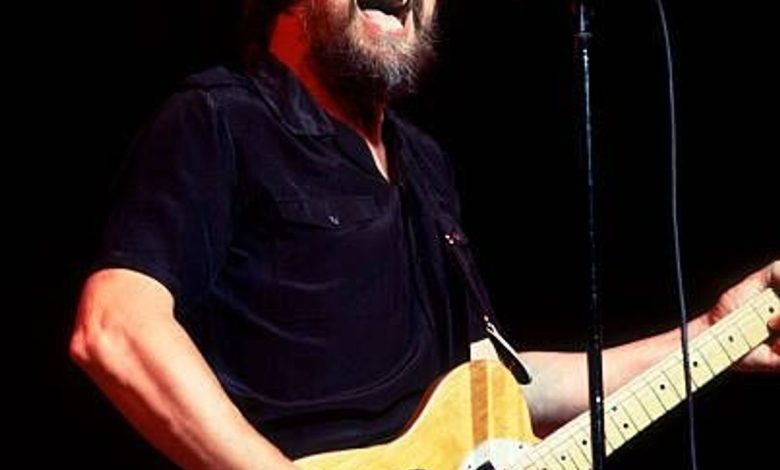
In 1976, Bob Seger released “Night Moves,” a song that captured the feeling of being young, restless and unsure of where life was heading.
Unlike many rock songs of the era, its power came from memory rather than fantasy. Seger drew inspiration from his own teenage years growing up in Michigan, remembering summer nights, drive-in movies and the feeling of being young with nowhere particular to go.
The movie that helped inspire it
Seger has explained that the song was partly inspired by the 1973 film The Last Picture Show, which featured young people growing up in a small Texas town.
But the memories in the song were his own.
The result was a deeply personal piece of storytelling about a young man looking back on a relationship and realizing that time had moved on.
His breakthrough moment
“Night Moves” was released in 1976 as the title track of Seger’s album Night Moves.
The song became a major turning point in his career, reaching No. 4 on the Billboard Hot 100.
More importantly, it helped establish Seger as one of America’s great working-class rock storytellers.
His voice sounded weathered and emotional, making the memories feel lived rather than invented.
Why the song still feels familiar
The magic of “Night Moves” is that it isn’t really about one specific summer.
It’s about remembering who you were before life changed.
That universal feeling helped turn the song into one of Bob Seger’s signature recordings and one of the defining American rock songs of the 1970s.
Decades later, the opening guitar and Seger’s unmistakable voice can still bring listeners back to a summer that may never have been theirs.
Listen to “Night Moves”
▶️ YouTube: Bob Seger – Night Moves
Continue reading
1983 — Annie Lennox Was Crying on the Floor When a Machine Started a Beat. How Did Failure Turn Into Sweet Dreams?
At six in the morning, Annie Lennox was crying.
The first Eurythmics album had not transformed their fortunes. Money was tight. The equipment Dave Stewart had bought was difficult to operate. Their previous band had collapsed. Their romantic relationship had ended even though they were still trying to work together.
Lennox was exhausted and depressed.
Then Stewart finally coaxed a beat and a strange synthesizer riff out of the machinery.
According to the story both musicians later told, Lennox heard it from the floor and suddenly looked up.
What was that?
She moved toward another synthesizer.
Two electronic parts began answering each other.
Out of a morning that had felt like another failure came the foundation of “Sweet Dreams (Are Made of This).”
In 1983, the song would reach No. 1 in the United States, become one of the defining recordings of synth-pop and turn Eurythmics into international stars.
The breakthrough sounded futuristic.
Its emotional source was much older.
Two people were wondering whether they had any reason to continue.
Before Eurythmics, There Was Another Ending
Annie Lennox and Dave Stewart had already known success and disappointment together.
They were members of the Tourists, a British band that achieved chart recognition around the end of the 1970s. They were also a couple.
Both arrangements eventually ended.
The Tourists broke apart.
Lennox and Stewart’s romantic relationship broke apart too.
For many pairs, that would have been the end of the collaboration.
Instead, they decided to keep making music.
That choice created Eurythmics.
It also created an unusual emotional dynamic.
They were former lovers attempting to invent a new artistic life while the old personal life was still close enough to hurt.
Their first album, In the Garden, was recorded with respected producer Conny Plank and strong musicians.
It did not become the breakthrough they needed.
The project was expensive.
The road ahead looked increasingly uncertain.
Failure Was Becoming Physical
The pressure affected Lennox deeply.
She has spoken about depression during this period. Stewart was struggling with the practical problem of how they could keep recording without the budgets and systems that had surrounded their earlier work.
The answer was independence.
They began building a small studio setup and experimenting with electronic equipment.
This approach seems normal now. A musician with a laptop can create an entire record in a bedroom.
In the early 1980s, affordable electronic music technology was still awkward, limited and sometimes unreliable. Learning to program machines could feel like learning a new language.
Stewart borrowed money from a bank to buy equipment.
He later recalled receiving a loan of £5,000.
The purchase did not immediately solve anything.
He struggled to make the gear behave.
Lennox grew more discouraged.
Then, during that early-morning session, something finally locked into place.
The Machine Found a Pulse
The central riff of “Sweet Dreams” is so familiar now that it is difficult to imagine it as a surprise.
At the time, it sounded cold, repetitive and slightly menacing.
There is no warm acoustic introduction.
The song begins with machinery.
A programmed beat.
A synthetic bass pattern.
A loop that feels less like a band starting to play than a system switching on.
Then Lennox enters.
Her voice changes the temperature.
She brings soul, weariness and authority into a landscape made of electronics.
That contrast is one reason the record still works.
If the track were only mechanical, it might feel clinical.
If the vocal were placed over conventional rock instrumentation, it might feel ordinary.
Together, they create tension.
Human against machine.
Emotion inside repetition.
A voice trying to remain upright inside a world that keeps cycling.
The Words Were Not a Dream
The title sounds comforting until you listen to the lyric.
“Sweet Dreams (Are Made of This)” is not a simple song about ambition.
Its worldview is uneasy.
People use each other.
People want to be used.
Desire, power and exploitation blur together.
Lennox has described the lyric as emerging from a dark emotional place. The words carry disillusionment rather than optimism.
Then comes the phrase that changes the song’s direction:
Hold your head up.
Keep moving on.
That addition prevents the record from collapsing into cynicism.
The song looks at a world full of manipulation and still insists on motion.
That is the emotional truth of the Eurythmics story at that moment.
They had not discovered that everything was wonderful.
They had discovered they could continue anyway.
The First Release Did Not Instantly Save Them
Even after the song existed, success was not immediate.
Eurythmics released “Love Is a Stranger” in 1982. It initially made only a modest chart impression in Britain.
The album Sweet Dreams (Are Made of This) appeared in early 1983.
The title track began climbing.

In the United Kingdom, “Sweet Dreams” reached No. 2.
Then the song traveled to America.
There, the combination of sound and image became explosive.
By September 1983, “Sweet Dreams (Are Made of This)” reached No. 1 on the Billboard Hot 100.
The pair who had been fighting debt, failed expectations and emotional collapse were suddenly international pop stars.
The distance between those two realities was less than two years.
The Orange Hair Changed the Picture
The video mattered almost as much as the record.
Annie Lennox appeared with closely cropped orange hair and a sharply tailored dark suit.
The image was immediately memorable.
In an era when women in pop were often presented through conventional glamour, Lennox complicated the frame. Her look was androgynous, controlled and confrontational.
She stared into the camera rather than decorating it.
The video also included surreal imagery, including a cow inside a boardroom-like setting.
Nothing about it explained the song in a literal way.
That was the point.
The clip felt like a visual puzzle.
MTV gave that puzzle repeated access to American audiences.
Suddenly, Eurythmics were not only the duo with the strange electronic hit.
They were the duo with the woman nobody could mistake for anyone else.
Image Became Independence
Lennox’s visual identity did more than attract attention.
It gave her control.
She could change appearance dramatically — masculine tailoring, wigs, theatrical makeup, later full character transformations — and turn the expectation that female singers must be visually consumed into a performance she directed herself.
The camera did not define Annie Lennox.
She played with what the camera expected.
That became central to Eurythmics.
Their videos explored gender, desire, power and role-playing with the same ambiguity found in their lyrics.
The visual intelligence of the project helped ensure they were not trapped as a one-hit electronic novelty.
“Love Is a Stranger” was re-released and became a major U.K. hit.
Later came “Here Comes the Rain Again,” “Would I Lie to You?,” “There Must Be an Angel” and a long sequence of records that moved between synth-pop, soul, rock and electronic experimentation.
But the door opened with “Sweet Dreams.”
The Sound Was Cheap Compared With a Traditional Studio
One of the most inspiring parts of the story is how little the breakthrough depended on luxury.
The song did not require a giant studio orchestra.
It did not require the industry to hand them a huge budget.
It required enough technology to experiment and enough stubbornness to keep learning it.
This made Eurythmics part of a larger shift in pop music.
Electronic instruments were changing who could create a powerful record and how.
A small number of people could construct rhythm, bass and atmosphere without a conventional band in the room.
The studio itself could become an instrument.
Dave Stewart embraced that freedom.
Annie Lennox brought a voice powerful enough to prevent the machines from dominating the emotion.
Their partnership became a model for the producer-performer duo in the electronic age.
Failure Had Changed the Method
Had the Tourists continued comfortably, Eurythmics might never have existed.
Had In the Garden become a major hit, Lennox and Stewart might not have been forced to rethink their process.
Had money been plentiful, Stewart might not have built the improvised home-studio approach that allowed experimentation at strange hours.
Failure narrowed their options.
Then the narrowness became style.
This is one of creativity’s cruelest patterns.
The thing that feels like limitation in the moment can later look like identity.
But that transformation is only visible afterward.
At six in the morning, while Lennox was crying and Stewart was fighting with equipment, there was no guarantee a classic song was coming.
There was only another attempt.
That is why the breakthrough still feels human beneath the machines.
The World Heard Survival as a Synth Line
Rock history often romanticizes inspiration as lightning.
“Sweet Dreams” came from something more ordinary and more difficult: persistence after disappointment.
The beat mattered because it interrupted despair.
The riff mattered because it made two exhausted people curious again.
The song’s message is not “believe and everything will work.”
It is closer to this:
The world may be exploitative.
People may disappoint you.
Your plan may fail.
Your relationship may end.
Your first attempt may disappear.
Keep your head up.
Move on.
The lyric and the biography reinforce each other without needing to be identical.
That is why the song has lasted beyond its 1980s production style.
Its machines sound vintage now.
Its emotional problem does not.
From Nearly Finished to Impossible to Ignore
Eurythmics would go on to sell millions of records and become one of the defining British acts of the decade. Lennox later built a major solo career. Stewart became an influential producer and songwriter.
The Rock & Roll Hall of Fame eventually described the opening of “Sweet Dreams” as a moment that changed perceptions of 1980s pop-rock.
That scale would have been difficult to imagine during the bleak period before the hit.
The story could easily have ended with the Tourists.
Or with the first Eurythmics album.
Or with a bank loan that became more debt.
Instead, it continued because two people who had already failed together decided to fail one more time if necessary.
Then the machine started.
A Song That Still Sounds Like a Door Opening
The opening beat of “Sweet Dreams” is now one of the most recognizable sounds of the 1980s.
It feels inevitable because we have heard it for decades.
But nothing about the morning it emerged was inevitable.
That is the beauty of the story.
The future did not arrive with confidence.
It arrived while Annie Lennox was exhausted, Dave Stewart was still learning his equipment, and both of them were living with the evidence that earlier plans had not worked.
Then curiosity returned.
One sound.
Another sound.
A voice.
A song.
Sometimes a career changes because somebody makes the perfect strategic decision.
Sometimes it changes because, at the worst moment, something finally makes you lift your head from the floor.
Hear the Moment the Darkness Turned Electric
These are not simply two synth-pop classics.
They are the sound of two people rebuilding a creative life from debt, heartbreak and disappointment — until the world could no longer ignore them:
▶ Eurythmics — “Sweet Dreams (Are Made of This)” (Official Video)
▶ Eurythmics — “Love Is a Stranger” (Official Video)
Read more stories
- Hayden Panettiere Once Recalled Her Doctor’s Warning That She Would Not Live to See 35 — Weeks Before Her Death
- Prince Harry and Meghan Markle Are Reportedly Moving Back to the UK – Details About the Reasons Behind the Decision
- After I Gained Weight from Having Twins, My Husband Gave Me an AI Portrait of Myself as a Size-Zero Model, Saying, ‘I’m Waiting for You to Look Like This Again’ – The Next Day, He Froze When He Saw My Gift for Him
- My Son’s Future Mother-in-Law Teased My Dress at the Engagement Dinner – Then My Son Stood up and Said Something That Made Her Look Away