He Fell in Love With His Close Friend’s Wife—Then Turned the Secret Into a Rock Classic
A love song can sound like a promise. This one sounds like a man running out of ways to ask.
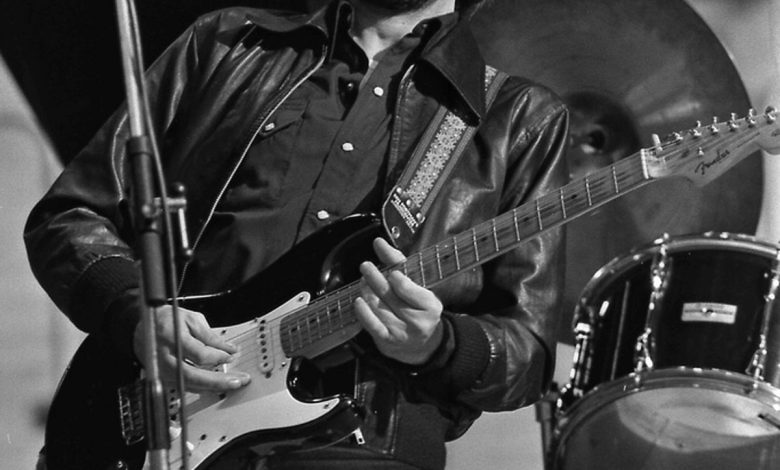
When Layla appeared on Derek and the Dominos’ 1970 album, its restless guitar figure and strained vocal gave listeners an extraordinary recording. Behind that sound was a very specific predicament: Eric Clapton loved Pattie Boyd, who was married to his friend George Harrison.
Knowing that changes the question at the center of the song. It is no longer simply whether someone will return a singer’s affection. It is what answering him might cost.
Boyd was a model and, later, a photographer with a life of her own. Yet she became the person behind a song that would follow Clapton for decades. Letters preserved by Boyd make clear that the longing was not a story invented to sell a record.
In a letter postmarked October 1970, Clapton asked about her feelings for her husband and for him. The envelope was marked urgent. Those surviving papers give the familiar recording a different kind of weight: there was a real person waiting for an answer. Christie’s documents the letter and its background.
The name came from literature. Clapton had encountered the Persian story of Layla and Majnun, associated with the poet Nizami, in which separation and unattainable love become consuming forces. He found a way to place his own feelings inside that older story.
But recognizing the inspiration does not turn the song into a simple romantic victory. Boyd’s choice mattered. The force of his feelings could not make that choice for her.
The music, meanwhile, grew through collaboration. Derek and the Dominos recorded in Miami, and Duane Allman joined the sessions in August 1970. His guitar became part of the album’s unmistakable sound. Clapton’s official timeline records those sessions.
Listen to how the guitars seem to answer and crowd each other around the vocal. The arrangement leaves little room to settle. For this listener, that is what makes the recording feel so exposed: the urgency is carried by the instruments as much as by the words.
Then the piano-led closing passage opens a different space. The voice falls away, but the music continues. You can hear that change as a release, or as the moment after a difficult conversation when neither person knows what to say.
Boyd and Clapton eventually married in 1979, a date confirmed in his official biography. The recording, however, remains fixed in the uncertainty that came years before.
That is one reason to hear it again. The later history gives us an outcome; the song gives us the waiting.
Watch Clapton perform Layla at the Royal Albert Hall in 1991 below. This is a later live performance, rather than the original 1970 studio recording.
You do not need to have lived this particular story to recognize its tension. Many people have wanted an answer they could neither demand nor hurry. In Layla, that private feeling becomes something a roomful of strangers can share.
The Heartbreaking Song That Made a Generation Call Their Parents Before It Was Too Late
The unsettling thing about this song is how reasonable the father sounds.
There is work to do. A household needs supporting. Time together can wait until life becomes less demanding. None of it sounds extraordinary, which is exactly why the ending of Cat’s in the Cradle can feel so close to home.
Harry Chapin released the song in 1974. Its familiar melody carries a story about a father and son whose opportunities to be together keep slipping past. The tragedy accumulates through ordinary decisions, rather than one dramatic departure.
The writing began with Sandy Chapin, Harry’s wife. In a retrospective interview, she described a poem shaped partly by the uneasy relationship between her first husband and his father, and partly by a country song about parents looking back after their children had grown.
Harry initially put the poem aside. Sandy recalled that he returned to it after their son Josh was born. She believed becoming a father may have changed how he understood it, while acknowledging that he had not explained that connection to her. That distinction matters: the family recollection is more nuanced than a neat overnight revelation.
Harry supplied the music, and the song reached No. 1 in December 1974. The Chapin archive preserves Sandy’s account of its creation.

At the beginning of the story, the child looks toward his father. He wants his company and imagines growing into someone like him. The father keeps postponing the time they might spend together.
Later, the direction of the request changes.
Now it is the older father reaching out. His grown son has obligations of his own, and the pattern returns from the other side. What once sounded like a child’s admiration becomes an uncomfortable recognition.
One way to hear the song is as an accusation. Another is as a warning about habits that can travel through a family without anyone deliberately teaching them.
The father may believe providing for his son is proof of love. The son may learn, from what happens each day, that love is something people feel while remaining too busy to show up. Those two understandings can coexist for years without a conversation.
That reading is what makes the song worth revisiting at different ages. A younger listener might identify with the child who keeps waiting. Someone raising a family might notice how familiar the father’s excuses sound. An older listener might hear the cost of assuming there will always be another opportunity.
Its emotional argument reaches beyond the family in the lyrics: our intentions and the time we actually give each other are not always the same thing. We can care deeply and still leave the people we love waiting.
Nor does the story require every busy parent to be its villain. Responsibility is real. So is exhaustion. The difficult question is whether postponement has become a routine we no longer notice.
Listen to Cat’s in the Cradle below, and pay attention to how the meaning of the family’s familiar pattern changes as the child grows.
The ending cannot restore the years inside the song. But the listener is still outside it, with a different day ahead. A call, a visit, or a few undistracted minutes may be small things. They are also things we can choose before they become memories of what we meant to do.
“That’s All Right”: How Elvis Presley’s First Single Became a Southern Breakthrough
A Small Record With a Big Sound
Before Elvis Presley became a national celebrity, “That’s All Right” was a rough, fast-moving recording made by a 19-year-old Memphis singer and two local musicians at a small independent studio.
The single, released by Sun Records in July 1954, did not arrive with the machinery of a major label, an established fan base, or a carefully managed national campaign.
Instead, it grew through local radio, word of mouth, jukeboxes, record stores, and the curiosity of listeners who heard something familiar and completely new in the same performance.
“That’s All Right” is often described as one of the foundational records of rock and roll, although no single recording can definitively claim to be the genre’s first.
Its importance rests less on a simple origin story than on the way it connected Black blues, white country music, Memphis rhythm, and a young performer whose voice seemed to belong to several musical worlds at once.
From Memphis Recording Service to Sun Records
Sam Phillips operated the Memphis Recording Service before establishing Sun Records, creating a place where local musicians could make demos, independent records, and recordings that larger companies might have overlooked.
Phillips had a particular interest in the sound of the American South, especially the energy and emotional directness he heard in blues and gospel performances.
Elvis had already visited the operation in 1953 to make a private acetate, recording “My Happiness” and “That’s When Your Heartaches Begin” as a personal project rather than a commercial release.

That earlier visit brought Elvis to the attention of Marion Keisker, Phillips’s assistant, who remembered his distinctive voice and kept him in mind when the studio was looking for new talent.
Elvis’s first acetate did not make him famous, but it placed him within the small Memphis music network that connected singers, musicians, radio personalities, and independent record producers.
When Phillips later arranged for Elvis to work with guitarist Scotty Moore and bassist Bill Black, the group had no guarantee that it would produce a hit or even discover a permanent musical identity.
The musicians first worked through slower songs and familiar material, but the session changed direction when Elvis began playing Arthur “Big Boy” Crudup’s blues number “That’s All Right.”
The Breakthrough in the Studio
Crudup had recorded “That’s All Right” in 1946, and Elvis’s version drew directly from that earlier blues performance rather than presenting the song as an entirely new composition.
The crucial change came through the arrangement, which moved with a faster, more buoyant pulse and placed Elvis’s country inflections against Moore’s electric guitar and Black’s forceful bass.
The story of the session has become part of music history because the performance reportedly began during a break, when Elvis started singing and playing the song in an excited, unconventional style.
Moore and Black joined him, and Phillips quickly recognized that the loose performance had a character missing from the more cautious material they had been attempting.
Phillips rolled the tape as the musicians played, capturing a performance that sounded spontaneous without being musically careless.
Elvis’s vocal did not imitate a polished pop singer, since it shifted between a bluesy ache, a country twang, and an almost conversational attack that made the lyrics feel immediate.
Moore’s guitar helped define the record’s lean, bright texture, while Black’s bass gave the track a rhythmic bounce that helped distinguish it from both traditional blues and mainstream country music.
Phillips added to the atmosphere with the concise, echoing production style that became associated with early Sun recordings.
The result was not a grand studio construction but a compact burst of rhythm and personality that seemed to move faster than the conventions surrounding it.
Sun 209 and “Blue Moon of Kentucky”
Sun Records issued “That’s All Right” as Sun 209 on July 19, 1954, pairing it with Elvis’s version of “Blue Moon of Kentucky.”
The record label credited the performers as Elvis Presley, Scotty, and Bill, reflecting the fact that the sound belonged to a small working group rather than to Elvis alone.
The choice of the second song was significant because “Blue Moon of Kentucky” had been strongly associated with Bill Monroe, a leading figure in bluegrass music.
Monroe’s original version was a waltz, while Elvis and the trio reshaped it into a quicker performance that matched the restless energy of “That’s All Right.”
The two sides therefore presented a musical argument in miniature, with a blues song recast through country phrasing on one side and a country standard given a blues-inflected rhythmic lift on the other.
That pairing helped listeners understand the record as something connected to established Southern traditions, even as its sound challenged the boundaries between those traditions.

The release was modest by later Elvis standards, but Sun’s independent operation could respond quickly when local interest began to build.
Dewey Phillips and the Memphis Radio Moment
The first major turning point came through WHBQ radio personality Dewey Phillips, who played “That’s All Right” on his popular Memphis program “Red, Hot and Blue.”
Phillips’s enthusiasm gave the record a crucial platform because he treated it as an exciting new sound rather than as an obscure release from a tiny label.
Listeners responded with enough intensity that the station continued playing the record and invited Elvis to appear for an interview.
The attention was especially valuable because radio remained one of the fastest ways for a local record to travel beyond the neighborhood where it was made.
A song could move from a disc jockey’s turntable to record stores, jukeboxes, dance halls, and living rooms before a national label had time to notice its commercial potential.
Memphis listeners heard “That’s All Right” as a record rooted in familiar Southern music but energized by a performer who did not fit comfortably into the usual categories.
That response transformed the song from a studio experiment into a local event, giving Elvis and his band an audience they had not possessed when the tape was recorded.
A Sound That Crossed Musical Boundaries
The record’s impact also reflected the complicated musical culture of the segregated American South, where Black blues, white country, gospel, and rhythm and blues often shared musical ideas even when the record business kept audiences and markets apart.
Elvis was a white singer performing a song first recorded by a Black blues artist, and that fact shaped how the record was understood, promoted, and eventually remembered.
His version did not erase Crudup’s contribution, since the song’s structure and emotional foundation came from Crudup’s earlier work.
At the same time, Elvis brought a different vocal attack and a different regional audience to the material, creating a performance that could reach country listeners without abandoning its blues foundation.
The record’s power came from that exchange rather than from the idea that Elvis had invented every element of its sound.
In Memphis, musical boundaries were already porous, and “That’s All Right” made those connections audible in a form that was short, direct, and easy for radio to repeat.
The single’s historical significance therefore belongs both to Elvis’s performance and to the musicians, songwriters, Black recording artists, and regional traditions that made the performance possible.
From Local Attention to Regional Hit
As airplay spread, “That’s All Right” began moving beyond Memphis through independent distribution and Elvis’s increasingly active schedule of live appearances.
The record found an audience across parts of the South, where listeners encountered it on radio and in the same clubs, theaters, and package shows that supported other emerging country and rhythm-and-blues performers.
Elvis’s first public performances with Moore and Black helped turn the record into more than an audio experience because his energetic stage presence gave audiences a visual explanation for the excitement they heard on the single.
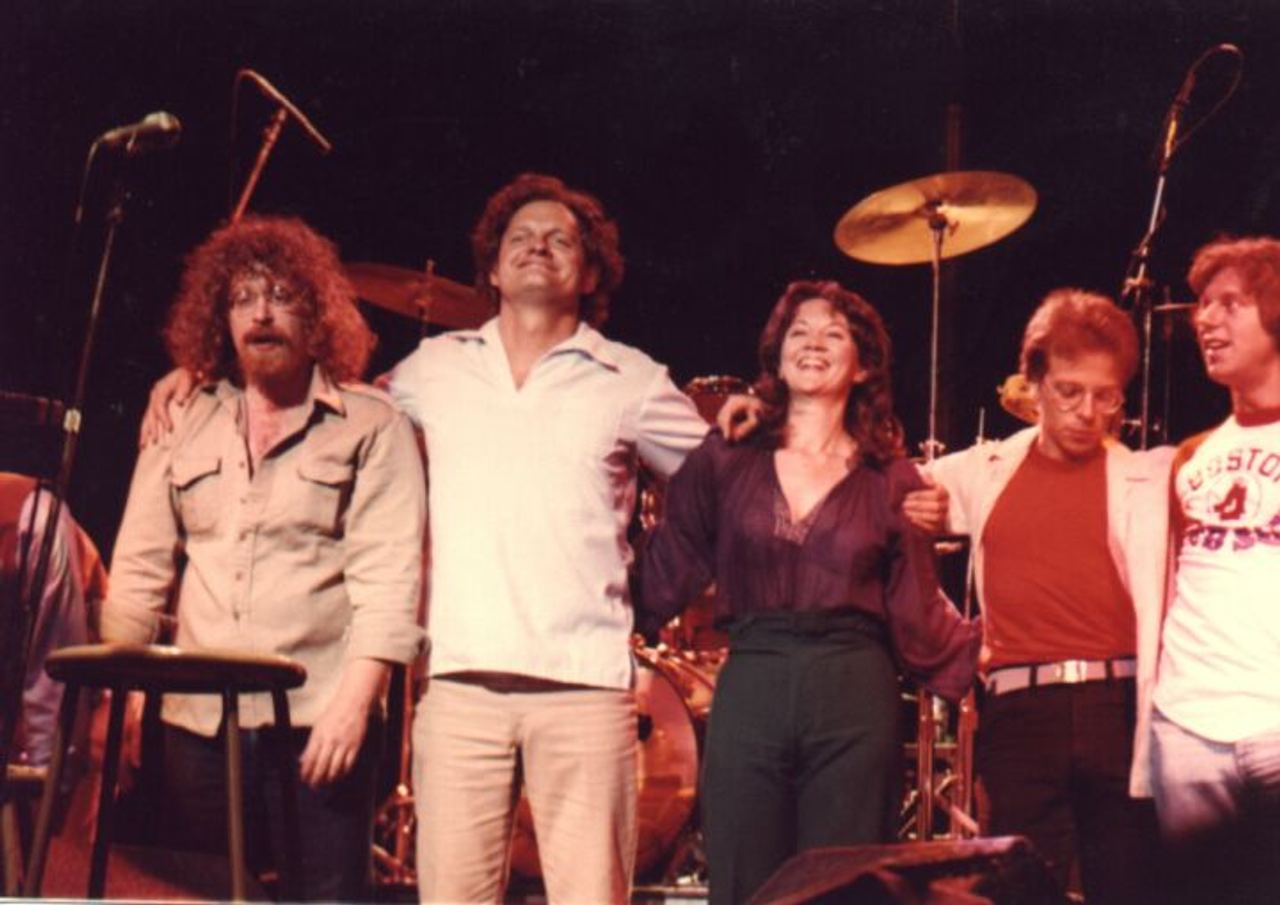
A July 1954 appearance at Memphis’s Overton Park Shell became one of the early performances associated with the trio’s growing local reputation.
The response encouraged Elvis to continue performing the song even as he developed a broader stage set built from country, blues, gospel, and pop material.
By the time he appeared on the Louisiana Hayride in October 1954, he had moved from a promising Memphis newcomer to a performer with enough regional momentum to command attention outside Tennessee.
The Louisiana Hayride was an important platform because the radio program reached a broad Southern audience and connected its performers with the country music industry beyond Memphis.
Elvis’s appearance there helped extend the reach of the Sun single and gave him a setting where his hybrid sound could be tested before listeners accustomed to traditional country music.
The record’s success was not yet national superstardom, but it had achieved the essential step of proving that local excitement could support regional travel, bookings, airplay, and additional releases.
Why “That’s All Right” Still Matters
“That’s All Right” remains important because it captures a moment before Elvis’s image, choreography, and celebrity had been fully defined.
The record presents him as a young singer responding instinctively to material he understood, surrounded by musicians whose playing kept the performance immediate and physical.
Its rough edges are part of its appeal, since the recording sounds like a discovery happening in real time rather than a finished formula being applied in a studio.
The single also shows how American popular music often develops through reinterpretation, with songs crossing from one community to another and changing meaning along the way.
Elvis did not create the blues or country music that informed the record, but he helped bring their meeting point to a wider commercial audience.
Sam Phillips’s role was equally important because his small-label approach allowed a surprising performance to remain surprising instead of forcing it into a safer arrangement.
Scotty Moore and Bill Black supplied the instrumental framework that made the song’s momentum possible, and Arthur Crudup’s original recording provided the essential songwriting foundation.
Treating the record as a solo achievement obscures the network of artists and musical traditions that shaped its sound.
The Lasting Legacy of Elvis’s First Single
In the years that followed, Elvis became one of the most recognizable performers in the world, but “That’s All Right” continued to preserve the specific uncertainty of his beginning.
The recording shows a local musician finding a voice at the exact moment when independent Southern studios were becoming powerful sources of new popular music.
Its path from a Memphis tape to a regional hit demonstrates that major cultural changes can begin with modest resources, a receptive disc jockey, and a performance that does not sound like anything else on the radio.
The single did not arrive as a finished declaration of rock and roll, yet it made the genre’s emerging ingredients impossible to ignore.
“That’s All Right” became Elvis Presley’s first commercial single because it connected a familiar song to an unfamiliar energy, and it became a regional hit because Memphis listeners recognized that energy before the rest of the country did.
That combination of local context, musical borrowing, independent production, and charismatic performance gave the record a lasting place in American music history.
Read more stories
- Every Babysitter We Hired Quit Without Explanation – So My Husband Wore a Wig and Applied for the Job
- Southern Cornbread Dressing
- I Had Hardly Recovered from a Brutal Delivery – When My Husband Looked at Our Newborn Daughter, He Froze and Asked the One Question I Never Expected to Hear
- Robert Duvall’s Wives: A Look at the Late Actor’s Four Marriages and His Private Life Before His Passing at 95