I Lost My Childhood Sweetheart 16 Years Ago – Today, a Young Man Who Looked Just like Me at That Age Knocked on My Door
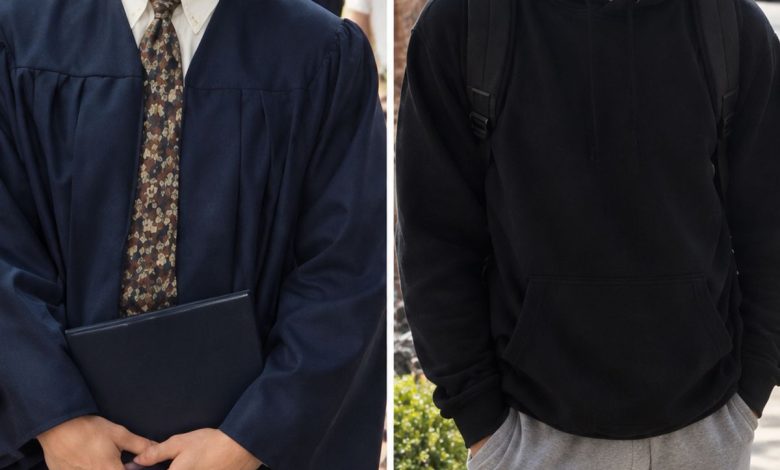
The boy on my porch looked like someone had taken an old photograph of me and brought it to life. Then he told me his mother's name, and suddenly the disappearance that had haunted me since high school stopped being a mystery and became something much more personal.
My name is Danny, and 16 years ago I lost my first love.
I was 17 then, and her loss affected me in a way I never fully talked about afterward.
Susan disappeared.
There was no body, no goodbye, and no note.
One day, she was there, and then she was gone.
The police searched. Her parents cried on television.
Flyers went up all over town.
Her picture was taped inside grocery store windows and pinned to bulletin boards at gas stations.
People whispered.
Some said she had run away.
Some said she had been kidnapped.
Some said teenagers did impulsive things and she would come home when she got tired of wherever she had gone.
She never came home. At least, not as far as I knew.
It happened three weeks before our senior prom.
Susan and I had been together since we were 15.
I know people laugh when teenagers call something love, but I loved her.
I still believe that.
She was funny in a way that sneaked up on you.
She would sit quietly through an entire conversation, then say one thing that made everyone laugh harder than anything else said all night.
She had a small gap between her front teeth.
She hated when people pointed it out. I loved it.
I kept exactly one picture of her after she disappeared.
It was taken the summer before our junior year at the lake.
Susan was 16, sunburned across the nose, her wet hair stuck to her cheeks.
She was laughing at whoever held the camera.
Me, probably.
I kept the picture in an old jewelry box.
For years, I opened that box more often than I want to admit.
Then life kept moving.
It always does.
I went to college.
I got married at 26.
Her name was Melissa.
She knew about Susan, but not much.
I told her I had lost someone when I was young. I told her Susan had disappeared.
Melissa never pushed.
We were married for five years.
We didn't have children.
We tried for a while, then stopped talking about trying.
Eventually, our marriage ended for reasons that had nothing to do with Susan.
We simply realized that we had become polite roommates. The divorce was quiet.
Melissa remarried two years later. I stayed single.
At 33, I had settled into a life I didn't hate.
I had a small house.
A decent job managing inventory for a regional hardware supplier.
A vegetable garden I took far too seriously.
Friends I saw often enough.
I wasn't miserable.
But some part of me had always remained 17.
The part that never learned what happened to Susan.
This afternoon, my doorbell rang.
I almost didn't answer.
I was outside working in the flower beds with dirt under my fingernails.
My jeans were covered in soil. I assumed it was someone selling something.
The bell rang again. I opened the door.
For one full second, I thought I was looking at myself.
Not myself now.
Myself at 17.
The young man standing on my porch had sandy hair falling across his forehead.
He had gray-blue eyes and a narrow face.
And when he gave me a nervous half-smile, I saw the same slight gap between his front teeth that Susan had.
My stomach dropped.
He looked about 18. Maybe younger.
He held a thick folder against his chest.
"I'm so sorry to just show up like this," he said.
I simply stared at him.
His smile disappeared. "My name is Eli."
I gripped the edge of the door.
Eli looked down at the folder.
"I think my mom knew you."
My throat went dry. "Who is your mother?"
He looked back at me. "Susan."
I don't remember inviting him inside.
One moment we were on the porch.
The next, we were sitting across from each other in my living room.
I hadn't even offered him water.
"You said Susan is your mother."
He nodded. "Was."
The word hit me. "Was?"
Eli's eyes dropped. "She died four months ago."
I couldn't speak.
It felt ridiculous.
Susan had been gone for 16 years.
Some part of me had assumed she was dead for most of them.
But hearing the words still felt like being told for the first time.
"What happened?"
"Cancer."
He rubbed his thumb along the edge of the folder.
She was sick for about a year and a half.
I leaned back. My chest hurt.
"Where was she?"
"Indiana."
We lived in Ohio.

All those years, she was a state away.
I laughed once.
It didn't sound like laughter.
"She was in Indiana."
Eli nodded. "Mostly."
"Mostly?"
"She lived with her older sister at first. Then she went to college nearby and stayed there."
"Why?"
He looked confused. "Why what?"
"Why did she disappear?"
He took a breath. "Because she was pregnant."
The room went silent.
I heard the refrigerator humming in the kitchen.
A car drove past outside.
Somewhere, a dog barked.
I couldn't move. "Pregnant."
"Yes."
I looked at him.
Then I looked at his face again.
My face and Susan's smile.
My hands started shaking. "How old are you?"
"Sixteen."
I stood up so fast my knee hit the coffee table. Eli flinched.
I walked toward the window. "She disappeared 16 years ago."
"I know."
"And you are 16?"
"Yes."
I pointed at him without meaning to.
"Are you saying…"
His eyes filled with tears.
"I think you're my father."
I sat down again.
For several seconds, neither of us spoke.
Then I said, "Think?"
Eli opened the folder.
"My mom never told me your name."
That hurt almost as much as everything else.
"Not while she was alive?"
He shook his head. "She said my father was someone she loved when she was young. She said you didn't know about me."
"She told you that?"
"Yes."
"Did she say why?"
"She always said she'd explain when I was older."
He gave a small, bitter laugh.
"Then when I got older, she said she wasn't ready."
I looked at the folder. "So how did you find me?"
"After she died, I went through her things."
He pulled out several envelopes. Yellowed and old.
My name was on the front of each.
Danny.
I recognized her handwriting immediately.
Susan used to make her capital D too large.
Every envelope said my name.
My heart began pounding. "What are these?"
"Letters."
"To me?"
He nodded.
"She never sent them."
I reached for the top one.
My hands shook so badly I could barely open it.
The paper inside was folded twice.
The ink had faded.
"Danny,"
"I don't know if I'll ever send this. I don't know if you hate me. I don't know what Mom and Dad told you."
"I'm sorry."
I had to stop reading.
Eli looked at me.
"What did my grandparents tell everyone?"
"That she ran away."
"They sent her away."
The anger came so quickly it frightened me. "Sent her where?"
"To her older sister."
"Because she was pregnant?"
I stood again. This time I stayed standing.
"They knew. Her parents knew she was pregnant."
"Yes."
"They pretended that she had disappeared and lied to everyone."
"We searched for her and worried about her while they knew where she was."
"Mom wrote that they said she'd run away, but they had actually taken her to her older sister. They were ashamed that she was pregnant. They told her she couldn't come back."
I remembered Susan's father, Ron.
I remembered him standing beside a police cruiser with his arm around Susan's mother.
I remembered her mother crying.
I remembered Ron telling me, "If you hear from her, you call us immediately."
My hands curled into fists. "They knew where she was."
Eli nodded. "From what I read, yes."
"All that time."
"I'm sorry."
I looked at him. He was crying now.
And suddenly I realized I was interrogating a 16-year-old boy about decisions made before he was born.
I sat down. "No. I'm sorry."
He wiped his face. "I didn't know how you'd react."
"I'm just in shock."
That almost made him smile.
I picked up another letter. "Did you read these?"
"A few."
I nodded.
"That's good."
He looked surprised. "They were part of her life. You're her son." Then I corrected myself. "Our son."
The words sounded impossible.
Eli looked down. "We don't know for sure yet."
I looked at him again. "I think we do."
But we agreed to get a DNA test.
Not because I doubted him.
Because neither of us wanted a relationship built on resemblance and old letters alone.
We used a legal paternity testing service at a local lab.
Then we waited.
During those days, Eli stayed at a nearby hotel with a friend of his mother's who had driven him to town.
We met twice.
The first time, we got coffee.
The second time, we walked through the park.
I learned things.
Susan had become an elementary school teacher.
She taught third grade.
"She loved kids," Eli said.
"She always did."
"She never got married."
That surprised me. "Never?"
"No."
"Did she date?"
"Sometimes."
He shrugged. "Nobody serious."
"And you have no siblings?"
"No."
I hated the relief I felt.
It was selfish.
I had no right to want Susan's life to have stayed somehow connected to mine.
But part of me was glad Eli was her only child.
Then I felt ashamed for being glad.
"She was happy," Eli said suddenly.
I looked at him.
"I don't want you thinking she spent 16 years miserable."
I nodded slowly. "Okay."
"She liked her job. Her students loved her. Our house was small, but it was ours."
He smiled. "She made terrible pancakes."
I laughed. "She always burned them."
His eyes widened. "Seriously?"
"Every time."
We both laughed.
Then both of us stopped.
Because the moment was too strange. Too intimate.
A memory connecting two people who had met days earlier.
The DNA results came back the following week.
The probability of paternity was greater than 99.99 percent.
I read the page three times.
Then I sat at my kitchen table and cried.
I cried for Susan. For Eli. For myself.
For 16 birthdays and 16 Christmas mornings.
First steps and first words.
School plays, broken bones, bad report cards, and everything.
All gone.
I called Eli.
He answered immediately.
"Did you get it?"
"Yes. I'm your father."
He started crying. "So it's real?"
"It's real."
Two days later, we drove to Indiana to visit Susan's grave.
Eli drove part of the way.
I spent half the trip looking at him.
He finally said, "You know that's distracting."
"I'm sorry."
"You keep staring at me."
"I know."
"Do I really look like you?"
"You look exactly like me."
He smiled. "Mom always said I looked like my dad."
That sentence nearly broke me again.
Susan was buried in a small cemetery outside the town where she'd lived.
Her headstone was simple.
"Susan: 1993-2026."
Beloved Mother and Teacher.
I stood there for a long time.
Eli stayed a few feet away.
I touched the top of the stone.
"Hi, Susie."
I hadn't said that name in 16 years.
Only I called her Susie. She claimed she hated it.
She never really did.
I sat in the grass.
"I am so angry at you."
Eli looked toward me.
I kept talking.
"I know you were 17."
My throat tightened. "I know you were scared."
I pressed my hand against the stone.
"But if you had reached out at any moment, I would have come."
The tears started falling. "You should have known I would have come."
Eli sat beside me.
I looked at him. "I wish she had contacted me."
He nodded. "Maybe she was afraid or even ashamed."
"II haven't read her letters yet."
"You should read them. They led me to you. They might have the answers you're looking for."
He was right.
I hated that he was right.
I was avoiding facing the past because of how painful it was.
Now, I had no choice. If I wanted answers, I had to read Susan's letters.
I sat beside Susan's grave until the sun started dropping.
Before we left, I placed the old lake photo against the stone.
Then I changed my mind and picked it back up.
Eli noticed. "You're keeping it?"
"Yeah."
He smiled. "Good."
That night, after I got home, I finally opened every letter.
There were more than I expected.
The first few were full of panic.
She wrote that her parents had taken her away before she had a chance to tell me she was pregnant.
They had convinced her that I would hate her for disappearing, especially once I learned why.
In another letter, written a year later, she admitted she had almost called me dozens of times.
But by then, she was ashamed.
She wrote, "I keep thinking that if I call you now, the first thing you'll ask is why I waited this long. I don't have an answer that won't make me sound like a coward."
I sat at my kitchen table and read the sentence twice.
Then I opened another letter.
That one had been written several years later.
She had looked me up.
She knew where I went to college.
She knew where I worked after graduation.
Somehow, she had even found out when I got married.
That letter hurt the most.
"I saw your wedding announcement today. You looked happy. I cried, which isn't fair because I'm the one who disappeared from your life."
I had to stop reading for a while.
"I thought about contacting you, but what would I even say? Congratulations. Also, you have a son you've never met?"
I leaned back in my chair and closed my eyes.
"I don't want to ruin the life you built because I was too afraid to tell you the truth when I still had the chance."
"She wouldn't have ruined it," I whispered.
But the empty kitchen gave me no answer.
And the harder truth was that Susan had never given me the chance to decide that for myself.
She had spent years making choices based on what she thought I would feel.
First, she was afraid I would hate her for leaving.
Then she was afraid I would hate her for waiting.
And eventually, she convinced herself that silence was kinder than dragging the truth into the life I had built without her.
By the time I finished the last letter, it was after two in the morning.
I was angry with her.
I loved her.
I felt sorry for the frightened 17-year-old girl she had been.
And I resented the adult woman who had kept finding reasons to wait.
All of those feelings existed at the same time.
I folded the letters carefully and put them back in the folder.
It has been six months since Eli knocked on my door.
I wish I could say everything became easy after the DNA test.
It didn't.
You can't become a father to a 16-year-old overnight.
Sometimes I say too much.
Sometimes I don't know what to say at all.
Sometimes Eli calls me Danny.
Sometimes he calls me Dad and then looks surprised that he did.
We talk about Susan often.
I tell him stories he never heard.
He tells me stories I never got to live.
Between us, we are building a version of her neither of us knew completely.
I still get angry.
Mostly at Susan's parents. They are both gone now.
There is nobody left to confront.
Nobody to ask how they could stand in front of police and frightened teenagers while knowing exactly where their daughter was.
That may be the hardest part.
There will never be an apology.
There will never be an explanation that makes 16 stolen years acceptable.
But I am trying not to let dead people take another year from me.
Eli is here.
That matters.
Last weekend, he came over and helped me in the garden.
He hated every second of it.
Susan hated gardening too.
At one point, he looked at his muddy hands and said, "This is terrible."
I laughed. "You sound exactly like your mother."
He looked at me.
Then he smiled that crooked, gap-toothed smile.
"Tell me another story about her."
So I did.
I told him about the summer at the lake.
About the photograph.
About how Susan got sunburned because she refused to reapply sunscreen.
About how she pushed me off the dock after I teased her.
Eli laughed.
And for a moment, I could almost hear her laughing too.
I lost Susan 16 years ago.
Then I lost her again when Eli told me she was dead.
I don't think I'll ever completely stop grieving either loss.
But grief isn't the only thing she left me.
She left me a boy who has my eyes and her smile.
A son I should have known from the day he was born.
I can't get those 16 years back.
Neither can he.
So we're trying not to waste the ones we still have.
Do you think Susan's fear and shame explain why she never contacted Danny, or did waiting 16 years make the silence impossible to justify?
If you enjoyed this story, you might also like this one : On my 60th birthday, I opened my door to find exactly 60 sunflowers. Only one person had ever promised me that many — Danny, my childhood sweetheart, who died the year we were 15. Then I spotted a weathered box behind them, and what I found inside made my hands shake.
Read more stories
- Dave Davies Took a Razor Blade to a Cheap Amp — and Helped Give The Kinks Their Breakthrough Sound
- June Carter was born into country music royalty and trained as a stage actor in New York, yet her most defining choice was the spotlight she willingly surrendered.
- Homemade Chinese Egg Rolls
- I Married a Stranger from a Hospital Waiting Room So He Wouldn’t Pass Away Alone – After Our One-Week Marriage, His Lawyer Handed Me His Backpack