My Husband Took Our Sons Fishing Until My Daughter Revealed the Truth Six Years Later
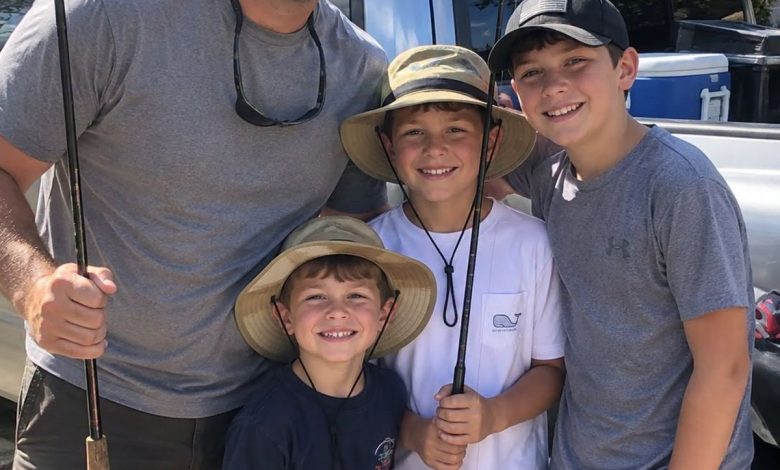
“Everybody look at me for three seconds.”
Daniel was checking the straps on the boat for what must have been the fourth time.
“Three seconds. That’s all I’m asking.”
“Dad’s crushing me,” my youngest said.
Daniel tightened the arm around his shoulders.
“Good. Maybe you’ll hold still.”
The boys laughed. I pressed the shutter.
Click.
That was the final photo I ever took of the four of them together.
I didn’t realize it then. I was squinting at the screen to see whether anyone had blinked, thinking about the grocery list, wondering if I’d remembered to pack sunscreen in their bag. Ordinary things. The sort of things you think about when you still believe there’s plenty of time.
Daniel turned toward the truck.
“Life jackets?”
Three groans. “Yes, Dad.”
“Whistles?”
“Dad.”
“Humor me.”
“They’re packed.”
He gave a slow nod, wearing the expression of a man who had just verified that national security was secure. That was my husband. Full tank before every trip. Weather checked twice, then checked again because apparently weather could transform in the seventeen seconds since the last refresh.
He had been fishing that lake for three years. He knew every launch site, every shallow patch, and every place where the current turned strange after hard rain.
I kissed him. Told the boys not to survive on chips all weekend. Daniel got into the truck.
“Sunday night,” he said.
“I know.”
He smiled through the open window.
“Miss me responsibly.”
“Go.”
The boys waved. I snapped one last picture as the truck drove off — just instinct, the way you photograph the things you love without stopping to ask yourself why.
I had no idea I had just taken a picture of four people I would never see again.
Sunday evening, dinner went cold.
At seven, I called Daniel. No answer. At seven-thirty, I called our oldest son. It just rang. By eight I was irritated. By nine I was frightened. At ten-fifteen, I called the police.
The following morning, Daniel’s truck was found near the marina. The empty boat trailer was still attached. His wallet was inside. So were two jackets.
The boat was discovered several hours later on the opposite shore — badly damaged, entirely empty.
Search crews spent weeks on that lake. Divers. Boats. Helicopters. Volunteers covering every inch of shoreline on foot.
They found nothing.
No sign of Daniel. No sign of the boys.
Eventually the official conclusion became the only answer anyone could offer me.
Boating accident. Strong current. Bodies likely carried away.
I nodded when people said it. Signed the paperwork. Then went home to three daughters and four empty seats at the table.
But one question kept scraping at me, quiet and relentless, like something trapped behind a wall.
How?
Daniel was careful. Excruciatingly, sometimes infuriatingly careful. If the forecast looked bad, he canceled. If equipment needed fixing, the trip waited. If one of the boys had forgotten a life jacket, he would have driven all the way home before launching. I knew this man. I knew the way he checked buckles, checked the forecast again, kissed me at the door.
So how did a man like that take all three of our sons onto a lake and never bring any of them home?
No one could tell me.
Daniel’s brother Dean was around all the time in the months afterward.
He repaired things that broke. Changed a tire in the rain one evening because I had completely forgotten that cars still needed normal maintenance after your life ends. He sat with the girls when they cried, and he sat with me when I couldn’t.
But anytime I mentioned the lake, something shut down in his face.
“Andrea, you have to stop.”
“I just want to understand—”
“You can’t.”
“What if they missed something?”
“They searched for weeks.”
“What if Daniel turned back because of something? What if something happened before they even launched?”
Dean would drag both hands hard over his face. Then he’d say some version of the same thing, gentle and unmoving as a wall.
“You have three daughters who still need you.”
I hated him for saying that. Not because he was wrong. Because it sounded too much like forget the other four. I never did. I never intended to.
Six years went by.
The girls grew up around the outline of their brothers. The space those boys had occupied — at the dinner table, in the morning bathroom, in the back seat — never fully vanished. It simply became something we moved around without talking about.
One daughter started college. Another learned to drive. Sophie, the youngest, became the one who finally said out loud what everyone else had apparently been thinking for months.
“Mom, we need to go through their things.”
She was standing in the doorway of her brothers’ room holding an empty cardboard box.
“No.”
“Mom.”
“I said no, Sophie.”
“We’re not throwing anything away, Mom.”
“Then why are you holding a box?”
“To donate what someone else could use.”
I stared past her into the room. Their things. The same things, in the same places, where they had been on the morning Daniel loaded the truck.
I told myself it wasn’t a shrine.
Some foolish, stubborn part of me had never completely stopped expecting footsteps in the hallway.
Sophie’s voice softened.
“They’re not coming back for these.”
That hurt.
She knew it. Her eyes filled right away.
“I’m sorry.”
I looked away. Then reached for another box.
“Fine,” I said.
We began packing. After a few minutes I made up an excuse to go cook dinner, hours before I needed to, just to have somewhere to be that wasn’t inside that room.
That afternoon, Sophie found the phone.
She walked into the kitchen holding a black rectangle with a cracked corner and set it on the counter in front of me.
“Mom? Wasn’t this Dad’s?”
I looked at it.
My heart started pounding before I could stop it.
It was Daniel’s old phone. The one he had told me he’d lost almost a year before the fishing trip. We had searched the car, the garage, the couch cushions. Eventually I just bought him another one and stopped looking.
“Where was this?”
“At the bottom of the electronics bin.”
I turned it over. Completely dead.
Sophie found the matching charger and plugged it in. She sat beside it on the floor as if she were waiting for a pulse.
“Mom, what if there are pictures?”
“Probably old ones.”
“What if there are videos? Voice notes?”
I didn’t answer. The phone sat there charging, and for a while neither of us said anything else.
When it finally powered on, it connected automatically to our home Wi-Fi. A few minutes later, old pictures began filling the gallery. I told Sophie I needed to start dinner and went upstairs.
I couldn’t look. Not yet. The thought of Daniel’s face appearing suddenly on a screen after six years — I wasn’t ready for what that would do to my chest.
A few minutes later, I heard her running.
“Mom.”
Something in her voice made me turn immediately.
Sophie stood in my bedroom doorway holding the phone in both hands. Her face had gone paper-white.
“What happened?”
She swallowed hard.
“There’s a video. It synced from Dad’s account.”
My heart started beating fast and wrong.
“What kind of video?”
“It’s from the day before the fishing trip.”
I stepped toward her.
Sophie looked down at the screen, then back up at me. Her voice came out barely above a whisper.
“Mom. Uncle Dean was there.”
She pressed play.
Daniel appeared on the screen.
He had propped his phone on the workbench in the garage while he sorted through fishing gear — life jackets, dry bags, the orange emergency whistles he always insisted on. He was laughing at something. Alive. Ordinary. Real in a way that made me reach for the bedpost behind me.
Then someone stepped into the frame.
Dean.
I stared.
On the screen, Dean said, “I’m not going, man.”
Daniel looked up sharply.
“What do you mean you’re not going?”
I turned to Sophie.
“Going where?”
“Fishing,” she whispered. “I think.”
My pulse surged. Dean had been invited. Dean had been invited, and in six years, he had never told me.
The video continued.
Daniel tossed a life jacket onto the workbench.
“You need this weekend.”
Dean laughed, but it was a bitter sound.
“My girlfriend walked out three months ago, Dan. Fishing isn’t going to fix that.”
Daniel looked at him.
“No. But sitting alone won’t either.”
Dean looked away.
Daniel lowered his voice.
“Come with us.”
“No.”
“Fine.”
Then Daniel picked up another life jacket, checked the straps, and said something that made every hair on my arms rise.
“Kids don’t remember every expensive thing you buy them, Dean.”
He yanked hard on the buckle.
“They remember whether you came back.”
I stopped breathing.
Daniel had said that the day before he never came back.
Sophie reached over and dragged the video forward.
“Mom, listen to what Dad says next.”
Daniel was still speaking to Dean.
“Fine. Don’t come fishing. But come over Sunday night.”
“For what?”
“The boys are going to talk your ear off whether you like it or not.”
Dean almost smiled.
Then the video ended.
I stood in my bedroom holding the black screen for a long time.
Sophie opened another folder on the phone.
“Dad’s old phone was linked to the same account as the replacement one, Mom.”
She showed me a saved location.
A small outdoor supply store. Miles off Daniel’s usual route to the marina.
Timestamp: Sunday morning. The day they vanished.
“Why would he go there?” Sophie asked.
“I don’t know,” I said.
So we went.
The store was quiet on a Tuesday afternoon. An older employee with the careful eyes of someone who had spent his whole life around fishermen studied the picture I’d taken in our driveway — Daniel, the boys, the truck behind them.
He looked at the boys.
Then pointed.
“These three.”
My heart jumped.
“You remember them?”
“Hard not to,” he said. “They argued for ten minutes about whistle colors.”
“Whistles?”
“Orange emergency whistles. Your husband bought one for each boy.” He paused. “And another adult flotation vest.”
I frowned.
“He already had one.”
The man shrugged.
“Said his brother might meet them.”
I drove straight to Dean’s house.
He opened the door, took one look at my face, and went still.
“What happened?”
I held up Daniel’s old phone.
Dean looked at it the way you look at something you believed was buried.
“You were supposed to go,” I said quietly.
Silence.
Then, barely above a whisper:
“I changed my mind Sunday morning. I was driving toward the lake when the emergency vehicles passed me.” His eyes filled. “I got there after the search had already started.”
For six years I had sat across from this man. Six years of dinners and birthday parties and school events and the kind of grief only people who loved the same people can share.
“Why didn’t you tell me?”
“What would it have changed?”
“I deserved to know, Dean.”
He looked down at the floor.
“I’ve spent six years thinking that if I’d been on that boat, maybe there would’ve been another adult. Maybe I could have done something.” He exhaled. “I thought you already had enough, Andrea.”
I looked him directly in the eye.
“You didn’t get to decide what I could carry.”
He flinched.
Then I told him about the extra flotation vest.
Dean went very still.
“He bought that for me?”
“Apparently.”
His face crumpled.
“I never even used it.”
That became our next question.
If Dean never got on the boat, where had the extra vest gone?
A retired search coordinator helped us review the old recovery inventory. Most of the gear had been cataloged without anyone knowing exactly what Daniel had packed. Now we did.
The numbers didn’t match.
The spare adult flotation vest was missing.
So was one orange whistle.
The coordinator stared at the report. Then said, very carefully,
“There was another incident on that lake that afternoon.”
My stomach turned.
“What incident?”
“Small boat capsized. Older man and his grandson.”
“Did they survive?”
“Both.”
I gripped the edge of the table.
“Who helped them?”
He looked through the report.
“Statement says another fishing boat reached them first. One adult. Several boys.”
Sophie’s hand found mine.
I already knew.
The grandfather’s name was Harold. He still lived twenty minutes from the lake, in a house with a detached garage where he spent his Sunday mornings.
The orange whistle was hanging from a nail on the wall.
Six years later, still there. Still orange. Still cheap. Still Daniel’s.
When I showed Harold the driveway photo, he pointed immediately.
“That’s them.”
My knees almost gave out.
He told us what he remembered, slowly and carefully, like a man who had carried the story for a long time and wanted to tell it exactly right.
His boat had overturned when a storm rolled in faster than the forecast had predicted. His grandson Ben was struggling to keep his head above water.
Then Daniel’s boat appeared.
The boys threw flotation gear. One of them kept shouting instructions over the roar of the wind and water.
Both arms. Put both arms through. Both arms.
I covered my mouth.
Sophie squeezed my hand harder.
I knew that voice without hearing it. My middle son used to bark those exact words when helping his sisters into their backpacks — impatient, exact, completely convinced that if you didn’t do it right the first time, you’d have to do it again.
Both arms.
Harold smiled, and there was something warm and sad in it at once.
“That kid wouldn’t stop yelling until Ben had it on right.”
Another boat eventually reached them. Daniel waited until help was close. Then he turned toward shore as the weather got worse.
After that, Harold saw nothing.
No miraculous answer. No survival we hadn’t known about. No secret ending waiting to be uncovered.
Only the final known thing my husband and sons had done.
They had stopped.
Because someone needed help.
Ben was eighteen when we met him.
He walked into the garage and I looked at him longer than was probably polite. He was tall and quiet, with the careful movements of someone who had been told a story about himself his entire life and was still trying to decide what it meant.
For six years, I had counted the children who didn’t come home.
Standing in front of me was one who did.
He barely remembered Daniel’s face. He had been very young, very frightened, swallowing water. But he remembered the shouting.
Both arms.
That was enough.
The final hours of my sons’ lives had existed, until that moment, only in my imagination. Cold water. Darkness. Fear. All the things a mother’s mind invents when it has nothing else to work with.
Now there was one small piece that was different.
Their voices. Their habits. Them — right to the end, exactly who they had always been. The kind of kids who wouldn’t stop yelling instructions until they were sure you were safe.
That evening, Sophie and I went back to the bedrooms.
The donation boxes were still sitting on the floor where we had left them.
Sophie touched one.
“Should we put everything back?”
I looked around the room. Their things. Six years of stillness.
I had kept everything because I thought moving it meant moving away from them. As if the distance between me and my sons were measured by the space between their belongings and the door.
I understood then that I had it backward.
“No,” I said. “We started. We finish.”
A few days later, Sophie and I drove to the lake.
Dean was already there when we arrived, standing at the water’s edge with his hands in his pockets. Harold came with Ben, who was carrying nothing, wearing old jeans, looking nervous and eighteen and alive.
I brought one of my sons’ fishing rods.
Ben stared when I held it out to him.
“He would’ve hated seeing a good rod sit in a closet,” I said.
Ben took it carefully, the way you hold something that belonged to someone you never really met but still owe something to.
Dean stood beside me looking at the water.
“I’ve spent six years thinking an empty place on that boat belonged to me,” he said quietly.
I looked at the orange whistle still hanging from Harold’s jacket zipper.
“Maybe not everything Daniel packed ended up where he expected,” I said.
Dean’s eyes filled.
Sophie raised her phone.
“Mom. Closer.”
I turned.
For one terrible second, all I could see was our driveway six years earlier. Daniel. Three boys. The truck. The last photograph.
Sophie waited.
Dean stepped beside me. Ben held the fishing rod. Harold rested a hand on his grandson’s shoulder.
No one replaced anyone. No one could. That wasn’t what this was.
But we were standing here, connected by what had happened out on that water. Connected by four people who stopped their boat on a stormy afternoon because someone needed help, and who were, in some way I couldn’t fully explain but completely felt, still shaping the world they had left behind.
Sophie smiled.
Click.
And this time, I didn’t look at the photo afterward wondering who might be gone before the next one.
I simply let myself be in it.
For the first time in six years, that was enough.