Nazareth Took an Overlooked Love Song and Made Every Word Sound Wounded—One Painfully High Vocal Changed Its Fate
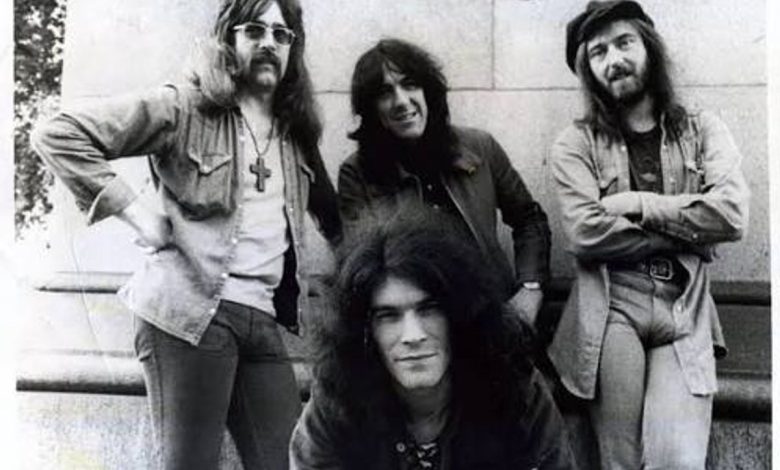
NAZARETH — 1975
The song existed for years before Nazareth made it bleed
“Love Hurts” was not a new song when Nazareth recorded it.
Boudleaux Bryant had written it in 1960. The Everly Brothers recorded it for A Date with the Everly Brothers, but their version was an album track rather than a single. Roy Orbison, Jim Capaldi, Gram Parsons and Emmylou Harris were among the artists who would also bring different emotions to it.
Nazareth heard something else inside the composition.
They slowed the feeling down, surrounded it with hard-rock weight and placed Dan McCafferty in a vocal range that makes every line sound physically difficult.
That last detail matters. The song says love wounds, scars and burns. McCafferty’s voice does not merely repeat those metaphors. His strained, sandpaper tone makes the body seem involved.
The result became the version millions of listeners now hear in their heads when the title is mentioned.
Nazareth did not transform the song by adding a complicated story. They transformed it by changing the emotional temperature.
What had once been a concise country-pop lament became a power ballad that sounded as if the singer had survived exactly what the words describe.
The band chose covers only when they could make them unrecognizable
Nazareth had already built a reputation for taking other writers’ songs and forcing them into the band’s own hard-rock language. Their version of Joni Mitchell’s “This Flight Tonight” had become a major international success even though the arrangement sounded far removed from Mitchell’s original.
Bassist Pete Agnew later explained that the band often returned to songs they had loved for years, but only recorded them if they believed they could change them enough to make them feel like Nazareth songs.
“Love Hurts” fit that instinct.
The group had listened to the Gram Parsons and Emmylou Harris version and had known the song long before their hit recording. Yet their own take removed the conversational intimacy of a country duet and replaced it with isolation.
There is nowhere for McCafferty to hide.
The arrangement moves slowly enough that each phrase arrives exposed. Guitar sustains around him, the rhythm remains deliberate, and the vocal has to climb into a register that sounds almost punishing.
That punishment became the record’s identity.
A key that hurt the singer became the key to the hit
Agnew has told one of the most revealing stories about the session.

While McCafferty and Agnew were away at a wedding in Scotland, guitarist Manny Charlton and drummer Darrell Sweet worked on the backing track. They set the song in the same key they associated with the Gram Parsons and Emmylou Harris version.
For McCafferty, singing that arrangement an octave higher pushed the melody into a brutal range.
Agnew later joked that if the singer had been present when the key was chosen, the band might never have recorded it that way—and perhaps never would have had the hit.
That accident is essential to understanding the finished record.
McCafferty’s voice sounds wounded partly because the performance is physically demanding. He has to reach and rasp. The notes do not sit comfortably.
The discomfort turns into meaning.
A lyric that insists love hurts is being delivered by a singer whose vocal cords seem to be proving the point.
The arrangement removes romance from the word love
Many love songs use strings, warm harmonies or gentle rhythm to reassure the listener even when the lyric is sad.
Nazareth offer almost no reassurance.
The guitar tone is broad and cold. The tempo feels suspended. The drums arrive with rock weight but without speed. The performance gives the impression that the singer is standing alone after the relationship has already ended, repeating a lesson he no longer has the luxury of doubting.
The band also altered one of the lyric images from the earlier version, replacing the “stove” line with a more direct image of a flame. The change fits their harder sound. The song becomes less quaint and more elemental.
Fire. Scars. Pain. Rain.
The vocabulary is simple, and Nazareth keep it simple.
That is why the record works. There is no narrative escape route. No explanation of who left whom. No scene of reconciliation.
Only the singer’s conclusion remains: love hurts.
The band makes that conclusion sound less like bitterness than experience.
A ballad hidden inside a hard-rock breakthrough
Nazareth’s album Hair of the Dog established the band’s hard-rock identity in the United States. The title track is aggressive, swaggering and built around a riff that became classic-rock radio material.
“Love Hurts” is almost the emotional opposite.
On the U.S. edition of the album, the slow ballad sat beside the band’s heavier material and gave radio programmers a different entrance into Nazareth’s sound. Released as a single, it reached No. 8 on the Billboard Hot 100 in early 1976 and became the band’s only U.S. Top 10 hit.
Internationally it went even further, reaching No. 1 in several countries and developing extraordinary longevity in places such as Norway.
The success changed the song’s identity worldwide. The Everly Brothers had recorded the composition first, but Nazareth made it a global rock standard.
That is one of popular music’s strangest transformations: an earlier album track became, fifteen years later, the defining ballad of a Scottish hard-rock band.
Dan McCafferty turned pain into texture
The reason the version endures is ultimately vocal.
McCafferty had one of rock’s most distinctive voices—raspy, high, metallic and capable of sounding both powerful and damaged at the same time.
On “Love Hurts,” those qualities become inseparable from the lyric.
When he sings about scars, the rasp sounds like a scar. When he reaches upward, the strain sounds like emotional resistance. When he insists that romantic happiness can be self-deception, there is nothing polished in the tone to soften the claim.
That is why the record can feel larger than its relatively simple arrangement.
The singer becomes the production.
Nazareth did not need to rewrite Boudleaux Bryant’s basic idea. They only needed to place it in a body that sounded as if the idea had been learned the hard way.
The song’s global success was not the result of making the words more complicated.
It came from making the words sound physically true.
Why the high key changes the meaning of every line
The extreme vocal register does more than make McCafferty sound impressive. It changes the narrator’s emotional position.
In a comfortable key, “Love Hurts” could sound reflective—the wisdom of someone calmly reporting what experience has taught him. In Nazareth’s version, calm reflection becomes impossible. The singer has to fight for the notes, and that effort makes the lesson sound newly discovered.
He is not a philosopher explaining that love can wound people. He sounds like someone learning the lesson while singing it.
That distinction is why the rasp matters so much. McCafferty’s voice contains friction. Air, grain and strain become part of the melody. The performance sounds close to breaking without actually losing control.
Rock singers later turned this kind of wounded high-register delivery into a power-ballad vocabulary, but Nazareth’s recording arrived before the style hardened into formula. The discomfort still feels dangerous.
The song’s famous simplicity gives the singer nowhere to hide. Each line repeats the same conclusion in different images, and the vocal keeps supplying new evidence.
By the end, the title is no longer an opinion.
It sounds like something the singer’s body has proved.
A cover became definitive by refusing to behave like a cover
There is one final reason Nazareth’s version became dominant: the band never sounds respectful in the cautious sense of the word. They respect the song by risking it.
They change the scale, the vocal register and the emotional weight until the composition belongs naturally beside their own hard-rock material. The listener does not need to know the Everly Brothers history to believe this is a Nazareth record.
That is the hardest achievement in a cover. Faithfulness can preserve a song, but transformation can reveal a possibility the original recording never needed to explore. Nazareth found that possibility in pain, volume and a voice pushed high enough to sound almost wounded by the act of singing.
May you like
The Making of Sweet Baby James: How James Taylor’s Breakthrough Album De…
The Album That Changed the Conversation
When James Taylor released Sweet Baby James in February 1970, he was not yet the polished…
Linda Ronstadt and Emmylou Harris Helped Create “Trio” — But Their Great…
Two voices that belonged togetherLinda Ronstadt and Emmylou Harris had already built respected careers before joining Dolly Parton…
Marvin Gaye Asked “What’s Going On?” — And One Question Changed Soul Mus…
A question born from a troubled timeIn the early 1970s, America was dealing with war, social unrest and deep divisions.Marvin Gaye…
Hear the song—and the recording that helps reveal its place in the artist’s story
Nazareth — “Love Hurts”
[EMBED:
Share
X

Telegram
Other posts
Jun 29, 2026
Elvis Presley Saw a Story About Poverty — Then “In the Ghetto” Became One of His Most Mean…
Aug 03, 2026
Ella Langley Stepped In for Tate McRae — Then Her Duet With Morgan Wallen Became a Fan Fav…
Jun 03, 2026
Ella Langley Wrote “You Look Like You Love Me” as a Joke — Then Riley Green Turned It Into…
Jun 28, 2026
One of the Greatest Love Songs Ever Written Was Inspired by a Forbidden Romance
Jun 22, 2026
Dolly Parton Joined Reba McEntire on “Does He Love You” — And Two Country Legends Made the…
Jul 17, 2026
1983: “I Don’t Even Like This Song Anymore,” He Told the Songwriter — Then the One Voice T…
Jul 11, 2026
The Dream That Became the Biggest Song of 1965
Aug 13, 2026
The Night Two Legends Stopped Competing
Read more stories
- I Trusted My Lazy 18-Year-Old Brother-in-Law with My Toddlers While I Bought Groceries – I Returned to an Empty House
- My Daughter Never Came Home from Prom – Eleven Months Later, What I Accidentally Found Hidden Inside My Son’s Beanbag Chair Made Me Go White as a Ghost
- Southern Cornbread Dressing
- My MIL Put My Wedding Dress up for Sale at Her Garage Sale – When I Discovered What She 'Needed' the Money For, I Went Pale