Steve Perry and Journey’s “Open Arms”: The Power Ballad That Became an Arena-Rock Classic
How a vulnerable piano ballad from Journey’s blockbuster Escape era became one of Steve Perry’s defining vocal performances.
Born During Journey’s Breakthrough Era
“Open Arms” emerged during the creation of Journey’s landmark 1981 album, Escape. Keyboardist Jonathan Cain had begun developing the musical idea before joining Journey, while he was still with The Babys. After Cain became part of Journey in 1980, he and lead singer Steve Perry completed the song together.
The ballad represented a softer direction for a band already known for powerful guitars and arena-ready rock. That contrast initially made the song an uncertain fit, but it ultimately became one of the defining recordings of Journey’s most successful period.
“Open Arms” appeared on Escape, the album Journey’s official website identifies as the home of the song alongside classics including “Don’t Stop Believin’.” Released as a single in 1982, the ballad gave Perry’s extraordinary voice room to move from quiet vulnerability to a soaring emotional climax.
What Does “Open Arms” Mean?
“Open Arms” is a song about reconciliation, vulnerability and the willingness to welcome love back after emotional distance.
The narrator is no longer protecting himself behind pride or uncertainty. Instead, he offers complete emotional openness to someone whose importance has become impossible to deny.
That straightforward message is central to the song’s appeal. The arrangement begins with Cain’s gentle piano and gradually expands around Perry’s vocal, allowing the emotional intensity to grow without overwhelming the lyrics.
Perry’s performance became one of the clearest demonstrations of why his voice was so important to Journey. He turns a simple romantic confession into an arena-sized declaration while preserving the intimacy at the heart of the song.
How Big Was the Audience Response?
No trustworthy historical source can calculate exactly how many individual fans “Open Arms” created, so its reach is better measured through chart performance, certification and continuing audience interest.
The single became one of Journey’s biggest American pop hits, climbing to No. 2 on the Billboard Hot 100 and remaining there for six weeks. It was an important demonstration that Journey could compete at the highest level of mainstream pop without abandoning its rock identity.
The song’s commercial life has continued for decades. The Recording Industry Association of America lists “Open Arms” among Journey’s certified singles, with a new certification recorded on January 26, 2024.
Its digital audience is also substantial. Journey’s official 1982 performance video on the band’s Official Artist Channel has accumulated more than 65 million YouTube views, showing how strongly the song continues to connect with listeners long after its original release.
The album behind it became even larger. Journey’s official biography states that Escape was certified Diamond by the RIAA in 2021, representing more than 10 million equivalent album units in the United States.
What Did “Open Arms” Do for Steve Perry’s Career?
For Steve Perry, “Open Arms” helped cement his reputation as one of the defining rock vocalists of his generation.
Perry had already played a crucial role in Journey’s rise after joining the group in the late 1970s. But the Escape era pushed the band into a new commercial category. The album became Journey’s first No. 1 album in the United States, while songs such as “Open Arms,” “Who’s Crying Now” and “Don’t Stop Believin’” made Perry’s voice instantly recognizable to a vast mainstream audience.
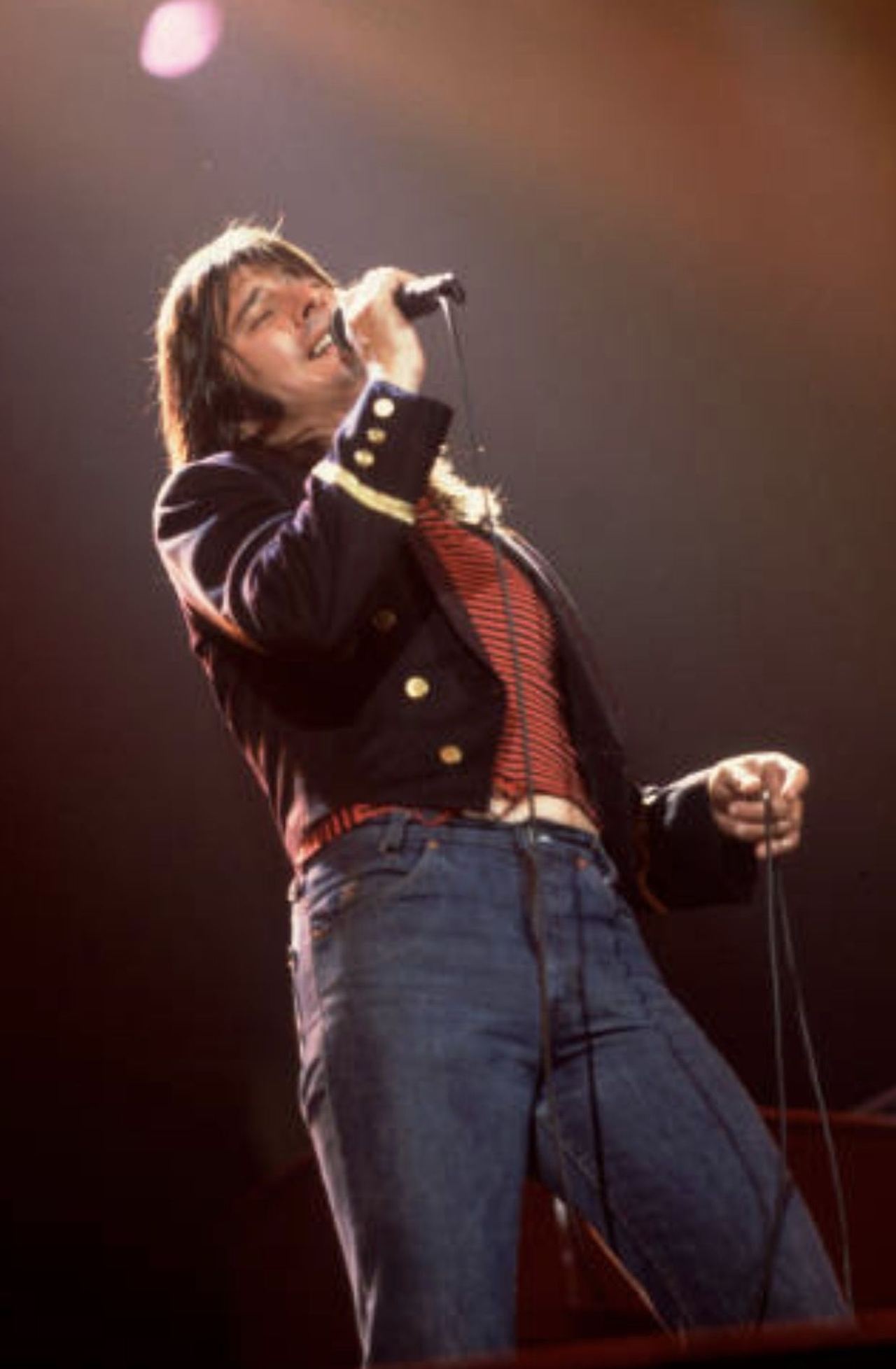
“Open Arms” was especially important because it demonstrated his range as a singer. Perry was not simply a powerful rock frontman; he could deliver a highly exposed piano ballad with precision, restraint and emotional force.
Journey ultimately became one of the world’s best-selling bands. The group’s official biography reports worldwide record sales of more than 100 million, along with numerous Gold and Platinum albums and a long list of U.S. Top 40 singles.
Journey was inducted into the Rock & Roll Hall of Fame in 2017, with Steve Perry included among the inducted members. While no single song can account for an achievement of that scale, “Open Arms” belongs to the extraordinary run of recordings that established Perry-era Journey as one of the signature American rock acts of the 1980s.
A Ballad That Outlived Its Era
“Open Arms” has endured because its emotional idea is simple and universal: sometimes love requires surrendering pride and allowing another person back into your life.
The recording also captures Journey at a particularly important moment. Jonathan Cain’s piano, the band’s controlled arrangement and Steve Perry’s unmistakable vocal combine to create a power ballad that feels intimate even when performed for an arena-sized audience.
Decades after Escape, the song remains part of Journey’s musical identity and one of the performances most closely associated with Perry’s voice.
For Steve Perry, “Open Arms” was more than another successful single. It became a showcase for the emotional quality that helped earn him a lasting place among rock music’s most celebrated singers.
Watch and Listen
Watch the official video on Journey’s Official Artist Channel:
Journey – Open Arms (Official Video – 1982)
Sources
- Journey Official Website — Escape
- Journey Official Biography
- RIAA — Journey Gold & Platinum database
- Official Charts — Open Arms
The Heartbreaking Truth Behind Janis Joplin’s Iconic Piece of My Heart
The year was 1968, a time when the flower power movement was beginning to wilt under the weight of political unrest, yet the airwaves were still crackling with the raw energy of the counterculture. Amidst this backdrop of change, a voice emerged from the smoky, subterranean clubs of the era to shatter the silence. When Janis Joplin belted out the opening lines of Piece of My Heart, she wasn’t just performing for a crowded venue; she was baring a soul that had been weathered by relentless expectation and the crushing isolation of sudden, meteoric fame. To the millions listening on their home stereos, she was a rock goddess, but behind the curtain, Janis Joplin was a woman drowning in a reality that her music could no longer soothe.
Most fans remember the screams and the unbridled passion that defined her presence, but the history of Janis Joplin is a tragedy draped in velvet and cigarette smoke. As the psychedelic era peaked and the promise of Woodstock loomed on the horizon, the pressure to maintain an untouchable persona became a suffocating shroud. While the world saw an unstoppable force of nature, those in her inner circle witnessed a lonely soul constantly searching for validation in all the wrong places. Her performance of Piece of My Heart remains a haunting testament to this internal dissonance, where every crack in her voice felt like a plea to be truly seen beyond the stage lights.
The irony of her legacy is that Janis Joplin provided a soundtrack for freedom while feeling increasingly imprisoned by the very stardom she had chased. Whether she was clutching a bottle of Southern Comfort or channeling her blues-drenched pain into a microphone, she lived in a cycle of highs and lows that mirrored the volatility of the sixties themselves. The recording studio, often a place of artistic refuge for many, became a mirror reflecting her desperate need for connection. She didn’t just sing the lyrics about giving her heart away; she was actively pouring the last reserves of her identity into a culture that consumed her talent while ignoring her fragility.
Even decades later, the sonic impact of that era remains tethered to her signature wail. For those who grew up in the shadow of the Vietnam War and found solace in the warmth of a vinyl record, Janis Joplin serves as a visceral reminder of what we lost. Her music acts as a time capsule, transporting us back to a world of fuzz pedals, bell-bottoms, and the lingering scent of incense in a crowded apartment. The tragedy of her short life is not just a footnote in rock history, but a profound human story that continues to resonate with anyone who has ever felt too much in a world that asks us to hide our scars.
As we look back at the icons who defined the late 1960s, the name Janis Joplin stands alone as the embodiment of authentic, unpolished emotion. She was a bridge between the blues of the past and the rock revolution of the future, yet she could never quite find a bridge back to herself. Her songs remain a vital part of our collective memory, preserved in the grooves of our oldest albums, still vibrating with the ghost of a woman who gave her everything to a world that was simply not prepared to handle the intensity of her heart.
Read more stories
- Everybody in My Family Forgot My Birthday – So I Gave Myself the Gift They Feared Most
- My Husband Became an Organ Donor – His Doctor Stopped Me in the Hospital Hallway and Said, ‘There’s Something He Made Me Promise Not to Give You Until Now’
- Our Sweet Neighbor’s Daughter Always Babysat Our Kids for Free – We Came Home Early, and the Truth Wiped the Smile off My Face
- ‘Help Me’: Woman Finds a Note at Her Mother’s Wedding, Leading to a Major Scandal