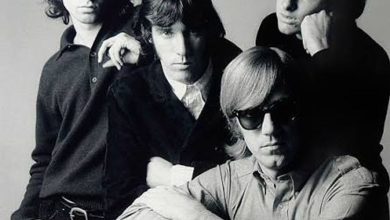
The Beatles Had a Problem With “Yesterday” — It Was So Different That They Almost Kept It Off the Charts

A Beatles song that didn’t sound like The Beatles
In 1965, The Beatles were at the height of Beatlemania when Paul McCartney brought a song into the studio that sounded unlike almost anything the band had recorded before.
The song was “Yesterday,” released on August 6, 1965, as part of Help!.
But its origins were surprisingly unusual.
It started as “Scrambled Eggs”
McCartney first woke up with the melody in his head and was initially worried that he had unconsciously borrowed it from somewhere else. While he worked out the lyrics, he used the temporary words “Scrambled Eggs” to fit the melody.
Eventually, the unfinished idea became the emotional ballad we know today.
Only one Beatle actually played
When “Yesterday” was recorded at Abbey Road on June 14, 1965, McCartney performed the vocals and acoustic guitar himself. George Martin suggested adding a string quartet, creating a remarkably intimate arrangement.
That meant the finished recording didn’t feature John Lennon, George Harrison or Ringo Starr playing instruments.
For a band famous for its four-member sound, it was an extraordinary departure.
The Beatles were hesitant
The group didn’t initially want “Yesterday” released as a single in Britain because they felt it was too different from their rock-and-roll identity. Yet the song eventually became one of their most celebrated recordings.
It reached No. 1 on the US Billboard Hot 100 and became one of the most covered songs ever recorded, with Guinness World Records identifying it as The Beatles’ most covered composition.
What began with a melody McCartney wasn’t even sure was his own became one of the defining songs of the Beatles era.
Listen to “Yesterday”
▶️ YouTube: The Beatles – Yesterday (Remastered 2009)
Continue reading
Jimmie Rodgers’ “Blue Yodel No. 1 (T for Texas)”: The 1927 Recording That Launched America’s Blue Yodeler
Jimmie Rodgers’ “Blue Yodel No. 1 (T for Texas)”: The 1927 Recording That Launched America’s Blue Yodeler
How a spare guitar-and-voice performance recorded in Camden became Jimmie Rodgers’ first major hit, helped define the blue yodel, and pushed an emerging country star onto the national stage.
Recorded at the Moment Country Music Was Taking Shape
Jimmie Rodgers recorded “Blue Yodel,” later widely known as “Blue Yodel No. 1 (T for Texas),” on November 30, 1927, in Camden, New Jersey, during his second major session for the Victor Talking Machine Company.

Only months earlier, Rodgers had auditioned for producer Ralph Peer at the historic Bristol Sessions and recorded his first Victor sides. Their encouraging reception brought him to Victor’s home studios, where “Blue Yodel” became the decisive breakthrough.
The recording was strikingly spare: Rodgers accompanied himself on guitar and combined rural white musical traditions with the twelve-bar blues and his distinctive yodel. The result helped establish a new commercial country style that sounded immediately recognisable as Jimmie Rodgers.
What Does “T for Texas” Mean?
The song is not a conventional narrative with one continuous plot. Instead, it uses floating blues-style verses about Texas, romantic frustration, wandering, jealousy and hard living.
Its deeper importance lies in the way Rodgers combined those blues-derived themes with a yodel that functioned almost like an instrumental response to the sung lines.
That synthesis reflected the musical world Rodgers had absorbed around the railroads and the American South. The Country Music Hall of Fame emphasises the importance of African American blues, work chants, folk music, jazz and stage yodelling in the style he created.
The song therefore became more than a catchy refrain: it was an early demonstration of how Black and white Southern musical traditions were interacting inside the emerging commercial country genre.
How Strongly Did Audiences Respond?
Reliable individual fan counts do not exist for a record issued in the late 1920s, so sales and historical accounts provide the clearest evidence.
The response was extraordinary. The Alabama Music Hall of Fame reports that “Blue Yodel” became one of the relatively small number of early country recordings to sell one million copies. Other historical estimates place sales at more than one million.
The Country Music Hall of Fame describes it as Rodgers’ first big hit and states that within months he was moving toward national stardom, appearing in major theatres, broadcasting regularly and securing vaudeville work.
The recording’s influence has lasted far beyond its original sales. In 2004, the Library of Congress selected “Blue Yodel (T for Texas)” for the National Recording Registry because Rodgers’ blue yodels helped define country music.
What Did the Song Do for Jimmie Rodgers’ Career?
“Blue Yodel No. 1” was the recording that transformed Jimmie Rodgers from a promising regional performer into a national recording star.
Its success created the template for a series of blue yodel recordings that became central to his identity as “America’s Blue Yodeler.” Over the next five years, Rodgers recorded more than one hundred titles and became one of the first true stars of commercial country music.
His influence spread across generations. The Country Music Hall of Fame cites artists including Gene Autry, Johnny Cash, Lefty Frizzell, Merle Haggard, Bill Monroe, Dolly Parton, Hank Snow and Ernest Tubb among those who acknowledged his impact.
Rodgers was in the first class inducted into the Country Music Hall of Fame in 1961. He entered the Songwriters Hall of Fame in 1970 and the Rock & Roll Hall of Fame as an Early Influence in 1986.
Why “Blue Yodel No. 1” Still Matters
The recording is important not simply because it sold extraordinarily well for its era, but because it helped establish the vocabulary of country music before the genre had fully settled into a fixed identity.
Rodgers fused blues phrasing, rural song traditions, guitar accompaniment and yodelling into a personal style that countless later performers could recognise and adapt.
Its historical status is reflected in two major honours. The Recording Academy inducted “Blue Yodel (T for Texas)” into the Grammy Hall of Fame in 1985, and the Library of Congress added the recording to the National Recording Registry in 2004.
For Jimmie Rodgers, “T for Texas” was the breakthrough. For American music, it became one of the foundational recordings through which country, blues and popular performance met on record.
Watch and Listen
Jimmie Rodgers – Blue Yodel No. 1 (T for Texas)
Read more stories
- My Fiancé’s Ex Showed Up at Our Wedding in a Bright Red Dress – As I Tried to Make Her Leave, She Grabbed My Hand and Whispered, ‘Don’t Marry Him Until You Know This’
- Steak and Potato Foil Packs
- My Son Walked Across the Graduation Stage in a Bright Red Dress While the Auditorium Giggled – He Did It for Me
- Halle Berry Turns 60: From Prom Dress Beauty Queen to Oscar Winner – See Her Through the Years and What AI Imagines Her Kids Would Look Like with Her Fiancé – Photos