The Chilling Legacy of Anton Chigurh: A Psychopath Revisited
The stark landscape of the American southwest serves as a haunting backdrop for one of cinema’s most unsettling characters, Anton Chigurh, portrayed by Javier Bardem in the Coen Brothers’ iconic film, No Country for Old Men. When Bardem stepped in front of the camera in 2007, he was not merely performing; he was embodying a chilling enigma that would later compel the interest of psychologists and researchers alike. Chigurh, with his cattle gun, exudes an eerie calmness, a stark contrast to the chaos he leaves in his wake. Audiences were left in a state of disquiet, grappling with the unsettling realization that this villain seemed to operate on an entirely different frequency than the notorious murderers of cinematic history.
Years after the film’s release, two Belgian forensic psychiatrists, Dr. Samuel Leistedt and Dr. Paul Linkowski, embarked on a groundbreaking journey to dissect the psychological underpinnings of movie villains. They viewed over four hundred films, from the silent era to modern cinema, armed with the diagnostic tools of their profession. What they sought was not just entertainment but an exploration of how accurately these characters represented real-world psychopathy. With each frame, they scrutinized the emotional landscapes of fictional villains, aiming to uncover the truth behind their motivations and behaviors.
Their endeavor led to a surprising discovery: out of the myriad of characters that graced the silver screen, only 126 truly aligned with the clinical definitions of psychopathy. A significant majority of Hollywood’s portrayals fell short, often relying on exaggerated traits that deviated from the cold detachment found in real-life psychopaths. Unlike their cinematic counterparts, genuine psychopaths do not seek applause; they do not revel in their own narratives. Instead, they navigate the world with a chilling lack of empathy, leaving a wake of destruction that is almost clinical in its execution.
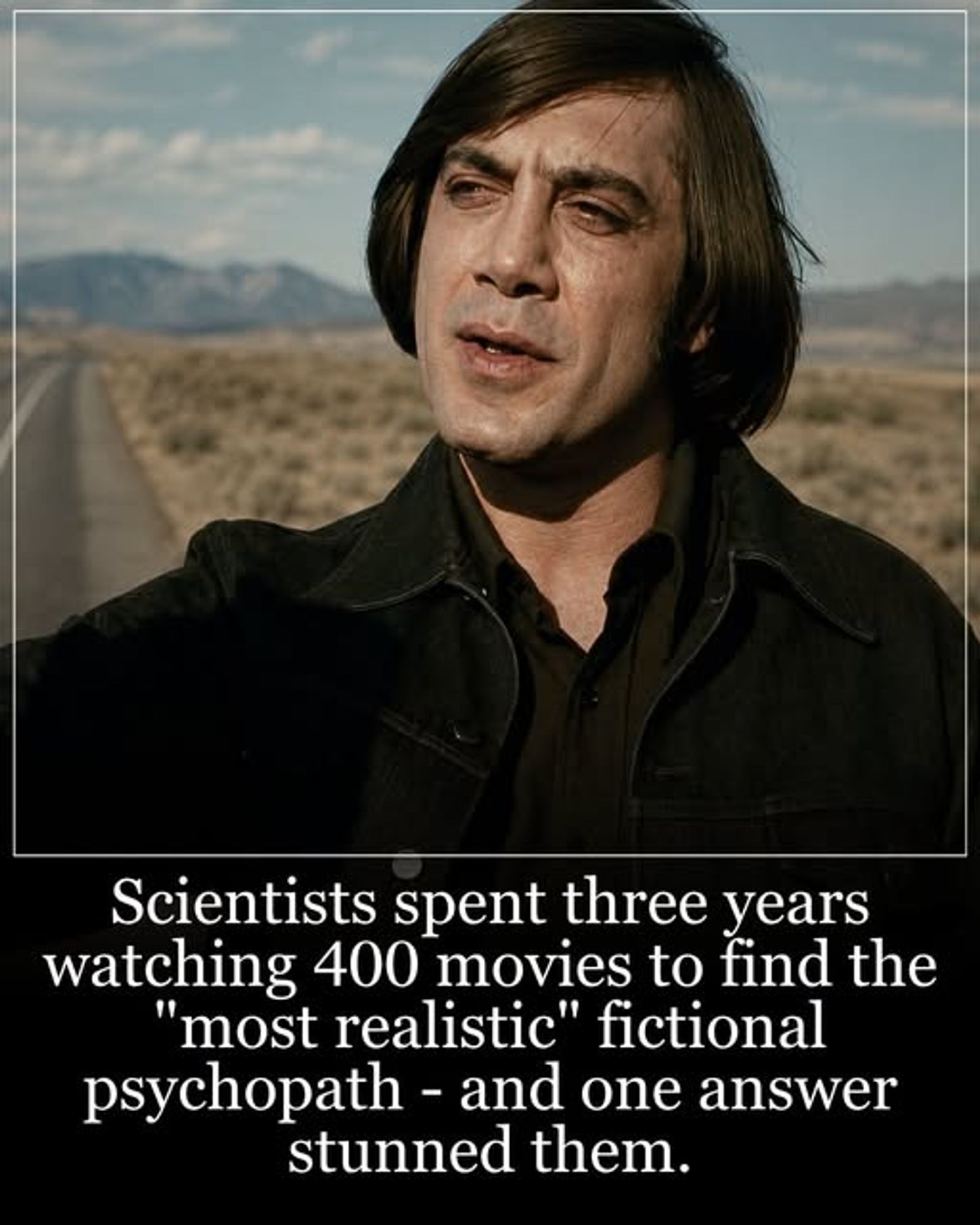
Chigurh emerged as a rare example of this accurate depiction. Unlike typical villains who often relish their roles—monologuing about their brilliance or suffering—Chigurh operates with an emotionless precision that is as terrifying as it is thought-provoking. He fulfills his grim tasks with an air of routine, devoid of the theatricality that so many others display. For Leistedt and Linkowski, this was more than just a character study; it was a revelation about the very nature of villainy in art and its disconnect from reality.
The impact of Chigurh’s portrayal transcends the film itself, opening a dialogue about the nature of evil and the complexity of human psychology. His chilling demeanor resonates deeply with viewers, creating an unsettling mirror that reflects our fears about unchecked violence and indifference. This exploration into the minds of fictional psychopaths not only challenges the conventions of storytelling but also invites us to ponder the depths of the human condition.
In a world that often seeks to understand its monsters through the lens of trauma and drama, Chigurh stands defiantly apart. He is a reminder that not all darkness is born from pain; some may simply exist, unbothered and unwavering. As we reflect on his character, we are left with an unsettling question: what does it mean to be truly devoid of conscience, and how does that shape our understanding of humanity itself?
Read more stories
- Released in 1971, this cheerful pop hit sounded bright and carefree on the surface… But hidden inside the lyrics was a surprisingly sad story most listeners never noticed.
- Shelley Winters: A Voice That Refused to Be Silenced
- Ed Harris’s Journey from Frustration to Acceptance in Dutton Ranch
- The Last Ride: John Wayne’s Moving Farewell in The Shootist