The Heartbreaking Goodbye Behind One of Cat Stevens’ Most Beloved Songs

In 1970, Cat Stevens was standing at a turning point. His relationship with actress Patti D’Arbanville was ending, while he was also preparing to enter a new chapter of his musical life.
That goodbye became the emotional heart of “Wild World.” Stevens later described it as his parting song to Patti, as their lives began moving in different directions.
But the song was more complicated than a simple breakup.
Stevens had previously survived a serious battle with tuberculosis, an experience that changed the way he looked at life. As he later explained, the song was also partly a warning to himself as he stepped back into the world and a new period of success.
That is what gives the song its unusual sadness. It sounds like someone saying goodbye to a lover, but underneath it is also an artist saying goodbye to an old version of himself.
Released in 1970, the song became one of Stevens’ defining recordings and helped bring wider attention to Tea for the Tillerman.
Decades later, the emotion still feels familiar.
Sometimes the hardest goodbye isn’t about wanting someone back.
It’s about knowing they have to go—and hoping the world will be kind to them.
Continue reading
Buck Owens Turned a Lonely Road Into a Country Classic — Then “Together Again” Became One of His Signature Songs
A heartbreak song with a different sound
By 1964, Buck Owens had already become one of the leading voices of the Bakersfield sound — a harder, cleaner style of country music that stood apart from the polished Nashville sound.
Then came “Together Again.”
Written by Buck Owens, the song tells a simple story of heartbreak finally coming to an end. The narrator is reunited with the person he loves, and the sadness that filled his earlier songs suddenly gives way to relief.
But the recording itself had an unusual ingredient.
That crying steel guitar
One of the most memorable sounds on “Together Again” comes from the steel guitar played by Tom Brumley.
Its high, aching notes almost sound like another voice answering Owens.
That distinctive steel-guitar sound became a defining feature of the Bakersfield style and gave the song an emotional quality that made the simple lyrics hit much harder.
Owens’s relaxed vocal delivery kept everything grounded.
He didn’t oversing the emotion.
He simply told the story.
Then it reached No. 1
Released in 1964, “Together Again” became one of Buck Owens’s biggest successes.
The song reached No. 1 on Billboard’s country chart, adding another major hit to a remarkable run for Owens and his Buckaroos.
The recording also demonstrated why his music was becoming so influential.
It was country music, but it had energy.
The electric guitars were sharp, the rhythm was driving and the steel guitar cried above everything.
The Bakersfield sound
Owens and his Buckaroos helped establish Bakersfield as an important center of country music during the 1960s.
Their sound would influence artists for generations, particularly musicians looking for an alternative to the smoother Nashville production style.
“Together Again” remains one of the clearest examples of that approach.
It was simple.
It was direct.
And it sounded unmistakably like Buck Owens.

A song that still feels honest
The beauty of “Together Again” is that it doesn’t need a complicated story.
Someone has been gone.
Someone has come back.
And suddenly the loneliness is over.
That emotional simplicity, combined with Tom Brumley’s unforgettable steel guitar, helped make the recording a classic of 1960s country music.
Listen to “Together Again”
Buck Owens – “Together Again”
Peggy March Was Only 15 When She Recorded “I Will Follow Him” — Then She Made Pop History
A teenage voice nobody expected
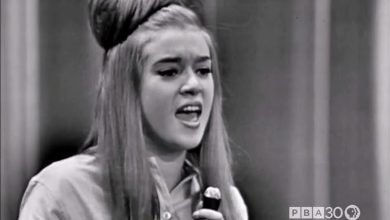
In 1963, Peggy March was just 15 years old when she recorded “I Will Follow Him.”
She had already begun her career under the name Little Peggy March, but nothing had prepared her for what happened next.
The song was written by François “Frank” Pourcel, Paul Mauriat, Norman Gimbel and Arthur Altman. The English version transformed an earlier instrumental melody into a dramatic declaration of devotion.
March’s youthful voice gave the recording a distinctive quality — innocent, determined and surprisingly powerful.
Then the record took off
Released in early 1963, “I Will Follow Him” quickly climbed the American charts.
On April 27, 1963, it reached No. 1 on the Billboard Hot 100.
March became the youngest female artist to have a No. 1 single on the U.S. chart, a record that made her name part of pop history.
The song’s arrangement helped make it unforgettable.
A dramatic orchestral introduction builds toward March’s vocal, while the repeated chorus gives the recording an almost overwhelming sense of devotion.
Fame came very quickly
For a teenager, the success was enormous.
Suddenly, Peggy March was performing the song that had become one of the most recognizable pop records of the year.
But the story didn’t end in America.
She later built a particularly successful career in Germany and Japan, recording music in several languages and becoming an important international pop performer.
That international chapter is sometimes overlooked when people remember her only for “I Will Follow Him.”
More than a teenage hit
“I Will Follow Him” has continued to return to popular culture decades after its original release.
The song has been covered by numerous artists and famously appeared in the 1992 film Sister Act, introducing its melody to a completely new generation.
But the original remains special.
There is something almost surreal about hearing that enormous orchestral arrangement behind a singer who was only 15 years old.
Peggy March didn’t simply have a hit.
She made history while still a teenager.
And for one remarkable moment in 1963, one of the biggest voices in American pop belonged to a girl who hadn’t even finished growing up.
Listen to “I Will Follow Him”
Peggy March – “I Will Follow Him”
Read more stories
- My Family Cut Me off After I Used ‘Their Inheritance’ to Go Back to School – What Happened on Graduation Day Left Me Stunned
- How ‘The Most Beautiful Girl’ Was Hiding in Two Failed Norro Wilson Singles
- My Husband Left Me Home with the Kids While He Took His Mother on a Luxury Cruise – When They Returned, His Mother Screamed, ‘Oh No! How Dare You!’
- My Fiancé Didn’t Say ‘I Do’ at Our Wedding – When I Found Out Why, I Was Grateful He Hadn’t