The night Brian Epstein saw what everyone else missed
On a damp November evening in 1961, Brian Epstein walked down the narrow stone steps into Liverpool’s Cavern Club expecting little more than a routine scouting trip. He was a record store manager, not a music mogul, and he had come because customers kept asking about a local act playing there. The room was dark, crowded, and noisy, and the band on stage hardly seemed polished enough to be shaping the future. They laughed between songs, smoked mid-set, and ignored the rules that were supposed to separate working musicians from hopefuls.
Most people who saw that performance would have left with the same thought: too rough, too messy, too undisciplined. But Epstein saw something else in the four young men from Liverpool. He saw a raw force that didn’t fit the tidy expectations of the industry, yet felt impossible to ignore once you heard it. He had never managed a band before and knew almost nothing about production, but something in their energy stayed with him after the music stopped. Weeks later, he offered to become their manager, and they said yes.
What followed was a long lesson in rejection. Epstein carried demo tapes across London and knocked on the doors of major labels, only to hear no again and again. Decca Records turned the group down in early 1962, choosing another band they believed would be easier to work with. Around the industry, guitar bands were being treated like a fading trend. Even friends wondered why Epstein kept pressing forward for musicians so many people dismissed.
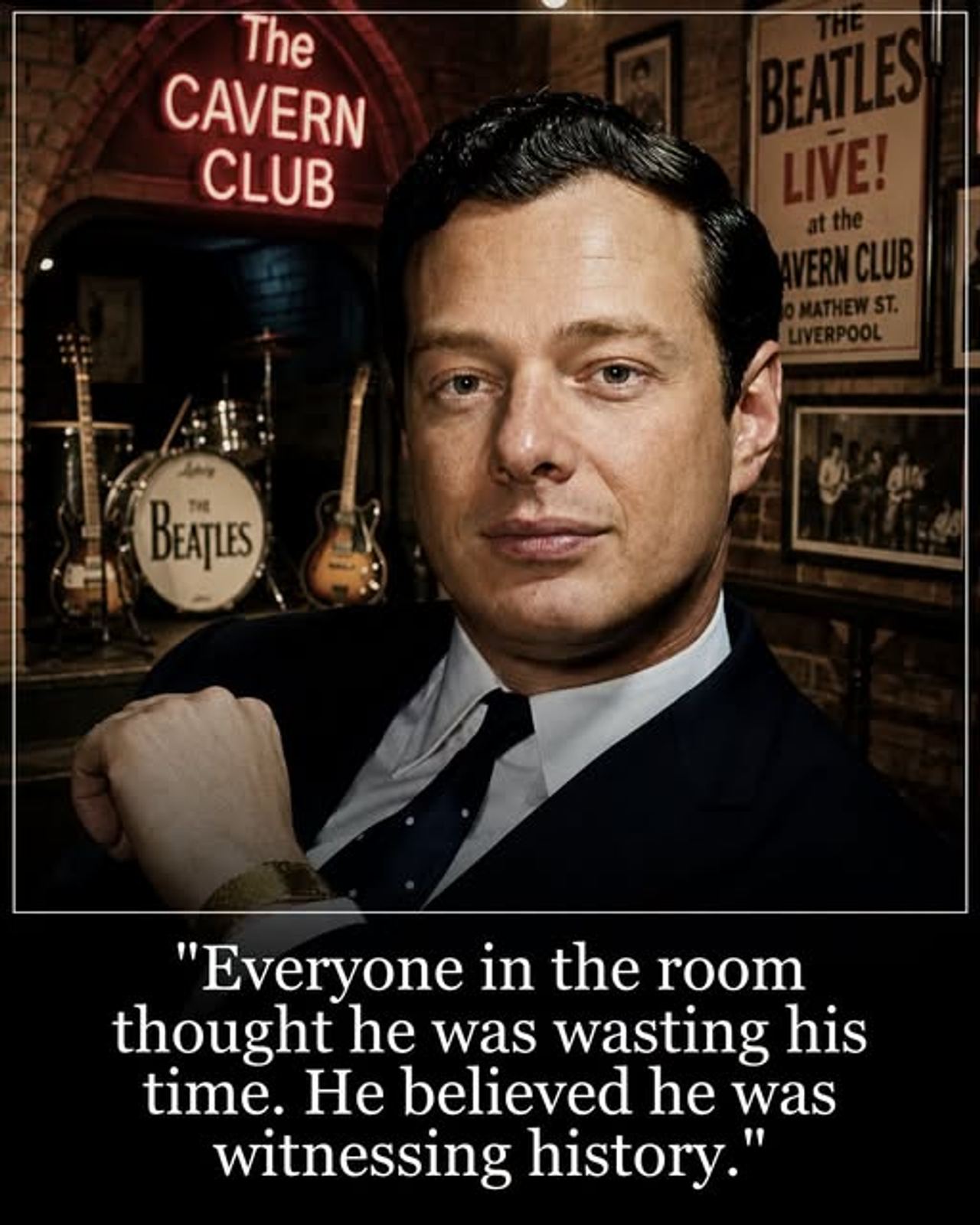
He refused to let go. Eventually, he reached George Martin at Parlophone, a small EMI label, and this time the response changed. Martin listened carefully and heard what others had missed. He signed the band, giving Epstein the opening he had been chasing all along. But the manager’s work was far from over. He wanted the group to look as serious as they sounded, so he asked them to trade leather jackets for tailored suits, to arrive on time, and to bow together after each show. He believed presentation could help the music find its audience.
The changes were not easy. Some fans grumbled, and the band pushed back more than once. Yet Epstein stayed firm, convinced that people needed a reason to take a chance before they could fall in love. In time, the results spoke for themselves. “Love Me Do” entered the British charts, followed by “Please Please Me,” and then the phenomenon grew too large to contain. Crowds became so loud they nearly swallowed the songs whole.
By 1964, the same group once turned away by label after label was standing on a stage in America, watched by tens of millions in a single night. History would celebrate John, Paul, George, and Ringo for the music they made, but behind that ascent stood Brian Epstein, the man who looked into a smoky cellar, saw possibility where others saw disorder, and believed long enough to help the world see it too.