The Voice They Nearly Left Out of The Mamas & the Papas
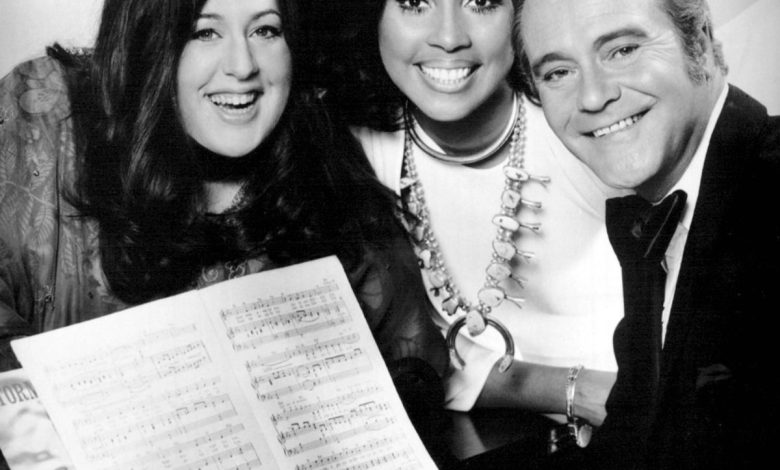
How Cass Elliot overcame resistance to become the vocal force that made the group’s harmonies unforgettable.
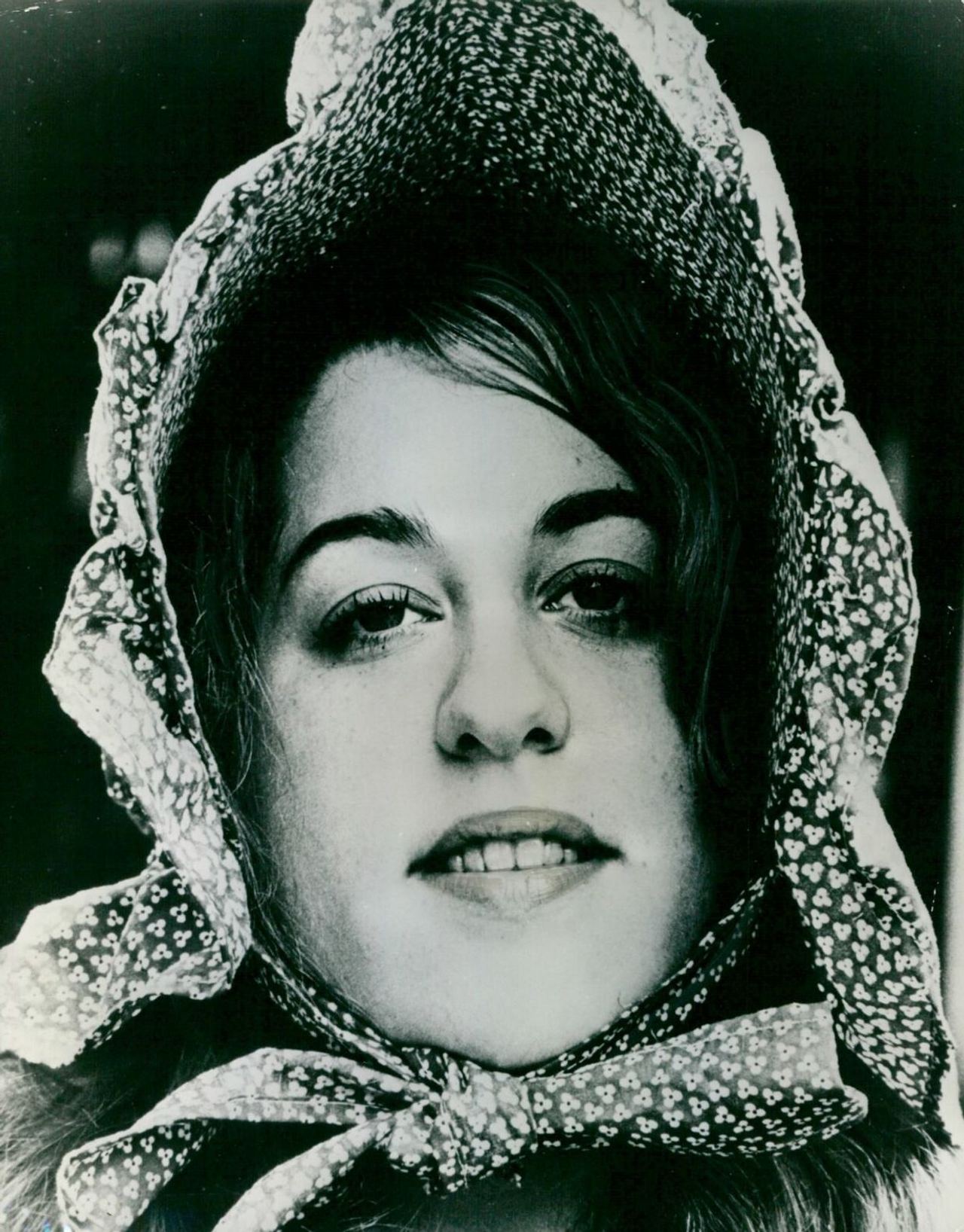
Cass Elliot. Photo: Rogers, Cowan and Brenner-publicity agency-Beverly Hills. Public domain.
The missing piece was already in the room
Before The Mamas & the Papas existed, John Phillips, Michelle Phillips and Denny Doherty were searching for a new vocal identity. Cass Elliot moved in the same folk circles and had already sung with Doherty in The Mugwumps. Her voice was powerful, accurate and instantly recognizable. Even so, John resisted bringing her into the emerging group.
Accounts differ on every detail, and a later tale about her range changing after a head injury became part of the band’s mythology. The simpler truth is that Elliot kept singing with them until the musical case for her presence was impossible to dismiss.
Four voices became one sound
The final blend depended on contrast. Michelle’s bright tone, Cass’s depth and force, Doherty’s expressive lead and John’s arranging sense created harmonies that did not resemble a conventional folk quartet. California Dreamin’ made that combination audible to the world.
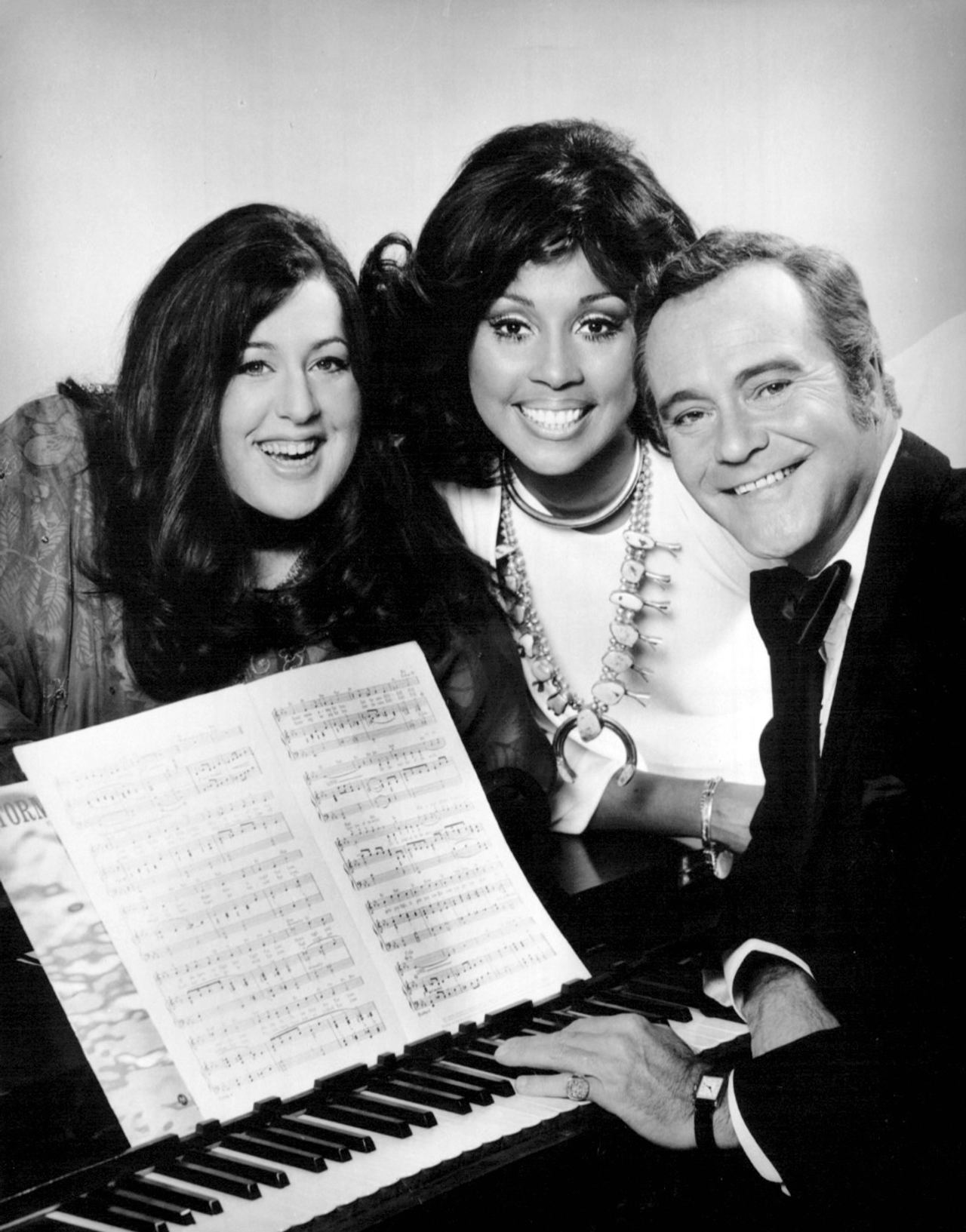
Elliot was not merely filling a lower harmony. Her voice gave the records gravity. When she moved to the front, as on Words of Love or Dream a Little Dream of Me, the group’s sound expanded from clever arrangement into personality.
Cass Elliot. Photo: Unknown author Unknown author. Public domain.
Success did not erase the old judgment
The band became one of the defining American pop groups of the 1960s, but Elliot continued facing jokes and assumptions aimed at her body. Those pressures make the early resistance more significant. The member treated as a questionable fit became the person many listeners remembered first.
The lesson is not that rejection automatically produces greatness. It is that gatekeepers can be least reliable when confronted with something they have not learned to value. The Mamas & the Papas needed four particular voices, and removing any one of them would change the architecture. Cass Elliot did not squeeze into the group’s sound. Her presence completed it.
The Slade Anthem That Turned a Number-One Hit Into an Invitation to Let Go
Some records ask you to listen. This one sounds as though it expects you to join in.
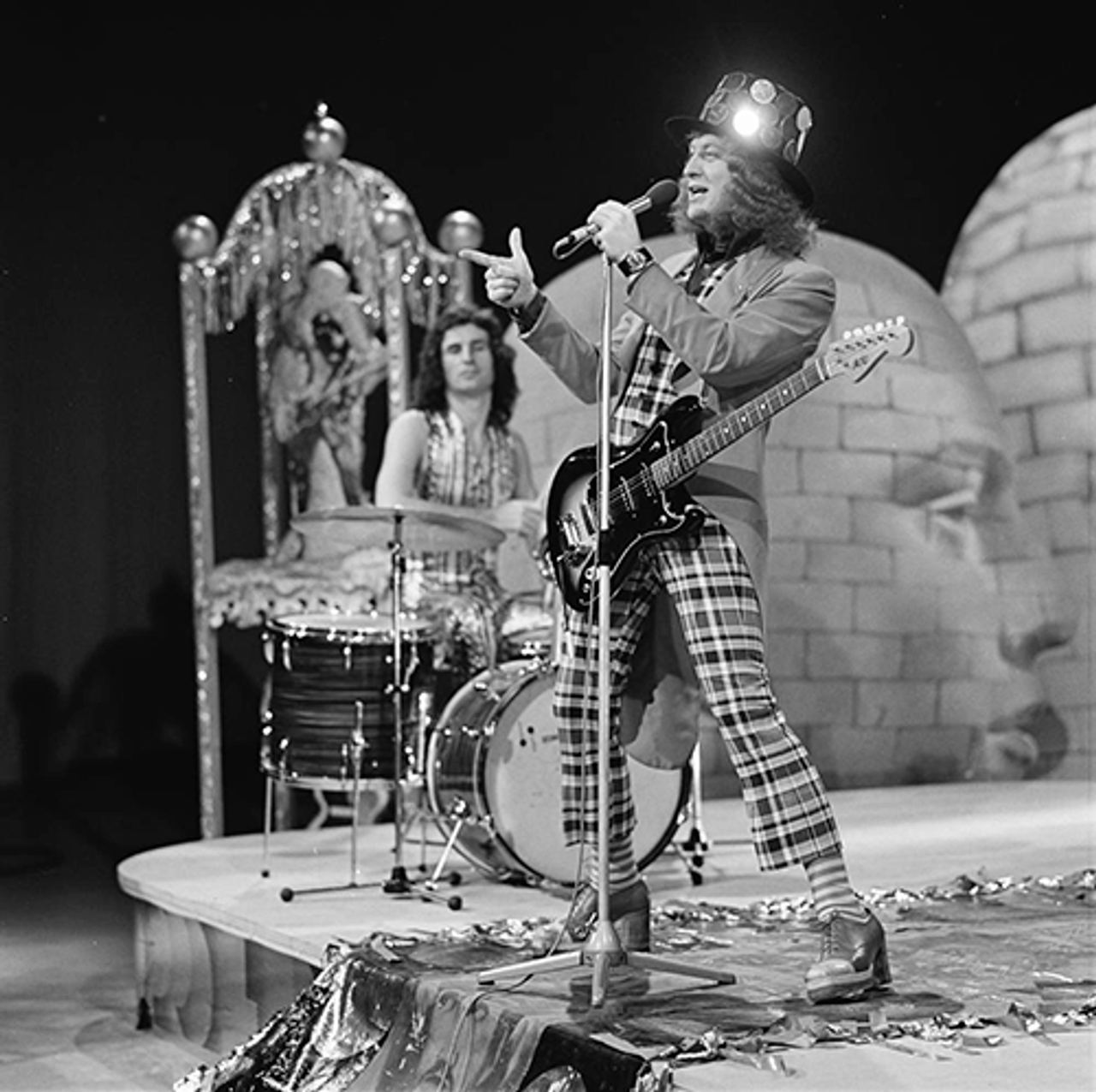
Noddy Holder’s voice does not arrive politely. It comes through with a rasp, a push, and the kind of conviction that makes a chorus feel larger than the room where you are hearing it.
Behind him is Slade: a band whose sharpest pop instinct could live inside an enormous amount of noise.
On the UK chart dated September 9, 1972, Mama Weer All Crazee Now reached number one. It stayed at the top for three weeks. September 9, 2026 marks fifty-four years since the beginning of that run.
Noddy Holder on TopPop, November 2, 1973, a later appearance. Photo: AVRO, via Beeld en Geluid / Wikimedia Commons. Unaltered. CC BY-SA 3.0 NL: . Source:
The date explains why we are returning to it. The opening seconds explain why it is worth returning to.
The title may look unruly on paper, but the musical idea is remarkably direct. A strong beat, a voice that refuses to disappear into the arrangement, and a repeated hook leave little distance between performer and listener.
You do not have to admire the spelling to understand the invitation.
Holder and Jim Lea wrote the song, and Chas Chandler produced the recording. With Dave Hill on guitar and Don Powell on drums, the band’s familiar lineup gave that invitation its weight.
Listen to the balance. The performance can sound rough-edged without losing the shape of a pop song. Every return to the hook makes the next one easier to anticipate.
That is where the pleasure sits: not in waiting for a complicated twist, but in knowing what is coming and wanting it anyway.
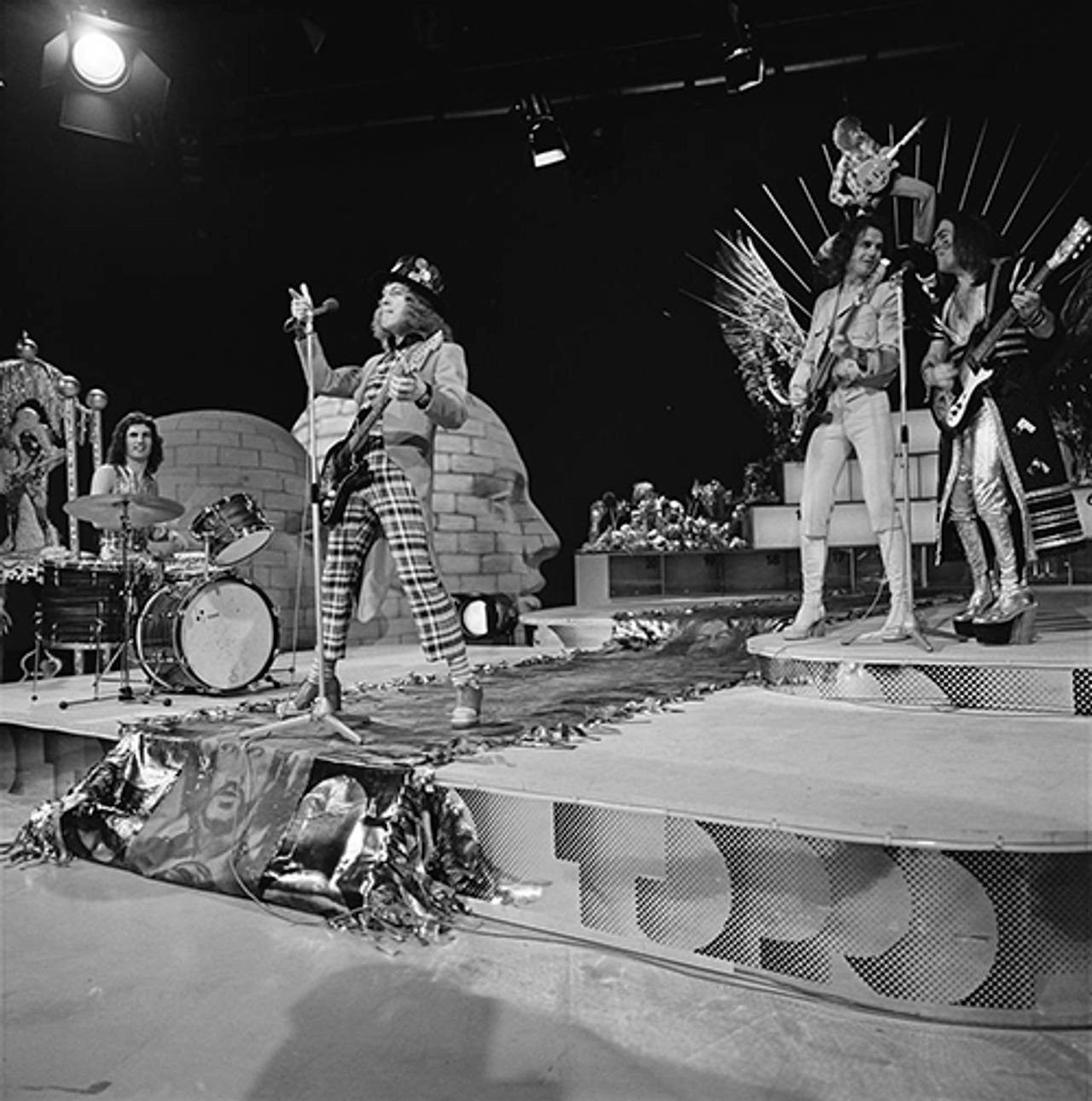
A different view of Slade on TopPop, November 2, 1973; not the September 1972 chart moment. Photo: AVRO, via Beeld en Geluid / Wikimedia Commons. Unaltered. CC BY-SA 3.0 NL: . Source:
For anyone who remembers this music from a bedroom radio, a record shop or a crowded dance floor, the voice may bring the setting back before the mind supplies a date.
For a younger listener, there is no memory to recover. The record has to work on its own. Its directness gives it a chance to do exactly that.
Anniversary articles often make old music sound respectable. This song is a useful reminder that respectability was never the only point.
Sometimes a record matters because it lets a listener drop their guard for a few minutes. It replaces distance with participation. Even listening alone, you can hear where the answering voices ought to be.
Fifty-four years after that climb to number one, the chart position remains part of its history. The more immediate test is whether the next chorus still makes you want to join it.
Hear Slade’s Mama Weer All Crazee Now in the official visualizer below. It accompanies the recording; it is not footage of a live performance on September 9, 1972.
Before Elvis Made It Rock, Bill Monroe Made This Song Hurt
Before Elvis made it race, Bill Monroe let it ache.
One song could hold both feelings. In one recording, it swayed like a lonely dance. In another, it sounded ready to leave the room and take the listener with it.
The melody connected them. The man who wrote it was Bill Monroe.

September 9, 2026 marks thirty years since Monroe’s death. For a musician remembered as the Father of Bluegrass, there are many ways to measure his influence. But one of the simplest is to return to a song that traveled beyond the sound in which he first sang it.
Bill Monroe performing in 1982, decades after the original recording. National Park Service collection, via Wikimedia Commons; listed as a US government public-domain photograph.
The song is Blue Moon of Kentucky.
Monroe’s early version was a waltz. Its gentle three-beat motion gave his high voice room to stretch the sadness, making the melody feel suspended between affection and absence.
That is the version worth hearing before the story moves to Memphis.
In 1954, Elvis Presley recorded the composition at Sun with guitarist Scotty Moore and bassist Bill Black. The arrangement changed its gait: the waltz became an energetic rockabilly performance in four-four time.
It appeared on the other side of Presley’s first single, alongside That’s All Right. A song rooted in Monroe’s country world had become part of a different musical beginning.
But the later recording does not make the earlier one merely a stepping stone.
Listen to Monroe’s voice on its own terms. The high notes do not smooth away the loneliness. They expose it. The unhurried movement allows a familiar feeling to stay in the room instead of rushing toward a release.
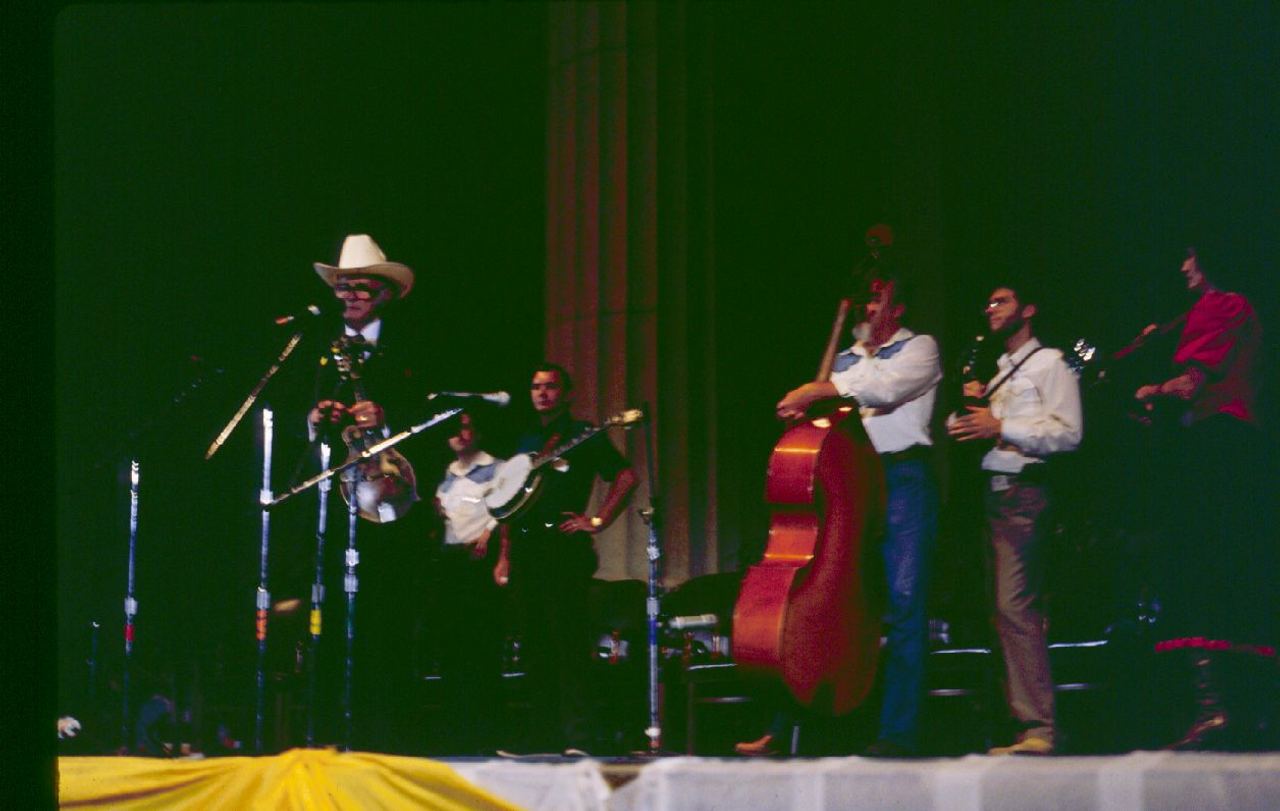
A wider view of Monroe and the Blue Grass Boys at the same 1982 event. National Park Service collection, via Wikimedia Commons; public domain in the United States. Neither photograph depicts the original studio session.
The phrase Father of Bluegrass can sound like a title in a history book. On a recording, it becomes something less distant: a particular voice, an instrumental conversation, and a way of making sorrow clear without making it small.
Monroe’s mandolin playing and the musicians who passed through his Blue Grass Boys helped shape a sound that continued far beyond any one lineup. His songs became music other people could carry, change and bring home again.
That is what makes this anniversary more than a date of loss.
Thirty years after his death, we can still choose to hear the singer before the legend. We can hear how differently a tune moves when its sadness is allowed to take its time.
Listen to Bill Monroe and his Blue Grass Boys performing Blue Moon of Kentucky in the official Columbia/Legacy audio below. This is an archival recording, not audio from the pictured 1982 performance.
Before you remember what Elvis did with it, hear what Monroe put there.
Read more stories
- My Husband Put His Brother’s Wife’s Photo on Our Fridge to ‘Motivate Me to Lose Weight’ – But When His Dad Saw It, He Put Him in His Place
- My aunt used to make this every Sunday after church. The sauce is so good you’ll want to l
- Every Time My Grandson Visited, My DIL Made Him Wear Long Sleeves – Even in the Middle of Summer
- Sausage, Egg, and Cheese Sandwiches