When I Was 25, the Love of My Life Suddenly Disappeared Without a Word – Nearly 50 Years Later He Sat Down Beside Me and Said, ‘Maggie, There’s Something Very Important I Need to Tell You’
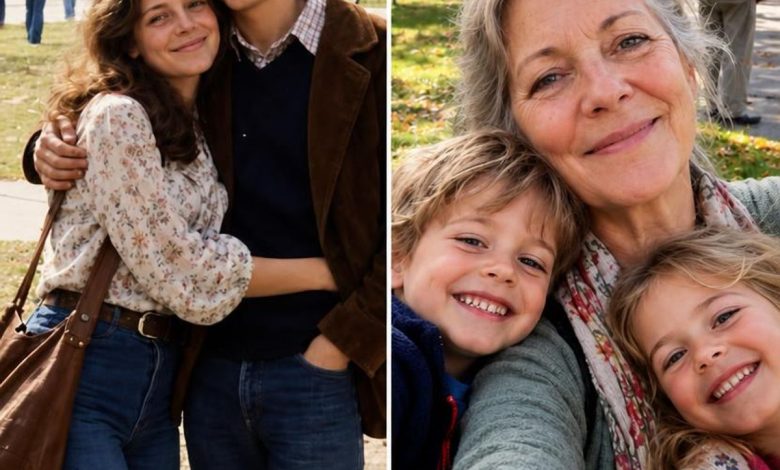
At 25, I was three months from marrying Derek when he emptied his dorm room and vanished. Nearly 50 years later, he found me watching my grandchildren in the park, said my name like he’d last spoken it yesterday, and pulled something from deep inside his coat that had once belonged to my own mother.
“Mind if I sit?”
I moved my purse from the other end of the bench.
“Go ahead.”
The man lowered himself beside me with the careful concentration of someone whose knees had started negotiating terms.
I barely looked at him.
My grandchildren were arguing near the swings. The younger one believed the older one had violated several important playground laws, and I was waiting to see whether diplomacy would succeed before Grandma had to intervene.
Then the man beside me said, “Maggie.”
My fingers closed around the wooden edge of the bench.
I turned.
Gray hair. Deep lines around his mouth. A face time had rearranged so thoroughly that for a second I saw only a stranger.
Then he rubbed his thumb across the side of his index finger.
Once.
Twice.
A nervous habit I’d watched through lectures, exams, and every conversation about our wedding.
I met his eyes.
“Derek?”
He nodded.
Nearly fifty years after disappearing from my life, Derek gave me the same crooked little smile he’d worn at thirty-three.
“You’re late,” I said.
“I know.”
I looked back toward the playground.
The world apparently intended to continue.
“What are you doing here?” I asked.
“I came to find you. Elaine from college told me you came here with your grandchildren on Thursdays.”
“You succeeded.”
“I wasn’t sure you’d speak to me.”
“You haven’t given me enough information to decide yet.”
He accepted that.
Then he reached inside his coat.
“Maggie, there’s something very important I need to tell you.”
I almost laughed.
There had been a time when I would have given anything to hear those words.
***
Derek and I met in college.
I was twenty-five by our final year. Derek was thirty-three, though most people assumed he was younger.
We were planning our wedding between exams and cheap dinners.
I loved him completely.
Worse, I thought I knew him completely.
One evening, we were making the guest list on the floor of my apartment when I asked which relatives he wanted invited.
Derek went quiet.
“I don’t have anyone.”
I thought he meant nobody nearby.
“No cousins? An aunt?”
“No parents. No brothers or sisters. It’s just me.”
I felt awful for asking.
So I never pushed again.
Three months before our wedding, Derek vanished.
His dorm room was nearly empty.
His roommate looked as frightened as I was.
“He didn’t tell me anything, Maggie. I thought he was with you.”
The dean checked his records.
“Derek withdrew from the university. No explanation.”
I called every number I had.
I wrote letters.
Two came back.
I sent another anyway.
For a long time, I believed there had to be one perfect question I could ask myself that would explain what I’d done wrong.
Eventually, life became louder than the question.
I built one.
A life, I mean.
And now the man who had left me at twenty-five was sitting beside me while my grandchildren fought over a swing.
***
Derek pulled his hand from his coat.
There was no letter.
No photograph.
No ring.
He held a cheap red plastic comb.
Several teeth were missing.
I stared at it.
“You disappeared for nearly fifty years and brought me a comb?”
His mouth twitched.
“I had hoped to get farther before you started making fun of me.”
That irritated me because it sounded so much like him.
“What is it?”
He turned the comb over.
“Your mother’s.”
I stopped smiling.
“My mother died fourteen years ago.”
“I’m sorry.”
“You never met my mother.”
Derek looked at me.
“She gave it to me when I was eight.”
I studied his face, searching for some sign that age had affected more than his knees.
“I met her before you did.”
The playground seemed suddenly too noisy.
“What does that mean?”
Derek held the comb between both hands.
“Your parents were my foster parents.”
I didn’t say anything.
“They were what?”
“I lived with them.”
“No.”
“For about nine months.”
“No, Derek.”
“I was eight.”
“My parents never fostered children.”
“Not after you were born.”
That stopped me.
He told me the address of the house where I’d spent my childhood.
Then he described the kitchen.
The green clock over the doorway.
My father’s habit of putting too much pepper on scrambled eggs.
The cupboard where my mother hid the good scissors.
“The third stair squeaked,” he said.
“It didn’t.”
“Left side.”
I stared at him.
Because he was right.
I’d forgotten until he said it.
If you stepped close to the wall, the third stair complained.
“How do you know that?”
“I told you.” He held up the comb. “I lived there.”
My eyes returned to it.
“Why would my mother give you that?”
“I cut my own hair.”
Despite everything, I blinked.
“You what?”
“I found the good scissors.”
A laugh nearly got past me.
Derek noticed.
“It wasn’t funny.”
“How bad?”
“Your mother put a hat on me before she took me outside.”
That did it.
I laughed once.
Derek smiled.
“She fixed what she could, handed me this and said, ‘Next time, try this before the scissors.'”
“You kept it?”
“I didn’t own much.” He ran his thumb over the missing teeth. “And nobody had ever handed me something and said it was mine.”
That quieted me.
“Why did you leave them?”
“The placement was temporary.”
His answer came quickly, as though he’d spent years learning the accurate version.
“Another placement opened. Longer term.”
“So my parents didn’t…”
“No.” He looked down. “But I thought they did.”
“What did you think?”
“Around the same time, your mother found out she was pregnant.”
I understood before he finished.
“You thought they were getting rid of you because they were having me.”
“I was eight.”
“Derek…”
“I knew what temporary meant. I just didn’t believe it.” He put the comb across his palm. “I thought they were getting their real child.”
For the first time since he’d sat down, my anger had to make room for something else.
It didn’t leave.
It simply moved over.
“Did anyone tell you that wasn’t true?”
“Probably. I don’t remember believing them.”
“What happened after?”
“I moved again. Then again.”
He shrugged.
“I grew up.”
That was all he gave me.
I didn’t ask for a catalog of everything that happened to the eight-year-old boy after he left my parents’ house.
There was still a larger question sitting between us.
“How did you find out who I was?”
Derek looked toward the playground.
“Three months before our wedding.”
I felt the bench beneath my hands again.
“What happened?”
“You were sorting photographs.”
I remembered.
My mother had mailed me a box for the wedding display.
Derek had gone strangely quiet that evening.
I’d assumed he was tired.
“There was a picture of your mother standing outside that house,” he said. “I recognized the porch first.”
“You recognized her?”
“Not completely. Not until you told me when the picture was taken.”
He swallowed.
“The next morning, I drove to see her.”
“You went to my parents’ house?”
“Yes.”
“Without telling me.”
“Yes.”
I looked away.
Some habits apparently began early.
“What did she say?”
“She didn’t recognize me at first.”
That, at least, sounded real.
“I told her my name. Told her about the comb.”
“And then?”
“She cried.”
Derek stared at the red plastic in his hands.
“I asked her why they sent me away.”
“What did she say?”
“That they hadn’t.”
He explained that the placement had always been temporary. My parents had asked about remaining in contact, but Derek had moved again and whatever connection might have survived hadn’t.
Then he asked my mother the question he’d carried since childhood.
“Was it because you were having Maggie?”
I could almost see my mother’s face.
“She said no.”
“Of course she did.”
“I know that now.”
“What happened next?”
Derek rubbed his thumb against his finger.
“I should’ve been relieved.”
“But you weren’t.”
“No.”
“Why?”
He looked directly at me.
“Because suddenly I knew why your family had always felt familiar.”
I waited.
“And I started wondering why you did.”
I turned toward him.
“What is that supposed to mean?”
“I’d spent my whole life thinking that house was the closest I’d ever come to having a family. Then I met you without knowing who you were, and I wanted to marry you.”
“Derek.”
“I panicked.”
“About what?”
“Whether I loved you because you were you or because being with you felt like getting something back.”
I looked toward the swings.
“What did my mother say?”
“She told me to tell you.”
That answer hurt more than I expected.
“She did?”
Derek nodded.
“I told her I couldn’t.”
“Why?”
“Because I didn’t know the answer.”
“And what did she say?”
His voice became quieter.
“That’s not your decision.”
My mother.
Of course.
“What did you do?”
“I promised I’d tell you that night.”
“But you didn’t.”
“No.”
“You went back to campus.”
“Yes.”
“You packed your room.”
He nodded.
“You withdrew. And disappeared.”
He looked at me.
“Yes.”
The playground blurred for a moment, not from tears but from the simple effort of looking at him and fitting this story around fifty years of silence.
“I told myself I needed time,” he admitted.
“You took fifty years. How much time did you actually need?”
He looked down at the comb.
“Less than a year.”
That answer was worse than every possibility I’d invented at twenty-five.
I turned fully toward him.
“What?”
“I knew before the first year was over.”
“Knew what?”
“That I loved you.”
My voice came out low.
“Then why didn’t you come back?”
“At first, shame.”
He didn’t dress it up.
“I knew what I’d done. Every month I waited made coming back harder. Then I learned you’d moved away.”
“That stopped you?”
“No.”
He rubbed his hands together.
“I kept telling myself showing up again would only hurt you. Later I heard enough through old college contacts to know you’d built a life.”
“And you decided I was better off.”
“Yes.”
I laughed, but there was nothing funny in it.
“You got very good at deciding things for me.”
He smiled.
No argument.
No defense.
That almost made me angrier.
“Do you know what I thought after you left?”
He didn’t answer.
“I thought I had done something.”
“I know.”
“No.” I leaned closer. “You know it now. I knew it then.”
Derek looked down.
“You got to know why you left, Derek. I got fifty years of guessing.”
“You’re right.”
I watched one of my grandchildren race across the grass.
He stopped long enough to wave at me.
I waved back.
“So what was the answer?” I asked.
He knew exactly what I meant.
Derek looked at the red comb.
“I missed that house,” he said. “And I loved you.”
I waited.
“I was thirty-three. I thought if both were true, one of them had to be a lie.”
“And now?”
“Now I know people aren’t that simple.”
I sat with that.
Then I asked the only question left.
“Why today?”
Derek closed his fingers around the comb.
“Because I was packing up my house last month.”
“Moving?”
“Smaller place.”
He held the comb up.
“I found this in a drawer.”
“You’d lost it?”
“No.”
That mattered somehow.
“I’d always known where it was.”
His eyes met mine.
“I realized I’d spent nearly fifty years protecting the one thing your mother gave me while still refusing to give you what she told me you deserved.”
“The truth.”
“Yes.”
My grandson called, “Grandma!”
I raised one finger.
One minute.
Then I looked at Derek again.
For once, he waited for me to decide what happened next.
He glanced toward my grandchildren.
“They’re yours?”
“Very much.”
He smiled.
“I’m glad.”
I believed him.
That didn’t erase anything.
“I don’t expect you to forgive me,” he said.
“Good.”
He almost laughed.
“I’m old, Derek. I don’t make fifty-year decisions on park benches.”
“I understand.”
“But I’m glad I know.”
His eyes lowered.
“I’m sorry it took this long.”
“So am I.”
My granddaughter shouted that her brother was cheating again.
Some emergencies survived every generation.
Derek held out the red comb.
“I thought you should have this.”
I took it.
Cheap plastic. Missing teeth.
My mother had touched it before I existed.
For a moment, I wanted it simply because she’d given it away with those hands.
Then I looked at Derek.
This wasn’t something my mother had lost.
It was something she’d given a frightened eight-year-old boy and told him was his.
I placed it back in his palm and closed his fingers around it.
“She gave it to you.”
Derek stared at our hands.
“Yes.”
“Then stop giving it back.”
My grandson came running over.
“Grandma, are you coming?”
“In a minute.”
He noticed Derek.
“Who’s he?”
Derek looked at me but said nothing.
“An old friend,” I said.
My grandson accepted that and raced away.
I stood.
Derek began to rise.
“You can sit.”
He settled back.
I took two steps toward the playground, then turned.
He was still holding the comb.
“Don’t lose that.”
Derek looked down at it.
“I haven’t yet.”
“I noticed.”
Then I walked toward my grandchildren.
Esta historia es una obra de ficción inspirada en hechos reales.
Read more stories
- This Late Actress Proved You Don’t Need Surgery to Look Stunning – Photos of Her Transformation
- My Husband Insisted We Didn’t Need a Plumber for Our Basement Leak and Promised to Fix It Himself – So I Called One While He Was at Work, and What He Found Inside the Pipe Made My Blood Run Cold
- My Son Tugged on My Sleeve and Said, ‘I Saw Dad and Uncle Roy Do the Bad Thing Again’ – What I Revealed Next Made the Room Go Silent
- My Husband Refused to Attend His Own Father’s Funeral – Afterward, His Father’s Lawyer Handed Me a Sealed Letter and Said, ‘He Wanted You to Learn the Truth Before Your Husband Did’