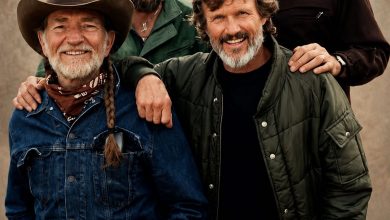
When producer Chips Moman brought a Jimmy Webb song titled Highwayman into his Nashville s
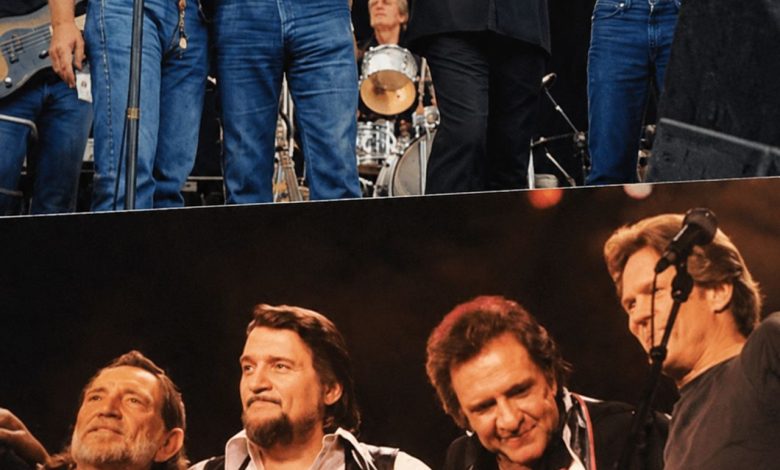
When producer Chips Moman brought a Jimmy Webb song titled Highwayman into his Nashville studio, something rare happened in country music: four of its strongest, most independent voices stopped competing and started singing together. Johnny Cash, Waylon Jennings, Willie Nelson, and Kris Kristofferson were already towering figures in their own right, each with a style and identity no one could mistake. Yet in that moment, they found a way to share not just a song, but a purpose.
Released in May 1985, the four-verse ballad climbed to No. 1 on the country chart. Just as importantly, it gave the four men a name that would remain attached to them for the rest of their lives: The Highwaymen. It was a name that fit the image each of them had built over the years, but it also captured something deeper about the collaboration itself. This was not a manufactured supergroup assembled for novelty. It was a meeting of veterans who understood one another’s roads, scars, stubbornness, and strengths.
A turning point in a changing era
By the mid-1980s, Nashville radio was moving toward a younger generation of singers. That shift is familiar in every era of popular music, but for artists who had spent decades building careers, it could feel especially sharp. Cash, Jennings, Nelson, and Kristofferson were legends, but they were also men carrying the physical toll of long years on the road and past health battles. They had nothing left to prove individually, yet the industry around them was changing.
That context helps explain why Highwayman mattered so much. It was more than a hit single. It was a statement that these four artists still had something vital to say, and that they could say it more powerfully together than by guarding their own territory. In a business that often rewards ego and spotlight, their decision to join forces felt both practical and generous.
What makes the story especially compelling is that it did not come from desperation. It came from chemistry. These were not strangers testing a commercial idea. They were artists with distinct personalities who recognized a rare comfort in each other’s company. That comfort became part of the music, and listeners could hear it.
The Swiss hotel room where it began
The alliance came together the year before, in Montreux, Switzerland, during the filming of Johnny Cash’s 1984 Christmas television special. Away from the cameras, the four friends sat in a Swiss hotel room, passing around an acoustic guitar and swapping songs. It is an image that feels almost mythic now, but its power comes from how simple it was. Before there was a brand, before there were arena shows and album cycles, there were just four friends making music together in private.
That kind of beginning matters. So many enduring collaborations start not in boardrooms but in unguarded moments, when artists remember why they loved songs in the first place. In that hotel room, they were not chasing a trend or trying to outmaneuver radio. They were reconnecting with the ease that comes when gifted musicians trust one another enough to relax.
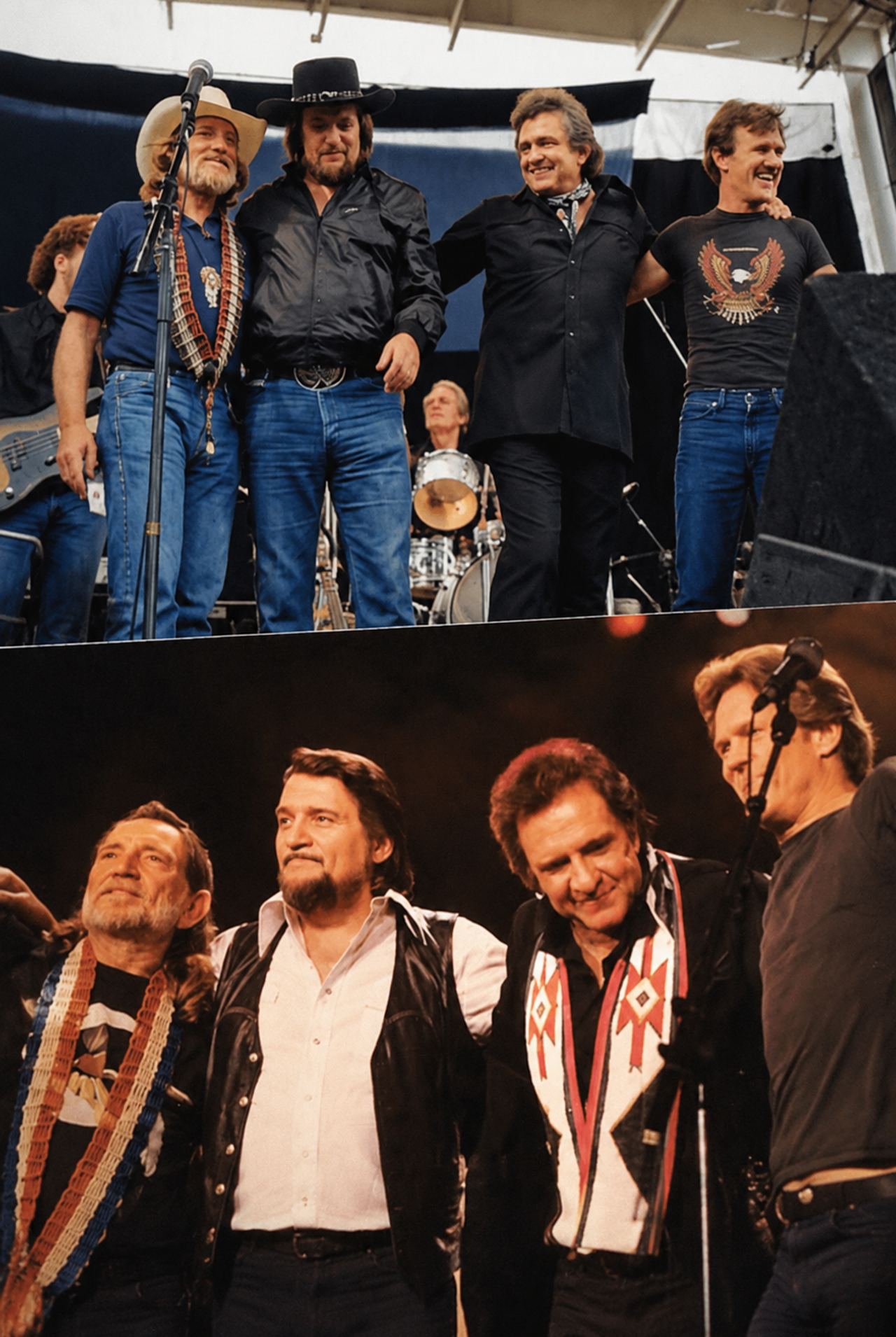
Rather than seeing each other as rivals for shrinking radio airtime, they decided to bring that camaraderie back to Tennessee. They recorded an album with Moman at his Three Alarm Studio, turning a casual bond into something lasting. The story resonates because it offers a different model of ambition. Instead of protecting individual status, they built a shared home for their voices.
Four stars, one microphone
There is something symbolic about the image of four fiercely individual artists sharing one microphone. Cash, Jennings, Nelson, and Kristofferson each brought a separate identity into the room, and none of that had to be erased for the collaboration to work. In fact, the appeal of The Highwaymen came from the opposite truth: the group succeeded because every voice remained unmistakably itself.
That balance is hard to achieve. Supergroups can sometimes feel crowded, as if too many legacies are competing for space. But The Highwaymen found room for all four. The original song’s structure helped, giving each singer a verse, but structure alone cannot create warmth. What listeners responded to was the sense that these men were not merely taking turns. They were listening to each other, honoring each other, and enjoying the exchange.
Over the next decade, The Highwaymen recorded three studio albums, ending with The Road Goes On Forever in 1995. That title now feels especially poignant. The group’s recorded output may have had an endpoint, but the idea behind it kept traveling: friendship over rivalry, fellowship over vanity, endurance over fashion.
Life on the road, and what remains
On stage, before sold-out arenas, the same spirit carried through. None of the four pushed for the center spot. Each stepped aside and watched warmly while another took a verse. That detail may sound small, but it says everything about why audiences connected so deeply with them. Fans were not just hearing famous songs from famous men. They were witnessing mutual respect in action.
Touring can grind people down, especially artists who have already spent decades living that life. Yet for The Highwaymen, those demanding schedules became a kind of shared refuge. The road was still the road, with all its fatigue and repetition, but now it was traveled in the company of friends who understood the cost and looked after one another. That image of four aging friends caring for each other gives the group’s legacy much of its emotional weight.
Time, of course, changes every story. Jennings died in February 2002, followed by Cash in September 2003, and Kristofferson in September 2024. Willie Nelson remains the last surviving voice from that Swiss hotel room where four friends chose brotherhood over solo pride. That fact makes the story feel even more tender now. What began as a creative partnership has become part of country music’s memory of loyalty, grace, and companionship.
The Highwaymen endure because they represented something people hunger to see: greatness without bitterness, individuality without isolation, and age without surrender. They were giants who did not need to stand alone to stand tall. If you have memories of The Highwaymen or thoughts on what made their partnership so special, share them with others.
Read more stories
- My Husband Kissed Another Woman in Front of Our Grandsons—Then His Own Mother Revealed the Secret That Almost Tore Our Family Apart
- Zach Top has a CMA Awards performance on the way, and we have one song suggestion for him.
- I Purchased My Parents a $425,000 Beach House. Four Days Later, My Sister and Her Husband Tried to Claim It. They Had No Idea I’d Already Put Protections in Place.
- My 12-year-old son, who has cancer, used his special wish to feed 300 homeless people — an