When the Country Music Hall of Fame inducted Patsy Cline in 1973 as its first female solo
When the Country Music Hall of Fame inducted Patsy Cline in 1973 as its first female solo member, the honor recognized far more than a remarkable voice. By then, she had already been gone for ten years, yet the standards she insisted on were still shaping the lives of women working in country music. Her legacy was not only musical. It was professional, practical, and deeply personal for the singers who came after her.
Before her death in a plane crash near Camden, Tennessee, in March 1963, Patsy Cline had spent years pushing back against an industry that often treated female performers as decorative additions rather than serious headliners. In the late 1950s and early 1960s, women were commonly booked as opening acts, paid only a fraction of what male performers received, and expected to fit a prescribed image. The message was clear: sing the songs, look the part, and do not ask too many questions.
Cline did ask questions, and more importantly, she demanded better answers. That is one reason her story still resonates so strongly. She did not simply succeed within the system as she found it. She challenged it, and in doing so, made it harder for others to ignore how unfair it was.
Refusing the image others chose for her
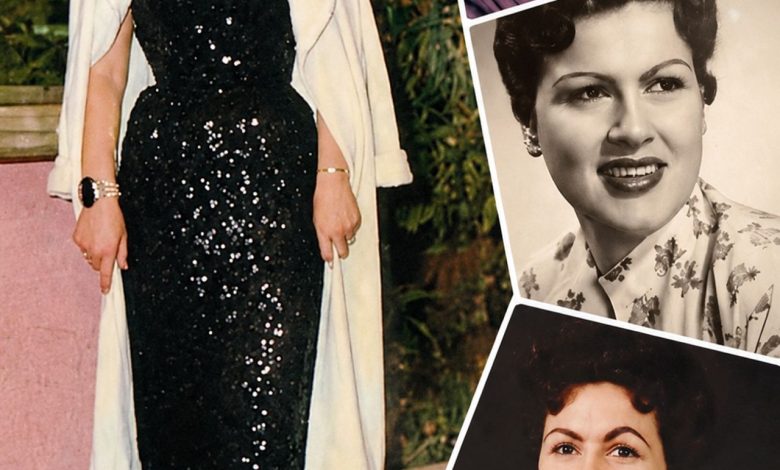
Born Virginia Patterson Hensley, Cline rejected the standard cowgirl image that promoters expected female country singers to wear. Rather than accept fringe skirts as a uniform, she worked with her mother, Hilda Hensley, to create custom cocktail dresses and evening gowns for her appearances. That choice was about style, but it was also about authority. She was deciding how she would be seen, and by extension, how she would be treated.
That visual independence mattered in a business where women were often packaged before they were heard. Cline understood that presentation could either reinforce other people’s expectations or declare self-possession. Her gowns became part of the way she carried herself: polished, self-directed, and unwilling to be reduced to an industry stereotype.
It is easy to view wardrobe as a small detail, but in Cline’s case it was part of a larger pattern. She was building a career on her own terms, piece by piece. The dresses, like the business rules she enforced, sent a message to promoters and audiences alike that she was not a novelty act and not an afterthought.
The rule that changed the road
Her best-known professional boundary was blunt enough to become legend on the touring circuit: “No Dough, No Show.” Patsy Cline did not trust venue operators to settle up after a performance. Instead, she stayed backstage until her full guarantee had been counted out in cash. It was a simple rule, but it carried enormous force. In an era when women in country music were often underpaid and expected to be grateful for whatever they received, Cline insisted that her work had value and that value had to be honored.
That rule was not just about money. It was about respect, leverage, and survival in a difficult business. Touring could be exhausting, unpredictable, and unequal. By making payment non-negotiable, she established a standard that protected her from excuses and delay. Just as importantly, she modeled a form of self-protection that younger artists could learn from.
That toughness helps explain why her influence endured after her death. Rules like that outlast a performance. They become part of the culture of a workplace, passed from one generation to the next. A singer watching Cline hold her ground could see that professionalism did not mean staying quiet. It could also mean knowing exactly what you were owed.
Strength after the 1961 crash
That determination was especially striking in 1961. On November 29 of that year, Cline went to New York to join a Grand Ole Opry charity bill at Carnegie Hall. The appearance came only months after a devastating head-on automobile collision in Madison, Tennessee, on June 14, 1961. The crash left her hospitalized for a month with a dislocated hip, a broken wrist, and deep facial lacerations.
The physical toll alone would have been enough to stop many performers for a long while. But only two months after leaving the hospital, she entered the Bradley Film and Recording Studio in Nashville on crutches to record Willie Nelson’s “Crazy.” According to the account, she delivered the song in a single vocal take because her ribs still hurt too badly to keep singing.
That moment has become central to how people understand Patsy Cline. It combines vulnerability and force in the same scene: a singer still injured, still in pain, still refusing to let pain have the final say. Even without adding anything beyond the facts, it is a powerful image. She was not performing from a place of ease. She was working through hurt, relying on discipline, instinct, and sheer resolve.
It also helps explain why her example meant so much to other women in Nashville. Her authority was not abstract. She had lived the costs of the profession, endured them, and kept showing up with clarity about what she deserved.
Opening the door and holding it open
Just as important as Patsy Cline’s personal success was the way she shared what she had learned. Rather than guarding her hard-won position, she welcomed younger singers into her home. Loretta Lynn, Dottie West, and Jan Howard were among those she encouraged. She called her friends “Hoss,” a detail that adds warmth to a story often told through grit and struggle.
Her support was practical, not merely sentimental. She taught them how to stand up to booking agents so that the doors she had pushed open would remain open. That may be one of the most lasting parts of her legacy. Many trailblazers prove what is possible for themselves. Fewer take the next step and actively prepare others to claim the same ground.
That generosity is one reason her influence feels so alive decades later. Patsy Cline did not just alter expectations through talent and courage. She helped create a chain of knowledge among women navigating Nashville. The rules she enforced, the image she chose, and the advice she gave all became part of a broader change in how female artists could move through the business.
Her Hall of Fame induction in 1973 as the first female solo member therefore carried a meaning larger than memorial recognition. It acknowledged a performer whose impact continued after her death because she had changed the working terms of the profession itself. Her voice made listeners stop. Her principles made the industry adjust.
Patsy Cline’s story still speaks to anyone who has had to fight to be taken seriously, paid fairly, or allowed to define themselves on their own terms. If her example means something to you, share your thoughts and the part of her legacy that stays with you most.
Read more stories
- Jerry Mathers, now 78, is the final surviving member of the beloved “Leave It to Beaver” f
- My Daughter Put Away 1,900 to Purchase Her First Heifer, but Her Own Father Bid Against Her, So I Drove Her to a Different Auction
- A Grandmother Raised Her Granddaughter After Losing Her Daughter – Then the Child’s Father Dragged Them to Court, Where the Girl Left the Judge Speechless
- In 1977, on the set of the country variety show “Hee Haw,” singer Kenny Rogers met televis