1965: The Year The Byrds Helped Turn Folk Rock Into One of the Defining New Sounds of the Decade
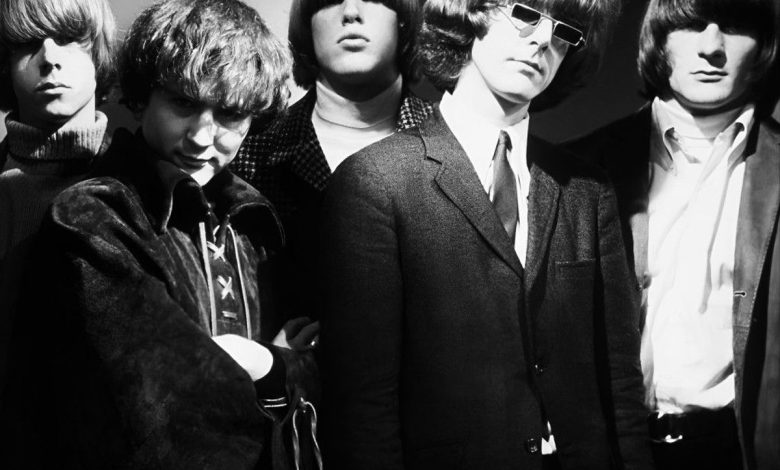
The Byrds did not invent folk music, electric rock, or the 12-string guitar. What they did in 1965 was fuse those ingredients so convincingly that a new sound suddenly seemed obvious. With ‘Mr. Tambourine Man,’ ‘Turn! Turn! Turn!’ and Roger McGuinn’s chiming Rickenbacker, the Los Angeles band helped make folk rock a national language.
Before the Byrds, the Ingredients Were Already in the Air
At the beginning of 1965, American popular music was moving in several directions at once. The folk revival had filled college campuses, coffeehouses and festivals with acoustic guitars and serious songs. Bob Dylan had become the movement’s most important young songwriter. Pete Seeger and Joan Baez showed that folk music could carry social and moral weight far beyond a small club.
At the same time, the British Invasion had transformed youth music. The Beatles made electric guitars, group harmonies and a hard backbeat feel modern. George Harrison and the Searchers helped make the bright shimmer of 12-string guitar familiar.
The elements of folk rock already existed. What had not yet happened was a record that made the combination feel complete.
Then five musicians in Los Angeles found a way to make Bob Dylan danceable.
The Byrds Were Built From Folk and the Beatles
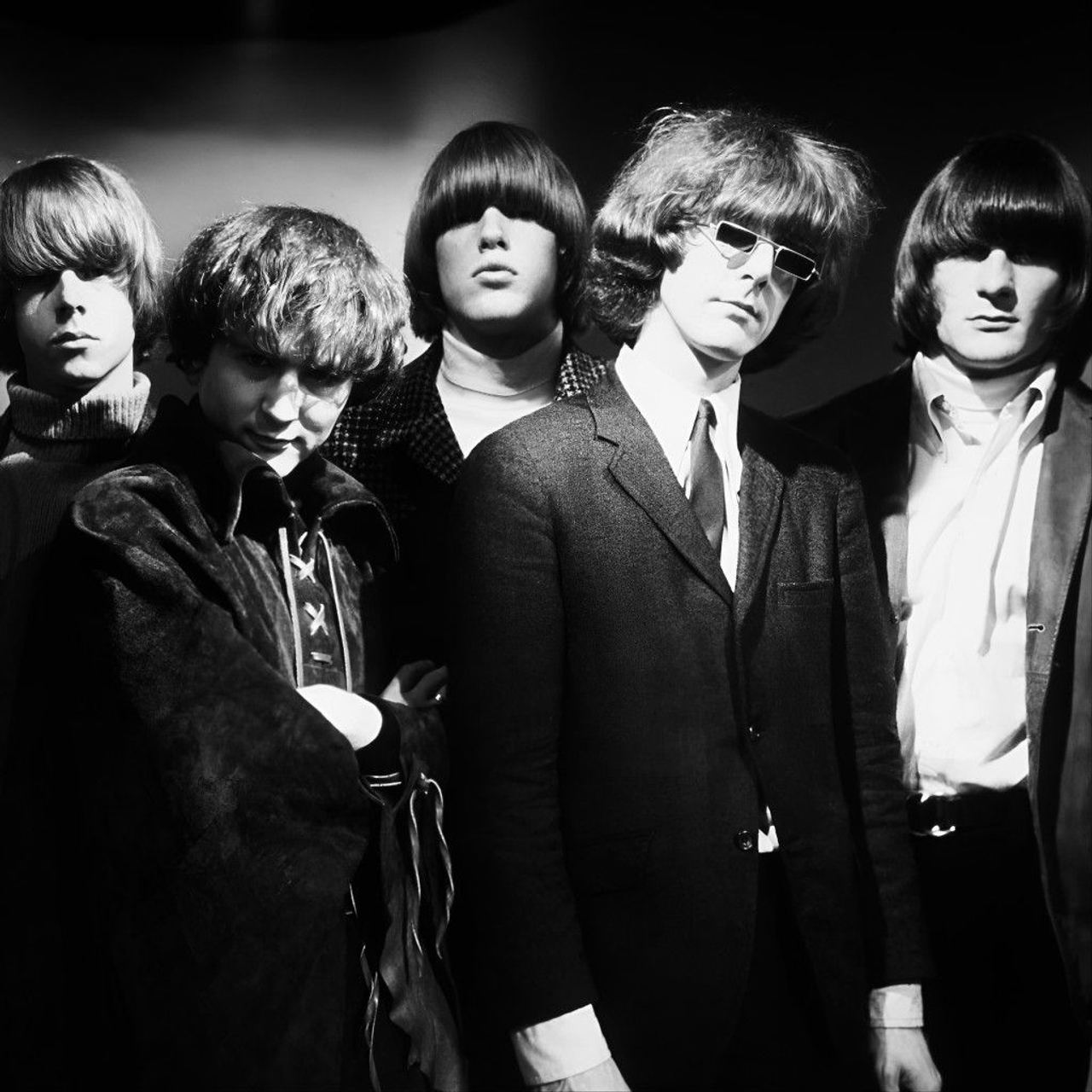
Roger McGuinn, Gene Clark, David Crosby, Chris Hillman and Michael Clarke came together in Los Angeles as the Byrds. Several had deep folk backgrounds before turning toward rock.
McGuinn had played 12-string guitar for years and worked with folk artists. Clark had sung with the New Christy Minstrels. Crosby had also moved through the folk-club world.
Then the Beatles changed their sense of what a group could be.
McGuinn later recalled being struck by the way the Beatles used chords familiar from folk music inside rock and roll. When he saw George Harrison with an electric Rickenbacker 12-string, the connection became physical.
McGuinn already understood the acoustic 12-string. The electric version gave him something else: a bell-like sound that could carry folk melody while cutting through a rock rhythm section.
That guitar would become the Byrds’ signature.
‘Mr. Tambourine Man’ Changed How Folk Lyrics Moved
The breakthrough song was Bob Dylan’s ‘Mr. Tambourine Man.’
The Byrds had access to an early demo before Dylan’s own version appeared on Bringing It All Back Home. Their challenge was to turn an expansive, surreal folk composition into a concise pop single without draining away its mystery.
They shortened the song dramatically, kept one verse, added a rock beat, surrounded the melody with harmony vocals and put McGuinn’s Rickenbacker at the front.
McGuinn sang lead in a style he later described as somewhere between Dylan and John Lennon.
The result was more than a cover.
The words now moved differently. Dylan’s dreamlike images rode on a beat young listeners could dance to. The lyric still sounded literary, but the record felt immediate enough for Top 40 radio.
That combination became the Byrds’ great 1965 discovery.
A No. 1 Debut Single Gave the New Sound a National Audience
The Byrds recorded ‘Mr. Tambourine Man’ on January 20, 1965. Columbia used experienced Los Angeles session musicians on much of the backing track, while McGuinn played the crucial 12-string guitar and members of the Byrds supplied the vocals.
The label released the single in April.
On the Billboard Hot 100 dated June 26, it reached No. 1.
For a debut single, the impact was extraordinary.
The record also carried Bob Dylan’s songwriting to the top of the American pop chart in a way one of his own recordings had not yet done.
For young musicians listening in garages, bedrooms and college towns, the lesson was easy to hear: serious folk writing did not have to remain acoustic. It could live inside a rock band and still keep its meaning.
By the time the debut album Mr. Tambourine Man arrived on June 21, the Byrds were no longer a promising Los Angeles group.
They were helping define a new category.
The Album Proved Folk Rock Was More Than One Clever Cover
The album mattered because it showed that the idea could support an entire band, not just one hit.
There were more Dylan songs, but there was also Gene Clark.
Clark’s original writing gave the Byrds another emotional center. ‘I’ll Feel a Whole Lot Better’ became one of the group’s most enduring early tracks and showed that the new sound did not depend entirely on borrowing songs from the folk canon.
The record could carry Dylan’s imagery, Clark’s personal songwriting and the group’s distinctive blend of harmony, electric guitar and rock rhythm.
By mid-1965, American music writers had begun using the term ‘folk rock’ to describe what they were hearing.
The label spread quickly because the contrast was so clear.
Folk suggested words, tradition and social consciousness.
Rock suggested electricity, rhythm and youth.
The Byrds made the two sound as though they had always belonged together.
They Did Not Make Dylan Go Electric – But They Helped Prove the Audience Was Ready
The Byrds’ role in Bob Dylan’s own transformation is easy to exaggerate.
Dylan was already moving toward electric music. Bringing It All Back Home arrived in March 1965 with an electric first side. By summer, ‘Like a Rolling Stone’ was changing radio, and his electric set at the Newport Folk Festival became one of the decade’s most debated musical moments.
The Byrds did not cause that shift.
What their success did was prove, at exactly the right time, that a mass audience would accept folk-rooted writing delivered through rock instrumentation.
Dylan pushed outward from folk.
The Byrds pulled folk songs into the sound of a band.
The boundary was breaking from both directions.
That is why 1965 feels less like the birth of a single genre and more like a musical border suddenly becoming impossible to defend.
Then ‘Turn! Turn! Turn!’ Proved the Sound Was Not a Fluke
The Byrds could have tried to repeat ‘Mr. Tambourine Man’ with another Bob Dylan cover.
Instead, they reached into another part of the folk tradition.
Pete Seeger had written ‘Turn! Turn! Turn! (To Everything There Is A Season)’ in 1959, adapting language from the Book of Ecclesiastes. Roger McGuinn already knew the song from earlier work and helped shape the Byrds’ version around the same elements that defined their breakthrough: ringing 12-string guitar, close harmony and a strong rock pulse.
The lyric carried ancient contrasts.
A time to be born.
A time to die.
A time to weep.
A time to laugh.
A time of war.
A time of peace.
In late 1965, those words sounded newly urgent.
An Ancient Text Became a No. 1 Record in a Changing America
The United States of late 1965 was living through rapid cultural and political change. The Vietnam War was escalating. The civil rights movement had reshaped the moral conversation of the decade. Young Americans were becoming increasingly skeptical of old institutions and older definitions of authority.
Into that atmosphere came a rock record built around words thousands of years old.
The Library of Congress later noted how the Byrds’ version of ‘Turn! Turn! Turn!’ connected with audiences amid the escalation of Vietnam and the countercultural shifts of the 1960s.
The single reached No. 1 on the Billboard Hot 100 and stayed there for three weeks.
That second chart-topper changed the meaning of the first.
‘Mr. Tambourine Man’ was no longer an isolated miracle.
The Byrds had found a musical language that could repeatedly turn folk material into mainstream rock.
Two No. 1 Hits Helped Turn Folk Rock Into a Movement
By the end of 1965, the Byrds had two No. 1 singles: ‘Mr. Tambourine Man’ and ‘Turn! Turn! Turn!’
That commercial proof mattered.
Other artists and producers were already moving into similar territory. Simon & Garfunkel’s ‘The Sound of Silence’ would become a No. 1 hit after electric instrumentation was added to an earlier acoustic recording. The Turtles, the Lovin’ Spoonful and other acts were helping expand the folk-rock boom.
The sound varied from group to group, but the basic possibility was now established.
A rock record could carry poetry.
A folk song could carry drums.
A political or philosophical lyric could sit beside the week’s biggest pop singles without losing its seriousness.
The Byrds had not invented every part of that idea.
They made it commercially undeniable.
The Rickenbacker Echoed Far Beyond 1965
The Byrds’ influence soon moved beyond folk rock itself.
McGuinn’s chiming 12-string guitar became one of the recurring sounds of guitar pop. Tom Petty and the Heartbreakers later made ringing guitars central to their identity. Peter Buck of R.E.M. carried the jangle into college rock. The Bangles, the Smiths and many other bands drew from the same bright vocabulary.
The sound lasted because it is emotional as well as technical.
A jangling 12-string can suggest motion and memory at the same time. It sounds modern and nostalgic in a single chord.
That was exactly what the Byrds were doing in 1965: reaching forward with electricity while carrying older American song traditions with them.
The guitar did not merely decorate folk rock.
It gave the genre an instantly recognizable voice.
More Than 60 Years Later, the Records Still Define the Achievement
The afterlife of the Byrds’ two great 1965 singles shows how durable the breakthrough became.
‘Mr. Tambourine Man’ entered the GRAMMY Hall of Fame in 1998.
In May 2026, the Library of Congress selected ‘Turn! Turn! Turn!’ for the National Recording Registry, preserving it as part of America’s recorded-sound heritage.
The Library’s description focused on the same ingredients listeners heard in 1965: McGuinn’s jangling 12-string, the harmonizing voices of Gene Clark and David Crosby, and the rhythms of Chris Hillman and Michael Clarke joining folk to rock and roll.
What once sounded new enough to require a new genre name is now part of the historical record.
That is a long journey for a sound that arrived through a transistor radio in little more than two minutes.
1965 Was the Year the Byrds Made the Hybrid Feel Inevitable
The Byrds did not invent folk.
They did not invent rock.
They did not invent the electric 12-string guitar.
And they did not single-handedly create the idea of combining folk songwriting with amplified instruments.
Their achievement was more precise.
They made the combination feel inevitable.
‘Mr. Tambourine Man’ reached No. 1 and showed that Bob Dylan’s poetic language could live inside a brilliant pop single.
The debut album showed the approach could sustain a band.
‘Turn! Turn! Turn!’ reached No. 1 again and proved the source material could come from Pete Seeger and Ecclesiastes rather than Dylan.
Roger McGuinn’s Rickenbacker gave the movement its instrumental signature. Gene Clark’s songs proved the Byrds could write from inside the new style. Crosby’s harmonies, Hillman’s bass and Clarke’s drums helped turn the concept into a real band sound.
By the end of 1965, folk rock was no longer an experiment waiting for a name.
It was one of the defining new sounds of the decade.
And whenever that 12-string begins to ring, you can still hear the year when American folk and rock discovered how naturally they could live together.
Listen Again
If this story brought back transistor radios, Columbia singles, or the first time a 12-string guitar seemed to ring through an entire room, revisit the two No. 1 recordings that defined the Byrds’ breakthrough year.
The Byrds – Mr. Tambourine Man (Official Audio, Columbia/Sony)
The Byrds – Turn! Turn! Turn! (To Everything There Is A Season) (Official Audio)
Continue reading
Prince Turned “1999” Into a Celebration of Life at the Edge of an Uncertain Future
The Song That Made the Future Feel Like a Party
In 1982, Prince released “1999,” a song that transformed anxiety about the future into an irresistible celebration.
Prince wrote and produced the song for his fifth studio album, 1999. The recording reflected his growing fascination with synthesizers, drum machines, funk rhythms, rock guitar, and layered vocals.
The song was built around the idea of people facing an uncertain future while choosing to enjoy the present. Rather than treating fear and uncertainty as reasons to retreat, Prince turned them into fuel for celebration.
Prince shared the vocals with members of his band, including Lisa Coleman, Dez Dickerson, Jill Jones, and Wendy Melvoin. Their contrasting voices helped create the dense, energetic sound that became one of the recording’s defining characteristics.
Released in September 1982, the song initially achieved moderate success. Its popularity grew significantly after Prince’s breakthrough in the mid-1980s, eventually becoming one of his signature recordings.
The music video also helped establish Prince’s distinctive visual identity. His flamboyant style, dramatic movements, and commanding presence gave audiences a glimpse of the performer who would soon become one of the biggest stars in popular music.
What made the recording so memorable was its contradiction. The lyrics acknowledge fear and uncertainty, yet the music sounds joyful, energetic, and completely alive.
That combination became central to Prince’s artistic identity. He could take serious subjects and turn them into music that demanded movement, celebration, and participation.
Decades later, “1999” remains one of Prince’s defining recordings and a powerful example of his ability to combine funk, pop, rock, and electronic music into something entirely his own.
Listen to “1999”
▶️ YouTube:
Read more stories
- I found 17 hotel receipts stuffed in my husband’s golf bag — my response brought his mistr
- Old-Fashioned Frozen Peach Crisp
- My Husband Booked Himself a Business-Class Seat and Sent Me to Economy with Our 1-Year-Old Triplets – 10 Minutes After Takeoff, Karma Made Him Regret Everything He’d Done
- Hayden Panettiere, 36, Dead: The Man She Was with the Night Before and What She Said in Her Last Interview