1985 – Their Best Song Had Already Failed Twice. What Made the Third Try Impossible to Ignore?
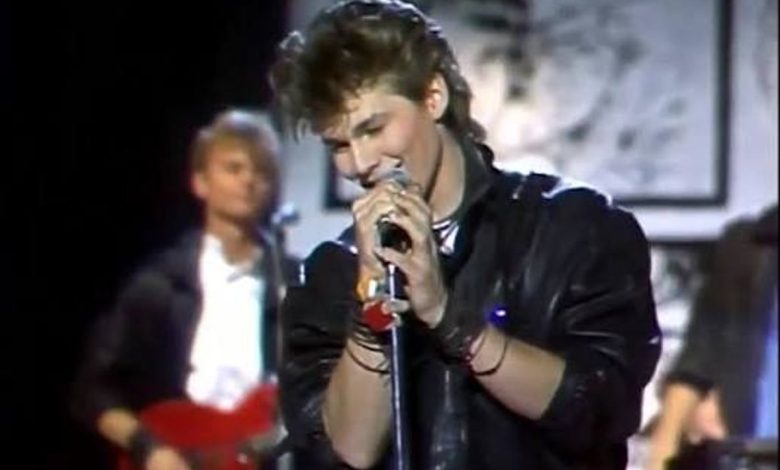
By the time the world fell in love with “Take On Me,” a-ha had already watched it fail.
More than once.
The melody existed before the band was famous. An early version had roots in a song called “Miss Eerie,” written when Paul Waaktaar-Savoy and Magne Furuholmen were still teenagers. Later it became “Lesson One.” Then it became “Take On Me.”
The group recorded it in London.
It was released in 1984.
Almost nothing happened.
They re-recorded it with producer Alan Tarney.
A 1985 British release still failed to become the breakthrough everyone hoped for.
Most bands do not receive another attempt after that.
a-ha did.
A new video, a third British release and extraordinary persistence turned the same stubborn song into a worldwide No. 1.
The overnight success had taken years.
The Riff Was Older Than the Band
The famous keyboard figure did not arrive in a flash of 1985 inspiration.
Its core had been living with the musicians for years.
Magne Furuholmen has recalled developing the riff when he was very young. Morten Harket heard an early version before a-ha existed in its final form and recognized something inside it.
That matters because “Take On Me” can sound almost too perfect now – as if every hook must have been designed by a marketing team.
In reality, the song was assembled through persistence.
Verse melody.
Keyboard riff.
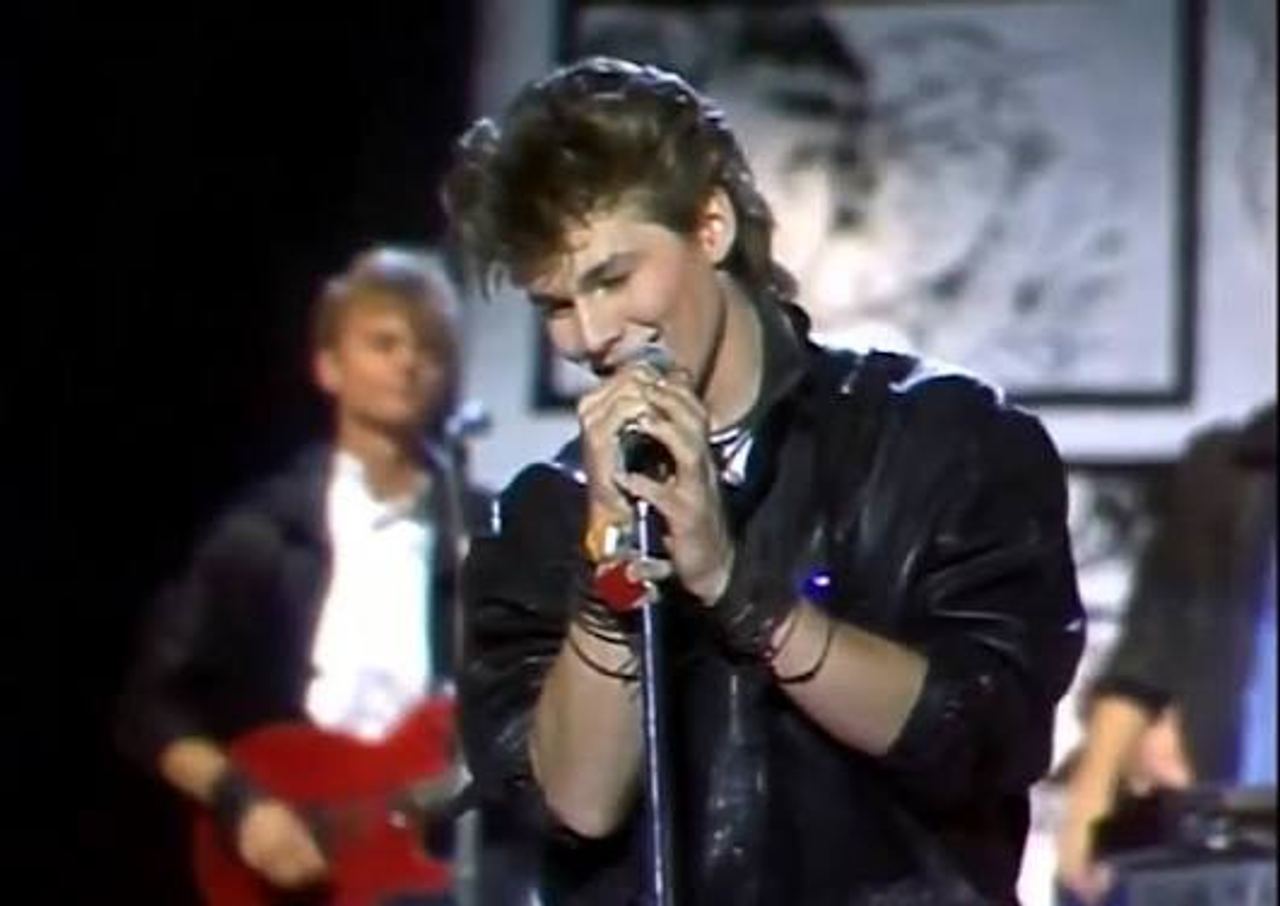
A chorus built to use Harket’s extraordinary range.
A middle section added so the sweetness would not become empty.
The final track is full of hooks because the band kept solving problems until almost nothing remained that could be removed.
The First Version Did Not Connect
The 1984 recording, produced by Tony Mansfield, was different from the hit the world remembers.
It received some radio exposure but failed to chart in Britain.
For a young Norwegian band that had moved to London chasing an international career, the failure felt dangerous.
Record companies do not usually reward expensive disappointment with endless patience.
The group feared Warner might drop them.
Yet people inside the American side of the label still believed in the song and the band.
They were allowed to try again.
That second chance led to producer Alan Tarney.
Tarney went back toward the energy of a-ha’s own demo and rebuilt the recording with greater clarity and lift.
This was the version that would eventually become famous.
But even a better record was not enough immediately.
The Second Release Still Did Not Break Britain
The newly recorded “Take On Me” appeared in the U.K. in April 1985.
Again, it failed to become the hit.
This is the part of the story that makes later success feel almost unreasonable.
The problem was no longer simply “the recording is wrong.”

The band now had the version we know.
The world still had not noticed.
Warner’s American team decided that the song needed an image strong enough to make people stop.
They brought in director Steve Barron.
What followed did not merely promote the record.
It changed the history of music video.
The Pencil World Opened
The “Take On Me” video combined live action with rotoscoped pencil animation created through painstaking frame-by-frame work.
A young woman in a cafe enters the drawn world of a comic book. Morten Harket reaches toward her from another reality. Romance turns into chase, danger and escape.
The central image – Harket’s hand moving between human and pencil form – gave MTV viewers something they had never seen in quite that way.
The video also solved a problem for the band.
It made a-ha visually memorable without reducing them to fashion.
The technology and story became part of the song’s emotion: crossing a barrier to reach someone.
The title suddenly had a visual meaning.
Take on me.
Come with me.
Step through.
America Heard It First
MTV exposure helped the single climb in the United States.
In October 1985, “Take On Me” reached No. 1 on the Billboard Hot 100, making a-ha the first Norwegian band to top that chart.
Only after the American rise did the third U.K. release finally work.
Reissued in Britain in September 1985, the song climbed to No. 2.
The record that had already failed in the same country twice was now one of the defining songs of the decade.
At the 1986 MTV Video Music Awards, the clip won six awards.
The video did not make a bad song good.
It made the world pay attention long enough to hear the song properly.
Why the Chorus Needed Morten Harket
A crucial part of the record’s identity is the climb in Harket’s vocal.
The chorus moves through an unusually wide range, ending in the famous high note that countless karaoke singers discover is much less friendly than it sounds.
But the difficulty is not there for athletic display.
The melody rises because the emotion rises.
Harket begins low and keeps reaching upward, as though the song itself is trying to cross a distance.
That is why replacing him with a technically capable singer rarely reproduces the same effect.
The vocal is not simply high.
It is yearning made architectural.
The Third Chance Became the Permanent Version
Pop history often rewards the illusion of inevitability.
Once a song becomes a classic, every decision seems obvious.
“Take On Me” is a useful correction.
The first recording was not right.
The first release failed.
The improved recording still did not immediately break Britain.
The band needed label advocates, another video budget, another campaign and enough belief to endure repeated evidence that the marketplace might never agree with them.
Then it did.
The result was so successful that the failures became almost invisible.
That is the strange cruelty of a breakthrough: the public meets you only after all the failed versions have disappeared.
A Hit Built From Refusing the Ending
There is a beautiful connection between the video’s story and the song’s real history.
In the clip, the two characters keep trying to cross a boundary that seems determined to separate them.
In real life, a-ha kept trying to cross the boundary between a song they believed in and an audience that had not yet heard what they heard.
The wall finally broke in 1985.
Not on the first try.
Not on the second.
On the chance most songs never receive.
A Hit Built From Refusal to Quit
The most useful lesson in the a-ha story is that the famous breakthrough was not the product of one lucky afternoon. The melody existed before the international hit, and an earlier version had already failed to produce the result the band wanted. Instead of abandoning it, a-ha and their supporters kept revisiting the arrangement, production and presentation until the song finally had a form capable of traveling.
Producer Alan Tarney helped turn the 1985 recording into the bright, aerodynamic version listeners know. Then director Steve Barron and animators led by Michael Patterson gave it a visual world that could compete with the song’s speed. The pencil-sketch narrative did more than make a clever video. It dramatized the central fantasy of pop itself: a face on a screen reaching through the barrier and asking the viewer to enter.
That is why calling the success a “third chance” is more than trivia. Most failed singles disappear because the business moves on. “Take On Me” survived because people around it continued to hear potential after the market had already offered reasons to stop. When the final version reached No. 1 in America, the apparent overnight sensation was really the last stage of a long argument with failure.
Step Through the Frame Again
The hit version sounds effortless only because years of effort have been hidden inside it. Watch the pencil lines come alive once more, then follow a-ha into the darker, cinematic single that proved the breakthrough was not a one-song accident.
▶ a-ha – Take On Me (Official Video) [4K]
Read more stories
- My Fiancé Forgot to Hang Up, and I Overheard Him Talking to His Family About Me – So I Planned the Ultimate Revenge
- I Was a Surrogate for My Best Friend and Delivered a Healthy Boy – But When She Saw His Eyes at the Hospital, She Handed Him Back and Whispered, ‘I’m Not Taking Him’
- Ray Price’s “For the Good Times” Brings Country Sophistication and Crossover Elegance in 1970
- Before He Was Johnny Paycheck, George Jones Already Knew What Donny Young Could Do