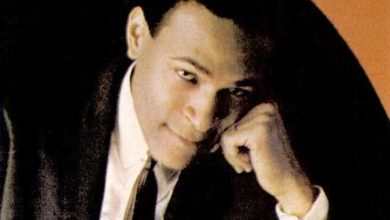
How John Anderson’s “Swingin’” Put Country Swagger Back on the Radio in 1983
A hit that sounded like it came in through the side door
By 1983, mainstream country was leaning sleek. Production was getting smoother, crossover ambitions were rising, and much of Nashville’s commercial sound was being carefully buffed for wider appeal. Then came “Swingin’,” a record that felt gloriously unconcerned with polish. John Anderson didn’t charge in with grand sentiment or arena-ready drama. He arrived with a grin, a bounce, and a song that sounded like it had dirt on its boots.
From its opening feel, “Swingin’” announced itself as something livelier and looser than much of what surrounded it on country radio. It had movement in the rhythm, mischief in the delivery, and a conversational ease that made it feel instantly familiar. Instead of chasing sophistication, it leaned into personality. That choice helped turn the single into a No. 1 hit on Billboard’s Hot Country Singles chart and one of the decade’s most durable country records.
Why the song connected so fast
Part of the magic of “Swingin’” is how unforced it feels. The melody is catchy without sounding manufactured, and the story unfolds with the kind of plainspoken detail country music does best. There is humor in it, but not novelty for novelty’s sake. The song invites listeners into a scene, lets the characters breathe, and trusts the groove to do the rest.
That balance mattered. Audiences heard something playful, but they also heard authenticity. Anderson’s voice, with its wiry twang and lived-in texture, gave the song backbone. He didn’t oversell the joke or smooth away the rough edges. He sang it like a guy who knew these people and this world. In an era when country could sometimes feel dressed up for company, “Swingin’” felt like real life with the volume turned up.
“Swingin’” worked because it sounded fun without sounding fake.
John Anderson’s voice was the secret weapon
Anderson had something country radio could not easily replicate: a vocal style that felt both traditional and distinctive. His singing carried echoes of older honky-tonk and rural storytelling, but he delivered them with enough spark to sound current. On “Swingin’,” that quality became the record’s center of gravity. The performance is relaxed, but never sleepy; sharp, but never stiff.
That mattered because a song like this can collapse if it is too cute or too calculated. Anderson keeps it grounded. He gives the lyric swagger instead of wink-wink gimmickry, and that swagger is what helped the song break through. He sounded less like a singer trying to fit a trend than like an artist dragging the trend a little closer to his own world.
A groove that challenged the mainstream country template
The instrumentation on “Swingin’” helped set it apart. Its energy was central to its appeal: rhythmic, buoyant, and confident in a way that made the song feel almost physical. You can hear the record move. Rather than settling into a stately country glide, it pushes forward with an infectious pulse that gives the storytelling lift.
That pulse is a big reason the song felt disruptive. It did not reject country tradition; it reanimated it. The record drew on the genre’s fondness for character, motion, and barroom ease, but packaged those traits in a way that sounded immediate on early-1980s radio. In doing so, it suggested that country did not have to become more pop to feel contemporary. It could also get earthier, stranger, and more alive.
The biggest hit of his career—and a signal to Nashville
“Swingin’” became the biggest hit of John Anderson’s career, but its importance goes beyond chart success. The single served as a reminder that listeners still had an appetite for records with strong regional character and a little irreverence. It proved that a song could be commercial without sanding away every eccentricity.
For Nashville, that was a meaningful message. “Swingin’” did not blow up the mainstream, but it bent it. The song made room for more personality at the top of the format and showed that a hit could be built on groove, twang, and storytelling rather than crossover gloss. Its success was both a triumph for Anderson and a nudge to the industry: country swagger still sold.
Why “Swingin’” still feels alive
Decades later, “Swingin’” remains easy to spot because it never chased a temporary fashion as hard as it chased a feeling. The feeling is joy, but also confidence—the confidence of a record that knows exactly what it is. That is often what lasts. Songs tied too tightly to a moment can become museum pieces. “Swingin’” still moves because it was built on rhythm, voice, and character, three things country music never really outgrows.
Its legacy is not only that it was a major hit in 1983. It is that the song preserved something essential at a moment of transition. It reminded the genre that looseness could be a strength, that humor could coexist with craft, and that swagger had a place in mainstream country. For three brisk minutes, John Anderson made country sound rowdy, personable, and utterly sure of itself—and radio listeners followed along.

Quick Facts
- Artist: John Anderson
- Song: “Swingin’”
- Year highlighted: 1983
- Chart achievement: No. 1 on Billboard Hot Country Singles
- Known for: Catchy melody, lighthearted storytelling, and bold instrumentation
- Significance: Helped redefine what mainstream country could sound like in the early 1980s
Image credits: Unknown authorUnknown author / Wikimedia Commons / Public domain; Engraving by w:William Holl the Younger / Wikimedia Commons / Public domain; eagle102.net / Wikimedia Commons / CC BY 2.0.