THE LINE NO ONE CROSSES
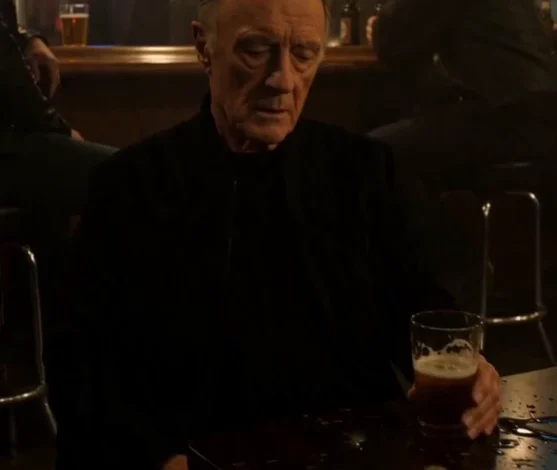
“Get out. Now.”
The words didn’t echo.
They didn’t need to.
They landed flat, heavy, and final—like something that had never once been questioned in this room.
Like a rule that had always existed, long before anyone here decided to test it.
And then—
The kick came.
It wasn’t sloppy.
It wasn’t emotional.
It was deliberate.
Boot met wood with a violent crack that split through the bar like a sound that didn’t belong to anything living.
The table didn’t just move.
It jerked forward.
Hard.
The legs scraped across the concrete floor with a long, tearing grind that made every set of teeth in the room tighten instinctively.
Dry.
Ugly.
Unapologetic.
One corner lifted for a fraction of a second, wobbling before slamming back down, the impact sending a dull vibration through the floor beneath it.
At the center—
A beer glass shuddered.
The liquid inside jumped violently, foam surging upward in a trembling crown before spilling over the rim.
It crept outward slowly, thick and uneven, like it wasn’t sure where to go.
Then gravity claimed it.
A slow spill.
Over the edge.
Drop by drop.
Each one hitting the concrete with a soft, wet sound that felt louder than it should have.
For just a fraction of a second—
The bar kept moving.
A laugh—half-formed—hung awkwardly in the air.
A cue stick hovered mid-motion, the player frozen somewhere between intention and hesitation.
The jukebox hummed quietly in the corner, dragging out the last few notes of a song that suddenly sounded too clean for this place.
Then—
Everything stopped.
Not gradually.
Not naturally.
It snapped.
Like something invisible had just drawn a line through the room and everything on both sides understood it instantly.
Inside the biker bar on the edge of a dust-choked Texas town, silence didn’t fall.
It locked in.
Laughter died where it stood.
The cue stick lowered without striking.
The pool ball rolled lazily across green felt… slowed… then stopped inches from the pocket, as if it had changed its mind.
The jukebox crackled once—
Then cut itself off completely.
Even the neon lights buzzing along the walls seemed to hum softer—not visibly, but in the way the room felt.
Every eye turned.
Not to the man who kicked the table.
But to the man sitting behind it.
The old man didn’t move.
Not even a flinch.
Sixty-five.
Maybe seventy.
Age had marked him in all the expected places—but it hadn’t taken anything important.
Silver hair, tucked neatly beneath a worn brown hat.
A faded denim jacket draped loosely over his shoulders, the fabric softened by time, shaped more by roads than by rooms.
His hands—
Rough.
Lined.
Steady.
Wrapped around a glass of beer like the rest of the world had no authority over it.
That kick should have meant something.
It should have startled him.
Should have demanded attention.
Should have forced reaction.
It didn’t.
He reached forward.
Two fingers.
Nothing more.
Precise.
Controlled.
He slid the glass back into place as if correcting a minor inconvenience.
Foam still clung stubbornly to the rim.
Settling.
Slowly.
He didn’t look up.
Didn’t blink.
Didn’t acknowledge anything.
That—
That was the first mistake.
Cole Maddox stepped closer.
He didn’t rush.
Men like him never rushed.
They didn’t need to.
Big.
Broad.
Heavy in a way that made space react to him before he even asked it to.
Leather vest stretched tight across his chest, patches layered like proof of survival rather than decoration.
Boots planted hard with every step.
Each one deliberate.
Each one loud enough to remind the room who owned the ground.
His confidence wasn’t built from thought.
It came from repetition.
From never being challenged long enough for doubt to take root.
He leaned in.
Close.
Too close.
The kind of distance meant to force submission without needing to ask for it.
“You hear me?” he growled, voice low and steady, thick with control. “This ain’t your place.”
No response.
The old man lifted his glass.
Took a slow sip.
Not defiant.
Not submissive.
Just—
Unbothered.
Behind Cole, a few bikers smirked.
They shifted in their seats, leaning back, settling in for what they assumed would be familiar.
They’d seen this before.
Different man.
Same ending.
But not everyone smiled.
A few stayed still.
Watching.
Carefully.
Because something had shifted.
Not loudly.
Not visibly.
But deeply.
Like pressure building beneath something no one could name yet.
The old man set the glass down.
Deliberate.
Centered.
Then—
“Sit down.”
The words were quiet.
Almost soft.
But they didn’t land that way.
They didn’t sound like a suggestion.
They didn’t sound like a challenge.
They sounded like something older than both.
Something that didn’t need to repeat itself.
Cole blinked.
Once.
Then laughed.
Short.
Sharp.
Dismissive.
“You deaf, old man?” a younger biker snapped, stepping forward too fast, too eager.
He slammed his palm onto the table.
Harder this time.
Beer sloshed violently over the edge, dripping faster now.
“You don’t belong here.”
Still—
Nothing.
Not even a glance.
The old man didn’t acknowledge him.
Didn’t register him.
Didn’t give him anything to push against.
And that—
That was worse than resistance.
Because resistance meant engagement.
This—
This was absence.
Then—
The old man reached into his jacket.
Slow.
Unhurried.
The room reacted before anyone realized they were reacting.
Weight shifted.
Postures adjusted.
Hands hovered closer to belts.
Eyes narrowed.
Breaths tightened.
Because men like these didn’t think first—
They felt.
And something about that movement—
Didn’t belong here.
He pulled out a phone.
Old.
Scratched.
Outdated.
The kind no one used anymore.
He raised it to his ear.
A soft click.
“I’m here.”
That was it.
No explanation.
No urgency.
No emotion.
He lowered the phone.
Slipped it back into his jacket.
Picked up his beer again.
Cole stared at him.
Confusion crept in.
Small.
Unwelcome.
“…Who you call?” he asked.
No answer.
Seconds passed.
Then more.
Nothing happened.
No sirens.
No footsteps.
No sudden shift.
Just silence.
Thick.
Unanswered.
The tension twisted.
From expectation—
Into something less comfortable.
Uncertainty.
Cole scoffed.
“That your move?” he said. “Calling nobody?”
A couple of bikers laughed.
Relief trying to creep back in.
Trying to reset the balance.
The younger one leaned forward again.
“You think that scares—”
The door opened.
Not loud.
Not violent.
But precise.
Controlled.
And that—
That made it worse.
A man stepped inside.
Dark suit.
Sharp lines.
Clean.
Wrong place.
Wrong world.
He didn’t hesitate.
Didn’t scan the room like he was entering unfamiliar territory.
He walked in like he already knew how this would end.
His eyes swept once—
Then locked onto the old man.
And everything about him changed.
Instantly.
Posture tightened.
Spine straightened.
Expression sharpened.
Respect replaced neutrality in less than a second.
“Stop.”
The word cut clean through the room.
Cole turned, irritation rising.
“Who the hell are—”
The suited man raised a hand.
Didn’t look at him.
Didn’t acknowledge him.
Cole stopped talking anyway.
That—
That was the first real sign.
“Sir,” the man said quietly, stepping closer. “We didn’t know you were here.”
The word Sir spread.
Not loudly.
But completely.
Behind Cole, an older biker went still.
Completely still.
“…No,” he muttered.
Another leaned forward, eyes narrowing.
Trying to see past the years.
Past the stillness.
Recognition moved slowly—
Then locked.
“…That’s him,” the older biker whispered.
The younger one frowned.
“Who—”
“I told you,” the older man said under his breath.
“The roads.”
“The land.”
“The deals that don’t exist on paper.”
A pause.
His throat tightened.
“…That’s who owns it.”
Cole didn’t turn fully.
But something inside him shifted.
Slow.
Heavy.
Real.
The suited man stepped closer.
Not toward Cole.
Toward the old man.
“Area’s secured,” he said softly.
“Perimeter’s already moving.”
That didn’t belong here.
That belonged somewhere organized.
Controlled.
Dangerous.
Cole’s jaw tightened.
“…What perimeter?”
No one answered.
That—
That was the second sign.
Outside—
Engines.
Not loud.
But many.
Arriving.
Stopping.
Doors opening.
Closing.
Boots hitting gravel.
Measured.
Even.
Coordinated.
Not chaos.
Not a gang.
Structure.
Cole glanced toward the window.
Headlights cut through dust-coated glass.
Multiple vehicles.
Spaced.
Intentional.
Inside—
No one moved.
Because now they all felt it.
This wasn’t escalation.
This was containment.
And it had already been in place—
Before he arrived.
The old man finished his beer.
Slow.
Unrushed.
Like time didn’t apply to him.
He set the glass down.
Perfect.
Centered.
Then—
He looked up.
For the first time.
His eyes met Cole’s.
And something inside Cole dropped.
Not fear.
Not yet.
Something deeper.
Recognition.
“…Who are you?” Cole asked.
The old man studied him.
Calm.
Still.
Unimpressed.
“You walked in loud,” he said quietly.
“Kicking tables.”
“Making noise.”
Cole didn’t respond.
Couldn’t.
The old man leaned back slightly.
Comfortable.
Like the room adjusted around him.
“Out there,” he said, nodding toward the door, “that might mean something.”
His gaze sharpened slightly.
“But not here.”
Outside—
A radio crackled.
“Position set.”
And now—
It landed.
This wasn’t backup.
This was already in place—
Before anything started.
“…You some kind of boss?” Cole asked.
The older biker behind him let out a dry laugh.
“Boss?” he muttered.
“You think bosses move like that?”
Silence.
Heavy.
Settling.
The suited man shifted.
Waiting.
“For your command.”
The old man shook his head.
“No.”
That single word—
Ended everything.
No anger.
No threat.
Just finality.
“You came in thinking this place was yours.”
“Kicking.”
“Shouting.”
“Taking space.”
A pause.
“But this town…”
He let it sit.
Then finished—
“…runs because I allow it to.”
Silence collapsed inward.
Cole felt it.
Fully.
Not fear.
Something colder.
Permanent.
“…What do you want?” he asked.
“Nothing.”
That hit harder than anything else.
“No deals.”
“No threats.”
“Just remember where you are.”
Silence stretched.
Heavy.
Cole looked around.
At his men.
At the door.
At the unseen presence outside.
Then back at the old man—
Who hadn’t raised his voice once.
And still controlled everything.
A shift.
Small.
Final.
Cole stepped back.
“We’re leaving.”
No argument.
No hesitation.
They moved.
Slower than before.
As Cole reached the door—
“…What’s your name?”
The old man turned the empty glass once.
Set it down.
“You don’t need it.”
A beat.
“Just remember the feeling.”
Cole held his gaze—
Then left.
The door shut.
Engines started.
One by one.
Then faded.
Gone.
Inside—
Silence remained.
Different now.
Owned.
The suited man exhaled.
“Should I—”
“No.”
The old man stood.
Placed cash down.
More than enough.
Always more than enough.
The bartender nodded.
Familiar.
Respectful.
Outside—
The night stretched wide.
Quiet.
But not empty.
Never empty.
The old man stepped into it.
Adjusted his hat.
And walked.
Unhurried.
Unnoticed.
Understood by very few.
Because in that town—
He wasn’t just power.
He wasn’t just control.
He was the system behind it.
And more importantly—
He was the line.
The one you don’t see—
Until it’s already too late.
The Husband Brought Another Woman Home, but His Wife Had Already Closed the Door
Something in her face said she had imagined cruelty, but not paperwork. Not insolvency. Not the humiliating possibility that the man who had promised to “take care of everything” could not even control the floor beneath his shoes.
Mara closed the binder and drew one sheet free, placing it on top.
“Since you seem determined to make tonight theatrical,” she said, “you should know the rest.”
Nolan took the page.
Temporary occupancy revocation. Notice prepared by counsel. Effective upon service.
“What the hell is this?”
“The first step,” Mara said. “My attorney advised me to wait until I was ready. I wasn’t sure when that would be.”
Evelyn’s voice sharpened. “Attorney?”
Mara nodded once. “I spoke to her the same week I spoke to the bank.”
“You planned this?” Nolan said.
“No.” Mara’s voice was soft now, which made it more dangerous. “You planned this. I survived it early.”
The words seemed to move the temperature in the room.
For a long moment no one spoke. Outside, a car passed in the street, tires hissing on wet pavement. Somewhere upstairs the heater kicked on, then off again. The house held its breath.
Then Nolan did what frightened men often do when their first weapon fails.
He laughed.
It was not convincing. Too loud. Too sudden. A sound thrown like a glass against a wall.
“So that’s it?” he said. “This whole saint routine was an act? You sat here pretending to cook dinners, fold laundry, ask me how my day was, while secretly plotting against me?”
Mara watched him. “I was deciding whether there was anything left to save.”
“And there wasn’t?”
“There wasn’t you.”
That stripped something off him.
His face changed—not into guilt, not exactly. Into injury. The kind men like Nolan often confuse with innocence. “You don’t get to stand there acting superior. You were impossible to live with. You watched everything. Questioned everything. You made this place feel dead.”
Mara almost smiled, but there was nothing happy in it. “This place felt dead because you spent two years draining it. Money first. Then trust. Then air.”
Celeste took a step backward from the table. “You told me you were separated.”
Nolan didn’t look at her.
“You said she knew,” Celeste said.
Still nothing.
“You said the marriage had been over for a long time.”
Mara answered for him. “No. He made sure it felt that way only in rooms where I wasn’t present.”
Celeste’s mouth tightened. She picked up her purse from the chair—Mara’s chair—and now even that small movement seemed full of embarrassment. “I’m leaving.”
Nolan turned on her so quickly Mara saw the panic before the anger. “Don’t be dramatic.”
Celeste stared at him. “You brought me here.”
“You wanted honesty.”
“This?” she said. “This is not honesty. This is a trap with furniture.”
She moved toward the front hall. Evelyn called after her, “If you walk out now, you’re proving exactly what kind of woman you are.”
Celeste paused with her hand on the doorframe and looked back. “At least I know what kind of man he is.”
Then she left.
The front door opened and shut again.
The silence after that was different. Less crowded. More dangerous.
Nolan’s nostrils flared. “Fine. Let her go.”
But it didn’t sound fine. It sounded like something cracking under weight.
Evelyn moved quickly to his side now, as if instinct had finally placed her in her true role: defender, witness, excuse-maker. “Mara, enough. Whatever point you think you’ve made, enough. We’ll sort this out tomorrow.”
“No,” Mara said.
Evelyn blinked. “Excuse me?”
“Tomorrow was for families who hadn’t turned betrayal into an entrance.”
Nolan slapped the document onto the table. “You can’t throw me out tonight.”
“I can ask you to leave property you do not own.”
“I paid for this house.”
Mara met his eyes. “You borrowed against it until it nearly disappeared.”
He stepped toward her then, not quite threatening, not quite not. Just close enough to remind her that for years he had relied on size, voice, movement—the theater of force. Mara did not step back.
Evelyn saw that and intervened, perhaps not to protect Mara but to preserve whatever remained of the scene. “Nolan.”
He stopped.
Mara said, “There’s more in the file.”
He laughed again, smaller this time. “Of course there is.”
“There are copies of the transactions from the restaurant account.”
His eyes sharpened.
“And the renovations line item you blamed on plumbing repairs.”
“Stop.”
“And the cash withdrawal the week you told me your partner had been robbed.”
“Stop.”
“And the insurance request you filed after reporting lost equipment that was never purchased in the first place.”
Evelyn’s head turned slowly toward her son. “Nolan?”
He looked at his mother now with something close to hatred—not because Mara had lied, but because she hadn’t. “You don’t understand business.”
Mara answered, “No. I understand patterns.”
She walked to the counter, picked up the brown envelope, and placed it on top of the binder.
“The bank wasn’t the only one asking questions.”
He stared at the return address and went pale.
It was from an audit unit.
Evelyn’s voice dropped. “What is that?”
“Ask him,” Mara said.
Nolan’s mouth opened, but no words came.
That was the unexpected mercy of truth when it arrives fully dressed: it does not need help speaking.
Mara did not raise her voice. She did not need to. “I didn’t expose you. Not yet. I didn’t hand over anything except what I needed to protect myself. I wanted to believe there was still a version of this where you looked at me once—just once—and told the truth before your life had to do it for you.”
His breathing had changed. Quick. Shallow.
“That’s why,” Mara said, “I asked if you were sure you wanted to do this today.”
Nolan grabbed the envelope, tore it open, scanned the first page, then the second. Whatever he saw there drained the last performance from him. The swagger disappeared. The outraged husband disappeared. Even the adulterous confidence was gone. What remained was simply a man cornered by the arithmetic of his own choices.
Evelyn took the pages from his hand. “Nolan.”
He turned away from her.
“You said the firm was stable.”
“It was.”
“You said the investors were secured.”
“They were supposed to be.”
“You said—”
“I know what I said!”
The shout ricocheted through the kitchen. Mara flinched internally, but not outwardly. Years ago, she would have rushed to soften the edge, lower the temperature, absorb impact. Tonight she let the words stay where they landed.
Evelyn stared at him with the dawning horror of a mother who realizes too late—not too late for love, but too late for denial—that the son she defended was not misunderstood. Only concealed.
“When?” she whispered.
He scrubbed both hands over his face. “It got bad six months ago.”
Mara said, “Longer.”
He looked at her with raw fury. “You think you’re winning?”
She considered that. “No.”
The answer startled all three of them.
Mara took a slow breath. “There’s no winning here. There’s the part where I stop disappearing inside your disasters. That’s all.”
Her voice shook on the last sentence, just once. It was the first crack she had allowed, and because it was small, it carried more weight than tears would have.
Nolan heard it too. Something in his expression shifted, but not enough to become remorse. Perhaps only recognition that the woman in front of him had stopped needing his version of reality.
He sank into the chair he had first claimed so confidently. Not from dignity. From lack of structure.
Evelyn remained standing, the audit letter in one hand, the property document in the other. She looked older suddenly. Smaller. Not because age had arrived in a minute, but because certainty had left.
“You should have told me,” she said to Nolan.
He laughed once under his breath, bitter and empty. “Would that have helped?”
“Yes,” she said.
“No,” Mara said quietly.
They both looked at her.
“No, it wouldn’t have helped,” Mara said. “You would have protected him from consequences the way you always protected him from mirrors.”
Evelyn’s mouth tightened. “You think I made him this way?”
“I think every time he broke something and you called it pressure, every time he lied and you called it ambition, every time he belittled someone and you called it stress, you handed him another inch of permission.”
Evelyn said nothing.
The heater clicked again. Rain began lightly against the back window.
Mara reached for the suitcase on the floor and set it upright. She pulled the handle all the way up and angled it toward Nolan.
“Take your things,” she said.
He looked at the suitcase, then at her. “And if I don’t?”
“Then my attorney’s process starts tonight instead of tomorrow morning.”
He held her gaze for a long time. It was the first honest silence they had shared in years. Nothing romantic remained in it. Nothing hopeful. Just the exhausted clarity of two people standing at the edge of a structure one of them had been demolishing from the inside.
Finally, Nolan stood.
He did not shout. Did not threaten. Did not beg. Some collapses are too complete for noise.
He took the suitcase handle.
Evelyn set the papers down carefully, as if sudden motions might still prevent disaster. “Where are we supposed to go?”
Mara looked at her, and what she felt was not triumph. It would have been easier if it were triumph. It was grief, threaded with relief and sharpened by the knowledge that relief never arrives clean.
“You should ask the person who brought his future in through my front door,” she said.
Nolan closed his eyes briefly.
Then he opened them and said, in a voice scraped thin, “You knew for three months.”
“Yes.”
“And every day you looked at me like nothing had changed.”
“Everything had changed.”
He absorbed that. The words seemed to wound him because they were true in a way accusations never were. If she had screamed, he could have resisted. If she had broken plates, he could have called her unstable. But quiet preparation had denied him the part he knew how to play.
Evelyn moved first toward the hall, perhaps understanding at last that no argument left in her was large enough to alter ownership, law, or consequence. Nolan followed, dragging the suitcase behind him. At the doorway to the hall, he stopped without turning around.
“What happens to us now?” he asked.
Mara stood by the kitchen table, one hand resting on the binder, the faucet still dripping behind her.
There were many answers she could have given. Legal ones. Cruel ones. Honest ones dressed as cruel. But the only answer that came felt heavier than all the rest.
“You live somewhere else,” she said. “And for once, you hear yourself.”
He stood there another second.
Then he walked out.
The front door opened. Cold air swept through the hall. Evelyn’s heels tapped once on the threshold. The suitcase wheels bumped over the seam in the floor. Then the door shut.
Mara remained where she was until the sound of Nolan’s car finally started outside. It idled. Reversed. Pulled away.
Only then did she let herself sit down.
Not in her chair.
In the one he had dragged out first, as if to claim the room.
The house was quiet now, but not healed. Houses never heal on command. They hold voices in the walls. They keep the shape of people after they’re gone.
Mara opened the binder again and looked at the first page without seeing it. Her hand drifted to the dish towel still lying on the counter, damp and twisted from her grip. A ridiculous thing to notice after a marriage ended in a kitchen. Yet that was what made it real—the towel, the dripping faucet, the cooling pan on the stove, the ordinary bones of a night that had split open anyway.
She reached up and turned the faucet off.
At last, the room stopped counting.
In the silence that followed, Mara sat alone in the house she had saved too late for love, but not too late for herself.
Read more stories
- KSI Freaks Out as a Britain’s Got Talent Performance Pushes the Limits
- The McCoys’ “Hang On Sloopy” Rockets to No. 1 and Grows into Ohio’s Unofficial Anthem in 1965
- Jackie DeShannon’s Timeless Classic “What the World Needs Now Is Love” Still Uplifts and Inspires Generations
- Released in 1971, this heartbreaking ballad changed how people heard breakup songs forever… because it wasn’t about anger or betrayal, but the quiet moment two people realize love is already gone.