The Six-Minute Arrangement That Had to Be Torn Apart Before It Became a Swing Anthem

New York, 1939. Glenn Miller was searching for the sound that could push his rapidly rising orchestra beyond the dance halls and radio broadcasts where it had built its reputation.
Then a complicated instrumental arrived in his hands.
Composer and saxophonist Joe Garland had developed the piece from riffs that had circulated through jazz for years. His original arrangement ran roughly six minutes—far too long for the normal three-minute limit of one side of a 78-rpm record.
Another major bandleader had already tried performing it on radio, but the long arrangement failed to create much excitement.
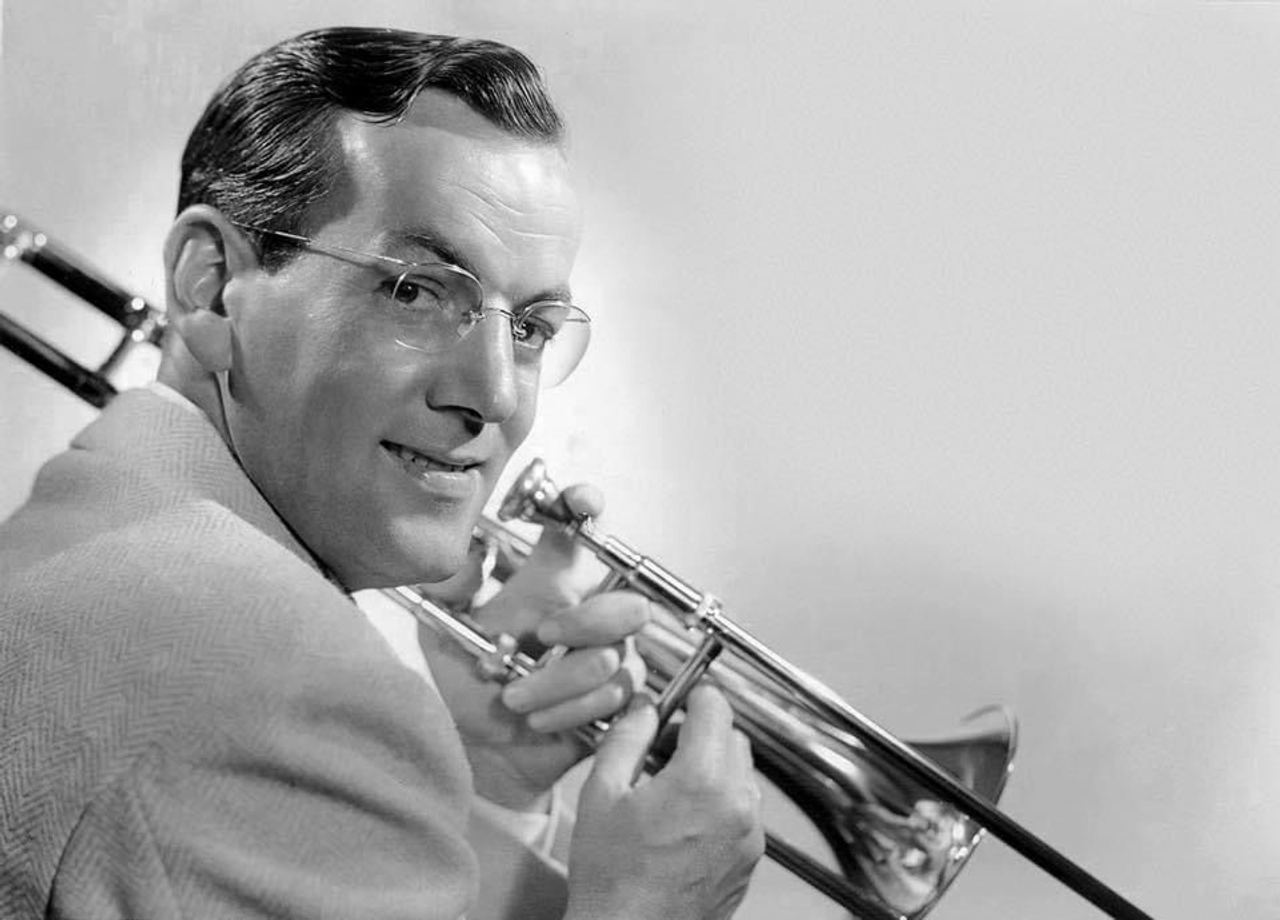
Miller heard something inside it worth saving.
Instead of accepting the arrangement as it was, Miller began cutting.
Sections disappeared. Repeated phrases were tightened. The tempo became more energetic. Solos were given clearer spaces, including the famous tenor-saxophone exchange. What had felt sprawling became compact and increasingly difficult for dancers to resist.
The most memorable change came near the ending.

Rather than finishing normally, In the Mood repeatedly became quieter, seeming almost ready to stop. Then the orchestra suddenly exploded back at full volume.
Band trombonist Paul Tanner later recalled the trick behind those false endings. The musicians listened for a cue from drummer Maurice Purtill. When the cowbell sounded, they knew the next entrance would come back loud.
To audiences, it seemed almost magical.
Miller tested the evolving arrangement in front of dancers at the Glen Island Casino, where the orchestra was enjoying a major breakthrough in 1939. The crowds loved the tension created by those disappearing endings and sudden returns.

On August 1, 1939, Glenn Miller and His Orchestra recorded In the Mood for RCA Bluebird in New York.
The result transformed an awkward, oversized arrangement into one of the defining recordings of the Big Band Era.
Its success was enormous. The record became a major hit in 1940 and eventually sold more than a million copies. The Library of Congress later described it as an “anthem of the swing era” and selected the 1939 recording for the National Recording Registry in 2004.
But its legacy is even larger than the sales.

For generations who never experienced a crowded ballroom in 1939, those opening saxophone riffs became a shortcut back to the Swing Era itself.
And that almost never happened in this form.
The composition had been too long. Its earlier performances had failed to ignite audiences. Miller’s breakthrough came from recognizing that the musical idea did not need more.
It needed less.
He cut away what slowed it down, sharpened the rhythm, built suspense into the ending and watched dancers respond.
In 1939, Glenn Miller did not simply record In the Mood.
He discovered the version the world had been waiting to hear.
Read more stories
- Cuppa Cuppa Cake
- I Came Home After a Difficult Labor to Find My Baby Girl’s Nursery Painted Completely Black by My MIL – What My Husband Did Next Was Worse than Kicking Her Out
- Cheesy Garlic Herb Dip
- Madonna Once Said She Didn’t Think She Was Beautiful — AI Now Imagines How She Might Have Aged Naturally — Photos