The High-Stakes Reunion Behind Dolly Parton and Kenny Rogers’ 1985 Real Love
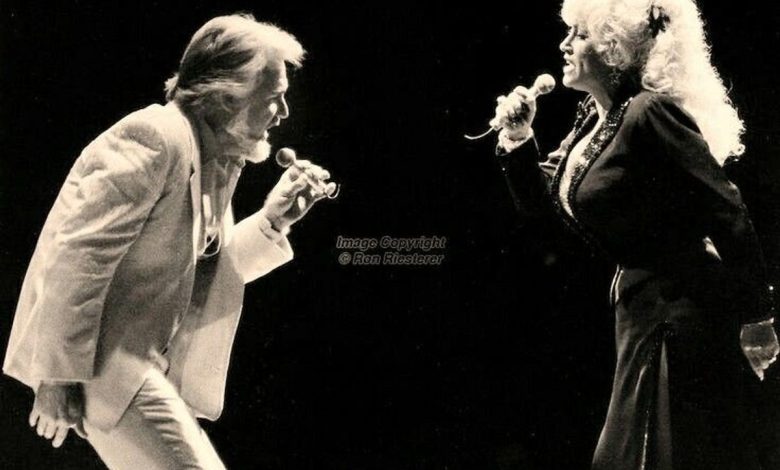
After their first duet became a worldwide phenomenon, Dolly Parton and Kenny Rogers faced an awkward question: had they discovered a lasting partnership, or merely captured lightning once? Real Love supplied the answer.
The pressure after a perfect first duet
By 1985, Parton and Rogers were permanently linked in the public imagination. Their contrasting voices had made the 1983 Bee Gees composition sound inevitable, even though Parton’s participation began as a last-minute studio idea. Reuniting carried risk. Anything too similar could feel like an imitation, while anything too different might waste the chemistry listeners wanted to hear again.
Real Love offered a middle path. Written by David Malloy, Richard “Spady” Brannon and Randy McCormick, it kept the polished country-pop accessibility of their first smash without trying to repeat its exact arrangement. Malloy also produced the recording, completed at Rumbo Recorders in Los Angeles on November 5, 1984.
A partnership moved onto the stage
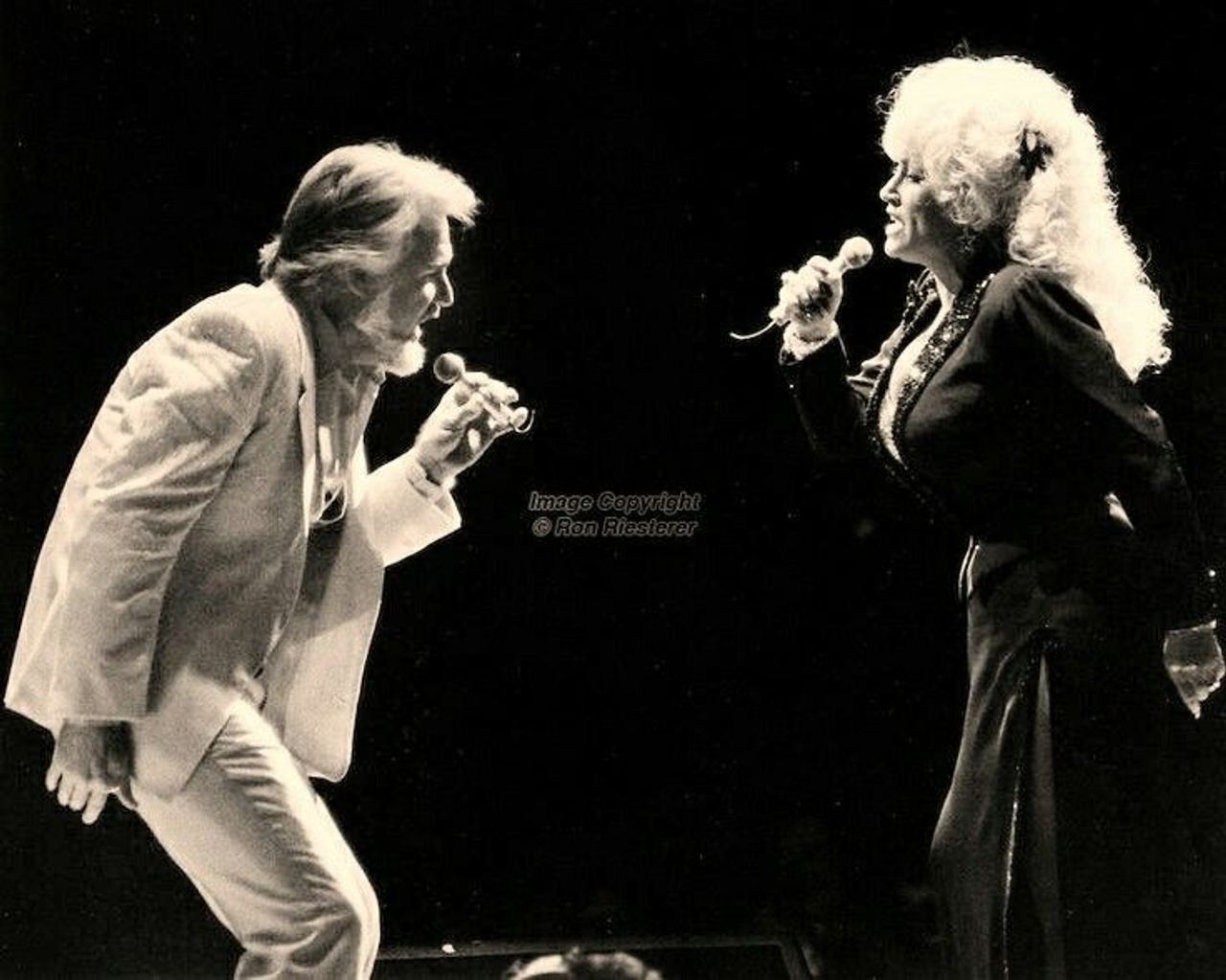
The title track appeared on Parton’s 1985 album Real Love and became its second single on April 29. By then, the partnership had expanded beyond one studio performance. Parton and Rogers mounted a nine-city American tour in February 1985, and footage from an HBO concert special helped form the song’s official music video.
That live setting mattered. Rogers’s grounded baritone and Parton’s bright, agile soprano no longer sounded like a surprising experiment; they sounded like a practiced conversation. The chorus presents love as something proven rather than imagined, which suited two performers demonstrating that their musical connection could survive beyond a single hit.
What the second number one proved
Real Love reached number one on Billboard’s country chart in August 1985, giving Parton and Rogers their second country chart-topper as a duo. It also reached number 13 on the adult contemporary chart and topped Canada’s country ranking. A Grammy nomination for Best Country Vocal Performance by a Duo or Group followed.
It never duplicated the enormous pop crossover of their first hit, but that may be precisely why its success matters. Real Love proved audiences were responding to Dolly and Kenny themselves, not only to one extraordinary song. What began as a fortunate studio pairing had become a genuine act—one strong enough to tour, record again and remain beloved for decades.
Watch the official video
Watch the 1985 performance footage and notice how comfortably Parton and Rogers trade lines, smiles and attention after turning an accidental duet into an established partnership.
How Stevie Nicks Turned a Rejected Fleetwood Mac Song Into Lindsey Buckingham’s Most Public Reckoning
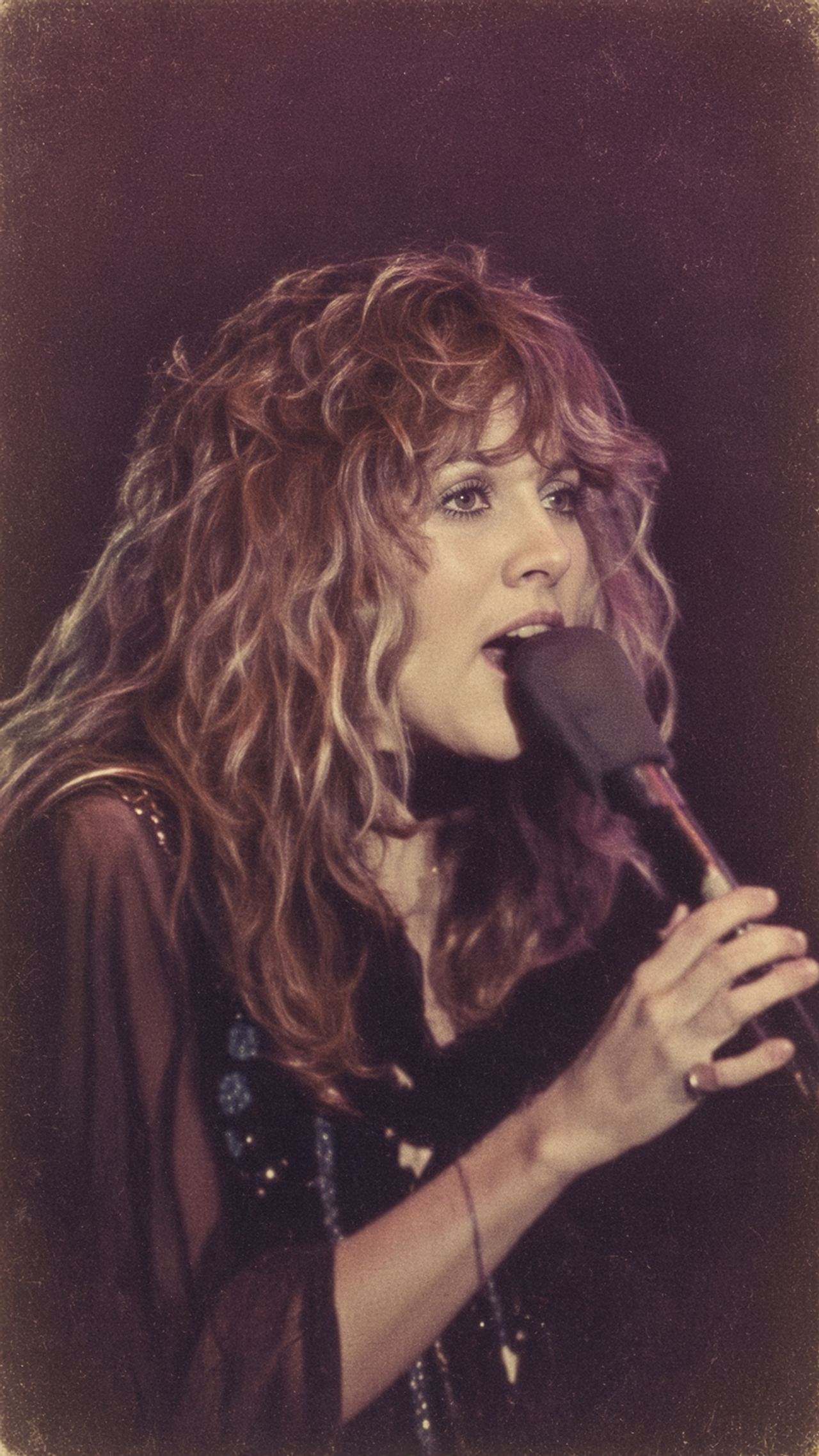
Stevie Nicks performing onstage. Her lost Rumours song would become one of Fleetwood Mac’s most powerful live moments.
Stevie Nicks wrote Silver Springs after her relationship with Lindsey Buckingham collapsed. Twenty years later, she stood across from him onstage and transformed the song Fleetwood Mac had once rejected into a public reckoning millions could see.
The breakup song removed from Rumours
Nicks wrote the song during the turbulent sessions for Rumours, when she and Buckingham were separating but still recording and performing together. Its beauty concealed a warning: the relationship might be over, but her voice and memory would remain with him.
The title came from Silver Spring, Maryland, a place name Nicks noticed while traveling. She imagined it as an idealized world that her romance could have become. Yet the finished recording was left off Rumours, reportedly because of the physical running-time limits of vinyl. I Don’t Want to Know took its place, and Silver Springs appeared only as the B-side of Buckingham’s Go Your Own Way.
A song that refused to disappear
The decision hurt because Nicks believed deeply in the recording. While Rumours became one of history’s defining albums, her answer to Buckingham remained outside its original track list. The song survived through fans, later collections and the unresolved emotions that continued to follow Fleetwood Mac.
Then the classic five-member lineup reunited in 1997 for The Dance. Recorded at Warner Bros. Studios in Burbank, the concert placed Silver Springs back at the center of the band’s story. This time, there was nowhere for its history to hide.
The stare that changed the performance
As the song approached its final passage, Nicks turned toward Buckingham and delivered the words directly to him. He continued playing guitar while meeting her gaze. The moment felt less like nostalgia than unfinished business unfolding in real time: two former lovers performing the emotional record of their own breakup.
The live version earned Fleetwood Mac a Grammy nomination and finally gave the song the recognition it had been denied in 1977. Its triumph was not simply that a discarded track became popular. Nicks reclaimed the story in front of the person who inspired it.
Silver Springs ultimately proved its own central promise. Buckingham moved on, the band changed, and decades passed–but the sound of Stevie Nicks’s voice continued to follow him.
Watch the unforgettable 1997 performance
Watch the official video and notice how the performance changes when Stevie Nicks turns toward Lindsey Buckingham near the climax.
How Fleetwood Mac Turned Five Broken Relationships Into “The Chain”
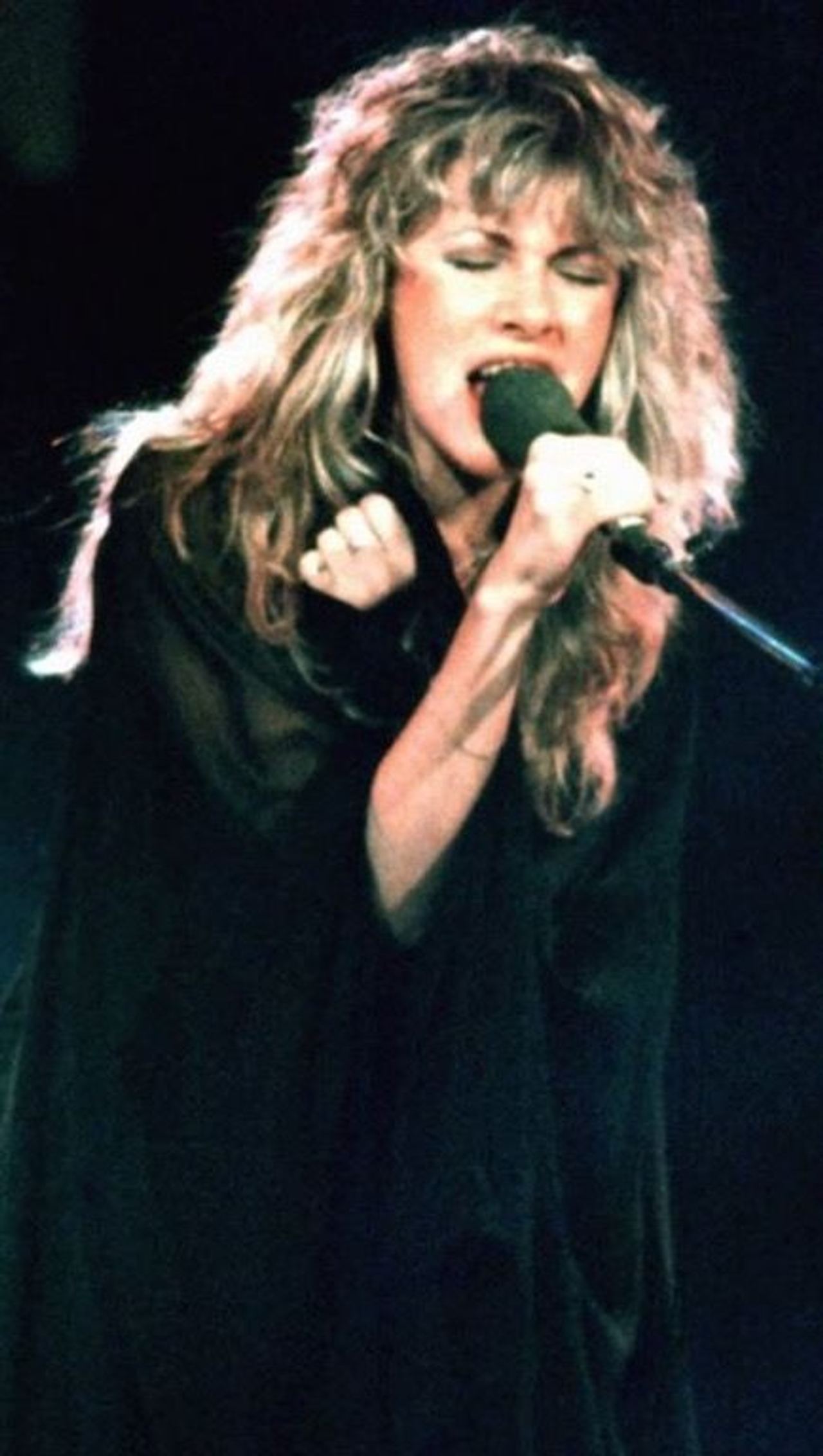
Fleetwood Mac performing “The Chain,” the only Rumours song credited to all five members.
By the time Fleetwood Mac recorded The Chain, the five people in the room were no longer simply making an album. They were singing through the wreckage of relationships that had once held their private lives–and perhaps the band itself–together.
Three collapses, five wounded bandmates
During the making of Rumours, Lindsey Buckingham and Stevie Nicks ended their long relationship. Christine and John McVie were divorcing after eight years of marriage. Mick Fleetwood was also watching his marriage to Jenny Boyd fall apart. The five musicians still had to write, record and perform together while the people beside them knew exactly whom each bitter lyric was about.
That tension produced songs that often sounded like replies in a private argument. Buckingham wrote Go Your Own Way; Nicks answered heartbreak with Dreams; Christine McVie turned separation into Don’t Stop. Yet The Chain became something different: not one person’s account, but a piece of music assembled by the whole band.
The only song credited to all five
The Chain was built from fragments rather than written in one clean session. Parts of earlier material were reshaped, Buckingham supplied the tense guitar figure, and John McVie’s famous bass passage drove the song toward its explosive final section. Mick Fleetwood’s drums, Christine McVie’s harmonies and keyboards, and the voices of Buckingham and Nicks turned separate ideas into one unified warning.
That is why every member–Buckingham, Nicks, Christine McVie, John McVie and Mick Fleetwood–received a songwriting credit. On an album filled with personal statements, it was the one composition officially belonging to all five.
A promise made by people coming apart
The contradiction is what gives the recording its force. The musicians repeat a vow not to break the chain even as their relationships are breaking around them. They could no longer remain the couples they had been, but they still recognized that Fleetwood Mac created something none of them could make alone.
Released on Rumours in 1977, the song became the band’s musical manifesto and a lasting concert centerpiece. It survives because the performance never sounds tidy or healed. It sounds like five people choosing to hold the music together when almost everything else had come apart.
Watch Fleetwood Mac perform “The Chain”
Watch the official performance and listen for the moment John McVie’s bass turns private tension into one of rock’s most unforgettable finales.
Elvis Presley at Sun Studio: The First Visit and Audition That Changed Music History
Before the King, There Was a Young Memphis Truck Driver
Long before Elvis Presley became one of the most recognizable performers in the world, he was an ambitious young man in Memphis looking for a way to turn his love of music into a future.
In the summer of 1953, Presley was eighteen years old, recently out of high school, and working as a truck driver for the Crown Electric Company while singing whenever he could.
Memphis offered him an unusually rich musical environment, with gospel churches, blues clubs, country radio, record stores, and neighborhood musicians shaping the sound that would eventually make him famous.
Presley absorbed those influences without fitting neatly into a single musical category, and his developing style reflected the collision of Southern gospel, country, rhythm and blues, and pop ballad traditions.
At the time, however, there was little reason to think that the shy young singer from Tupelo, Mississippi, would become a national celebrity.
The First Visit to 706 Union Avenue
On August 18, 1953, Presley entered the building at 706 Union Avenue in Memphis to make a private recording.
The business was then called the Memphis Recording Service, an operation run by producer and engineer Sam Phillips before the Sun Records name became nationally associated with groundbreaking rock and roll.
Presley paid four dollars to record a two-sided acetate featuring “My Happiness” and “That’s When Your Heartaches Begin.”
The recording was reportedly intended as a personal gift for his mother, Gladys, although the session also gave Presley an opportunity to hear his own voice on a professionally made record.
He did not arrive with a manager, a band, a polished stage act, or a carefully prepared career plan, and the visit was not a formal audition for a record contract.
Phillips was not present when Presley made that first recording, but his office assistant, Marion Keisker, was there and later remembered the unusual young singer.
Keisker kept track of Presley’s name and his potential as a ballad singer, a small administrative detail that became important when the teenager returned to the studio months later.
The acetate itself did not become a commercial release, but the visit placed Presley inside the same modest studio that would soon become one of the most important addresses in American music.
A Second Recording Brings Presley to Phillips’s Attention
Presley returned to the Memphis Recording Service on January 4, 1954, to make another private recording.
This time, he recorded “Casual Love Affair” and “I’ll Never Stand in Your Way,” giving Phillips and Keisker a clearer opportunity to consider whether his voice might fit the kind of artist Phillips wanted to develop.
The second visit still did not immediately produce a record deal, because Presley’s vocal identity was developing and the studio did not yet have the right song, musicians, or arrangement to reveal his full potential.
Phillips had built his reputation by recording regional Black blues and gospel performers, and he was searching for artists who could bring emotional directness and commercial energy to records that sounded different from polished mainstream pop.
His studio was small, his budget was limited, and his business depended on finding local talent with a distinctive quality rather than simply reproducing the biggest sounds already heard on the radio.
Presley’s voice contained some of the qualities Phillips valued, but the young singer still needed the musical setting that would allow his individuality to emerge.
The Audition That Was More Than an Audition
By the spring of 1954, Phillips and Keisker had enough interest in Presley to bring him back for a more serious evaluation.
Presley sang “Without You,” a ballad associated with an unidentified demo recording that Phillips had hoped to match with the right performer.
The song did not become Presley’s breakthrough, but his delivery convinced Phillips that the young singer had unusual feeling and a quality worth pursuing.
Presley was not yet a confident professional, and his early work showed that he was still searching for the balance between tenderness, intensity, and rhythmic movement that would define his later performances.
Phillips contacted guitarist Scotty Moore, who had experience playing country music and had worked with Phillips on other projects.
Moore then brought in bassist Bill Black, and the three musicians began rehearsing in an effort to discover whether Presley could work as the frontman of a small group.
Those early rehearsals were not smooth or predictable, since the musicians tried several kinds of material while Presley worked to move beyond the restrained ballad singing heard on his private acetates.
The crucial moment came when Presley began playing and singing in a more animated way during a break, turning a familiar blues feeling into something faster, louder, and unmistakably personal.
Moore and Black joined the experiment, and Phillips recognized that the loose, exciting performance had the spark missing from the earlier attempts.
The sound was not a fully formed genre, but it was fresh enough to suggest that Presley, Moore, and Black might have found a musical language of their own.
“That’s All Right” Changes the Direction
On a June 1954 recording session, the trio worked through material that included “I Love You Because” before finding the song that changed Presley’s career.
Presley’s version of “That’s All Right” drew from the blues recording by Arthur “Big Boy” Crudup, while the performance added a quicker country-inflected rhythm and the nervous energy of a young singer trying something new.
The musicians did not approach the song as a formal declaration that a new style had been invented, because the breakthrough emerged naturally from experimentation in the studio.
Phillips immediately understood that the performance had a striking character, and he helped shape it into Presley’s first commercial single for Sun Records.
The record was paired with “Blue Moon of Kentucky,” a Bill Monroe bluegrass song that Presley reworked with a livelier, more driving feel.
The pairing showed the musical conversation at the center of Presley’s early career, with a blues-based song and a country standard appearing together as two sides of the same record.
That combination mattered because Presley was not simply copying one tradition, and he was not creating his sound in isolation from the Black and white musical communities that surrounded him in the South.
His performance carried the emotional force and rhythmic flexibility of blues and gospel while also drawing on country phrasing, string-band momentum, and the directness of a pop single.
Memphis Radio Gives the Record a Chance
Sun released “That’s All Right” backed with “Blue Moon of Kentucky” in July 1954, and the record quickly attracted attention in Memphis.
Radio personality Dewey Phillips played “That’s All Right” on WHBQ’s popular program “Red, Hot and Blue,” exposing listeners to a singer whose voice and musical identity were difficult to classify.
The response was strong enough that the station played the record repeatedly and brought Presley in for an interview.
Presley was nervous about appearing on the radio, and he reportedly went to a movie before the broadcast because he did not want to listen to himself being interviewed.
Dewey Phillips helped introduce Presley to Memphis listeners as a new kind of performer, while local audiences supplied the first evidence that the unusual Sun single could connect beyond the studio.
Presley’s initial appearances also revealed that his stage presence was becoming part of the story, especially as his movements made the music feel more physical and unpredictable than a conventional ballad performance.
What began as a private recording for his mother had become a public musical identity built around risk, instinct, and a willingness to ignore strict boundaries between established Southern styles.
From 706 Union Avenue to a National Career
Presley’s first Sun recordings did not make him an overnight national star, but they gave him the foundation for a career that soon expanded beyond Memphis.
He performed with Moore and Black, worked with manager Bob Neal, and developed the restless stage presence that helped distinguish him from more traditional country singers.
Sun Records released additional Presley singles, including “Mystery Train,” as his popularity spread through the South and his sound reached more radio stations and live audiences.
The records also made 706 Union Avenue a symbolic location, because the small studio had captured a pivotal moment when a young singer’s influences, instincts, and collaborators finally aligned.
In November 1955, Phillips sold Presley’s recording contract to RCA Victor, a move that gave the singer access to far greater national resources while allowing Sun to preserve its place in the story of his rise.
Presley’s first RCA recordings turned him into a national sensation, and hits such as “Heartbreak Hotel” soon established him as a major figure in the emerging rock and roll movement.
Even after his career moved beyond Memphis, the circumstances of his first Sun sessions remained central to understanding how his artistic path began.
Why the First Visit Still Matters
Presley’s first visit to the Memphis Recording Service matters because it was ordinary in appearance but extraordinary in consequence.
He was not arriving as a discovered prodigy with a guaranteed contract, and the studio did not instantly transform him into the finished performer the public would later recognize.
Instead, the visit began a chain of small opportunities involving a private acetate, an observant assistant, a determined producer, two sympathetic musicians, and a song that revealed Presley’s instincts at exactly the right moment.
The audition that changed his path was therefore not a single theatrical event but a gradual process in which Presley’s voice became more compelling as the studio staff and musicians learned how to hear it.
That process also demonstrates how musical breakthroughs often emerge from collaboration rather than from one person working alone.
Phillips supplied technical knowledge and a strong sense of what might reach listeners, Moore and Black provided the instrumental framework, and Presley brought the emotional urgency that made the performance impossible to mistake for routine studio work.
The result was a sound that felt both familiar and new, which helped explain why “That’s All Right” could speak to listeners across the divided musical market of the 1950s.
Conclusion
Elvis Presley walked into 706 Union Avenue in 1953 to make a personal recording, but the visit eventually connected him with the people and circumstances that redirected his entire life.
His first acetate did not become a hit, his second recording did not immediately secure a contract, and his early audition did not resemble the polished launch of a future superstar.
What changed everything was the moment Presley, Scotty Moore, Bill Black, and Sam Phillips discovered that his strongest voice emerged when he stopped trying to sound like a conventional singer.
That discovery produced “That’s All Right,” gave Sun Records one of its defining records, and moved Presley from an uncertain Memphis music hopeful toward the career that made him the King of Rock and Roll.
Read more stories
- My Daughter Gave Up Her Newborn Twins at the Hospital – Then She Showed Up on My Doorstep at Dawn and Whispered Something That Changed Everything
- My MIL Kept My Child for Weeks, and My Husband Didn’t Care – I Went to Get Her Back and Was Shocked When I Entered the House
- Meghan Markle Breaks Her Silence Days After Reports of UK Return With a Telling Post on Her As Ever Brand’s Page
- Catherine Zeta-Jones’ Surprising Gift from Kirk Douglas’ Will Revealed — and It Has a Famous Maker