A Soldier’s Courage: One Man’s Stand Against Armed Robbers on a Train
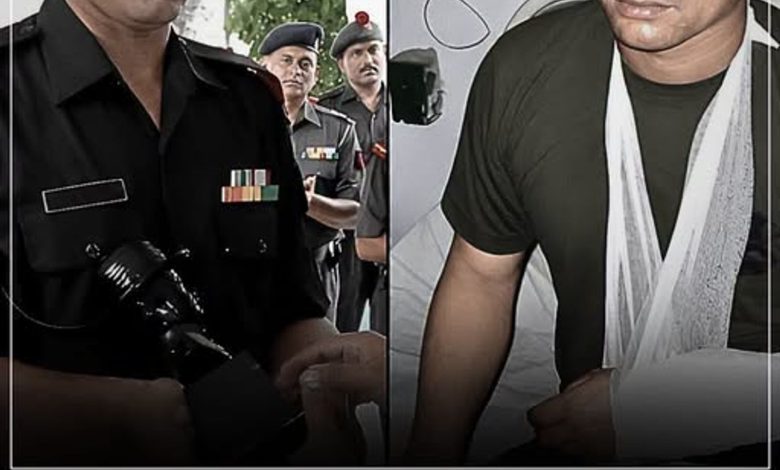
It was just after midnight on September 2, 2010, when the Maurya Express glided through the stillness of the night. The rhythmic clatter of the train wheels echoed through the carriages, lulling exhausted passengers into a state of weary calm. Among them sat Bishnu Shrestha, a 35-year-old man, recently retired from the Indian Army’s Gurkha regiment. He was on his way back to a life of tranquility, leaving behind the noise and chaos of military service. Little did he know, that calm would soon be shattered.
In an instant, the train jolted to a stop. The night that once held promise turned dark as armed men stormed the carriages, a wave of fear washing over the passengers. Reports would later suggest that as many as forty robbers had boarded, their intentions clear as they began demanding wallets, phones, and jewelry from the terrified commuters. Like everyone else, Shrestha complied, handing over his wallet with a heavy heart. It was just money, after all, and the grim reality was that resisting could invite unfathomable danger.
But as the robbers moved through the aisles, their gaze fell upon an 18-year-old girl seated nearby. Panic gripped her parents, who watched in horror and helplessness as the situation escalated. Surrounded by dozens of frightened passengers, Shrestha initially sat frozen in his seat, his heart racing. In that suffocating silence, a flicker of resolve ignited within him. The robbers had taken his wallet, but they had overlooked something far more significant—a kukri, the traditional curved blade that every Gurkha carries, a symbol of his identity and honor.
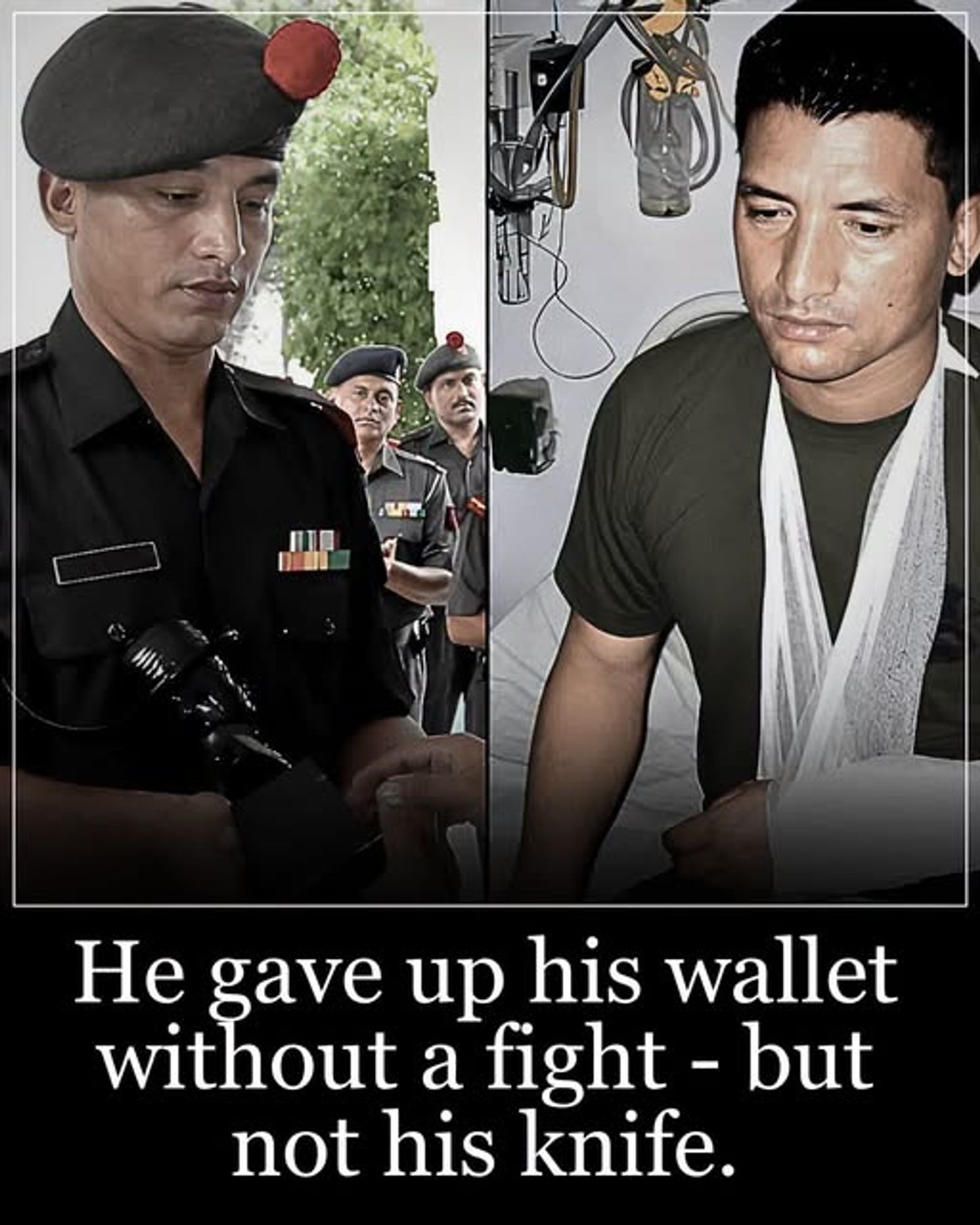
With a boldness that surprised even himself, Shrestha drew his kukri. The moment was chaotic and raw as he charged into the fray, a lone soldier standing against a band of armed men. His heart swelled with a mix of courage and desperation, knowing that inaction was no longer an option. The struggle was fierce; he felt the sharp bite of a wound slice through his hand, pain radiating with each movement. Yet, he pressed on, fueled by an instinct to protect not just the girl but all those who could not muster the strength to fight.
Minutes passed like hours until the chaos subsided, leaving several attackers defeated on the floor of the train car, while others fled into the night. The sense of relief was palpable, a collective exhale from the passengers who had been powerless moments before. When the police arrived at the next station, they found Bishnu, wounded but resolute, a soldier who had risen to the occasion when it mattered most.
Rushed to the hospital, Shrestha received treatment for his injuries, but his bravery had already earned him recognition. The Indian government honored him with two of the nation’s highest civilian bravery awards, a testament to his extraordinary choice in a moment of crisis. When asked about his actions, Shrestha humbly downplayed his heroism, stating, ‘I was acting as a soldier, as a human being who could not sit still while someone was being hurt.’
His story resonates with a quiet but powerful lesson: courage isn’t measured by the magnitude of the threat but by the moment one decides that inaction is no longer acceptable. Most of us will not face armed robbers on a train, yet we will encounter moments that demand a stand. Bishnu Shrestha’s act of bravery reminds us all that sometimes, it only takes one person to make a difference in the lives of many.