The doctor who learned to feel a heartbeat and save lives
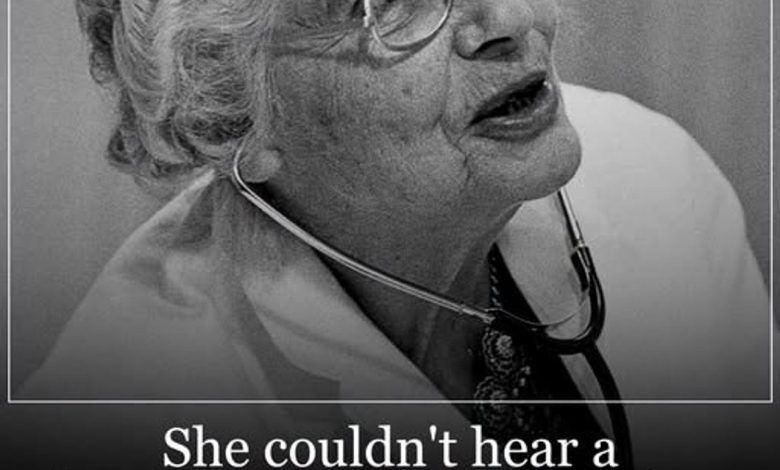
In 1921, a young woman named Helen walked into the office of a Harvard dean with a simple hope: she wanted to become a doctor. Her father taught there, a respected professor known across campus, but that family connection could not open a door Harvard refused to women. It was not her grades. It was not her ambition. It was only her gender.
The dean offered her a compromise that was meant to feel generous and would have discouraged many others: she could attend classes, listen to every lecture, absorb every lesson, but she would never receive a degree. Helen asked why anyone would choose an education under those terms. The dean’s answer was brief and revealing: “That is what we are hoping.” Helen did not flinch. “Well, I shall not be the first to disappoint you,” she told him, and walked out for good.
She found another place to study, one no less isolating. In the lecture hall, she was made to sit apart from the men, barred even from speaking with them. She was already carrying more than the weight of exclusion. Helen was dyslexic at a time when few understood what that meant, and she was steadily losing her hearing. By the time she became a doctor, she was almost completely deaf.
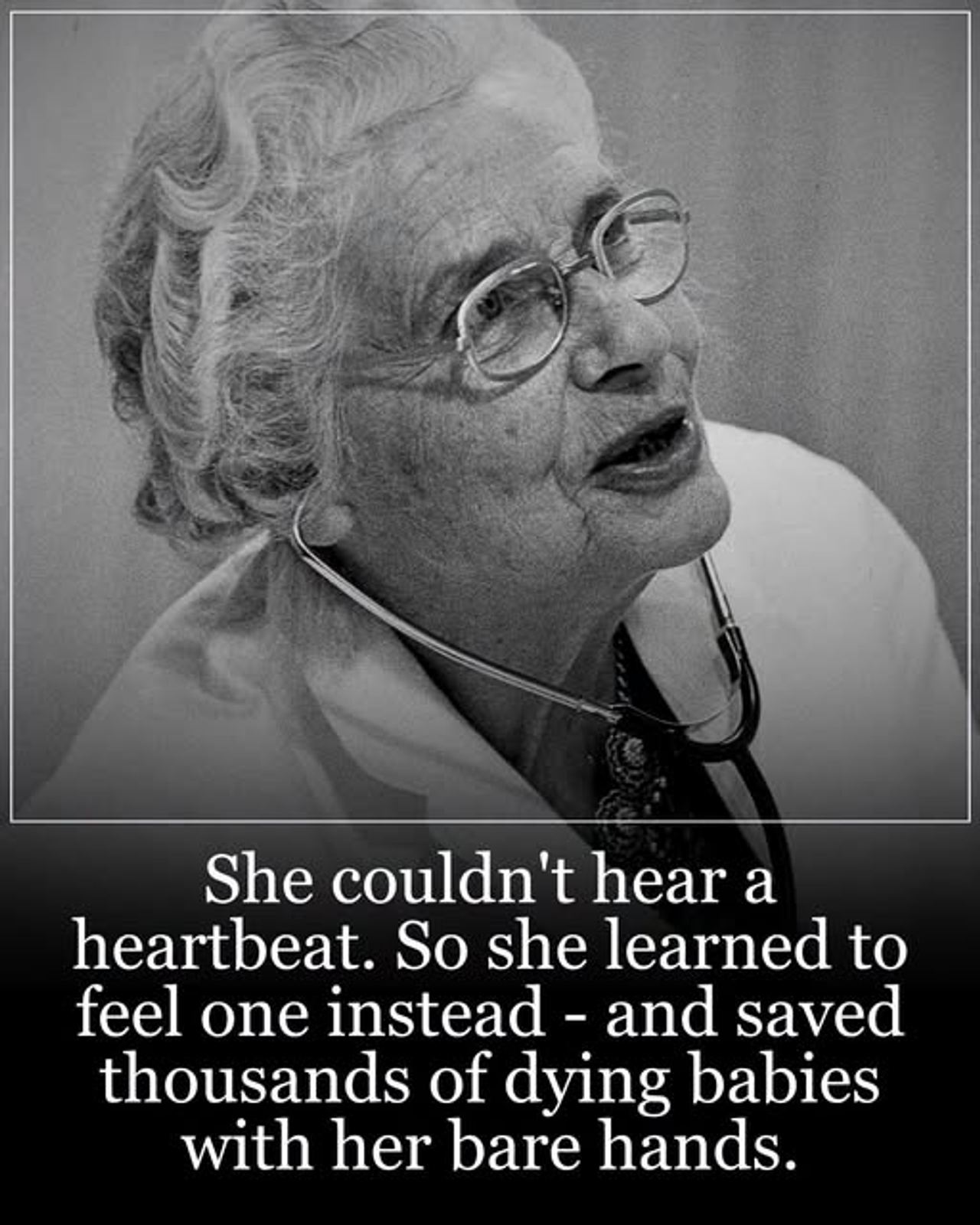
For most physicians, that would have been devastating. The stethoscope, the heartbeat, the faint sounds that guide diagnosis — all of it would have been out of reach. But Helen refused to accept that limitation as the end of her work. She approached it like a problem to solve. If she could not hear a heartbeat, she would learn to feel one. She placed her fingertips against the smallest chests and read rhythm through touch, as if the body itself were speaking in a language she could understand. She used imaging technology to see what her ears could no longer catch. Those who watched her work said she did not simply examine patients; she listened to them with her hands.
That ability led her to Johns Hopkins, where she was drawn into a desperate medical mystery. Babies were being born with a rare defect that turned their skin blue because their bodies could not get enough oxygen. Doctors could name the condition, but they could not fix it. Helen studied hundreds of these infants, looking closely at how blood moved through their hearts. Slowly, she traced the problem to a single flaw in the circulation.
Then she imagined something bold: if blood could not reach the lungs the usual way, what if a surgeon could build a new path? It was a radical idea, and it needed someone willing to trust the mind of a woman who could not hear a heart in the ordinary sense. In 1944, she found a surgeon who was ready to try.
What Helen achieved was more than medical innovation. It was a reminder that insight does not always arrive in the form the world expects. Sometimes it comes through resistance, through adaptation, through hands steady enough to feel what others cannot. And sometimes the person whom the system tries hardest to shut out is the one who opens the door for thousands of lives to follow.
Read more stories
- Jan & Dean’s “Surf City” Brings West Coast Sound to the Top and Launches the Surf Rock Boom in 1963
- The Dark, Haunting 1974 Hit That Became Gordon Lightfoot’s Only No.1 Song in America
- Strange, Familiar, and Beautiful: Families Around the World
- When Ella Langley Sang and Riley Green Simply Listened: Country Music’s Quietest Power, A Lesson in Musical Connection