A Medic’s Unyielding Courage Amidst Chaos in Iraq
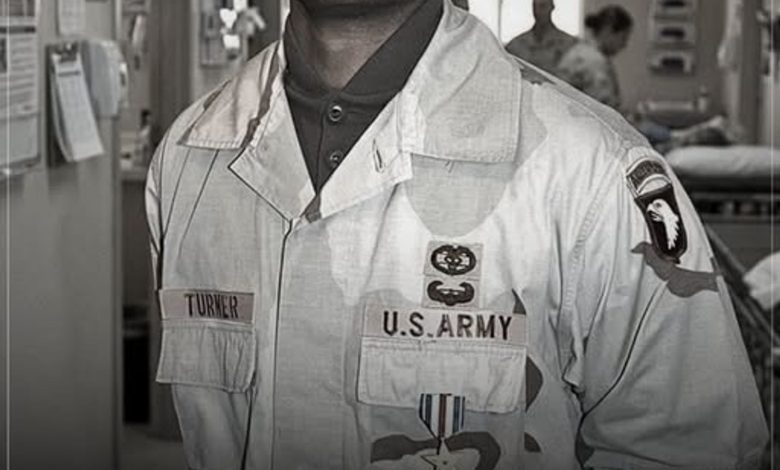
On the morning of April 13, 2003, the sun was just beginning to rise over the Iraqi landscape, casting a warm glow on the makeshift operations post south of Baghdad. For Dwayne Turner, a young Army medic, it was supposed to be another routine supply run. He was busy unloading gear, surrounded by the sounds of military chatter and the distant hum of helicopters. The atmosphere was charged with a mix of anticipation and tension, a feeling that would soon transform into chaos.
Without warning, the serenity shattered as a grenade exploded over the wall, sending a violent shockwave through the air. Gunfire erupted from every direction, creating a cacophony of noise that drowned out the initial blast. The force of the explosion hurled Turner against the side of his vehicle, pain searing through his legs as shrapnel embedded itself deep in his flesh. In that moment, most would have sought safety, waiting for help to arrive. But not Turner. He had been trained to respond — to act.
Through the thick smoke and chaos, something caught his eye: a fellow soldier stumbling, clutching his face in agony, blinded by a serious eye injury. With instinct kicking in, Turner rushed toward him, pulling him to safety and shielding him from the onslaught of bullets. Amidst the din of gunfire and fear, he found the strength to move again. Alongside two other medics, he hastily constructed a triage station out of sheer necessity. The makeshift clinic became a beacon of hope in the middle of a deadly firefight, a testament to their unwavering commitment.
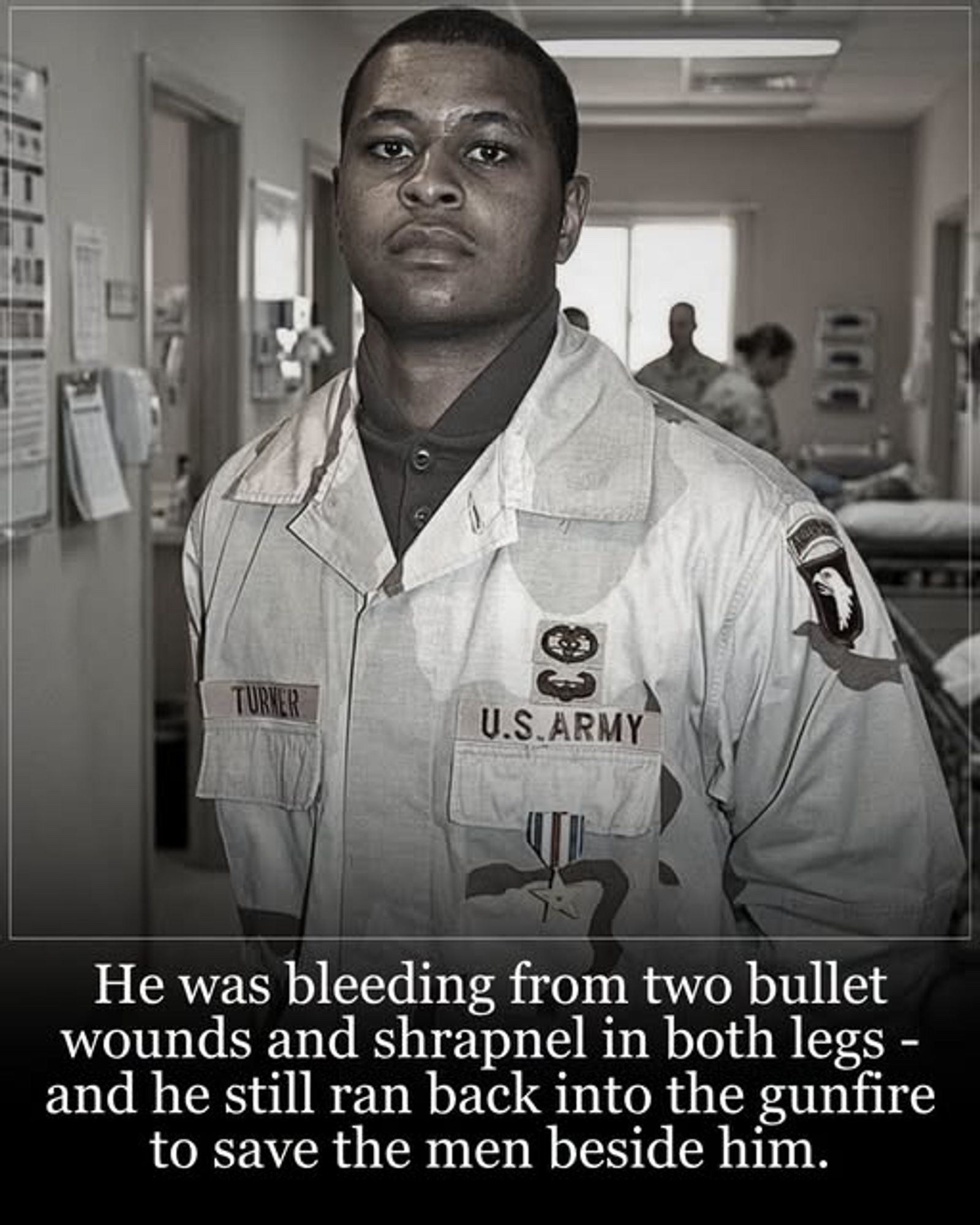
Turner didn’t stop to consider his own injuries. He darted back into the fray, retrieving more wounded soldiers, each time risking his own life to save another. The bullets continued to fly, and it wasn’t long before another shattered his right arm and pierced his left leg. Yet, in the heat of the moment, he dismissed the pain, attributing the impacts to rocks kicked up by nearby fire. His mind was singularly focused on the task at hand — saving lives.
It was only when a fellow medic called out to him, gesturing at the blood seeping through his uniform, that Turner acknowledged the severity of his own wounds. Still, he pressed on, treating soldier after soldier with unwavering determination, until the blood loss finally forced him to collapse against a wall, his body unable to sustain any more.
Turner survived that harrowing day, and so did many of the men he treated. The Army would later acknowledge that at least two of them might not have made it without his intervention. When he received the Silver Star for his bravery, he deflected the title of “hero,” insisting that he was merely doing his job. In his mind, there was no question; no one else was going to step up, so he did what was necessary.
In the quiet aftermath of the chaos, the true essence of courage shone through. Turner’s actions exemplified an extraordinary commitment to duty, underscored by the simple truth that some people are willing to risk everything for the lives of others. His story is a poignant reminder of the selflessness that exists even in the darkest moments, illuminating what it truly means to care for others above oneself.