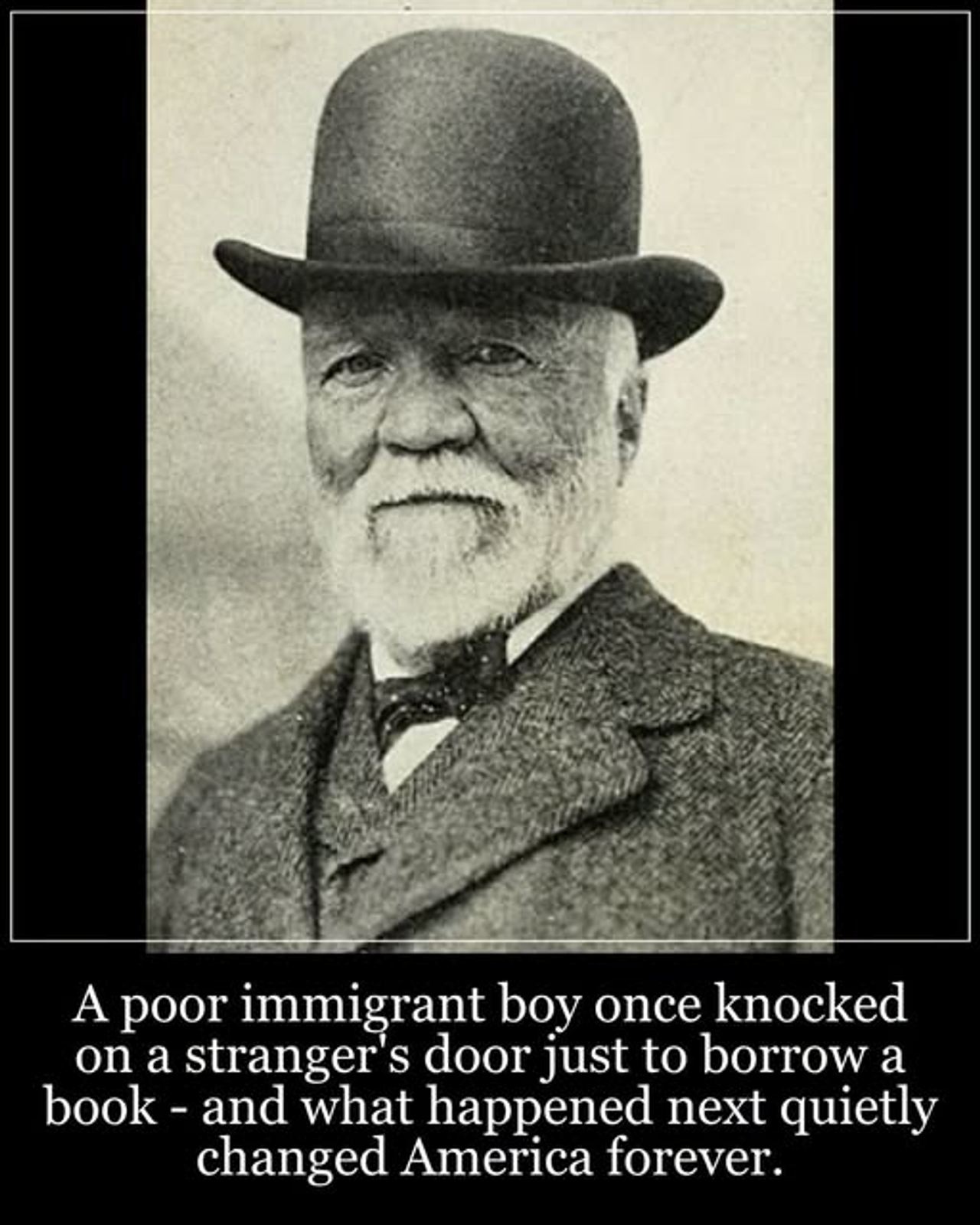
“In the autumn of 1848, a Scottish family stepped off a ship in Pennsy
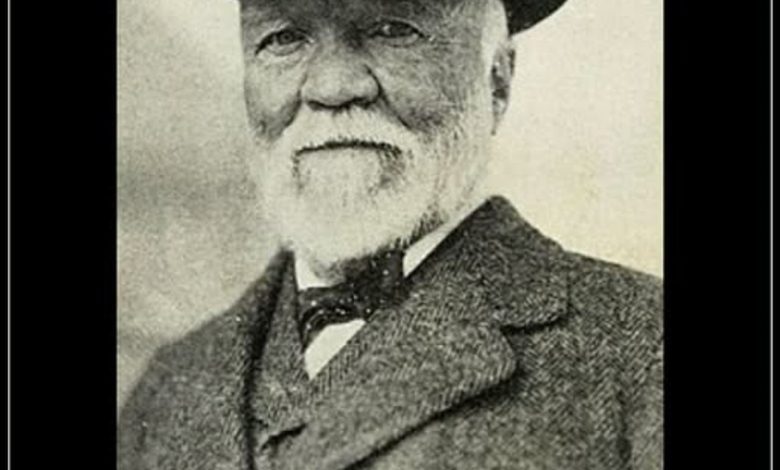
“In the autumn of 1848, a Scottish family stepped off a ship in Pennsylvania with almost nothing. They had borrowed the money for the crossing itself. Among them was a thin, quick-eyed twelve-year-old named Andrew, who within a year was working twelve-hour days in a cotton mill just to help keep the family fed. By his teens, Andrew had traded the mill for a slightly better job: running telegrams through the streets of Allegheny City for a few dollars a week. It wasn’t much. But it was steady, and it left his evenings free — free, that is, for the one thing he wanted more than anything else. Books. There was a retired colonel in town, a man named James Anderson, who had done something almost nobody did in that era: he opened his private library to working boys, free of charge, every Saturday. Four hundred books, sitting in his own home, available to any boy willing to climb the stairs and ask. For a kid with no money and no schooling to speak of, it was the closest thing to a miracle he’d ever been offered. Andrew went nearly every week. He read history. He read biography. He read essays by men who’d built things — railroads, businesses, ideas — and something in him began to stir. Then, one Saturday, everything nearly fell apart. The library’s directors decided that boys who weren’t formally apprenticed — boys like Andrew, who ran messages instead of working with their hands — would now have to pay a fee just to borrow a book. For a family that had gone into debt to reach America, even a small fee was a wall. Most seventeen-year-olds would have simply stopped going. Andrew didn’t. Instead, he sat down and wrote a letter — not a complaint, but an argument. He sent it to the Pittsburgh Dispatch, signed only “”Working Boy,”” insisting that a library meant to serve working boys couldn’t turn its back on boys simply because their labor happened to be delivering messages instead of swinging a hammer. It was, in its own small way, a plea for fairness. The newspaper printed it. Colonel Anderson read it. And not long after, the rule was quietly reversed. That single act — a poor teenager finding his voice to defend something he loved — turned out to be one of the most consequential letters of the 19th century, though nobody could have known it at the time. The boy’s name, of course, was Andrew Carnegie. He went on to build one of the largest industrial empires in American history — railroads, iron, oil, and finally steel. In 1901, he sold Carnegie Steel to J.P. Morg