The Night Johnny Cash Went to Jail in Starkville—and Later Sang About It at San Quentin
A small arrest that became part of the legend
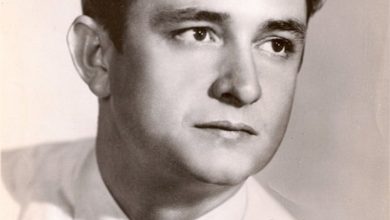
On May 11, 1965, Johnny Cash was arrested in Starkville, Mississippi, after appearing at Mississippi State University. In the early hours of the morning, police found him intoxicated and picking flowers on private property, and he spent the night in jail.
By the standards of rock-and-roll scandal, it was a modest episode—more oddball than outlaw. But Cash had a gift for turning stray moments, mistakes, and bruises into songs. Instead of hiding the arrest as an embarrassing footnote, he folded it into the larger Johnny Cash story: a life lived close to trouble, and close to the people who knew what confinement felt like.
Why the story suited Johnny Cash
Cash’s public image had long been tied to prison songs, hard luck ballads, and a voice that seemed to carry equal measures of authority and sorrow. Even before this arrest, he had become deeply associated with incarcerated listeners through songs like “Folsom Prison Blues,” which helped shape the moral and emotional terrain he inhabited as an artist.
The Starkville arrest fit that landscape in a peculiar way. It did not make Cash a hardened inmate, and he never claimed that it did. What it gave him was a vivid memory: the shock of the arrest, the absurdity of the charge, and the unmistakable sound and feeling of a cell door closing behind him. For a songwriter, that was enough to preserve.
Cash never had to pretend a single night in jail was the same as a prison sentence to understand why the memory stayed with him.
From local embarrassment to song
Cash transformed the incident into “Starkville City Jail,” a talking blues-style performance piece that drew humor from the situation without losing sight of the humiliation underneath it. The song works because it leans into the ridiculous details—the flowers, the drunkenness, the bad luck—while also preserving the unease of being locked up, even briefly.
That balance was central to Cash at his best. He could be funny without turning cruel, self-deprecating without becoming trivial, and plainspoken without losing drama. In “Starkville City Jail,” the joke is partly on him, but the setting is still a jail. The laughter never fully cancels the loneliness of the place.
The prison concerts changed the meaning of the material
By the time Cash entered San Quentin State Prison in February 1969, his prison performances had become some of the most significant shows of his career. He was not simply borrowing prison imagery for effect. He was taking his music directly to incarcerated audiences and treating them as listeners who mattered.
That context changed songs like “Starkville City Jail.” What had begun as a shaggy anecdote about a night in Mississippi became something more charged inside an actual prison. In front of men who could not go home after the applause ended, the song’s comic edge remained, but its emotional frame shifted. Cash was no longer just retelling an embarrassing episode—he was acknowledging, however imperfectly, the reality of confinement.
Why San Quentin was different
The power of the San Quentin performance lay in contrast. Cash was one of the biggest stars in country music, a national figure with a carefully cultivated aura of defiance, yet here he was singing about his own brief brush with jail inside one of America’s most famous prisons. He stood as both entertainer and witness: someone free to leave, but willing to step inside and address the men who were not.
That did not erase the gulf between a celebrity’s overnight arrest and the long, punishing terms faced by inmates. If anything, the moment matters because Cash did not need to flatten that difference. The gesture was meaningful precisely because he remembered his own fleeting fear without pretending it gave him full claim to theirs.
The lasting appeal of “Starkville City Jail”
“Starkville City Jail” endures because it captures something essential about Johnny Cash. It contains the humor, the rough edges, the instinct for mythmaking, and the unusual sympathy that made him more than a hitmaker in black. He could turn an awkward, slightly drunken arrest for picking flowers into a song that was entertaining on its face and quietly revealing underneath.
Performed at San Quentin, the song became more than a curiosity from Cash’s biography. It became an example of how he used personal mishap to build connection. One night in jail did not make him an expert on imprisonment. But he remembered enough of the feeling to sing the story back to men who knew that sound of the closing door far better than he ever would.
Quick Facts
- Person: Johnny Cash
- Arrest date: May 11, 1965
- Location of arrest: Starkville, Mississippi
- Circumstances: Arrested after a performance at Mississippi State University; found intoxicated and picking flowers on private property
- Song: “Starkville City Jail”
- Notable later performance: Performed at San Quentin State Prison in February 1969
Image credits: Sun Records / Wikimedia Commons / Public domain; Sun Records / Wikimedia Commons / Public domain.