A mother confessed to murder. A jury in Brazil still acquitted her

For a year, Erica sat in a jail cell in Belo Horizonte, Brazil, carrying a confession that seemed, on its face, impossible to defend. She admitted to killing Everton, the man she lived with. She admitted to the poison, the fire, and everything that came after. When police began to piece together what had happened, she did not deny a thing.
What she denied was something harder to pin down: that her actions could be understood without the terror that came before them. According to Erica, the chain of events began when she noticed messages Everton had sent to her 11-year-old daughter, messages that left her uneasy. Then came the moment that changed everything. She said she heard her daughter scream, ran toward the sound, and found Everton in the girl’s room, on top of her.
What happened next split the story into two very different versions. By Erica’s account, and by what prosecutors later described in court, she got Everton into another room and gave him a drink laced with Klonopin, a sedative that left him unable to resist. After that, she attacked him. With the help of a teenager who had heard the disturbance, she moved his body to an abandoned lot on the edge of the city. There, she mutilated the body and set it on fire.
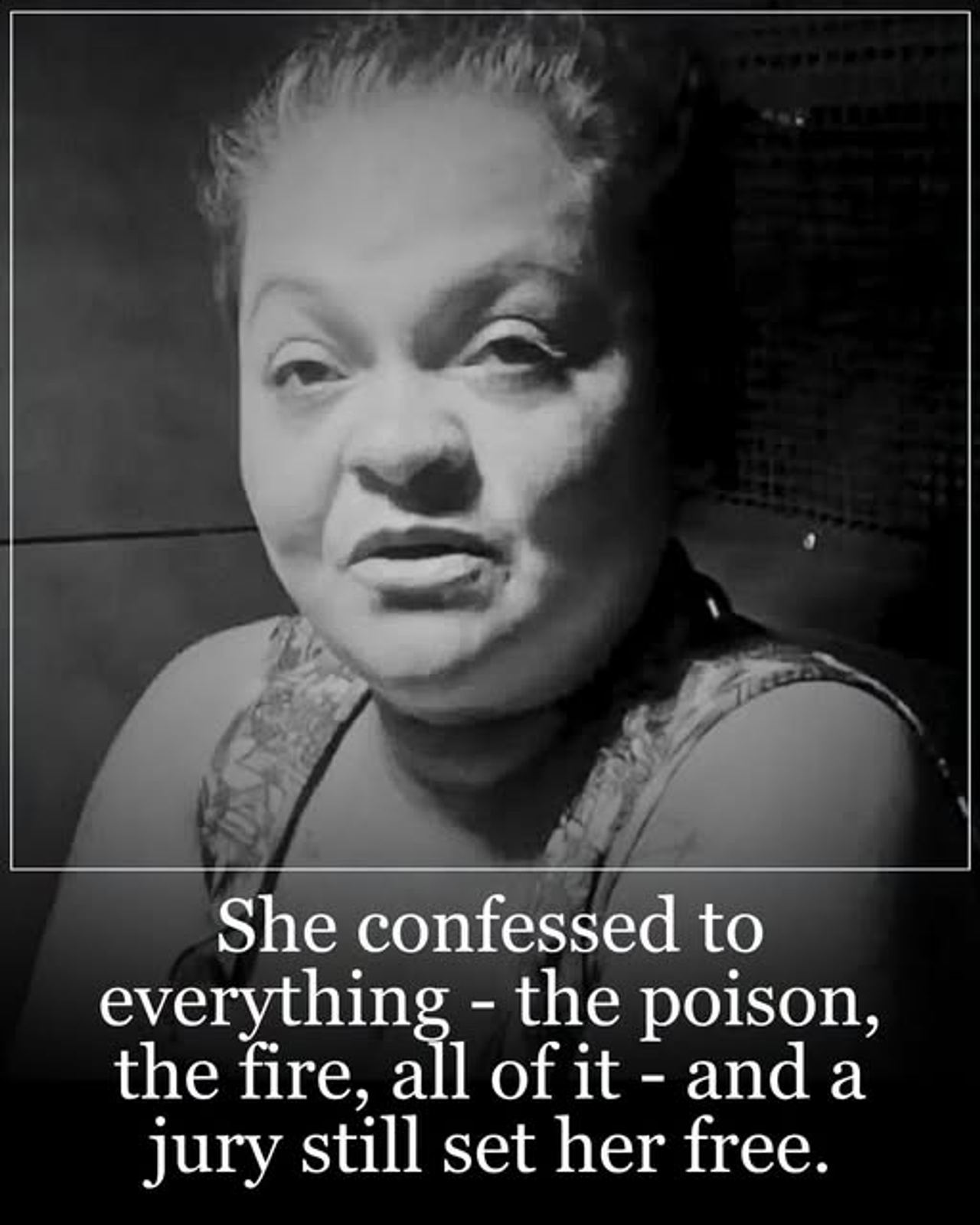
When the case reached the courtroom, prosecutors argued that the sequence itself proved intent. To them, this was not a sudden act of panic, but a deliberate series of steps: sedation, transport, mutilation. They charged Erica with aggravated homicide and destroying a corpse. Their case rested on the idea that whatever had happened in that room, the violence that followed had crossed a legal line that could not be forgiven.
Her defense did not challenge the order of events. Instead, it tried to bring the jury back to the beginning: to the mother, the daughter, and the moment Erica believed she had found a child in danger. They argued that everything that followed grew out of that unbearable discovery. The question, in the end, was not whether the act happened. It was what it meant under the law.
The trial lasted only one day. After deliberation, the jury returned an acquittal on every charge. After 365 days in custody, Erica was free.
It was the kind of verdict that leaves no one untouched, because it asks a court to weigh facts against fear, violence against protection, and the law against the raw instinct to defend a child. Whatever anyone believes about that night, the story of Erica is a reminder that justice is often forced to sit in the uneasy space between what is done and why it was done.