A young woman’s fight for justice after unimaginable horror
In the small farming village of Kocho, nestled in the northern hills of Iraq, life revolved around the rhythms of the land and the enduring spirit of the Yazidi community. With around 1,700 residents, the village was a close-knit enclave that had weathered centuries of persecution. However, in August 2014, a storm of violence descended upon Kocho, shaking its foundations to the core. Armed fighters encircled the village, presenting an ultimatum that would change the lives of its residents forever: convert to their ideology or face death.
For twelve agonizing days, the elders of Kocho desperately sought a diplomatic resolution, their hopes dwindling with each passing hour as they negotiated with their captors. The air was thick with tension and fear, a suffocating blanket that enveloped the villagers, who held their breath, praying for a miracle. But on the twelfth day, that breath was stolen away. The men and boys were forced away from the women, lined up like cattle, as their hearts shattered with the recognition of what was to come. Nadia Murad, a mere 21 years old, stood frozen as she watched six of her brothers taken, alongside her mother, who would never return.
What followed was a descent into a hell that Nadia could never have imagined. The younger women and girls were transported like mere objects, stripped of their humanity and dignity. For Nadia, the days turned into a blur of terror as she was passed between captors, enduring unspeakable violence that was not just physical but deeply psychological. Each attempt to escape was met with brutal punishment, yet the thought of accepting her fate was unfathomable. With each passing moment, her hope flickered like a candle in a storm.
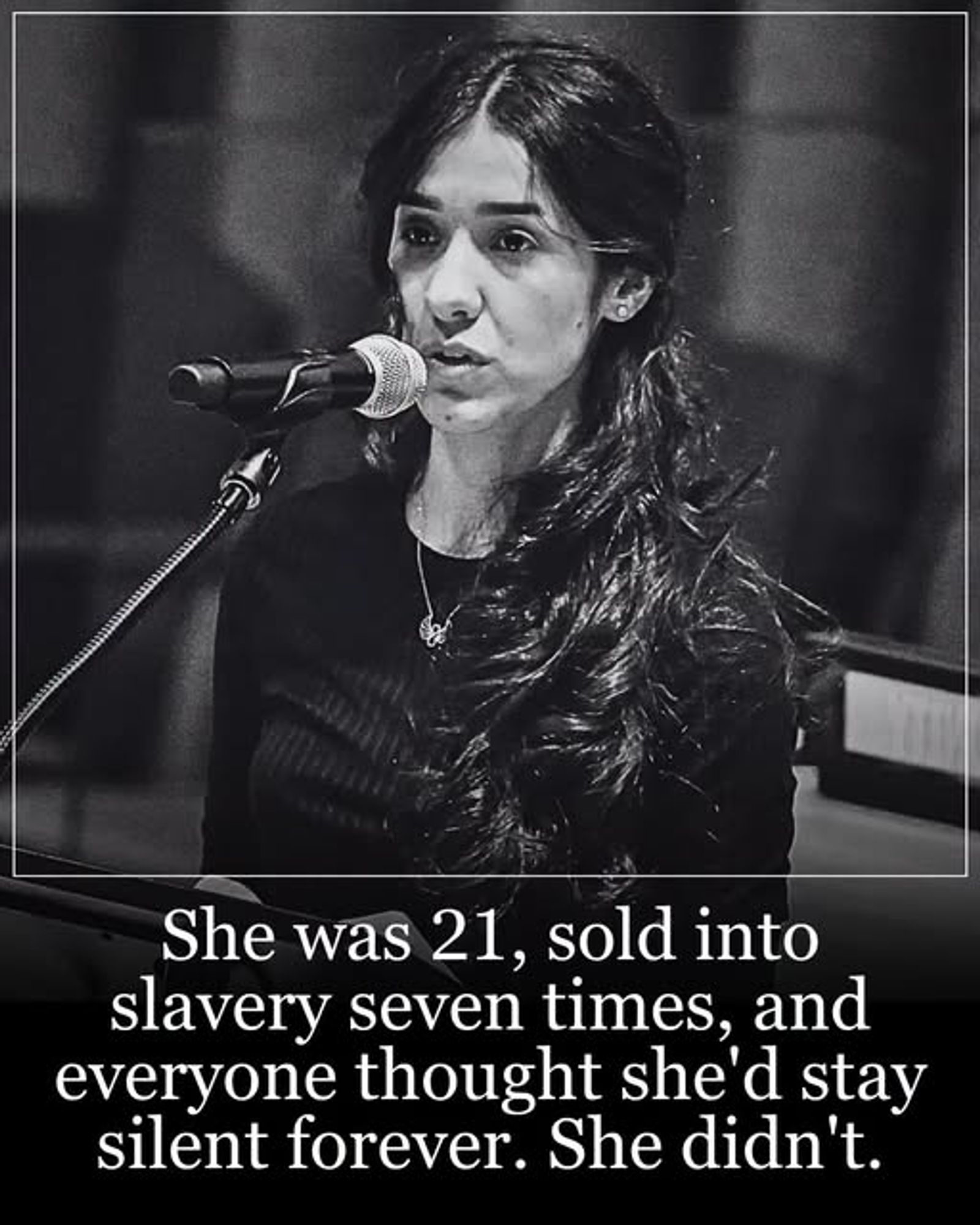
In November 2014, fortune struck in the form of an unlocked door. It was an opening that could lead to salvation or doom, but Nadia acted instinctively, fleeing into the night with nothing but the fierce determination to reclaim her life. She was taken in by a Muslim family, who understood the lethal risk of harboring her, yet their humanity shone brighter than their fear. They became her lifeline, aiding her escape through a network of brave souls who risked everything to see her free.
Eventually finding refuge in a camp before making her way to Germany, Nadia stood at the crossroads of survival and anonymity. Most might have chosen to fade quietly into an ordinary existence after such trauma, but Nadia felt a different calling. In December 2015, just over a year after her escape, she stepped into the hallowed halls of the United Nations Security Council. Standing before the world’s leaders, she bore her soul, speaking in Arabic and recounting her harrowing experiences without flinching.
Nadia gave voice to the voiceless, detailing the plight of countless girls who still faced a fate similar to her own. Her testimony was a piercing reminder of the atrocities endured by women like her, and as she finished speaking, the chamber fell into a profound silence. That silence, however, spoke volumes, igniting conversations around the world.
In the face of unimaginable horror, Nadia Murad chose resilience and advocacy, transforming her pain into a rallying cry for justice. Through her courage, she has not only reclaimed her identity but has also inspired countless others to stand firm against oppression, shining a light on the darkness that still looms over many lives. Her journey is a testament to the power of a single voice, reminding us that even amid despair, hope can rise from the ashes.