Buddy Holly wore thick black glasses and held a sunburst Fender Stratocaster, proving that a skinny kid from Texas could reshape American music without looking like a movie star.
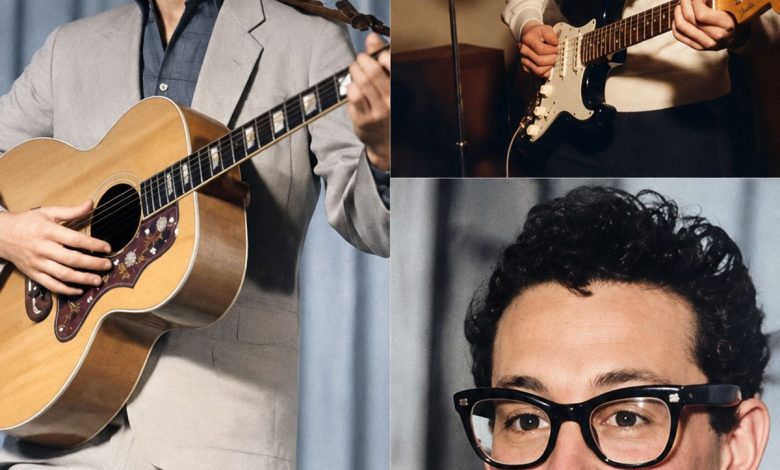
Buddy Holly wore thick black glasses and held a sunburst Fender Stratocaster, proving that a skinny kid from Texas could reshape American music without looking like a movie star. Alongside The Crickets, he built the two guitars, bass, and drums lineup that defined modern rock. In eighteen intense months between 1957 and early 1959, he pioneered overdubbing, pushed studio reverb to its limits, and wrote songs that set the exact blueprint for The Beatles and The Rolling Stones. Two nights before the end, a seventeen-year-old Bob Dylan stood near the stage at the Duluth Armory, locking eyes with the young man carrying the future of the genre. The decision to charter a Beechcraft Bonanza out of Clear Lake, Iowa on February 3, 1959, came from nothing more glamorous than exhaustion. The tour bus heater had frozen, clothes were cold and damp, and Holly simply wanted warm laundry and a bed before the next stop. The plane crashed into a snowy cornfield minutes after takeoff, taking his life at twenty-two alongside Ritchie Valens and J.P. Richardson. In Puerto Rico, his pregnant bride, Maria Elena, learned of the loss through a television broadcast, suffering a miscarriage in the quiet shock that followed. Months later, searchers found Holly’s heavy horn-rimmed frames resting beneath the melting Iowa snow. His eighteen months in the studio changed the grammar of rock bands forever, and the road from that West Texas garage to the winter fields of Clear Lake remains one of music history’s most defining journeys.
IN EIGHTEEN SHORT MONTHS, A TEXAS KID WITH HEAVY GLASSES REWROTE THE DNA OF ROCK AND ROLL BEFORE DISAPPEARING INTO AN IOWA CORNFIELD.
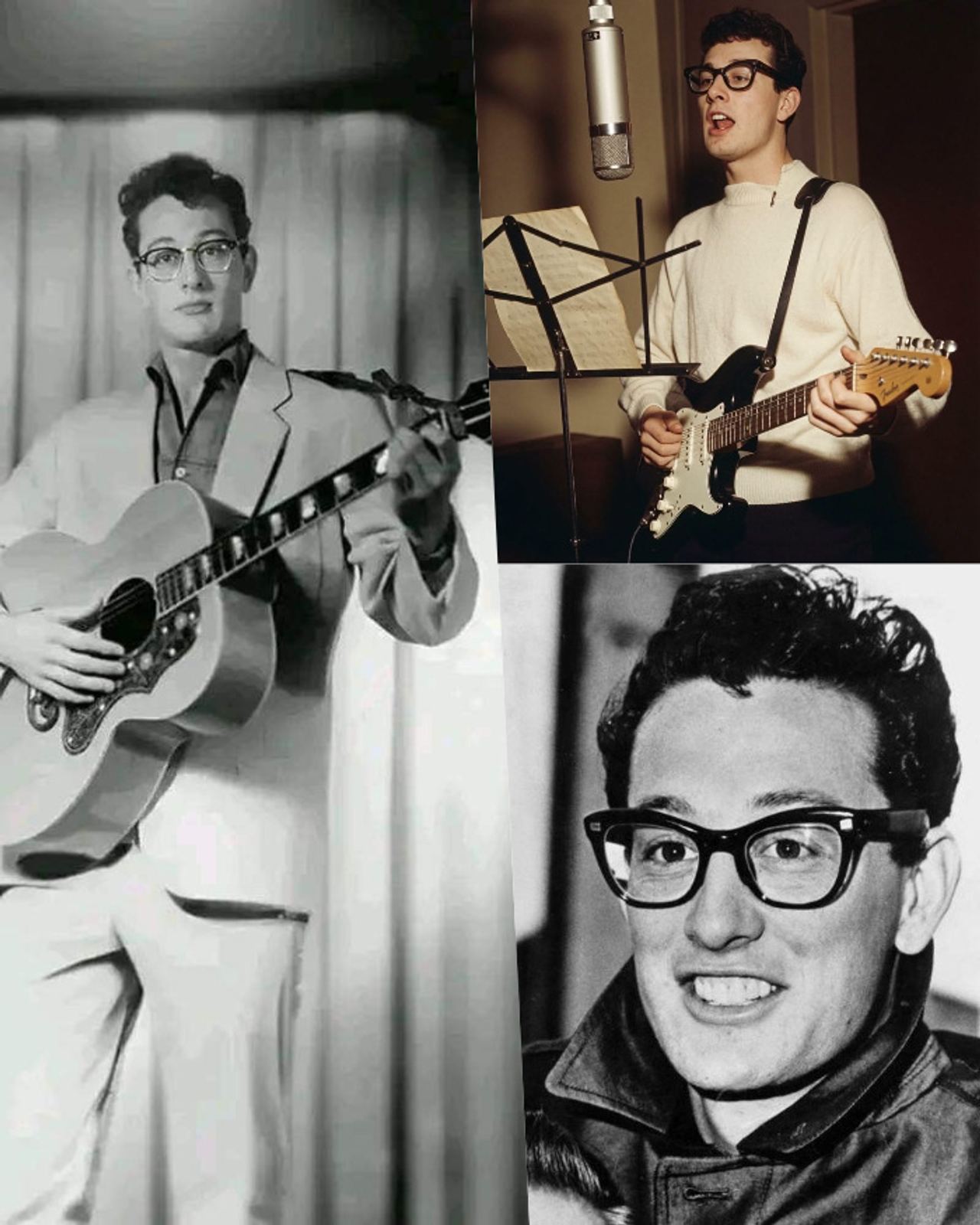
Charles Hardin Holley stood barely over six feet tall, weighed under a hundred and fifty pounds, and peered at the world through uncommonly poor vision. In the middle of the 1950s, pop performers looked like movie stars with slick pompadours and smoldering grins. Buddy Holly stepped under the harsh stage lights of Lubbock, Texas, wearing thick, angular horn-rimmed frames and holding a sunburst Fender Stratocaster. He looked like a neighborhood clerk, but the sound that poured out of his hands was fierce, precise, and entirely new.
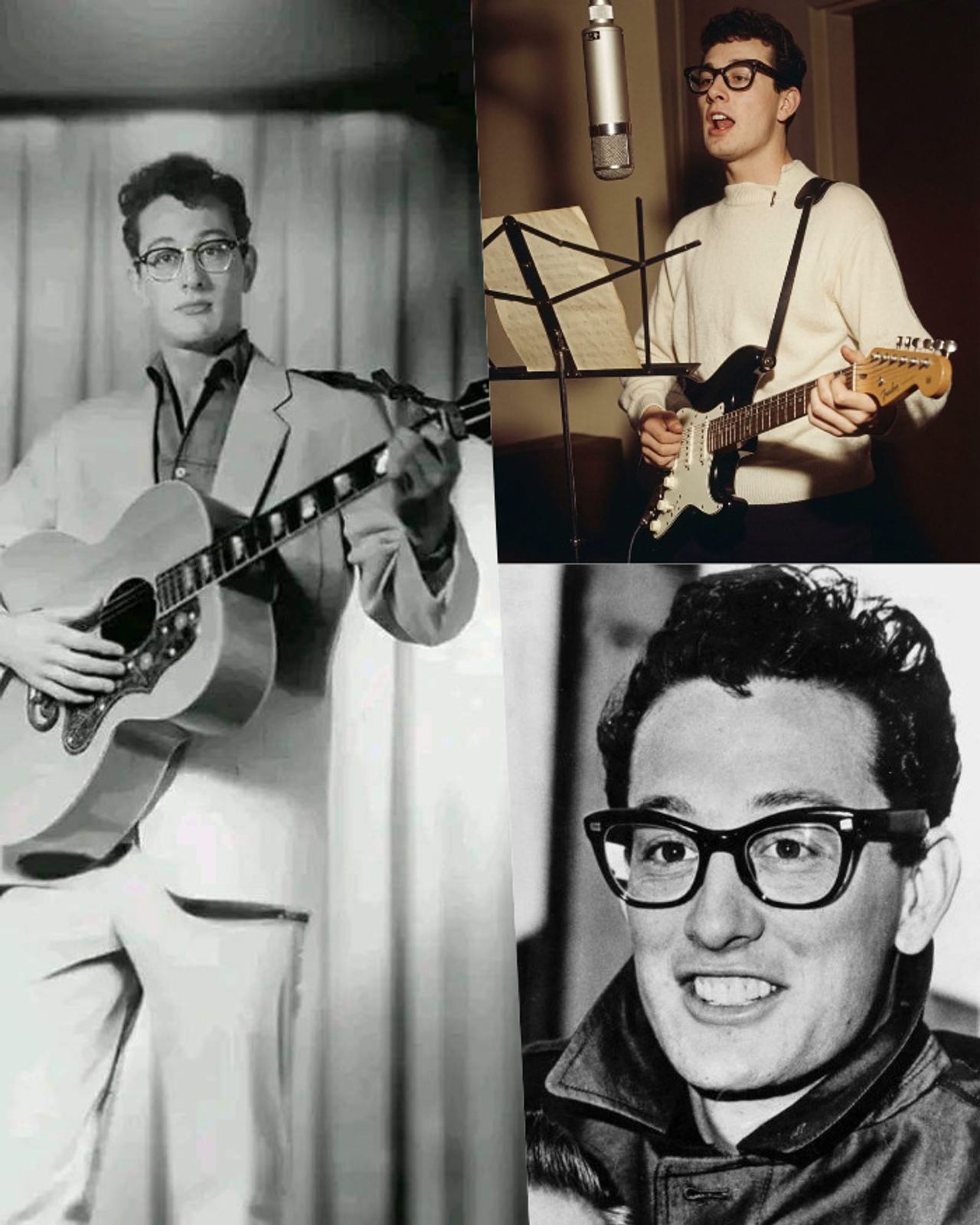
Alongside The Crickets, Holly established the two guitars, bass, and drum configuration that became the permanent template for rock bands everywhere. Between his breakout in the spring of 1957 and the winter of 1959, he took control of the recording studio like few artists before him. He pushed early overdubbing, layered guitars, experimented with echo chambers, and wrote hook-driven melodies that later guided The Beatles, The Rolling Stones, and countless British Invasion groups.
Two nights before the end, on January 31, 1959, the Winter Dance Party tour rolled through the Duluth National Guard Armory in Minnesota. In the front row stood a seventeen-year-old Bob Dylan, mesmerized by Holly’s presence and the raw drive of his rhythm playing. Holly’s gaze crossed the stage, briefly catching the teenager’s eye. Neither could know that the grueling winter tour was already falling apart under frozen Midwestern skies.
The tour was an administrative nightmare. The converted school bus heaters broke down repeatedly in subzero temperatures, leaving musicians freezing in their seats with damp clothing and numb fingers. When the caravan reached the Surf Ballroom in Clear Lake, Iowa, on February 2, exhaustion took over. Holly was determined to get a clean shirt, warm laundry, and a few hours of real sleep in a proper bed before the next tour stop in Moorhead, Minnesota.
He chartered a three-passenger Beechcraft Bonanza out of the nearby Mason City airport. In the final hours, tour companions Ritchie Valens and J.P. Richardson, known to fans as The Big Bopper, secured the other two seats. The aircraft took off into blinding winter weather just after midnight on February 3, 1959, and crashed minutes later into a snowy cornfield, ending four lives and freezing rock history in place.
Holly was only twenty-two years old. Back in Puerto Rico, his pregnant bride, María Elena, learned of the accident from a television news bulletin, enduring the heartbreak of losing her husband and suffering a miscarriage in the quiet trauma that followed.
When investigators combed the frozen debris field, the coroner logged Holly’s wallet, two silver cufflinks, and a suitcase, but his signature glasses were nowhere to be found. It was not until April, when the thick snow finally melted across the farm, that the landowner uncovered the heavy frames resting in the dirt alongside Richardson’s watch. Turned over to local authorities, the envelope marked with Holly’s legal name was filed away in a courthouse basement and forgotten for twenty-one years.
In 1980, the recovered frames finally resurfaced and were returned to his widow, before finding a permanent home at the Buddy Holly Center in Lubbock. Scratched by the Midwestern earth, they sit preserved behind glass—a quiet, everyday artifact from a skinny kid whose brief time in the studio gave modern rock music its lasting shape.
Video can’t be loaded because JavaScript is disabled: That’ll Be the Day
Read more stories
- My Husband and I Took Our Daughter on the Trip She Had Dreamed Of – On Our Last Day, the Manager Stopped Me and Whispered, ‘There’s One Thing About the Trip That Your Husband Never Told You’
- My Daughter Wasn’t Paid for Her Summer Job at the Local Ice Cream Truck – How She Handled It Made Me Realize I’d Raised Her Right
- Lemon Cream Scones
- My Husband Won ‘Parent of the Year’ for Raising Our 6 Kids While I Sat Alone in the Corner – Then Our Youngest Daughter Took the Mic and Said, ‘There’s One Little Detail’