Chuck Berry Took a Country Song to a Chicago Blues Label — and Opened a New Road for Rock & Roll


A young musician with more than one sound in his head
In 1955, Chuck Berry was not yet the architect of a new American style. He was a working musician from St. Louis, playing local clubs and building a sound from pieces that did not always seem to belong together. Blues and rhythm and blues were central to his playing, but so was country music, with its storytelling, steady pulse, and twangy directness.
That blend mattered. Berry was not simply copying the dominant black popular music of the moment, nor was he trying to become a straight country singer. He was listening across lines that the music business still treated as rigid. What he carried with him was a feel for jump, blues phrasing, and dance rhythm, but also a sense that country songs could be reshaped for a broader, louder, more driving kind of performance.
The Chicago trip that became a turning point
The breakthrough story begins with a trip to Chicago, where Berry went to see Muddy Waters perform. Waters was already a towering figure in postwar electric blues, the kind of artist whose presence alone could make a young musician rethink his ambitions. Berry did more than watch the show: he asked a practical question about how to reach a record company.
Waters pointed him to Leonard Chess, the force behind Chess Records. It was the sort of advice that sounds simple in retrospect and enormous in the moment. Berry took it seriously and made the connection. In that brief chain — a club performance, a conversation, a recommendation — one era of American music handed something to the next.
Berry went looking for a way in through the blues world, but the song that opened the door was not the one a Chicago blues label would have been expected to want.
Why the country song stood out
When Berry played material for Leonard Chess, the song that reportedly caught Chess’s attention was not a straight blues number. It was a country-influenced song, one that would become known as “Maybellene,” adapted from the traditional country tune “Ida Red.” That detail remains one of the great pivots in popular music: a black musician bringing a country-rooted idea into a black-owned Chicago label better known for electric blues and rhythm and blues.
What Leonard Chess heard was not country in a pure form. It was velocity, wit, and crossover potential. Berry’s approach turned the tune into something tauter and more modern, with the beat pushed forward and the guitar made central. The result was not a novelty and not a compromise. It was a transformation — country material recast with the attack and energy of rhythm and blues.
Chess Records and the sound of acceleration
Chess Records was an unlikely but crucial home for the experiment. The label had built its name on the electrified Chicago blues, music grounded in grit, amplification, and urban urgency. Berry’s song fit that atmosphere not because it followed the house style exactly, but because it translated its force into a different frame. The pulse was sharper, the story more streamlined, and the guitar less ornamental than commanding.
That recording helped define a sound listeners would soon recognize as foundational rock and roll. Berry’s guitar lines were crisp and propulsive. His vocal delivery had humor, momentum, and a conversational swing. The narrative felt distinctly American — cars, motion, pursuit, youthful desire — while the arrangement fused regional traditions that the industry had long sorted into separate bins.
A bridge across musical boundaries
Part of what made Berry’s early work so consequential was its ability to move between audiences at a time when radio formats and record marketing often reinforced racial and stylistic divisions. He understood the drama of country songs and the kinetic charge of rhythm and blues, and he found a way to place both inside compact records built for excitement.
That synthesis would become one of rock and roll’s central languages. Berry’s songs did not erase the sources they drew from; they made those sources collide in public. The guitar riffs, quick storytelling, and dance-floor momentum that followed in his wake would influence generations of performers. The story of that first Chicago meeting matters because it shows how a genre can emerge not from purity, but from bold combination.
What happened next echoes through music history
Looking back, the moment has the clean shape of legend: a young musician seeks out a hero, gets pointed to the right office, and arrives with exactly the unexpected song needed to change his life. But the enduring power of the story lies in its musical lesson. Berry succeeded not by narrowing himself to fit a category, but by sharpening the mixture that made him distinctive.
That is why this episode still feels larger than a career anecdote. A country-based tune delivered to a Chicago blues label became evidence that the future of popular music would be hybrid, electric, and mobile. Berry did not merely get a foot in the door. He helped redraw the room.
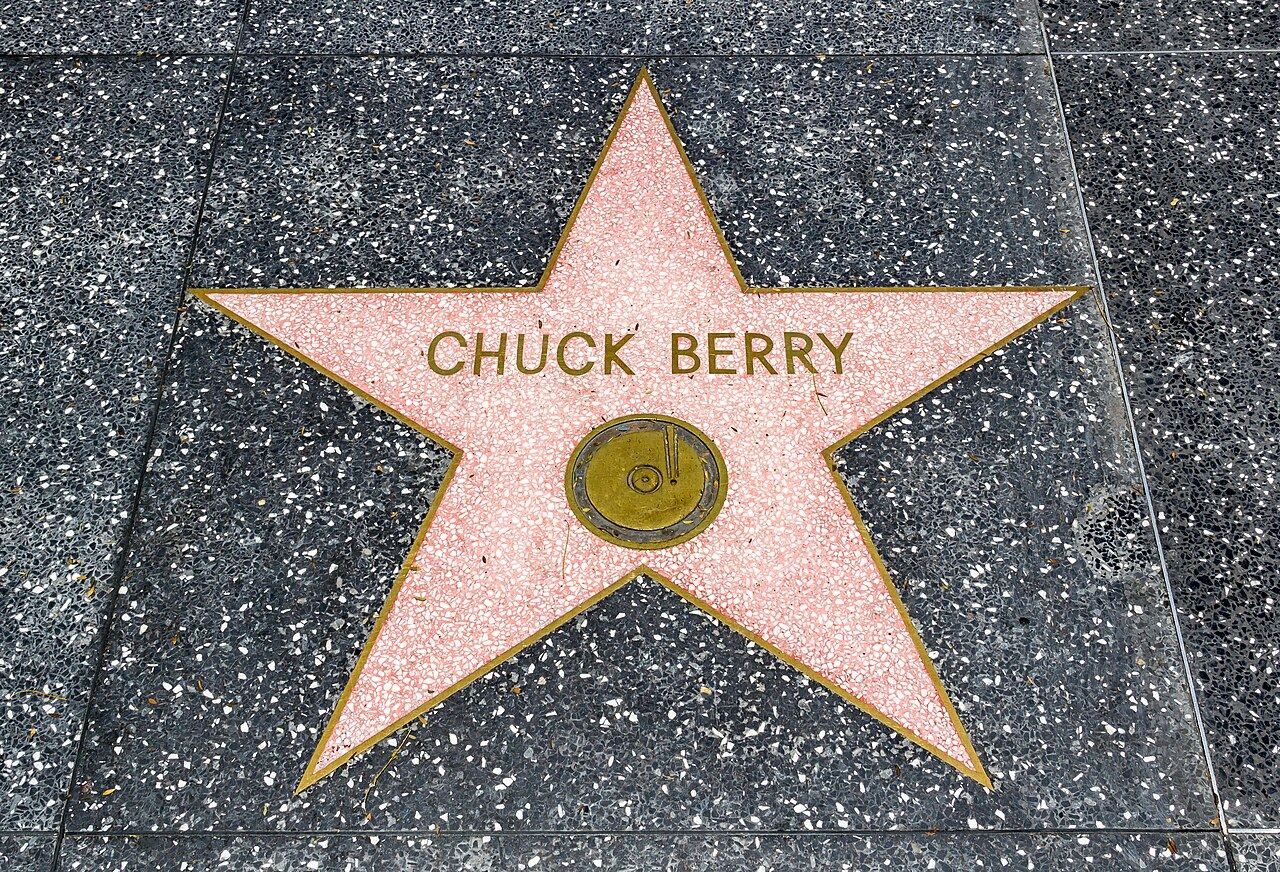
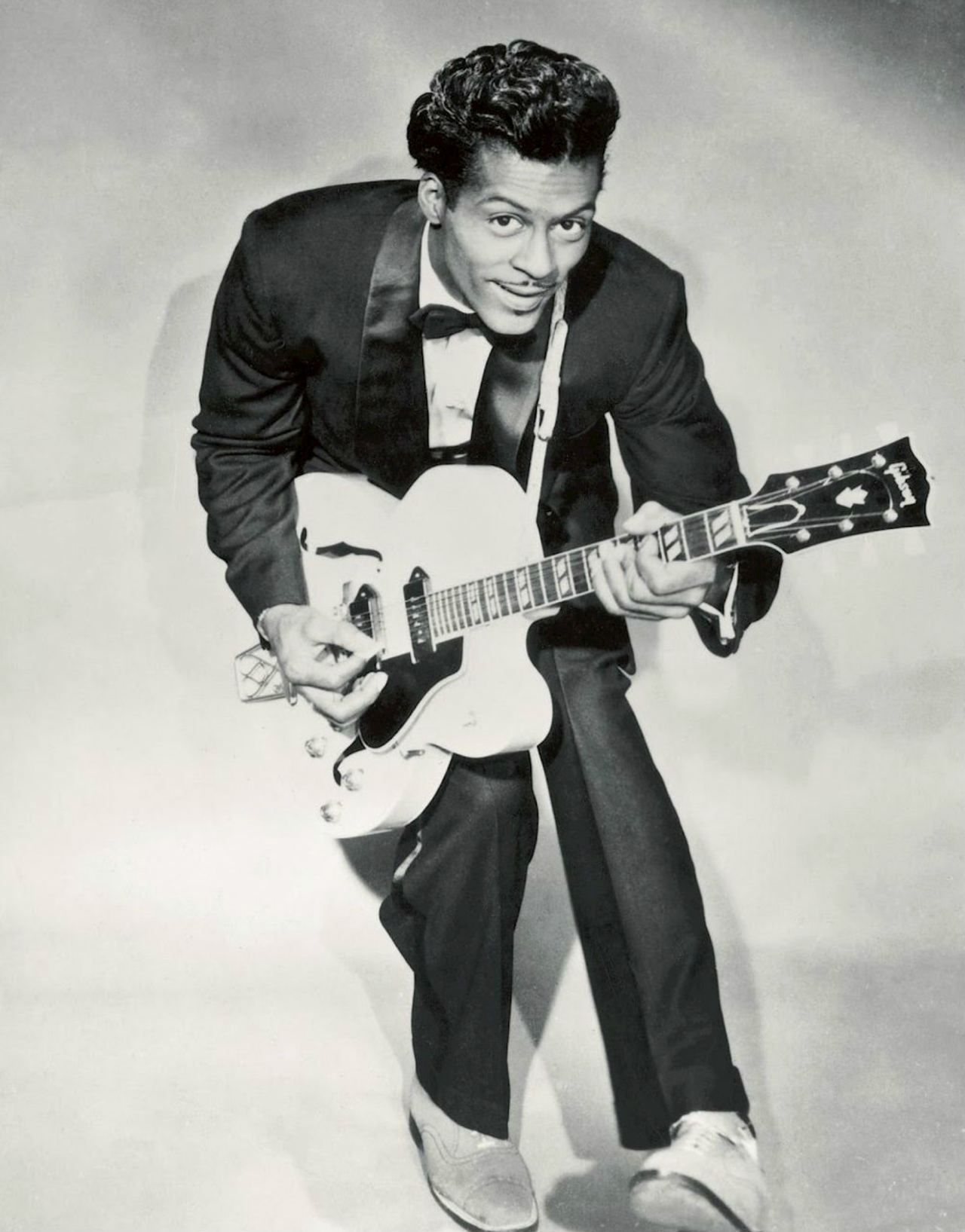
Quick Facts
- Artist: Chuck Berry
- Key city: Chicago
- Label: Chess Records
- Blues connection: Muddy Waters directed Berry to Leonard Chess
- Breakthrough song: “Maybellene,” adapted from “Ida Red”
- Historical significance: A crucial early example of country and rhythm-and-blues elements merging into rock and roll
Image credits: Håkan Henriksson (Narking) / Wikimedia Commons / CC BY 3.0; Dietmar Rabich / Wikimedia Commons / CC BY-SA 4.0; Pickwick Records / Wikimedia Commons / Public domain.