How Stevie Nicks Turned a Rejected Fleetwood Mac Song Into Lindsey Buckingham’s Most Public Reckoning

Stevie Nicks wrote Silver Springs after her relationship with Lindsey Buckingham collapsed. Twenty years later, she stood across from him onstage and transformed the song Fleetwood Mac had once rejected into a public reckoning millions could see.
The breakup song removed from Rumours
Nicks wrote the song during the turbulent sessions for Rumours, when she and Buckingham were separating but still recording and performing together. Its beauty concealed a warning: the relationship might be over, but her voice and memory would remain with him.
The title came from Silver Spring, Maryland, a place name Nicks noticed while traveling. She imagined it as an idealized world that her romance could have become. Yet the finished recording was left off Rumours, reportedly because of the physical running-time limits of vinyl. I Don’t Want to Know took its place, and Silver Springs appeared only as the B-side of Buckingham’s Go Your Own Way.
A song that refused to disappear
The decision hurt because Nicks believed deeply in the recording. While Rumours became one of history’s defining albums, her answer to Buckingham remained outside its original track list. The song survived through fans, later collections and the unresolved emotions that continued to follow Fleetwood Mac.
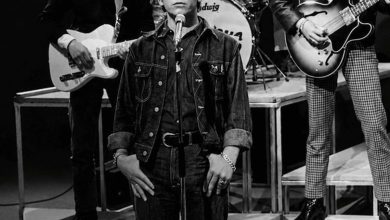
Then the classic five-member lineup reunited in 1997 for The Dance. Recorded at Warner Bros. Studios in Burbank, the concert placed Silver Springs back at the center of the band’s story. This time, there was nowhere for its history to hide.
The stare that changed the performance
As the song approached its final passage, Nicks turned toward Buckingham and delivered the words directly to him. He continued playing guitar while meeting her gaze. The moment felt less like nostalgia than unfinished business unfolding in real time: two former lovers performing the emotional record of their own breakup.
The live version earned Fleetwood Mac a Grammy nomination and finally gave the song the recognition it had been denied in 1977. Its triumph was not simply that a discarded track became popular. Nicks reclaimed the story in front of the person who inspired it.
Silver Springs ultimately proved its own central promise. Buckingham moved on, the band changed, and decades passed–but the sound of Stevie Nicks’s voice continued to follow him.
Watch the unforgettable 1997 performance
Watch the official video and notice how the performance changes when Stevie Nicks turns toward Lindsey Buckingham near the climax.
Continue reading
“That’s All Right”: How Elvis Presley’s First Single Became a Southern Breakthrough
A Small Record With a Big Sound
Before Elvis Presley became a national celebrity, “That’s All Right” was a rough, fast-moving recording made by a 19-year-old Memphis singer and two local musicians at a small independent studio.
The single, released by Sun Records in July 1954, did not arrive with the machinery of a major label, an established fan base, or a carefully managed national campaign.
Instead, it grew through local radio, word of mouth, jukeboxes, record stores, and the curiosity of listeners who heard something familiar and completely new in the same performance.
“That’s All Right” is often described as one of the foundational records of rock and roll, although no single recording can definitively claim to be the genre’s first.
Its importance rests less on a simple origin story than on the way it connected Black blues, white country music, Memphis rhythm, and a young performer whose voice seemed to belong to several musical worlds at once.
From Memphis Recording Service to Sun Records
Sam Phillips operated the Memphis Recording Service before establishing Sun Records, creating a place where local musicians could make demos, independent records, and recordings that larger companies might have overlooked.
Phillips had a particular interest in the sound of the American South, especially the energy and emotional directness he heard in blues and gospel performances.
Elvis had already visited the operation in 1953 to make a private acetate, recording “My Happiness” and “That’s When Your Heartaches Begin” as a personal project rather than a commercial release.
That earlier visit brought Elvis to the attention of Marion Keisker, Phillips’s assistant, who remembered his distinctive voice and kept him in mind when the studio was looking for new talent.
Elvis’s first acetate did not make him famous, but it placed him within the small Memphis music network that connected singers, musicians, radio personalities, and independent record producers.
When Phillips later arranged for Elvis to work with guitarist Scotty Moore and bassist Bill Black, the group had no guarantee that it would produce a hit or even discover a permanent musical identity.
The musicians first worked through slower songs and familiar material, but the session changed direction when Elvis began playing Arthur “Big Boy” Crudup’s blues number “That’s All Right.”
The Breakthrough in the Studio
Crudup had recorded “That’s All Right” in 1946, and Elvis’s version drew directly from that earlier blues performance rather than presenting the song as an entirely new composition.
The crucial change came through the arrangement, which moved with a faster, more buoyant pulse and placed Elvis’s country inflections against Moore’s electric guitar and Black’s forceful bass.
The story of the session has become part of music history because the performance reportedly began during a break, when Elvis started singing and playing the song in an excited, unconventional style.
Moore and Black joined him, and Phillips quickly recognized that the loose performance had a character missing from the more cautious material they had been attempting.
Phillips rolled the tape as the musicians played, capturing a performance that sounded spontaneous without being musically careless.
Elvis’s vocal did not imitate a polished pop singer, since it shifted between a bluesy ache, a country twang, and an almost conversational attack that made the lyrics feel immediate.
Moore’s guitar helped define the record’s lean, bright texture, while Black’s bass gave the track a rhythmic bounce that helped distinguish it from both traditional blues and mainstream country music.
Phillips added to the atmosphere with the concise, echoing production style that became associated with early Sun recordings.
The result was not a grand studio construction but a compact burst of rhythm and personality that seemed to move faster than the conventions surrounding it.
Sun 209 and “Blue Moon of Kentucky”
Sun Records issued “That’s All Right” as Sun 209 on July 19, 1954, pairing it with Elvis’s version of “Blue Moon of Kentucky.”
The record label credited the performers as Elvis Presley, Scotty, and Bill, reflecting the fact that the sound belonged to a small working group rather than to Elvis alone.
The choice of the second song was significant because “Blue Moon of Kentucky” had been strongly associated with Bill Monroe, a leading figure in bluegrass music.
Monroe’s original version was a waltz, while Elvis and the trio reshaped it into a quicker performance that matched the restless energy of “That’s All Right.”

The two sides therefore presented a musical argument in miniature, with a blues song recast through country phrasing on one side and a country standard given a blues-inflected rhythmic lift on the other.
That pairing helped listeners understand the record as something connected to established Southern traditions, even as its sound challenged the boundaries between those traditions.
The release was modest by later Elvis standards, but Sun’s independent operation could respond quickly when local interest began to build.
Dewey Phillips and the Memphis Radio Moment
The first major turning point came through WHBQ radio personality Dewey Phillips, who played “That’s All Right” on his popular Memphis program “Red, Hot and Blue.”
Phillips’s enthusiasm gave the record a crucial platform because he treated it as an exciting new sound rather than as an obscure release from a tiny label.
Listeners responded with enough intensity that the station continued playing the record and invited Elvis to appear for an interview.
The attention was especially valuable because radio remained one of the fastest ways for a local record to travel beyond the neighborhood where it was made.
A song could move from a disc jockey’s turntable to record stores, jukeboxes, dance halls, and living rooms before a national label had time to notice its commercial potential.
Memphis listeners heard “That’s All Right” as a record rooted in familiar Southern music but energized by a performer who did not fit comfortably into the usual categories.
That response transformed the song from a studio experiment into a local event, giving Elvis and his band an audience they had not possessed when the tape was recorded.
A Sound That Crossed Musical Boundaries
The record’s impact also reflected the complicated musical culture of the segregated American South, where Black blues, white country, gospel, and rhythm and blues often shared musical ideas even when the record business kept audiences and markets apart.
Elvis was a white singer performing a song first recorded by a Black blues artist, and that fact shaped how the record was understood, promoted, and eventually remembered.
His version did not erase Crudup’s contribution, since the song’s structure and emotional foundation came from Crudup’s earlier work.
At the same time, Elvis brought a different vocal attack and a different regional audience to the material, creating a performance that could reach country listeners without abandoning its blues foundation.
The record’s power came from that exchange rather than from the idea that Elvis had invented every element of its sound.
In Memphis, musical boundaries were already porous, and “That’s All Right” made those connections audible in a form that was short, direct, and easy for radio to repeat.
The single’s historical significance therefore belongs both to Elvis’s performance and to the musicians, songwriters, Black recording artists, and regional traditions that made the performance possible.
From Local Attention to Regional Hit
As airplay spread, “That’s All Right” began moving beyond Memphis through independent distribution and Elvis’s increasingly active schedule of live appearances.
The record found an audience across parts of the South, where listeners encountered it on radio and in the same clubs, theaters, and package shows that supported other emerging country and rhythm-and-blues performers.
Elvis’s first public performances with Moore and Black helped turn the record into more than an audio experience because his energetic stage presence gave audiences a visual explanation for the excitement they heard on the single.
A July 1954 appearance at Memphis’s Overton Park Shell became one of the early performances associated with the trio’s growing local reputation.
The response encouraged Elvis to continue performing the song even as he developed a broader stage set built from country, blues, gospel, and pop material.
By the time he appeared on the Louisiana Hayride in October 1954, he had moved from a promising Memphis newcomer to a performer with enough regional momentum to command attention outside Tennessee.
The Louisiana Hayride was an important platform because the radio program reached a broad Southern audience and connected its performers with the country music industry beyond Memphis.
Elvis’s appearance there helped extend the reach of the Sun single and gave him a setting where his hybrid sound could be tested before listeners accustomed to traditional country music.
The record’s success was not yet national superstardom, but it had achieved the essential step of proving that local excitement could support regional travel, bookings, airplay, and additional releases.
Why “That’s All Right” Still Matters
“That’s All Right” remains important because it captures a moment before Elvis’s image, choreography, and celebrity had been fully defined.
The record presents him as a young singer responding instinctively to material he understood, surrounded by musicians whose playing kept the performance immediate and physical.
Its rough edges are part of its appeal, since the recording sounds like a discovery happening in real time rather than a finished formula being applied in a studio.
The single also shows how American popular music often develops through reinterpretation, with songs crossing from one community to another and changing meaning along the way.
Elvis did not create the blues or country music that informed the record, but he helped bring their meeting point to a wider commercial audience.
Sam Phillips’s role was equally important because his small-label approach allowed a surprising performance to remain surprising instead of forcing it into a safer arrangement.
Scotty Moore and Bill Black supplied the instrumental framework that made the song’s momentum possible, and Arthur Crudup’s original recording provided the essential songwriting foundation.
Treating the record as a solo achievement obscures the network of artists and musical traditions that shaped its sound.
The Lasting Legacy of Elvis’s First Single
In the years that followed, Elvis became one of the most recognizable performers in the world, but “That’s All Right” continued to preserve the specific uncertainty of his beginning.
The recording shows a local musician finding a voice at the exact moment when independent Southern studios were becoming powerful sources of new popular music.
Its path from a Memphis tape to a regional hit demonstrates that major cultural changes can begin with modest resources, a receptive disc jockey, and a performance that does not sound like anything else on the radio.
The single did not arrive as a finished declaration of rock and roll, yet it made the genre’s emerging ingredients impossible to ignore.
“That’s All Right” became Elvis Presley’s first commercial single because it connected a familiar song to an unfamiliar energy, and it became a regional hit because Memphis listeners recognized that energy before the rest of the country did.
That combination of local context, musical borrowing, independent production, and charismatic performance gave the record a lasting place in American music history.
Read more stories
- A Man Took My Priority Seat on the Train and Called Me a Faker – But Later That Afternoon, Karma Struck Him Harder Than He Ever Imagined
- Madonna Once Said She Didn’t Think She Was Beautiful — AI Now Imagines How She Might Have Aged Naturally — Photos
- Kenny Rogers spent nearly six decades under stage lights, but he chose to step away so he could finally eat breakfast with his boys.
- My Date Publicly Humiliated a Young Waitress to Impress Me – Instead, I Humiliated Him